
Life at the water’s edge brings unique joys—and a few predictable headaches for home cooling. In Malibu, the same ocean that cools afternoons sprinkles salt onto equipment, canyons that frame postcard views funnel gusts that rattle vents, and glassy rooms soak up late-day sun until dinner time. When an air conditioner underperforms here, it usually isn’t random. It’s a coastal pattern announcing itself through warm rooms, odd noises, or humidity that just won’t settle. Understanding these common issues, and the Malibu-specific reasons behind them, is the first step to a calmer, more reliable home. Early in the season, a check-up can spot the telltale signs, and if you’re setting up a new air conditioning system, you can sidestep most of them with a few smart choices.
As someone who has crawled attics from Big Rock to Trancas, I’ve learned to listen for the coastline’s signature problems. They show up in a handful of familiar ways: a condenser that seems louder this year than last, a return grille that whistles when the fog hangs thick, or a thermostat that reads like midday summer in a room glazed with afternoon sun. Each symptom has a root cause—and a practical fix—grounded in how Malibu homes are built and how the ocean behaves.
Salt-Driven Coil Corrosion and Finned Surface Fouling
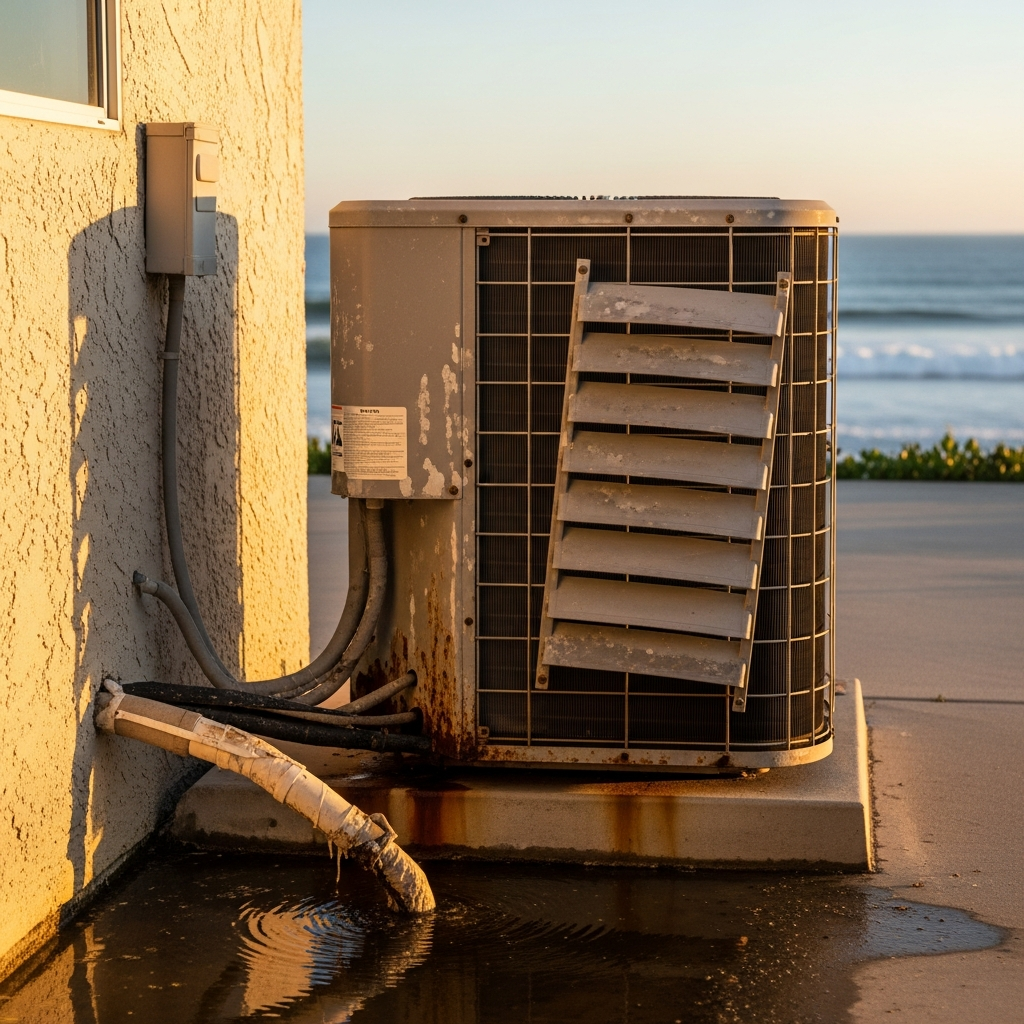
Salt is enemy number one for outdoor coils. It lands lightly, then attracts moisture, creating a micro-environment that pits aluminum fins and dulls copper. Over time, heat transfer suffers, the system runs longer, and comfort fades. In more exposed lots—Carbon Beach or beachfront lanes where the swell is part of daily life—this can advance quickly if ignored. The fix is twofold: prevention and care. Specify coastal-rated materials and protective coil coatings when installing or replacing equipment. Then, rinse gently with fresh water regularly and schedule professional cleanings. If performance seems down and the unit looks fine from a distance, inspection under the top panel often reveals the hidden, crusty buildup that’s throttling efficiency.
Indoors, the evaporator coil can struggle too—but for different reasons. If return ducts leak, attic dust bypasses the filter and sticks to the wet coil. The result is a slow loss of capacity and harder-working fans. Leaks at the return plenum or around filter doors are common culprits and are easy to tighten up once identified.
Clogged Condensate Drains During Marine Layer Weeks
Fog and cool mornings ride in with enough moisture that even on temperate days, your system quietly pulls gallons of water from the air. That water needs a clear path out. Slime growth inside the drain line, debris, or an undersized trap will eventually create a blockage. The first sign might be a musty odor near a closet, or a safety switch tripping and shutting the system down at an inconvenient hour. A good maintenance routine keeps this at bay. If you’ve already had an overflow, ask for a trap redesign and a clear route to daylight where possible. Condensate pumps work, but they are a moving part in a salty world—less is more in coastal mechanics.
In multi-level homes with air handlers above living spaces, a clean secondary pan and tested float switch are your best friends. It’s the simplest kind of insurance and pays for itself the first time wind and fog conspire to push humidity high.
Thermostat Location and Solar Gain Confusion
Many Malibu homes are temples of glass, which is wonderful for views and tricky for thermostats. A stat bathed in late-afternoon sun will think the house is roasting and overcool, leaving interior rooms too cold while the glassy corner is merely comfortable. Likewise, drafts from open stairwells can fool sensors into short-cycling equipment. The solution can be as simple as relocating the sensor to a representative interior wall, or using remote sensors that average temperatures across spaces you actually occupy. Pair that with shades or films designed to tame late-day sun, and the house feels even and calm from kitchen prep to sunset.
With variable-speed systems, controls matter even more. Incorrect settings can force a sophisticated system to act like an old on/off unit. A quick commissioning check by someone familiar with your equipment can restore the gentle modulation that keeps humidity and temperature steady.
Wind Rattle and Outdoor Unit Placement
Our canyons shape wind in surprising ways. A condenser perched at the edge of an exposed deck might see gusts that spin the fan faster than intended, creating a hum or even a safety fault. Louvers on wall caps can clatter on blustery days, sending a percussive sound into otherwise quiet rooms. Placing condensers where wind is broken—behind low walls, landscaping, or custom baffles—maintains airflow while calming turbulence. Upgrading exterior grilles to designs that resist flutter removes a surprisingly common and maddening noise from the home’s soundtrack.
Inside, flexible duct runs that are too long or poorly supported can drum when wind pressure changes outside. Re-hanging with proper supports and shortening excessive loops settles the system down so evenings sound like surf again.
Uneven Cooling in Open Plans and Tall Spaces
Stratification is physics meeting architecture. In two-story great rooms near Paradise Cove or Point Dume, warm air pools up high while the lower level chills. If the only return is down low, the system never drinks in the warmest air, and the cycle continues. Adding a high return or enabling a low-speed circulate mode that keeps air mixing solves the problem without brute-force cold blasts. Register placement and diffuser selection also make a difference; a register aimed across glass swings cool air down the pane and into the room, evening the feel without drafts.
Zoned homes can develop imbalances when dampers drift or schedules stop matching daily life. Rebalancing airflow and revisiting how you use the space—guest rooms idle most weeks, great room active from late afternoon—often restores harmony without new hardware.
Electrical Nuisances and Component Wear
Corrosive air doesn’t stop at coils. Outdoor disconnects, contactors, and capacitors all age faster near the ocean. Pitted contacts mean more heat, which means shorter component life. A mid-season failure often looks like an AC that “tries” and then quits. Regular inspections catch the early tells: discolored wires, buzzing relays, and hot-to-the-touch disconnects. Replacing small parts before peak season is far kinder than losing a weekend to an avoidable outage.
Inside, blower wheels load up with film over time, reducing airflow and making motors work harder. A good cleaning restores quiet and capacity you forgot you were missing. It’s a satisfying fix because you feel it the same day.
Wildfire Smoke, Filters, and Leaky Returns
When smoke drifts down from the mountains, windows close and filtration becomes your first line of defense. If returns leak at seams or filter racks, the system pulls dusty, smoky attic air around the filter instead of through it. The symptom is a house that smells smoky despite new filters. Sealing those leaks with mastic and ensuring the filter frame fits snugly transforms performance. Consider deeper media filters during smoke season; they pull more and last longer without whistling.
Continuous low-speed fan operation during events can quietly recirculate and clean indoor air without booming airflow. The goal is comfort and safety—in the moment and in the days after—while the outdoors returns to its best self.
Short-Cycling and Oversized Equipment
Older coastal installs were often oversized to “be safe,” but the result is short, loud runs that chill air without drying it. You feel clammy even when the thermostat says the right number. The fix is better than it used to be: modern variable-speed systems can be sized more precisely, and good controls let them idle along to match actual load. If replacement isn’t on the table yet, small steps—tighter ducts, cleaner coils, and adjusting fan speeds—can soften the symptoms while you plan an upgrade.
Right-sizing is particularly important in homes with big glass and steady breezes. A system that can loiter in low gear will keep up without the blast-and-coast routine that defines discomfort.
Noisy Indoor Air: Whistles, Rumbles, and Whooshes
Noise tells a story. A whistle at a return often points to a loaded filter or a return grille undersized for the fan speed. A low rumble from the ceiling can mean ducts resting on framing without isolation. Whooshing at a single register may be a sign that branch is doing too much work. The fixes are surgical: a larger grille here, a soft hanger there, a small balance damper tweak. The goal isn’t silence for its own sake; it’s to let the system fade so conversations, music, and ocean stay center stage.
Sometimes the quietest improvement is also the cleanest one: sealing a handful of small duct leaks that add turbulence and sap pressure where it’s needed. Air takes the easiest path; your job is to make the easiest path also the most useful one.
Glassy Rooms That Never Feel “Done”
West-facing rooms with big sliders can taunt even good systems from late afternoon into evening. If your AC runs and runs while the room feels just shy of comfortable, look at a combined approach. Interior shades or low-e films reduce the load before the system sees it. Then, ensure the supply register’s throw is washing the glass. Finally, enable a pre-cool routine that starts a touch earlier so the system stays ahead of the sun rather than chasing it. In Malibu, anticipating the sun’s arc is half the battle.
For homes that entertain at sunset, this small orchestration turns dinner into an easy, predictable affair. Guests notice when the air simply feels good as the sky turns orange.
Maintenance Gaps That Become Headaches
Most “mystery” problems aren’t mysterious. They start as skipped rinses, overdue filters, or ignored rattles. The coastline punishes procrastination because salt and fog keep working even when you’re away. Build a rhythm: spring tune-up for the heavy season, early fall check after wind events, and quick visual passes after storms. It’s the difference between a system that needs attention and one that gives you none.
And when issues do arise, bring in help that knows the shoreline. A tech who has solved a dozen salt-eaten coil cases or tamed a canyon’s wind rattle will get to the point quickly and leave you with a calmer home.
FAQ: Common Malibu AC Issues
Q: Why does my outdoor unit look fine but cool poorly?
A: Salt and grime often hide under the top panel or deep in the coil fins. A surface glance can miss the fouling that matters. A proper cleaning and performance check usually tell the full story.
Q: My AC leaks water sometimes—what’s happening?
A: On foggy days, condensate can overwhelm a partially clogged drain or a poorly designed trap. Clearing and redesigning the drain path solves most repeat leaks.
Q: The system is loud on windy days. Is that normal?
A: Not if it’s placed and secured well. Wind baffles, better exterior grilles, and proper supports quiet most gust-related noises.
Q: One room never gets comfortable. Do I need more tonnage?
A: Often no. Balancing airflow, adding a high return, or adjusting register throw addresses stratification and glass-driven loads without upsizing equipment.
Q: Do I have to keep windows closed all the time?
A: Enjoy breezes when air is clean and dry. When smoke or fog rolls in, close up, let the system clean and dry the space, and you’ll stay comfortable without overworking equipment.
Q: Are smart thermostats worth it here?
A: Yes, especially in glassy, sun-exposed homes. Pre-cool routines and remote sensors even out temperatures and reduce chasing the load after it spikes.
Q: How can I prevent these issues?
A: Coastal-focused maintenance—coil rinses, tight returns, clean drains, and tuned controls—stops most problems before they start. A coastal-savvy technician will tailor the plan to your lot.
If your AC is hinting at trouble—or you simply want it to disappear into the background the way it should—reach out to a local expert who understands both architecture and ocean. A short visit can quiet rattles, smooth temperatures, and restore the easy calm you bought this house for. When you update or service your air conditioning, you reclaim comfort that feels as natural as the sea breeze.