
What Makes Beach House Ductwork Tricky
Spend enough time in Malibu beach houses and patterns emerge. The views are spectacular, the breezes welcome, and the spaces can be surprisingly difficult to condition well. Under the boards and behind the shiplap, duct systems live with salt-laden fog, tight clearances, and renovations stacked over decades. When it comes time to replace ducts, those realities surface quickly. I have crawled under pier-and-beam cottages where crabgrass meets joists, and I have climbed into attics where the ocean is as audible as the blower. The result is a consistent set of challenges—and solutions—that define duct replacement in Malibu’s beach zone.
The first truth is that no two houses are alike. Some tuck mechanical runs along narrow bays beneath original floors, others hide them in low scissor trusses, and still others rely on improvised chases created during earlier remodels. Replacement is not a copy-and-paste affair; it’s detective work and design, with the goal of air that arrives quietly and evenly, day after day.
Salt, Corrosion, and the March of Time
Salt is everywhere near the sand. Hardware that looks fine from a distance can be flaking at the threads on closer inspection. In beach houses, we often find failing straps, brittle tapes, and rusty screws that loosen their grip. Joints open incrementally, and what begins as a small leak becomes a chain reaction of performance loss. Smart replacement work starts with a thorough purge of compromised hardware and the introduction of corrosion-resistant fasteners, robust mastics, and jackets designed to hold their integrity under marine exposure.
Metal components are not off the table—far from it—but they need thoughtful selection. Lined sections where acoustics demand, protective coatings where exposure is likely, and isolation from dissimilar metals that might invite galvanic corrosion all help the new system last. These subtleties matter; in Malibu, durability is a design choice as much as an installation outcome.
Tight Clearances and Awkward Paths
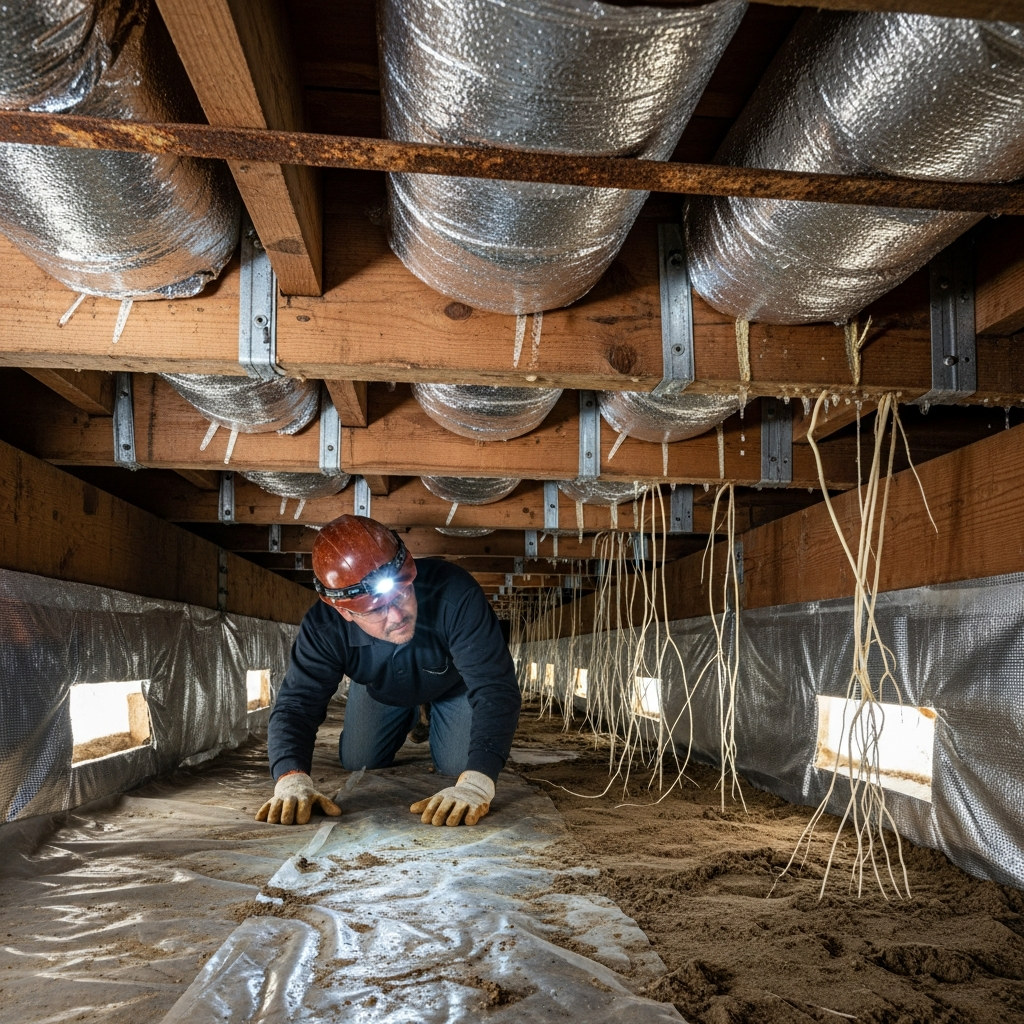
Beach houses frequently sit on low piers with crawlspaces that feel more like a letter slot than a room. Routing new ducts in those conditions requires a disciplined approach to minimize static pressure while avoiding kinks and crush points. Smooth-radius fittings, careful measurement, and supports that bear evenly across spans are the difference between a system that whispers and one that huffs. In attics with shallow pitches, we sometimes discover that prior work wound around structural members rather than planning a sensible path; replacement is the time to redraw that map and win back performance that was given away by turns that were too tight or runs that were too long.
Returns deserve special attention. Undersized or poorly placed returns push systems into negative pressure, drawing in crawlspace or attic air that adults and children then breathe. Replacement projects recalibrate return size and location, protecting indoor air quality and making filtration work as intended.
Rodent Intrusion and Sealing Gaps
Life on the sand includes wildlife. Rodents exploit torn jackets and weak joints, nesting near warm air paths. Once inside the envelope, they can chew, contaminate insulation, and create odors that linger. Effective duct replacement closes that invitation by tightening every seam, upgrading outer jackets, and paying attention to transitions at boots and plenums. It’s not glamorous work, but it is foundational to a clean, quiet system.
Sealing also addresses a less visible issue: pressure-induced infiltration. In windy conditions, leaky ducts encourage outdoor air to bypass filters and rush into the supply path through gaps. Tight joints and controlled return paths keep the system in charge of where air comes from and where it goes.
Condensation and Microclimate Pockets
When cool supply air travels through a humid beachside crawlspace or attic, any thermal bridge can condense moisture. If jackets are torn or compressed, that moisture finds a home. Over time, it can compromise insulation and introduce musty odors. Replacement turns the tide by restoring continuous vapor barriers, selecting insulation that maintains thickness in tight spaces, and routing away from known condensation zones. The result is a system that stays dry and, by staying dry, stays efficient.
Microclimates within the house play a role too. Rooms that face the ocean get different sun and wind than those tucked inland. Replacement lets us re-balance, giving a little more push where the afternoon sun heats up glassy walls and easing off where shade and calm prevail. That balance shows up as comfort that no longer swings with the tide.
Noise: From Background Roar to Coastal Hush
Beach houses seem to amplify sound. Hard finishes, big windows, and compact rooms can turn a register into a megaphone if the airflow is wrong. During replacement, we hunt for the causes—undersized runs, abrupt transitions, or registers that blast directly on seating. Smoother fittings, right-sized branches, and diffuser choices that spread air without a jet stream shift the soundscape from roar to hush. The difference is especially welcome at night, when the ocean becomes the soundtrack rather than the blower.
Another culprit is vibration transmitted into framing. Old hangers tied too tightly to joists can make an entire room buzz when the fan starts. Upgraded supports that isolate ducts from structure, plus thoughtful routing that avoids hard contact, bring serenity back.
Coordinating Replacement with Renovation
Beach houses often evolve in layers. A new kitchen here, a bedroom addition there, and an enclosed deck stitched on a decade later. The duct system follows, sometimes awkwardly. Replacement is the moment to reconcile that history, restoring coherence so each space receives the air it needs without starving another. We evaluate which trunks should be primary, which branches are redundant, and how returns can invite even circulation rather than chaos.
Timing this work with other improvements pays off. If ceilings are being opened or floors refinished, access improves and the finished product can hide in plain sight. The goal is a system that vanishes into the architecture until the day you need service, at which point clear labeling and sensible access make any future tweak straightforward.
Planning for Smoke Events and Salt Seasons
Malibu beach houses live close to nature, and that comes with seasons of smoke and salt. Replacement projects now consider these cycles as design inputs. Tight sealing to force all air through filtration, return placement that avoids dusty corners, and the option for low, continuous circulation help the home ride out difficult weeks. During onshore flow, balanced systems resist infiltration that would otherwise introduce moisture and particulates. These are not afterthoughts—they are first principles in a coastal environment.
Homeowners feel the benefits most when windows stay closed for a stretch. Rooms remain neutral in scent, surfaces collect less dust, and the HVAC sound recedes into the background. That calm is the definition of success in a beach house.
Frequently Asked Questions
Why do beach houses need different duct strategies than inland homes?
Salt, humidity, wind, and tight spaces create conditions that age materials faster and challenge airflow. Replacement strategies prioritize corrosion resistance, tight sealing, smooth routing in small spaces, and return sizing that protects air quality. These elements account for the marine environment in ways inland plans may not.
Can I reuse any of my existing ducts during replacement?
Sometimes, but only if materials and routing meet modern performance goals. In beach houses, we often find widespread wear that argues for comprehensive replacement. When a segment is sound and properly sized, it may be retained, but the default is to rebuild for durability and balance.
How do you prevent rodents from re-entering duct systems?
We close gaps at every connection, use robust outer jackets, and reinforce transitions at boots and plenums. We also look at the broader envelope for entry points. A sealed duct system, paired with good building maintenance, removes the shelter and pathways rodents seek.
Will replacement reduce the noise of my system?
Almost always. By addressing undersized runs, sharp bends, and poor diffuser placement, we reduce turbulence and resonance. Isolation hangers and smoother transitions help, turning a background roar into a gentle, steady hush that suits beach living.
How do you handle condensation risks in humid crawlspaces?
We restore or upgrade vapor barriers, choose insulation that maintains thickness, and route away from cold bridges where possible. The goal is a dry system; dry ducts maintain efficiency and avoid the musty odors that damp materials can create over time.
Is replacement manageable if my crawlspace is extremely tight?
Yes, with planning. We stage materials to fit access points, use fittings that maintain airflow in small envelopes, and coordinate with any concurrent work that might improve access. Tight spaces demand craftsmanship, but the payoff in comfort and calm is worth the effort.
When you are ready to turn a noisy, drafty setup into the kind of quiet comfort a Malibu beach house deserves, start with a plan for duct replacement that respects salt, wind, and architecture. With the right approach, the only thing you will notice is how effortlessly the home holds its cool mornings and warm evenings.