
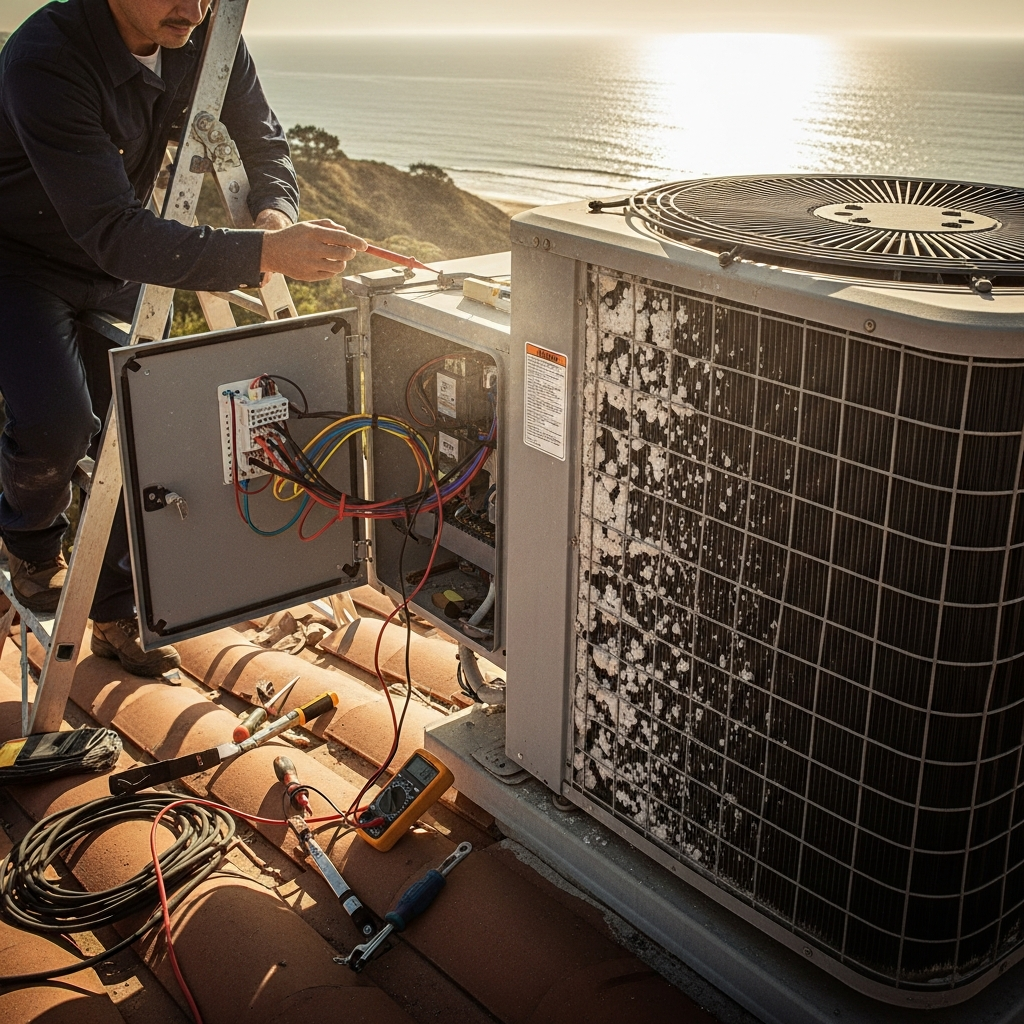
When the heat rolls across the Pacific and settles over the canyons, a quiet Malibu afternoon can turn sweltering in minutes. I have seen marine-layer mornings give way to blazing, still air by lunchtime, and that is often when an air conditioner decides to quit. In those tense moments, the right mindset is as important as the right tools. The first step is recognizing that true emergency air conditioning repair hinges on fast diagnostics, safe decisions, and a clear plan to restore comfort without introducing new risks. For many homes tucked on hillsides or perched above the beach, dependable air conditioning is not just a luxury; it protects indoor finishes from heat stress, helps sensitive occupants, and preserves a sense of normalcy when the weather turns unpredictable.
Malibu’s microclimates create unique stress on equipment. Salt air drifting up from the shoreline settles onto outdoor units, slowly forming a film that attracts moisture and corrodes unprotected metals. Canyon winds, particularly during Santa Ana events, can push dust and debris straight through condenser coils and into outdoor fan assemblies. Add in the occasional power surge during grid fluctuations and you have a recipe for sudden failures that rarely appear on a neat schedule. As a local, I have learned to read the signs: a system that ran a little louder the night before, a barely noticeable rise in indoor humidity, or a thermostat offset that seems harmless until it is not.
Understanding What Counts as an AC Emergency in Malibu
Not every breakdown is a true emergency, but certain conditions push a repair to the top of the list. If vulnerable occupants—infants, elderly family members, or those managing health concerns—are at home, loss of cooling can be urgent even on a moderately warm day. If you see water actively leaking through a ceiling from a condensate line or air handler, that elevates the situation immediately because damage compounds quickly. Likewise, if you smell burning, hear repeated breaker trips, or see frost forming on indoor copper lines, turn the system off and treat it as critical. Malibu’s steep sites and complex architectures mean that small HVAC problems can be hidden until they become big ones, so err on the side of caution.
It is easy to panic when temperatures spike, yet the best emergency responses are calm and methodical. Before calling for help, note what you observe. Is the thermostat powered? Is air blowing but not cold? Did the outdoor unit fail to start, or is it cycling on and off rapidly? Documenting symptoms saves precious minutes when a technician arrives and helps pinpoint whether the cause is electrical, mechanical, airflow-related, or refrigerant-based. If a breaker has tripped, reset it once only; a breaker that trips again is telling you something important, and repeated resets can mask an unsafe condition. If water is pooling around an indoor unit, power the system down and place towels or a container to capture drips while you wait for service.
Common Failure Points During Malibu Heat Waves
Onshore-offshore wind shifts put a spotlight on weak components. Outdoor capacitors stressed by years of salt exposure are frequent culprits, especially after a sudden heat spike that demands multiple hard starts. Contactors that look clean can stick when the sun bakes an enclosure, and high-pressure switches may trip if the coil surface is partially clogged with beach dust. Indoors, a clogged condensate trap can cause an emergency float switch to shut the system down, often at night when humidity creeps up and the drain pan starts filling. Ductwork routed through hot attics can amplify these issues by pushing return temperatures higher, forcing the compressor to work longer and harder.
Wildfire seasons layer another complication. While the flames may be miles away, smoke particulates travel easily into outdoor coils and indoor filters, choking airflow and coating sensors. I have opened units after a smoke event to find fine ash embedded into every fin. If you notice the system laboring after a smoky day, it may not be a coincidence. Emergency repair sometimes starts as emergency cleaning—restoring airflow so that the system can operate safely before any deeper mechanical intervention is attempted.
How Emergency Technicians Prioritize Safe, Fast Restoration
When I roll up to a Malibu home on an emergency call, the first priority is stabilization. We verify safe power, confirm airflow, and check basic refrigerant pressures or inverter diagnostics without tearing the system apart. If a single failed component can be replaced immediately, we do that. If corrosion or heat damage suggests a cascading failure, we aim for a temporary restore that buys time—perhaps cleaning a coil thoroughly, replacing a capacitor, and confirming all safeties remain intact. The goal is to leave the system operating within manufacturer parameters, not just running. On the coast, running but out-of-spec can mean a short road to a bigger breakdown.
Communication is just as critical as the wrench work. Malibu homes are often architecturally complex, with equipment tucked into spaces that require care to access. I walk homeowners through what we have found, what the near-term risks look like, and what options exist if the problem returns overnight. We discuss when to shut the system down, how to monitor indoor humidity, and which rooms are easiest to keep cool if triage becomes necessary. Clarity reduces stress and keeps everyone focused on practical steps while a permanent solution is secured.
Prevention That Makes Emergencies Less Likely
Most middle-of-the-night breakdowns announce themselves in subtle ways beforehand. A seasonal inspection tailored to Malibu’s environment can catch those whispers. That includes rinsing salt residue from outdoor coils with fresh water on a schedule appropriate to your proximity to the ocean, verifying protective coatings on coil fins or cabinets, and testing all low-voltage safeties that prevent overflow or compressor abuse. Indoors, attention to condensate management is nonnegotiable. Trap configuration, line pitch, and cleanouts matter more in a coastal town where nighttime humidity shifts keep condensate production high even when daytime air is dry.
Smart controls help, too. I appreciate simple thermostats that report filter status, track runtime, and send alerts when something falls out of bounds. If your home has multiple floors, zoning can reduce stress on a single air handler by balancing loads where people actually live from hour to hour. In especially exposed locations, a surge protective device adds resilience against brief grid anomalies. Prevention is not about perfection; it is about stacking small advantages so that when a problem does surface, it is less severe and more predictable to solve.
Staying Comfortable While You Wait for Help
There are safe, practical ways to buy time. If the system is blowing but not cooling, switch the fan to Auto rather than On, because constant fan operation can push latent moisture back into living spaces on humid nights. Close blinds on sun-facing windows, and if you have ceiling fans, run them counterclockwise to move air gently downward. Keep doors closed on rooms that are not in use so you can concentrate cooling where it is needed most. If a water leak is associated with the air handler, power the system down at the thermostat or disconnect, then focus on containing the water before it damages flooring or ceilings further.
When outdoor smoke or marine haze worsens, resist the temptation to open windows for relief if filtration is compromised. You will gain a few minutes of breeze and trade it for hours of cleanup and potentially aggravated allergies. Instead, target the rooms with the best insulation and the fewest sun-exposed walls. Portable dehumidification, if available, can make a dramatic difference in perceived comfort even when temperature rises a degree or two. These are stopgaps, but in an emergency they tilt conditions back in your favor.
Choosing the Right Local Help in a Pinch
In an ideal world, you already have a trusted professional lined up. If you do not, look for someone who speaks fluently about Malibu conditions: salt air mitigation, hillside equipment access, wildfire filtration strategies, and Title 24 compliance as it relates to replacement scenarios should the repair point that direction. Ask how they document findings, whether they stock common coastal-rated components, and how they handle after-hours follow-up if a fix needs refinement. A technician who asks about your home’s orientation, equipment age, and nearest canyon winds is already thinking like a local—one step closer to a prompt and lasting resolution.
Good emergency service ends with a plan. Maybe that plan is as simple as scheduling a follow-up deep cleaning after the heat wave passes, or as substantial as mapping a future upgrade if your existing system has reached the limits of safe operation. Either way, you should leave the visit with clear notes, recommended filter strategies for the coming days, and instructions for monitoring performance so you can call back early if something drifts.
Mid-Course Corrections After a Temporary Restore
Sometimes we stabilize a system knowing that the underlying cause requires a longer window—perhaps a specialty board on backorder or an access permit to reach an equipment platform. In that case, the next forty-eight hours matter. Keep an eye on frost at the refrigerant lines near the air handler, monitor the condensate drain for steady flow, and listen for new noises at startup. If your thermostat offers a diagnostic history, note any unusual shutdowns or high runtime alarms. And if a heat wave intensifies, consider pre-cooling earlier in the day to reduce strain during the peak hours when the grid is stressed and attic temperatures soar.
At mid-cycle check-ins, I often recommend brief reminders: rinse the outdoor coil gently if you are very close to the ocean and the manufacturer permits homeowner rinsing; change or at least inspect the filter more frequently during smoky weeks; and make use of any air quality sensors you have to balance ventilation with filtration. Attention to these micro-adjustments can turn a shaky system into a steady one long enough to bridge into a permanent fix. If you have been considering an upgrade, now is the time to collect information—features like variable-speed compressors and corrosion-resistant coatings can make your next system far more resilient along Malibu’s waterfront. And as you evaluate options, explore trusted resources that explain the fundamentals of air conditioning so your decisions are grounded in clear, practical knowledge.
Why Malfunction Patterns Differ Near the Water
Homes close to the beach encounter a different mix of failures than homes tucked farther inland or higher in the canyons. Salt accelerates every small scratch and exposes weak coatings or poorly sealed electrical enclosures. The result is a higher incidence of contactor pitting, outdoor fan motor bearing wear, and heat exchanger rust on combination systems. Meanwhile, canyon homes experience more wind-driven dust and leaf debris, which can block condenser fins and infiltrate cabinet seams. Understanding your home’s microclimate helps prioritize what to inspect first when an emergency strikes, which in turn speeds repairs and improves outcomes.
Preparing for the Next Event
After the panic fades and cool air returns, invest a little time in debriefing. Note the conditions leading up to the failure, what helped, and what did not. If power quality played a role, ask about surge protection or soft-start options compatible with your equipment. If drainage was the culprit, consider a secondary pan with a separate overflow shutoff. If smoke and ash were catalysts, align filter upgrade plans and discuss coil cleaning intervals paced to wildfire seasons. These small, local decisions pay big dividends over a long Malibu summer.
Frequently Asked Questions
What should I check before calling for emergency AC repair?
Verify that the thermostat has power and the system is set to Cool, ensure the air filter is not blocked, and check for any tripped breakers—reset once only. If you see water leaks, smell burning, or hear repeated breaker trips, turn the system off and call for help immediately. Document any error codes on your thermostat so a technician can act quickly.
Is it safe to run my AC if the outdoor unit is making a strange noise?
If a new grinding, squealing, or metal-on-metal sound appears, switch the system off. Continued operation can turn a fixable bearing or fan issue into a more serious failure. Malibu’s salt air can accelerate wear on outdoor fan motors; catching it early limits collateral damage.
How does salt air change emergency repair strategies?
Salt accelerates corrosion and can undermine electrical components. In emergencies, technicians check for hidden corrosion at terminals and verify that a quick fix will not be undone by a compromised contactor or capacitor. They may also recommend protective measures like periodic freshwater rinses and corrosion-resistant parts once the system is stable.
What can I do to feel cooler while waiting for a technician?
Close blinds on sun-facing windows, limit activity in unused rooms, run ceiling fans counterclockwise, and avoid opening windows during smoky or humid periods. If the AC is leaking water or short-cycling, shut it down to prevent damage and focus on containing any leaks.
When should I consider replacement instead of repeated emergency repairs?
If your system has frequent failures, uses outdated technology that struggles with Malibu’s salt and wind exposure, or cannot meet comfort needs during modest heat, discuss long-term options. Variable-speed systems with coastal protections often prove more reliable and efficient over time, especially in homes near the shoreline.
No one wants to think about the next breakdown once the house is cool again, but the best time to prepare is when the memory of the last emergency is fresh. If you are weighing upgrades, maintenance plans, or just want a second opinion, reach out to a trusted local pro today. For a clear, homeowner-friendly primer that can help you choose and care for the right solution, explore air conditioning resources, then set a convenient time for a visit. A short conversation now can spare you a long night later.