
Cooling with Care: The Environmental Story of AC in Malibu
In Malibu, comfort is part of the landscape. We open our homes to ocean light, gather friends on decks above the tide line, and rely on quiet cooling to take the edge off humid mornings and late-summer heat. Yet every degree of cool comes with an environmental footprint that matters—from the energy a condenser draws on a hot afternoon to the refrigerants cycling through coils beside the garden. Understanding this footprint is the first step toward shrinking it, and Malibu is uniquely positioned to lead with thoughtful choices that respect our coast. Consider this a local guide to greener air conditioning, grounded in the realities of salt air, canyon winds, and the ways our homes live with the Pacific.
Environmental stewardship here is not an abstraction. We see it in the way night sounds travel across the beach flats, in how fog beads on handrails, and in the birdlife that circles the bluffs. The choices we make—equipment type, maintenance cadence, and how we operate day to day—echo through energy use, air quality, and system longevity. A well-cared-for system is greener by nature because it uses less energy to deliver the same comfort and lasts longer before replacement.
Energy Use: The Quiet Footprint
When we talk environmental impact, energy is the quiet giant. In Malibu’s moderate climate, AC loads are often lower than inland, but efficiency still swings widely depending on maintenance, duct integrity, and how smartly we set thermostats. Dirty coils and filters force longer runtimes, leaky ducts spill cooled air into hot attics, and poor placement of outdoor units makes them fight salt film and wind. Each inefficiency adds up, especially on the first true heatwave when demand across the coast rises together.
Simple habits drive big gains. Start with airflow: clean filters and open, unobstructed returns reduce blower work. A lightly rinsed condenser coil breathes better, allowing the compressor to complete its job with fewer watts. Timing is another lever. Pre-cooling before the afternoon peak lets your home ride through the hottest hours with smaller bursts of operation. These patterns smooth demand and can complement broader grid stability efforts, easing stress during peak load periods.
Refrigerants: The Chemistry Behind the Cool
Refrigerants carry the heat out of your home, and their environmental impact varies. Many older systems use refrigerants with higher global warming potential. Responsible handling during maintenance and at end of life is essential. Malibu’s coastal conditions challenge seals and joints, so vigilance for leaks is not just about performance—it is a climate choice. An oily film on lines or fittings is the homeowner’s visual cue; paired with performance changes like poor cooling or icing, it signals time for professional diagnostics and repair.
Newer systems are transitioning toward lower-impact refrigerants and more efficient compressors that modulate to match load. While choosing equipment is a bigger decision with many factors, it is worth recognizing that refrigerant management—proper charging, leak repair, and recovery during replacement—is at the heart of keeping AC’s environmental profile in check. The greenest pound of refrigerant is the one that stays inside a tight, well-maintained system.
Equipment Placement and Coastal Exposure
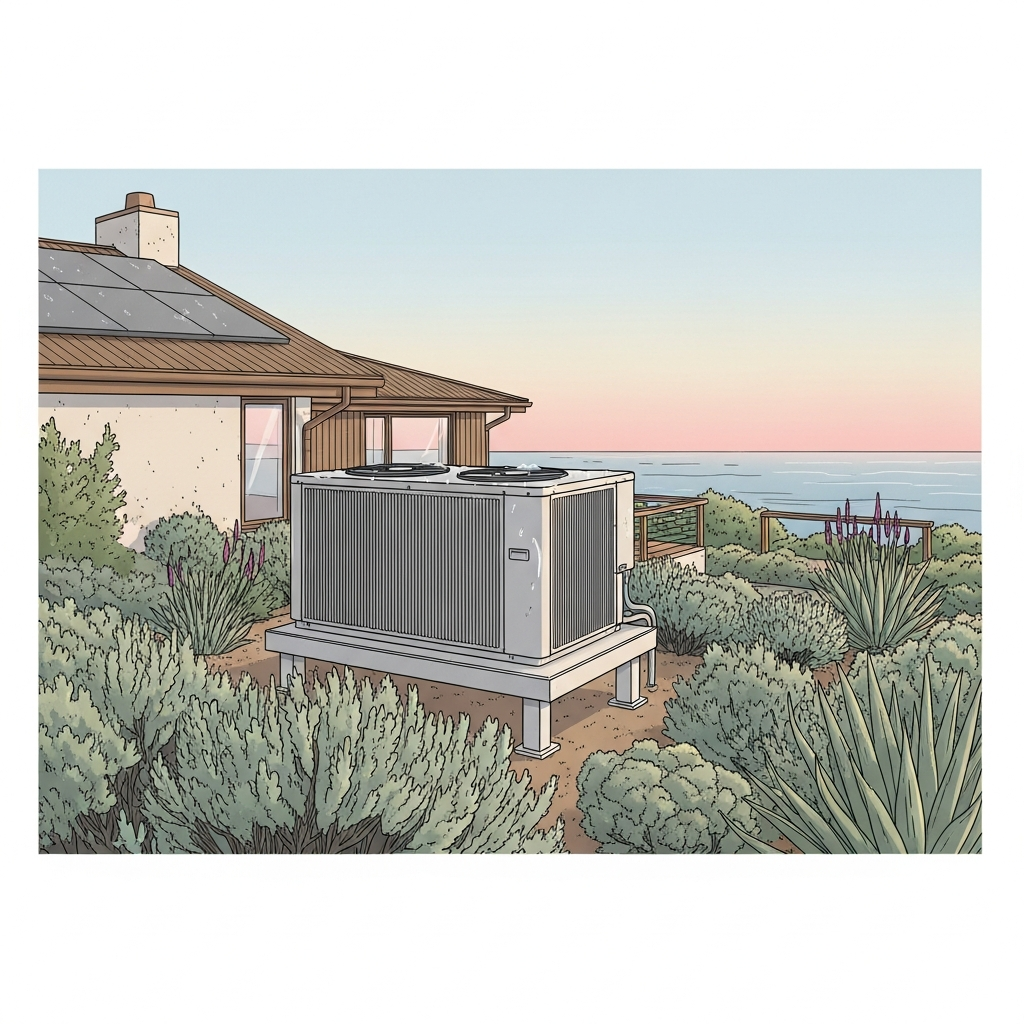
Where your condenser lives shapes both energy use and durability. Set against a direct salt blast, coils coat quickly and metals corrode faster. Tuck the unit where soft breezes wash over it, away from sprinkler overspray and with generous clearance from plantings. Shade is helpful, but not if it chokes airflow; a condenser’s best friend is unobstructed, gently moving air. These placement choices reduce the frequency and intensity of cleanings required and extend component life, which in turn delays the environmental cost of manufacturing and transporting replacements.
On decks and tight side yards common in beach homes, resist the urge to hide the unit behind dense screens. Visual calm is important, but you can achieve it with setbacks and thoughtful planting that does not crowd the coil. You will hear the difference too—quieter, smoother operation after sunset when sound carries farthest.
Ducts and the Building Envelope
Much of AC’s environmental story lives in hidden places. Duct leaks, even small ones, waste energy and degrade comfort. In Malibu’s climate, attics can swing hot in the afternoon; any lost cool to those spaces is doubly costly. Inspect for dark streaks at joints, re-seat loose boots, and wrap bare metal where insulation has thinned. These are not glamorous tasks, but tightening the duct system yields immediate, durable efficiency gains.
The building envelope—windows, doors, and insulation—sets the stage for how hard your AC must work. Glazing that embraces the ocean view can invite significant solar gain. Coordinated shading and insulated window coverings allow lighter AC cycles without sacrificing the horizon. A little forethought here pays off in smaller, steadier loads that variable-speed equipment handles beautifully.
Maintenance as Environmental Action
Regular maintenance is environmentalism you can feel. Clean coils, healthy capacitors, and tight electrical connections reduce waste heat and keep motors in their sweet spots. In Malibu, add salt management to the standard checklist: fresh-water rinses of the condenser on calm mornings and post-storm checkups to remove wind-driven debris. Attic and crawlspace inspections catch duct slumps and insulation gaps before they widen into persistent inefficiencies.
Filter management is part of this story. A filter that is too restrictive for your blower’s capability forces energy use up, while a poor fit allows dust to bypass and foul the coil, which then also increases energy use. Choosing a filter that balances capture with airflow, and changing it at a cadence matched to your beach traffic and smoke exposure, is the sweet spot.
Operating Smarter: Thermostat Tactics
The thermostat is where environmental intent meets daily life. Pre-cooling before the warmest hours arranges your energy use more gently across the day. Avoid big, abrupt setpoint swings; they trigger short, inefficient bursts. On foggy mornings, let the system remove humidity with longer, modest cycles rather than cranking down the temperature. On dry, windy days, accept a slightly higher setpoint that still feels comfortable due to low humidity.
Consider zones where appropriate. Malibu homes often have open living areas facing west and cozier bedrooms on the inland side. Zoning lets you cool what you use, when you use it, trimming waste without sacrificing comfort or view.
Noise and the Coastal Soundscape
Environmental impact is also acoustic. Night carries sound in Malibu, and a noisy system changes the way patios and decks feel after sunset. Maintenance that quiets vibration—tight panels, balanced fans, clean blower wheels—improves your environment and your neighbors’. Variable-speed equipment that hums rather than starts with a jolt can make a profound difference in lived experience, especially when bedrooms face shared courtyards or narrow side yards.
Placement again matters. A condenser set away from reflective walls and behind soft landscaping that does not impede airflow reduces sound bounce. These small siting choices do environmental double-duty: lower perceived noise and improved efficiency through better airflow.
Resilience During Smoke and Wind Events
Wildfire smoke and Santa Ana winds affect more than mood; they alter how your AC should run. Closed windows, clean filters, and steady cooling protect indoor air, but filters load quickly with ash. Replacing them more often during events keeps pressure low and motors comfortable. After the air clears, another change resets the system for normal operation.
Wind-blown debris can lodge in outdoor fans. A quick inspection after gusty days prevents imbalance that would otherwise waste energy and wear bearings. In our coastal setting, a little post-event attention helps systems return smoothly to their quieter baseline.
Equipment Choices that Move the Needle
When the time comes to consider new equipment, Malibu’s moderate loads favor variable-speed or two-stage systems that sip energy and maintain steady indoor conditions. Pairing right-sized equipment with sealed ducts and thoughtful return placement often beats simply choosing the highest rating on a sticker. Installation quality—level pads, clean brazed joints, proper charge, and meticulous airflow setup—determines how closely real-world performance matches the promise.
Lower-impact refrigerants are becoming the norm; choosing systems that use them responsibly and ensuring technicians recover and handle old refrigerants properly closes the loop on that environmental chapter. Meanwhile, keeping your current system tight and clean buys time and reduces footprint right now.
Community and Coastal Ethos
Malibu’s environmental decisions are often communal. A row of well-tuned condensers whispers instead of growls. Homes that pre-cool thoughtfully cut peaks that ripple through the neighborhood. Shared knowledge—from how to rinse coils without bending fins to where to set a thermostat during June Gloom—builds a culture of comfort with conscience. Each home that reduces waste extends benefits beyond its property line.
Consider the small rituals that align with this ethos: a calendar note to rinse the condenser after windstorms, a seasonal filter check before holiday guests, a walk-around at dusk to listen for changes in tone. These habits cost little and compound into meaningful environmental gains.
Mid-Season Checkpoint
Make it a tradition to pause mid-summer and review your air conditioning plan. Are coils clean and quiet? Has salt film started to return? Are you pre-cooling on days that call for it and relaxing setpoints when the marine layer lends a hand? Small, steady course corrections keep impact low and comfort high.
Frequently Asked Questions
Q: Does rinsing my condenser really make an environmental difference?
A: Yes. Clean coils improve heat exchange, reducing compressor runtime and energy use. In Malibu’s salty air, this simple habit has an outsized benefit.
Q: Are lower-impact refrigerants available for my home?
A: Many newer systems use refrigerants with reduced environmental impact. If you are replacing equipment, ask about options and ensure that any old refrigerant is properly recovered and disposed of during the swap.
Q: What is the greenest thermostat strategy for coastal homes?
A: Gentle pre-cooling before peak heat, steady setpoints rather than frequent swings, and avoiding fan-only operation during humid mornings are effective, low-impact tactics.
Q: How often should I change filters during smoke season?
A: Check weekly during heavy smoke. Replace as soon as breathing feels restricted at vents or the filter shows visible loading. Keeping pressure low protects motors and maintains indoor air quality.
Q: Does equipment size matter for environmental impact?
A: Absolutely. Right-sized systems run longer, quieter cycles that remove humidity efficiently and use less energy. Oversized units short cycle, wasting power and leaving indoor air feeling clammy.
Choose Comfort with a Lighter Footprint
Stewardship here starts at home—with quiet equipment, clean coils, and habits tuned to the seasons. If you are ready to refine your setup or plan an upgrade that honors Malibu’s coast while elevating day-to-day comfort, speak with local air conditioning professionals who understand our marine climate. Together, you can craft a plan that feels good inside and does right by the shoreline we all share.