
Understanding What Shapes an Air Duct Cleaning Quote in Malibu
When neighbors along the Pacific Coast Highway swap stories about home projects, air quality almost always comes up. Coastal air, Santa Ana winds, seasonal smoke drifting from inland fires, and the way Malibu’s cliffside homes are built all combine to make clean ducts more than a comfort—they’re part of how we protect our homes and our health. If you’re wondering how professionals determine a fair estimate for this work, it helps to start with the local realities that influence what you’ll be quoted. Malibu isn’t a one-size-fits-all market, and understanding the landscape helps you evaluate proposals with confidence and clarity.
Before diving into the details, it’s worth noting that a thorough cleaning is about more than dust. It touches airflow, indoor comfort, and the lifespan of your HVAC equipment. That’s why homeowners here often seek out trusted, specialized teams for air duct cleaning rather than generalists. The right approach looks at your home’s design, your system’s history, and current conditions inside the ducts. With that context, you can interpret any estimate you receive as a plan for results, not simply a number on a page.
Why Malibu Homes Are Unique
From La Costa to Point Dume, Malibu homes span hillside contemporary builds, low-slung ranch properties, and beach bungalows renovated multiple times over the decades. Architecture matters because ductwork weaves through whatever the original plan—and the remodels—left behind. Tight crawlspaces, long plenum runs, and custom soffits can make access either straightforward or painstaking. The more intricate the path from the air handler to supply vents, the more time and care a crew must budget to reach and treat every branch and register without disrupting finishes or fragile materials.
Then there’s the coastal layer itself. Salt-laden breezes don’t simply wash over decks and windows; they enter homes through open doors and windows, ride on fine moisture, and settle as films that catch dust. Over time, this combination can coat registers and stick to duct interiors, especially in runs with slight condensation during cool mornings. Inland homes see different stressors: ridge-top properties experience faster particulate buildup after windy days, and canyon neighborhoods sometimes pull in organic debris and wildfire residue. Your estimate will reflect how these conditions interact with your home’s construction and ventilation habits.
System Size, Zoning, and Complexity
Two homes with similar square footage can have very different HVAC configurations. A single air handler serving a compact footprint is one scenario; a multi-zone setup with separate supply trunks for different wings is another. The more zones and branches a technician must isolate, clean, and verify, the more labor the project requires. Malibu’s luxury builds often include guest suites, conditioned garages, or studio spaces above detached structures. Each additional area can add another set of registers, returns, and potentially a unique filter track or damper arrangement. An estimate anticipates this complexity, from the number of vents to the maze of transitions and elbows that accumulate debris in specific patterns.
It’s also common here to find mixed materials in a single system: metal trunks transitioning to flex runs, fabric connectors at air handlers, and older ductboard in a retrofit closet. Each material needs its own technique and tooling to be cleaned properly without damage. Soft bristle agitation might be ideal for flex duct, while rotary brushes and contact vacuuming are appropriate for rigid sections. Factoring this diversity into a plan is a hallmark of a reliable proposal, one that aims to restore the entire path rather than polish only what’s visible.
Accessibility and Site Conditions
Malibu terrain adds a twist to almost every home service. Driveways can be steep, staging areas can be tight, and mechanical rooms might be tucked above a garage or behind millwork. Good crews account for this in their planning, arranging safe equipment setup, protecting surfaces, and organizing a workflow that respects your property. If a job will require creative access—such as removing and reinstalling a decorative grill or reaching a high soffit return—those steps should be accounted for in the scope. You’re not simply getting a generic cleaning; you’re commissioning a tailored approach to your site.
While many homes are easily serviced in a straightforward day, some properties require phased work to minimize disruption, coordinate with ongoing renovations, or accommodate sensitive family schedules. Transparency about site logistics and how technicians will manage them is part of the value you’re evaluating. In Malibu, that local savvy—knowing how to navigate PCH timing, HOA requirements in gated communities, or coastal moisture concerns—often separates an okay experience from an excellent one.
What Technicians Look For During Assessment
A credible evaluation begins before any equipment is unrolled. Technicians will inspect the air handler, evaporator coil area, blower, accessible duct sections, and key registers. They’re looking for signs of particulate accumulation, moisture staining, microbial concerns, and gaps that could be pulling attic dust or crawlspace air into the system. They may use a borescope to visually confirm interior conditions. This isn’t nitpicking; it’s how a team maps the internal landscape and proposes a method that fits your ducts. A thorough pre-inspection sets expectations and aligns results with your indoor air quality goals.
Homeowners often ask whether it’s “worth it” if airflow seems fine. The answer lies in what the inspection reveals about the type of debris and its likely sources. Beachside properties commonly show fine, slightly sticky dust that mats quickly on filter media and registers; canyon homes might reveal fibrous debris, wind-driven grit, or soot traces. Patterns tell a story about infiltration points, filtration effectiveness, and ventilation habits. A plan that addresses both the symptoms and their root causes is the one that pays dividends, especially over Malibu’s long, dry seasons.
Method Matters: Tools and Techniques
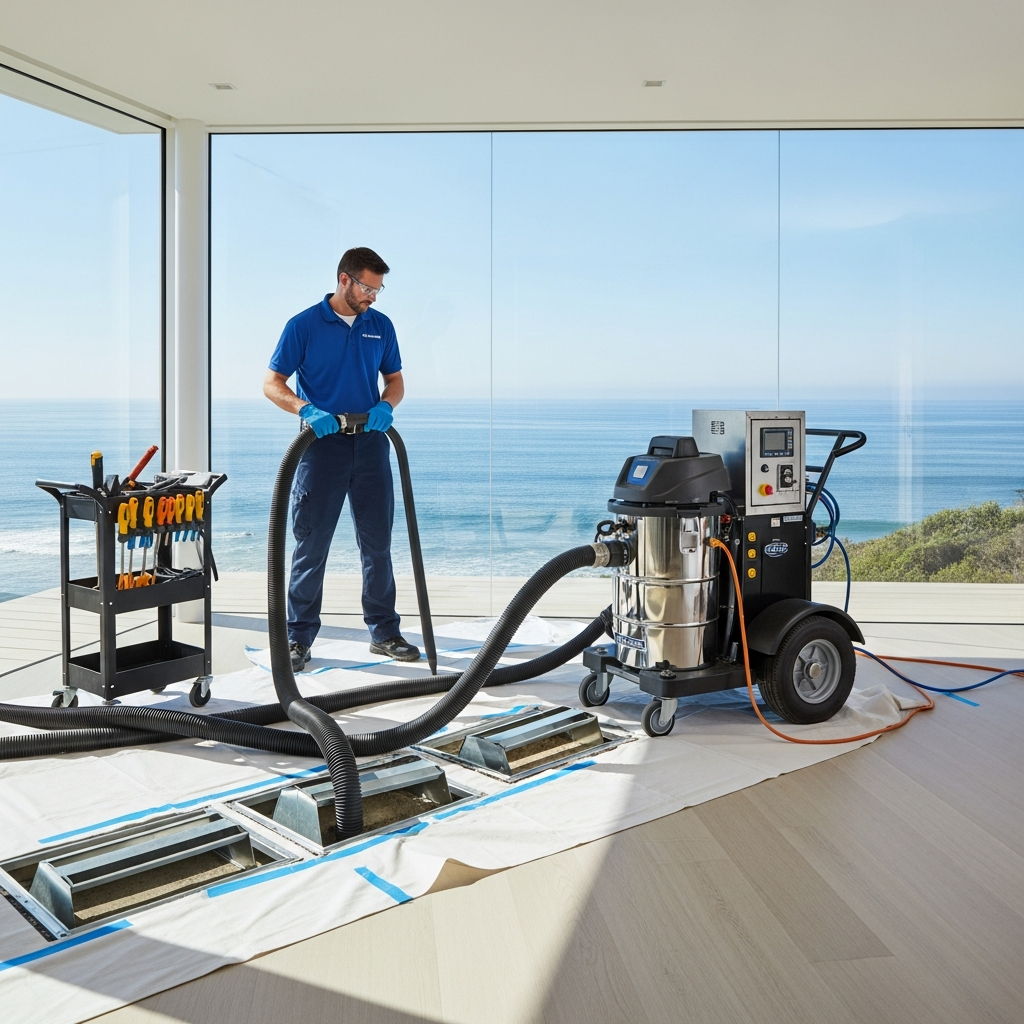
Professionals rely on negative-pressure vacuum systems to pull debris out of ducts while specialized brushes and air whips dislodge accumulations from the interior surfaces. Contact vacuuming may be used on accessible plenums and trunks, and antimicrobial treatments are sometimes indicated for specific concerns when supported by evidence from the inspection. The goal is always the same: remove contaminants without damaging liners, kinks, or dampers. Rushing or skipping agitation in favor of quick suction leaves behind residue, especially in flex and at bends where particulates lodge most stubbornly.
Equally important is protecting your living space. Registers should be temporarily sealed during setup to control airflow, and technicians should use drop cloths and corner guards to prevent scuffs. When the job is finished, every register is reinstalled securely, and the system is run to verify airflow and any damper positions. Reputable teams document before-and-after conditions with photos, which helps you see exactly what changed and why future maintenance will be easier.
Malibu’s Environmental Realities: Salt, Smoke, and Wind
Coastal influence is a constant teacher. Fine salt crystals combine with humidity to create a tacky film on metal, glass, and yes, duct interiors. That film grabs dust and can make registers look dull even when you clean them frequently. Inland, the Santa Monica Mountains contribute organic particulates during windy days, while wildfire seasons can layer soot and ash into ventilation systems even when flames never approach your home. These realities shape how often you might need attention and how crews tailor their approach to your property’s risk profile.
After smoke events, for example, technicians may recommend additional passes on returns, careful handling of lined ductboard, and special focus on filter racks and gaskets where odors can linger. Even if your HVAC remained off during poor air quality days, particulates can settle in unconditioned spaces and be drawn into the system once it restarts. A Malibu-specific plan anticipates these patterns and aims to reset your environment thoroughly.
Filter Strategy and Post-Cleaning Maintenance
A great cleaning is a reset, not a finish line. Once ducts are refreshed, filter strategy becomes your front-line defense. Talk with your technician about appropriate MERV ratings for your system, how often to change filters given your proximity to surf or canyons, and whether a higher-efficiency media cabinet or upgraded return filtration would be beneficial. Some Malibu homeowners benefit from adding a second return filter location or upgrading a leaky return plenum, small changes that yield big improvements in day-to-day air quality.
Equally, look at the home habits that influence buildup: windows thrown open on heavy marine layer mornings, pets that shed near return grills, construction dust from ongoing renovations, and fireplace use on cool evenings. The more you understand cause and effect, the more your freshly cleaned system will stay that way, extending the time between visits without sacrificing indoor air quality.
Interpreting Proposals With Confidence
When proposals arrive, read them for scope rather than speed. Do they specify the number of supply and return registers? Do they outline the process for agitation and debris removal, and mention surface protection inside your home? Are photo records included? Is coil cleaning addressed separately from duct cleaning when applicable? Clear, detailed language signals a team focused on results and accountability.
It also helps to evaluate communication. Malibu homeowners often juggle complex schedules, and properties may have special access instructions or quiet hours. Providers who proactively plan around these realities tend to deliver better outcomes. If a proposal seems too generic for your home’s layout or local conditions, ask for clarification. A quality company will welcome the conversation and refine the plan so you know exactly what to expect.
Timing Your Project Around Malibu’s Seasons
Between spring pollen bursts, summer marine layers, and late-year winds, timing can influence how clean your system stays post-service. Many locals prefer to schedule in early spring before peak onshore breezes or again after major wind events to clear what settled during the driest months. If you host frequent gatherings, plan for a window that avoids weekend traffic crunches on the PCH to keep the day smooth and predictable. Your schedule and the home’s exposure patterns matter more than any fixed calendar—select a window that fits your lifestyle and gives you a clean runway for the next season.
In the midst of planning, you might cross-compare approaches, references, and experience. Malibu is a niche environment, and providers who have worked canyon-to-coast understand how to adapt techniques to the microclimates. When you’re calibrating options, it can be helpful to ground your expectations in the fundamentals of thorough, professional air duct cleaning, then layer on the details that make your home unique.
How Malibu Home Design Influences Results
Architectural details aren’t just aesthetic; they shape airflow. Tall, glazed great rooms with clerestory returns behave differently from compact bedrooms with low supply vents. Long linear diffusers need different handling than classic grilles, and custom registers set into millwork require careful removal and reinstallation. Crews accustomed to Malibu’s design language anticipate these nuances and plan the work to protect finishes while still accessing what needs attention. The outcome is a system that both looks and functions cleaner, with even airflow restored across spaces that once felt stuffy or uneven.
Don’t overlook the attic and crawlspace story. In older homes, minor gaps can pull dusty air from those spaces into your returns, loading filters faster and casting a film across registers. Your technician may suggest sealing certain joints, improving return pathways, or adjusting damper settings to balance comfort. These recommendations enhance the value of the cleaning by addressing the upstream contributors that make ducts dirty in the first place.
Communication and Documentation
One of the most reassuring aspects of a well-run project is clarity at every step. Before work begins, you should understand which systems and rooms are included, how long the team expects to be onsite, and any preparation you should handle—like moving small items below high registers or securing pets. During the process, a lead tech should be available to explain progress and show findings that warrant attention. Afterward, a concise report with images closes the loop and becomes a baseline for future maintenance decisions.
With that documentation on hand, you can better track patterns over time. If your cliffside home sees more salt film each fall, you’ll know to pivot your schedule accordingly. If canyon breezes load returns faster in late summer, you’ll adjust filter changes. In Malibu, smart maintenance is about rhythm, not rigid rules, and clear records help you hit the right notes.
Common Misconceptions, Clarified
Some homeowners assume that spotless registers mean spotless ducts. In reality, grills are the tip of the iceberg; interior duct surfaces can harbor accumulations you don’t notice until airflow and indoor dust become issues. Others think a single quick pass with a shop vacuum equals a cleaning; professionals use high-powered negative air machines, specialized agitation tools, and containment practices that prevent redepositing debris in living areas.
Another myth is that coastal homes naturally stay cleaner because of ocean air. While sea breezes feel fresh outdoors, they carry fine moisture and salt that attract and hold particulates. That’s why Malibu properties—especially those right on the sand—benefit from a deliberate plan that respects the environment you love while reducing its impact indoors.
Preparing Your Home for a Smooth Visit
A little preparation goes a long way. You might clear floor space beneath returns, note any rooms used for remote work or naps so technicians can sequence quietly, and confirm gate codes or parking notes. Communicating about pets, alarm systems, and any delicate finishes near registers ensures the crew can move efficiently and thoughtfully through the day. The goal is a seamless experience that respects both your time and your space, leaving you with cleaner air and a home that feels cared for.
When the day wraps, take a moment to walk the home with your technician. Feel the airflow at vents that seemed sluggish before. Look at the photo documentation and talk through what those images reveal about your home’s patterns. That conversation cements the value of the service and shapes the next steps, whether that’s an upgraded filter plan or a simple reminder on your calendar to check returns after high-wind weeks.
FAQ: Malibu Air Duct Cleaning and Your Home
Q: How often should Malibu homeowners schedule duct cleaning?
A: Frequency depends on your exposure and lifestyle. Beachfront properties with open windows, homes near canyons with frequent winds, and households with pets often benefit from more frequent attention than well-sealed homes inland. After notable smoke events, consider an inspection to determine whether particulates settled inside the system.
Q: Will cleaning reduce dust on surfaces inside my home?
A: Many homeowners notice less dusting and clearer registers afterward, especially when cleaning is paired with improved filtration and minor air-sealing at returns. It won’t eliminate all dust—indoor activities and open-air living still introduce particles—but it often makes a visible difference.
Q: What if my ducts are older or made of mixed materials?
A: Mixed materials are common in Malibu. Professionals adjust techniques—gentle agitation for flex runs, careful contact vacuuming for rigid sections, and mindful handling of lined ductboard—to thoroughly clean without causing damage.
Q: Can I be home during the service?
A: Absolutely. Crews routinely work around families and pets, sequencing noisier steps and coordinating access room by room. If you work from home, let the team know so they can plan for quiet intervals when possible.
Q: Do I need antimicrobial treatments?
A: Only when supported by clear evidence and applied according to product and industry guidelines. Many homes benefit from cleaning alone. Your inspection should guide any additional steps, and reputable providers will explain the reasoning in plain language.
Q: How will I know the job was thorough?
A: Look for photo documentation, clear notes about which components were addressed, and measurable improvements in airflow. Ask questions and expect direct answers—transparency is a hallmark of professional work.
Ready to Breathe Easier in Malibu?
If you’re looking for a thoughtful, locally attuned plan for your home, now is a great moment to set up an assessment and map out next steps. Start with a provider who treats your property and schedule with respect, documents results, and understands our coast-to-canyon conditions. When you’re ready to move forward, choose proven air duct cleaning services that align with how you live, so your system stays cleaner longer and your home feels as refreshing inside as Malibu looks outside.