
When the Smoke Clears: Restoring Malibu Indoor Air After Wildfire Season
Wildfire season leaves more than headlines in its wake. Even when flames never approach Malibu’s neighborhoods, smoke can ride the wind from inland canyons and distant valleys, filtering into our homes through tiny gaps, open windows, and ventilation paths. The result is a film of ultrafine particles and a lingering scent that reminds you of smoky skies long after they’ve gone. Air duct cleaning becomes a powerful reset in this context, restoring the hidden pathways that carry comfort to each room and helping your home feel like itself again.
If you’ve ever stepped inside after a smoky day and caught that faint campfire note in a hall or bedroom, you’ve experienced how persistent residues can be. Removing them isn’t about a quick wipe at the registers; it requires a methodical approach to air duct cleaning that reaches returns, supply branches, and the key bends where particulates collect most stubbornly. Done right, the work clears debris, reduces odors, and gives your filtration strategy a fresh start, so you’re not fighting a losing battle against what settled during those hazy weeks.
Understanding What Smoke Leaves Behind
Wildfire smoke carries a complex mix of particles, from visible ash to ultrafine matter you can’t see. These particles behave differently inside a home’s HVAC system. Heavier debris might settle near returns and the first bends of supply trunks, while ultrafine particles can ride the airstream deeper, lodging in textured surfaces or along the gentle ripples of flex duct. The residues can hold onto odors that become most noticeable when the system first kicks on or when humidity shifts, such as during morning marine layers.
Because Malibu homes span everything from beachfront bungalows to hillside contemporaries, each system accumulates smoke differently. Open windows entice particulates deeper into the home, while tightly sealed builds may still draw smoky air through tiny gaps and passive vents. Understanding these patterns helps technicians target their work, focusing effort where it yields the most relief.
Why a Post-Season Reset Matters
After weeks of compromised air, your filter is only part of the story. Duct interiors continue to release what settled there each time the fan runs, a kind of slow-motion reminder of the season. A comprehensive cleaning removes that burden so your filters can focus on day-to-day dust and Malibu’s coastal particulates rather than remnants from the smoke event. Homeowners often report that rooms feel less stuffy, nighttime breathing eases, and that stubborn first-on odor fades or disappears.
Just as important, a reset allows you to reassess filtration. The right MERV rating, installed in a well-sealed rack, keeps your system efficient while capturing more of what flows through it. It’s the combination of clean ducts and smart filters that creates lasting improvement, especially when marine layers and canyon winds cycle through their seasonal routines.
The Professional Approach: From Inspection to Verification
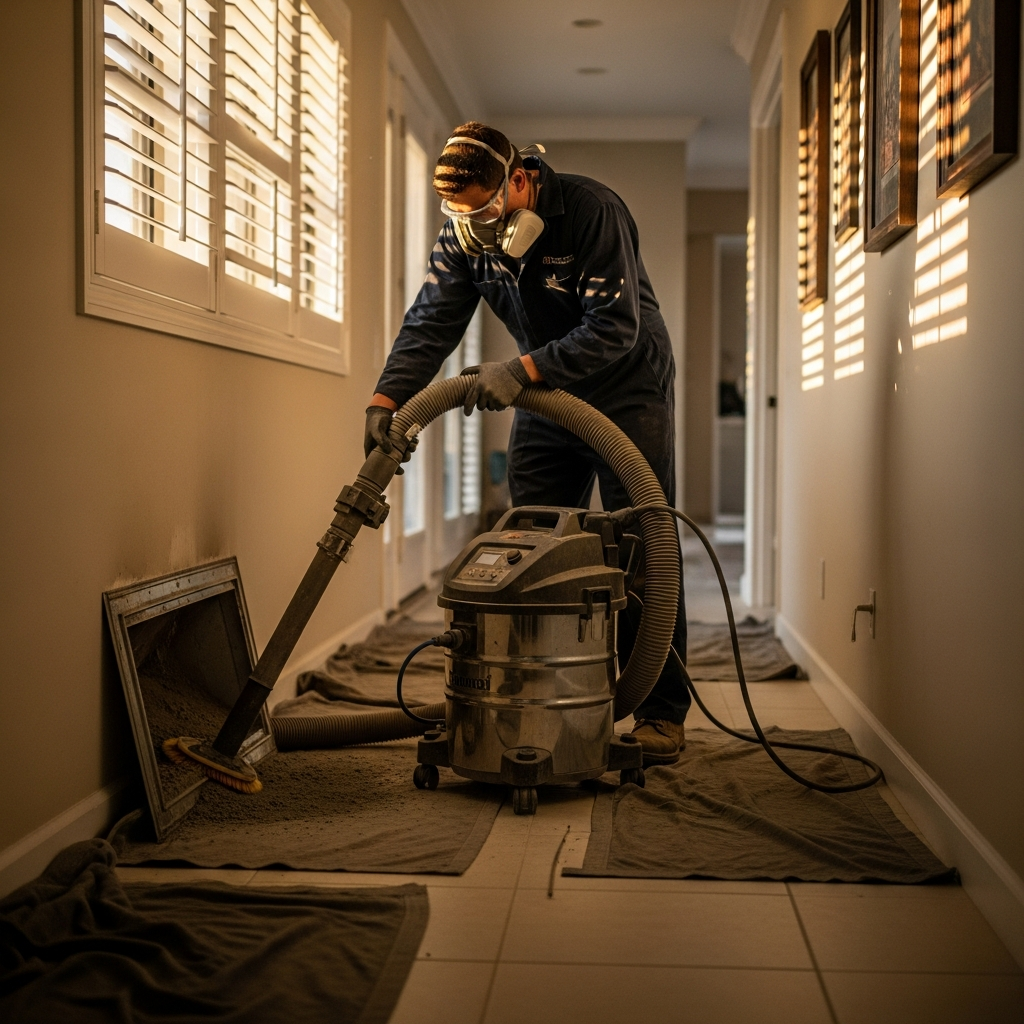
Effective cleanup starts with inspection. Technicians look at returns, supply runs, accessible trunks, and the air handler area, noting soot traces, staining, and any moisture that may have helped particles adhere. They select agitation tools appropriate to your duct materials—soft whips and brushes for flex, rotary agitation for metal, and careful contact vacuuming where surfaces are accessible. With a negative-pressure vacuum pulling debris away, the work progresses methodically, register by register, branch by branch, ensuring dislodged particles don’t escape into living areas.
Containment and protection remain priorities. Registers are sealed during setup, and crews lay down covers and guards to preserve finishes. At the close, teams reinstall registers, run the system to check airflow, and provide photo documentation of before-and-after conditions. This transparency gives you confidence that the reset isn’t superficial—it’s a measured intervention that addresses the actual residues inside your system.
Malibu’s Added Variables: Salt, Wind, and Microclimates
Wildfire smoke doesn’t arrive in a vacuum. In Malibu, it mixes with the realities of salt-laden air and wind-driven grit. Salt can create a slightly tacky film that grips fine smoke particles more tightly to surfaces, while wind funnels debris through commonly used doors and windows. Coastal mornings bring moisture that can intensify odors until the air warms and dries. Technicians familiar with these microclimates tailor their approach to these conditions, often prioritizing returns and specific bends where composite films build up fastest.
In canyon neighborhoods, expect extra attention on the returns and the trunks serving living areas that open frequently to decks and patios. On the beach, long linear diffusers and high clerestory returns need careful, well-protected access. The goal is to lift the combined residues—salt film plus smoke—so the home’s baseline feels clean and neutral again.
What You’ll Notice After a Thorough Cleaning
Homeowners often describe three immediate changes. First, that telltale smoky note at startup diminishes or vanishes. Second, registers look refreshed, without the dull cast that smoke and salt film create over time. Third, rooms feel more even in temperature and less stuffy, a sign that airflow is moving through less restrictive ducts. These gains compound when paired with a sensible filter plan and small home habit tweaks, such as using the range hood consistently and being strategic about open windows on heavy-smoke days.
For families with sensitive members, the difference can be deeply reassuring. While no home can be sealed from nature entirely, a clean system and aligned filtration provide a meaningful buffer, reducing the indoor load of residues that irritate lungs and noses.
Filter Strategy After Smoke
Filters are your forward defense, but they only perform as designed when they fit properly and your system can maintain healthy airflow. Post-cleaning is the ideal moment to confirm your MERV rating suits your equipment and lifestyle. A higher-efficiency filter may capture more ultrafine particles, but it must be balanced with airflow to avoid stressing the fan. Ask your technician about sealing any gaps at the filter rack, as even small leaks allow unfiltered air—often the very air carrying residual odors—to bypass the media.
Timing matters, too. After heavy smoke periods or windy weeks, check filters sooner than usual. If your home sits right on the sand or you love throwing the doors open at sunset, your filters will tell that story faster. A quick glance and a sensible change cadence keep gains from cleaning intact for longer.
Minimizing Re-Exposure as Seasons Shift
Nature will keep doing its thing—fog in the mornings, breezes in the afternoons, and occasional smoky days as distant fires burn. You can’t control the sky, but you can fine-tune habits indoors. On days when the air looks hazy, lean on your system’s recirculation and filtration rather than open windows. Use the range hood when cooking, since cooking aerosols stick to surfaces and amplify odors. Wipe registers gently when housekeeping turns over the rooms; a light, regular touch prevents films from reestablishing quickly.
Consider a brief follow-up inspection if you notice lingering scents weeks after cleaning. It may be that a particular return cavity or bend is holding onto residues, and a targeted pass will finish the job. Malibu’s homes are varied and personal; your system’s story merits the same tailored attention.
Protecting Finishes While Reaching Every Register
After fire season, the urge to move fast is understandable. Yet speed without surface protection invites scuffs or paint nicks around high returns and custom diffusers. Experienced Malibu crews come prepared with corner guards, drop cloths, and the right tape methods for delicate finishes. They climb carefully to access clerestory returns, remove and reinstall linear diffusers without bending them out of alignment, and stage equipment to keep pathways clear. Those choices matter as much as the cleaning itself, especially when you love your home’s architectural details.
Every register tells part of the story. Bedrooms near patios, kitchens that anchor family life, and hallways that channel ocean breezes all accumulate residues differently. A methodical sweep that considers these rhythms produces the kind of whole-home clarity you notice the moment you walk back in from the deck.
What Not to Expect—and What to Do Instead
Don’t expect a single miracle product to erase smoke odors in an instant. Quick fixes often mask rather than remove residues. Instead, rely on inspection-driven cleaning, appropriate agitation and vacuum, and thoughtful filtration. If a technician suggests steps beyond cleaning, they should be grounded in what the inspection revealed and explained in plain terms. A modest change—like sealing a leaky return or upgrading filter media—often delivers more lasting benefit than flashy, one-time treatments.
Likewise, don’t expect that closed windows alone kept your system pristine. Ultrafine particles travel and settle in surprising places. The good news is that a focused, professional reset reclaims the system and lets you move forward with confidence.
Frequently Asked Questions: Post-Wildfire Duct Cleaning in Malibu
Q: My home never smelled strongly of smoke. Do I still need cleaning?
A: Not always, but an inspection is wise. Ultrafine particles can settle silently and show up as subtle odors later or as faster-than-usual filter loading. A quick evaluation clarifies whether cleaning will help.
Q: How soon after smoke events should I schedule?
A: Once outdoor air returns to normal and you’re regularly running your system again, an inspection can confirm conditions. Many homeowners choose a reset soon after the season so filters work on current air, not last month’s residues.
Q: Will cleaning remove all odors?
A: It typically reduces or eliminates the smoky note by removing residues where they linger most. Persistent scents may point to specific cavities or habits, which targeted steps can address.
Q: Can I stay home during the process?
A: Yes. Crews sequence their work to respect your routines, communicate about noise, and protect finishes as they move through the home.
Q: What about coastal salt mixing with smoke?
A: Salt film can help particles adhere. Technicians tailor agitation and pay special attention to returns and bends where that composite residue sticks most stubbornly.
Q: How will I know it worked?
A: You’ll notice improved neutrality of indoor scent, refreshed registers, and more consistent comfort. Documentation with before-and-after images provides visual confirmation.
Reclaim Malibu Air, Room by Room
When smoke season passes, it feels good to reset your home to the clarity you expect from coastal living. Partner with a team that understands Malibu’s mix of salt air, wind, and architecture, and that documents every step so you see the difference yourself. When it’s time to schedule, choose experienced air duct cleaning services and breathe deeply—your home is ready for the next clear-sky day.