
Comfort inside a Malibu office is never just about temperature. It is about focus in a conference room with glass walls overlooking the Pacific, productivity in a studio off PCH where doors open and close with the rhythm of deliveries, and steady air in boutique spaces at the Civic Center where foot traffic ebbs and flows throughout the day. Commercial air conditioning here works in a uniquely coastal context, managing salt air, shifting humidity, and the realities of buildings that blend work with the casual openness of beach life. That is why a disciplined approach to air maintenance pays dividends well beyond the mechanical room.
Start with the building’s rhythm. Many Malibu offices run on staggered schedules—creative teams that start late and stay late, resident services that host evening events, or wellness studios with peak occupancy at sunrise and sunset. Maintenance plans should mirror that cadence so inspections, cleanings, and tests happen when they will be least disruptive and most informative. A rooftop unit that hums along on a quiet Saturday morning may behave differently on a busy Tuesday afternoon when conference rooms fill and outside doors swing wide to welcome clients.
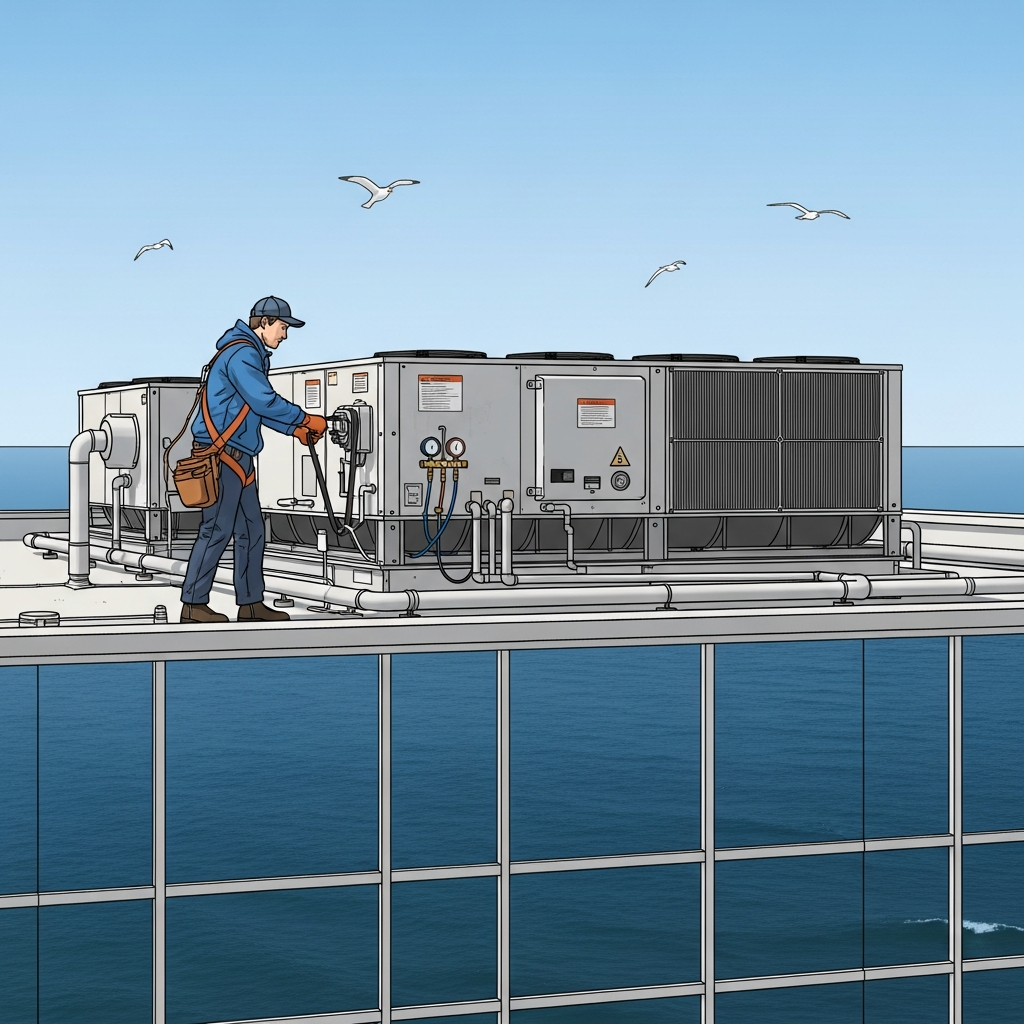
Rooftop packaged units are common along the coast, and they deserve thoughtful, regular attention. Salt mist and onshore breezes carry a blend of fine particulates that settle into coils and electrical compartments. A scheduled coil wash with the right cleaner keeps heat exchange efficient and extends fan life. Inspecting belt tension, verifying proper pulley alignment, and checking motor bearings prevent the kind of sudden squeal that echoes down an atrium. At the same time, technicians should test capacitors, contactors, and disconnects, since small faults under coastal exposure become big problems when a heat wave rolls through and every tenant notices.
Ventilation is where office maintenance intersects with health and policy. CO2 levels rise quickly in meeting rooms with dramatic views and tight seals. Economizers can save energy by drawing in cool outside air on mild days, but they must be calibrated, and their dampers kept clean. Malibu’s mild mornings tempt systems to open wide, while afternoons may demand closure if marine haze thickens or traffic fills the air with fine particulates. A well-tuned system senses those changes and adjusts without fanfare. Filters should be chosen for efficiency your blowers can sustain, and having a higher-grade option on hand for smoky periods allows facilities to maintain indoor air quality without choking airflow.
Water management is another quiet pillar of commercial reliability. Condensate lines that meander through ceilings and down walls must stay clear, especially in buildings with expansive glass that cools and dehumidifies significant volumes of air. Secondary drain pans and float switches need to be tested so a single algae bloom does not become a ceiling stain over a reception desk. In my experience, a quick, methodical wet test during maintenance tells you more than any visual check because you see water move, not just hope that it will.
Controls and zoning deserve more than a cursory glance. Offices with large windows on the ocean side and shaded workspaces inland can develop temperature microclimates that frustrate teams. Calibrating thermostats, validating sensor placement, and reviewing schedules avoids the classic tug-of-war between too cold and too warm. A building management system is only as effective as the data it reads; relocate a sensor from a sunlit niche to a representative zone, and the whole floor settles into calmer operation.
Commercial maintenance in Malibu also means thinking about noise. Rooftop fans can transmit vibration into lightweight structures, while older ductwork can pop and creak when dampers swing too aggressively. Adding soft-start controls, balancing dampers with a light touch, and tightening panel fasteners can turn the system’s soundtrack from intrusive to transparent. After all, great ideas rarely bloom in a room where the AC argues with every sentence.
Midyear, I like to revisit the system during a normal workday. That is when you hear the economizer take a breath, see how filters are aging under real occupancy, and observe whether grills are set for comfort rather than convenience. It is also a great moment to reaffirm a cadence of professional air maintenance—the predictable routine that keeps coils clean, sensors honest, and drains clear just as the summer tourism wave makes parking tight and service windows precious.
For multi-tenant spaces, communication is maintenance. Tenants note patterns long before gauges do: the east suite that feels muggy after lunch, the creative loft that warms up when a studio light array fires, the boutique whose door is propped open on weekends. Gathering those observations and folding them into duct balancing or schedule changes turns complaints into data. Over time, that habit builds trust and drastically reduces surprise calls.
Do not overlook the building envelope. In Malibu’s salt breeze, weatherstripping and door closers work hard. Gaps around loading docks or ground-floor entries can make compressors overachieve just to keep up with infiltration. A few minutes with smoke pencils during a maintenance visit can reveal the drafts that undermine comfort. Coupled with sun management—interior shades that blunt late-afternoon glare—you lighten the cooling load and let your AC run in its sweet spot.
Electrical health is foundational. Coastal air does not just corrode metal; it also wicks into connections. Torque checks on lugs, visual inspection for discoloration at contact points, and verification of balanced three-phase power keep motors running within specifications. Logging amperage under typical and peak loads builds a simple baseline so you can see trouble coming long before it breaks stride.
If your office leans on specialty equipment—server closets, recording studios, galleries with sensitive works—then redundancy and rapid response matter. Split systems serving those rooms should be cleaned with the same care as the main rooftop units, and sensors should be validated so they sound the alarm accurately. Battery backups for controls, periodic test runs during off-hours, and clean drain pans are minor tasks that prevent major headaches when an event or deadline approaches.
A word on documentation: maintenance that lives only in an invoice misses the chance to teach. I prefer leaving behind concise notes—filter condition, coil status, amperage readings, drain test results, control settings—so managers have a story they can reference. That history makes the next visit smarter and helps justify upgrades when data shows a trend, not just a hunch.
Finally, Malibu offices thrive on comfort that employees and clients do not have to think about. The building breathes, rooms feel even, and the mechanical soundtrack fades into the background of keyboards, quiet conversation, and the distant hush of the ocean beyond the glass. When maintenance operates at that level—anticipatory, respectful of schedules, tuned to the microclimate—everyone inside gets to focus on their work instead of the thermostat.
How often should a Malibu office schedule professional AC maintenance?
Plan for a comprehensive spring visit and a midseason check, with quick touchpoints after significant wind events. Buildings close to the ocean or with heavy use benefit from additional coil inspections and filter reviews in late summer when loads and occupancy peak.
What filters work best in coastal commercial spaces?
Choose filters that provide strong capture efficiency without over-restricting your blowers. Keep a higher-grade option available for smoky or hazy days, then revert once outdoor air clears. The key is consistency and monitoring pressure drops so motors do not strain.
How can we reduce hot and cold spots between glassy conference rooms and interior desks?
Calibrated sensors, thoughtful thermostat placement, gentle damper adjustments, and, where appropriate, zoning deliver balance. Pair those steps with envelope tweaks—shades, door closers, and weatherstripping—to cut infiltration and solar spikes.
What maintenance tasks most often prevent leaks and ceiling stains?
Regular condensate line flushing, tablet treatments against algae, verified float switch operation, and a simple wet test keep water moving as it should. Catching a slow drain in spring prevents a surprise above reception in July.
How do we prepare for days with wildfire smoke or heavy marine haze?
Pre-stage filter upgrades your blowers can handle, refine economizer logic to minimize intake on poor-air days, and schedule a post-event check to ensure coils remain clean. Clear tenant communication helps everyone understand why the system behaves differently until the air improves.
What signals suggest our rooftop units need immediate attention?
Squealing belts, frequent short cycling, musty odors at startup, uneven discharge temperatures, tripped float switches, or breakers that occasionally pop are all early warnings. Prompt response protects comfort and avoids cascade failures.
Ready to keep your Malibu office steady and comfortable?
Establish a practical plan for professional air maintenance, align visits with your work rhythms, and let trained eyes tune the details that matter most on the coast. Your team will feel the difference in quieter rooms, steadier temperatures, and an office that simply works—no drama, just dependable comfort.