
Coastal air has a way of refreshing the spirit and testing the metal. In Malibu, where the smell of salt and eucalyptus rides the afternoon wind, our homes enjoy mild seasons but contend with one persistent reality: salt-laden moisture touches everything. For air conditioning systems, that means maintenance is not an optional chore tucked into a busy calendar; it is the quiet practice that keeps cool air steady through foggy mornings and golden, late-day heat. I have spent years maintaining systems from the bluffs above Point Dume to the tucked-away canyons off Kanan, and the pattern is always the same—regular, coastal-specific care turns potential headaches into easy, predictable visits. If you own a beachside bungalow or a hilltop retreat, this guide will help you build a maintenance rhythm that preserves comfort, efficiency, and peace of mind, beginning with a focus on reliable air conditioning service tailored to Malibu’s shoreline.
Why Coastal Maintenance Is Different
Salt is a gentle corrosive, and it is always present along our coast. Even a light film carried by morning fog gradually settles on condenser fins, fan blades, and electrical connections. Over time, this film attracts dust, which thickens into a felt-like layer that slows airflow and reduces heat transfer. Inside the house, filters working against an open-door lifestyle—kids moving to and from the beach, dogs tracking fine sand—load faster than inland systems. The result is a cooling system that has to work harder to do the same job, making noises you did not hear last season and consuming more energy to hold the line on those first truly warm afternoons.
Understanding these dynamics reframes maintenance. Instead of a once-a-year ritual, coastal homes often do best with two seasonal visits—one before the warm season to ensure strong performance and one afterward to clean, inspect, and reset the system for the cooler months. In between, a handful of homeowner habits keep small issues from growing into expensive surprises.
Outdoor Coil Care: The Front Line
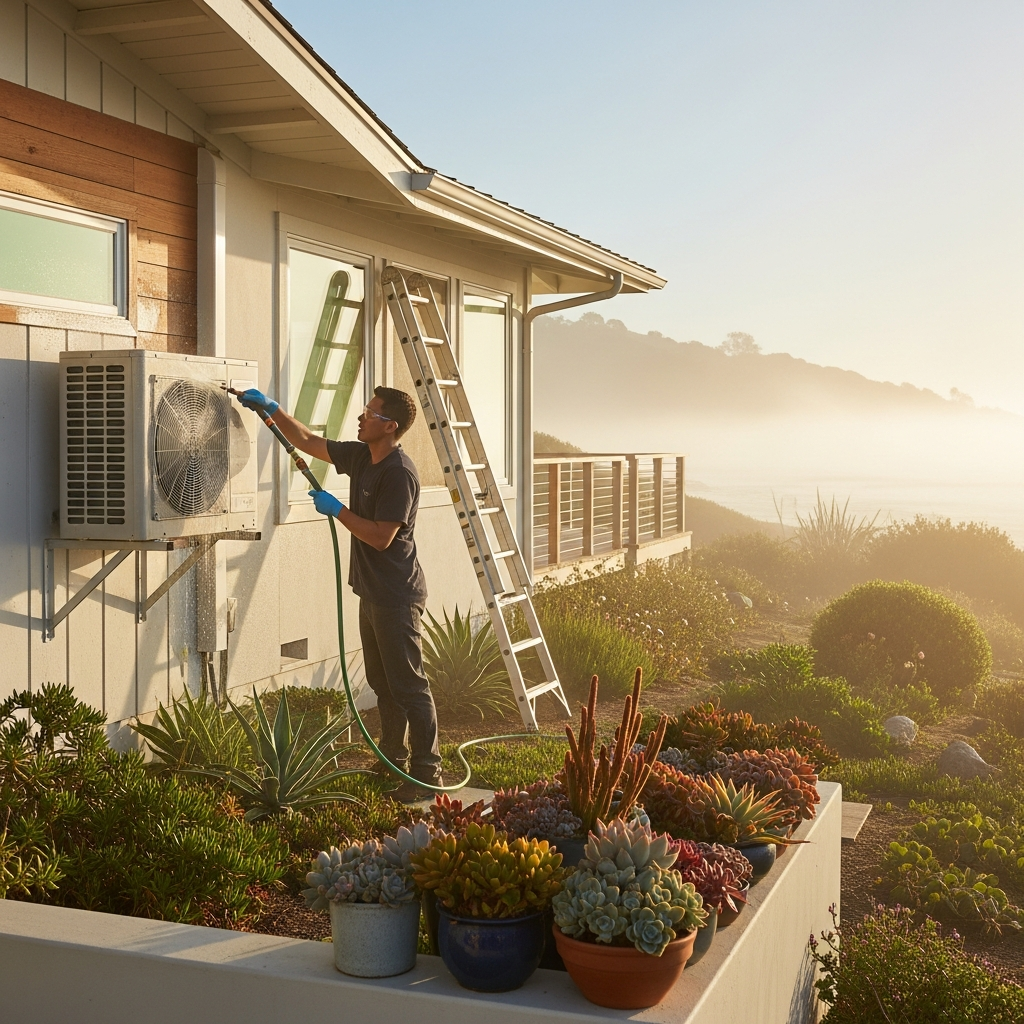
The outdoor unit lives in the salt air and deserves gentle, consistent attention. We start with a careful visual inspection to assess the fins, cabinet, and fasteners. If the home sits close to the water or in an open corridor like Broad Beach, we often see accelerated fin oxidation. Cleaning here is an art: never high pressure, never harsh chemicals. A low-pressure fresh-water rinse—directed parallel to the fins to avoid bending—can lift salt and dust without damaging the delicate metal. When needed, we follow with a fin-safe cleaner designed for coastal coils, applied and rinsed thoroughly. Once clean, we check for fin straightness, clear debris from the base, and verify that the condenser fan runs smoothly and quietly.
Placement matters in Malibu. If irrigation overspray reaches the unit, we adjust heads or shields to keep water off the cabinet. If strong afternoon winds buffet the fan, we consider subtle wind baffles or a slight repositioning to protect performance. We also confirm that vegetation is trimmed to give the unit breathing room, while keeping plantings in place to filter salt where practical.
Indoor Components: Clean Air In, Cool Air Out
Indoors, clean airflow is everything. We start with the return filter. In homes with open doors and pets, monthly checks make sense during summer, even if replacement is not always needed that often. The goal is to keep the filter clean enough to prevent pressure spikes that strain the blower motor. We then examine the evaporator coil. A dust-and-salt patina on the coil acts like a blanket, insulating it from the air. If we find buildup, we use coil-safe cleaners and gentle rinsing to restore the fin’s ability to shed heat. Clean coils mean colder supply air and lower energy use.
Blower wheels also collect fine dust and biofilm over time. A dirty wheel changes its aerodynamic profile, reducing airflow and efficiency. If inspection shows buildup, we remove and clean the wheel, then balance it for smooth operation. The result is a quieter system that moves more air with less effort. While there, we inspect the air handler cabinet for air leaks, seal gaps, and check that insulation is intact and dry.
Condensate Management: Keeping Water Where It Belongs
On humid mornings, your system wrings moisture from the air and channels it into the condensate pan and out through a drain. Algae and fine debris can clog that line, especially in long horizontal runs common in Malibu’s hillside homes. During maintenance, we treat the pan with bio-safe tablets when appropriate, clear the line with nitrogen or a wet/dry vacuum at an accessible cleanout, and confirm that any float safety switches work properly. We also verify that traps are correctly configured to prevent air bypass and odors. Good drainage is a quiet hero of reliable cooling; when it is ignored, pan overflows and sudden shutdowns follow.
Where condensate pumps are used, we test the pump function, flush the reservoir, and inspect the check valve. A sticky valve can cause backflow that shows up as an intermittent shutdown, and cleaning it before summer saves a frantic service call on a hot afternoon.
Electrical Health: Stable, Tight, And Clean
Salt air does not only attack metal fins; it also creeps into electrical contacts. As part of maintenance, we inspect contactors for pitting, test capacitors under load, and verify that wire terminations are tight and free of corrosion. We examine the disconnect, check the breaker condition, and measure voltage under load to ensure the system is not suffering from drops that will stress components. In Malibu, where afternoon demand can surge, a system on the edge of a voltage problem needs attention before heat season starts in earnest.
While testing, we listen for the subtle signs of wear—an outdoor fan with a bearing starting to sing, an indoor blower that takes a beat too long to come up to speed, or a compressor whose starting current is creeping higher year over year. These are the clues that allow proactive repair rather than reactive scrambling.
Ductwork: The Hidden Pathways
Even a perfectly tuned system underperforms if ducts are leaking or undersized. During maintenance, we inspect accessible ducts for obvious damage, disconnected runs, and signs of rodent intrusion. We look for kinks, crushed flex sections, and unsupported spans that collapse under their own weight. Static pressure readings at the air handler help us infer restrictions, and air temperature at key supplies tells us whether the cooled air is reaching rooms as intended. If needed, we recommend sealing and insulation upgrades that pay back in quieter operation and steadier comfort, especially in rooms over garages or at the ends of long runs common in larger homes.
Filters, IAQ, And Malibu’s Rhythms
Filtration decisions balance air quality with airflow. In coastal homes where doors and windows open frequently, slightly lower MERV filters can sometimes be the wiser choice to protect airflow while still capturing the majority of particles. If sensitivities exist or wildfire smoke becomes a seasonal factor, we can boost filtration or add dedicated IAQ components—such as an electronic air cleaner or an energy recovery ventilator—that integrate with the cooling system without overwhelming it. The key is to tune solutions to how you live. A home that hosts frequent gatherings may need more robust odor and particle management than a quiet retreat up a canyon, and maintenance is the moment to keep that conversation alive.
Protective Coatings And Hardware Choices
For homes closer to the water, applying a protective coil coating or choosing marine-grade fasteners during equipment replacement extends service life significantly. During maintenance visits, we assess the ongoing integrity of coatings, touch up where appropriate, and note any galvanic corrosion around dissimilar metals. Attention to these details makes next season’s maintenance easier and keeps the system looking as good as it performs.
Scheduling That Fits Malibu Life
Timing matters. We often schedule pre-season maintenance in late spring, after the heaviest rains have passed but before the first heat waves. Post-season maintenance arrives when the calendar eases, often in early fall, to remove salt and dust accumulated through summer. Within those windows, we tailor to your schedule—work-from-home needs, school pick-ups, and the ebb and flow of guests—so that the visit feels seamless.
In the middle of all these details lies a simple promise: consistency pays off. Systems that receive regular, coastal-aware maintenance break down less, recover faster if something does go wrong, and run more quietly day to day. Your Malibu home should feel composed no matter what the weather brings, and that is exactly what this approach delivers. If you want your air conditioning to feel almost invisible—just a soft background hum and clean, cool air—maintenance is how you get there.
Homeowner Habits That Help
Between professional visits, a few habits go a long way. Check and replace filters regularly during summer. Keep outdoor units clear of beach chairs, surfboards, and stored items that may migrate toward the side yard during busy weekends. Rinse coils lightly with a garden hose a few times each season if your home sits close to the water, taking care to spray gently and parallel to the fins. Shade sun-exposed thermostats and avoid placing heat-generating lamps nearby. Finally, listen to your system. New noises, smells, or behavior changes are signals worth noting; catching them early makes for easy fixes.
What A Maintenance Visit Feels Like
A well-run maintenance visit is calm and thorough. We arrive with clear expectations of timing, protect flooring and finishes as needed, and begin with a conversation about how the system has behaved since the last visit. After cleaning and inspection, we test under load—verifying temperatures, pressures, and control responses—then share what we found and what, if anything, needs attention next. You are left with a simple summary and the confidence that your home is ready for the season.
FAQ: AC Maintenance For Malibu Coastal Homes
Q: How often should I schedule maintenance? A: Twice yearly is ideal for most Malibu homes—once before the warm season and once after. Homes very close to the water may benefit from an additional coil rinse mid-summer.
Q: Can I rinse the outdoor coil myself? A: Yes, with care. Use low-pressure water, spray parallel to the fins, and avoid harsh cleaners. For deeper cleaning, let a professional use coil-safe products and proper techniques.
Q: What filter should I use? A: Choose a filter that balances air quality with airflow. Many coastal homes do well with mid-MERV filters, checked monthly during summer. If smoke or sensitivities are a concern, discuss options that maintain airflow while improving filtration.
Q: Why does my system smell musty at startup? A: Moisture and dust on the coil or in the drain pan can produce odors. Maintenance that cleans coils and treats the condensate system typically resolves the issue.
Q: Does salt air void equipment warranties? A: No, but manufacturers expect reasonable maintenance in coastal environments. Protective coatings and documented care help ensure support if issues arise.
Q: What are signs that corrosion is becoming a problem? A: Flaking on cabinet surfaces, crumbling fin edges, rust on fasteners, and greenish oxidation on copper are clues. Early intervention slows progression.
Q: Will maintenance reduce my energy bill? A: Clean coils, proper airflow, and verified refrigerant charge improve system efficiency, which typically lowers energy use during peak months.
Keep Your Malibu Home Calm And Cool
If it has been a while since your last service, or if you are preparing for guests and want everything to feel just right, schedule coastal-smart maintenance now. We will clean, tune, and document your system’s health so you can glide through the season without surprises. For attentive, local air conditioning care that respects the ocean and your time, reach out today and enjoy a home that stays effortlessly comfortable.