
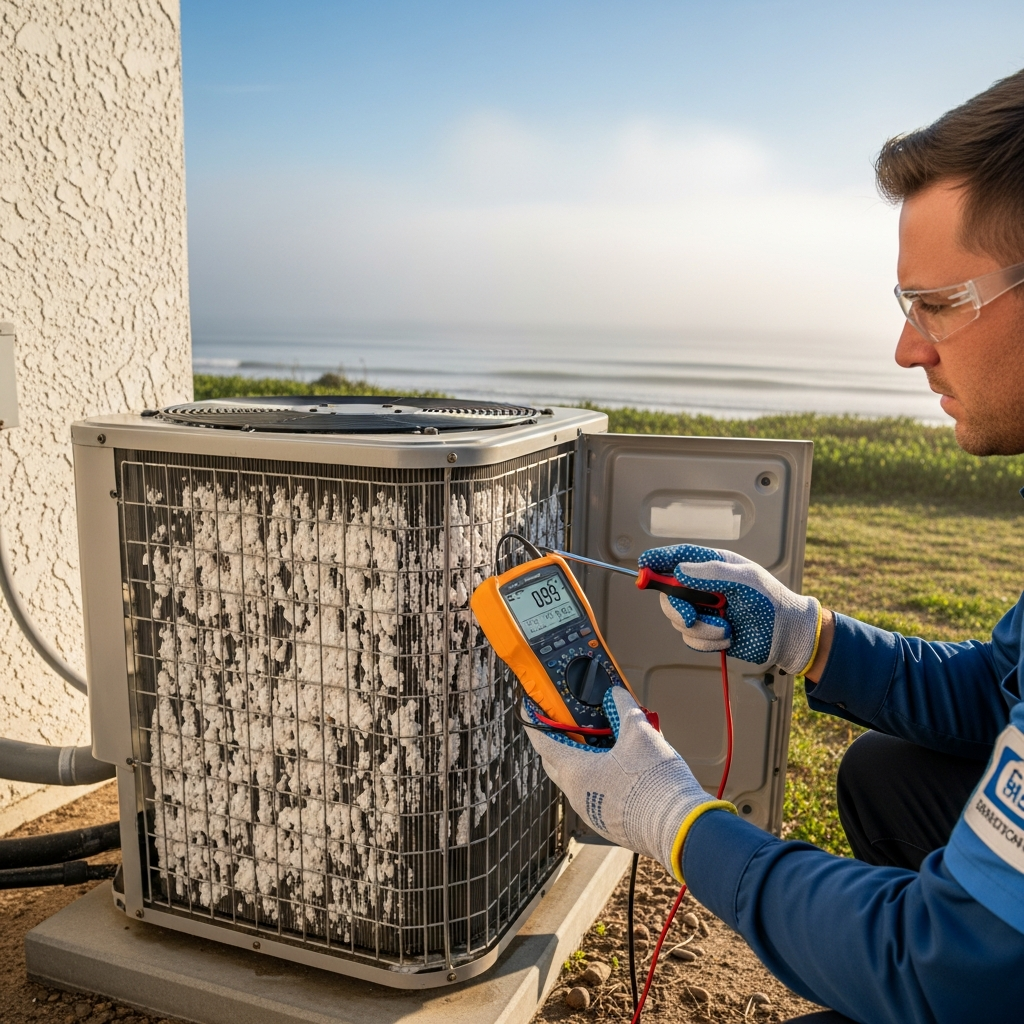
If you live in Malibu, you know that a home by the Pacific is both a gift and a responsibility. The ocean breeze cools the evenings, but the same salty air slips into every crevice of your house and, over time, into the delicate parts of your cooling equipment. I’ve spent years helping homeowners in La Costa Beach, Point Dume, and the Malibu Canyon corridor keep their systems running when summer’s marine layer turns sticky and the afternoon sun bakes the stucco. When you hear an unfamiliar hum from the outdoor unit or feel rooms warming up faster than they used to, prompt, locally informed action matters. That’s where an experienced eye for coastal wear and a practical plan for air conditioning repair can make all the difference.
Malibu’s microclimates add nuance to every cooling conversation. In the morning, fog often pushes inland and drapes the coastline; by midafternoon, the wind shifts, the fog burns off, and temperatures can swing quickly. Systems cycle longer during those transitions, which means minor issues are exposed and small inefficiencies become more apparent. If you’ve noticed your system needing a longer run to achieve the same comfort, or you’re hearing fans spool up more often than they used to, the coastal environment may have accelerated wear on components like contactors, capacitors, or fan motors.
Why coastal homes need a different repair approach
Salt is the silent saboteur. It rides in on the breeze and settles on the condenser coil fins, where it attracts moisture and begins a slow process of oxidation. Over months and years, this corrosion narrows the gaps between fins, reducing airflow and forcing your compressor to work harder. Electrical parts aren’t immune either; blade connectors, low-voltage wiring, and exposed terminals can pit and develop resistance, turning what should be a crisp electrical signal into heat and intermittent performance. A repair in Malibu should therefore start with a coastal checklist—inspect for salt deposits, check coil fin integrity, test electrical resistance at connections, and verify proper airflow with the oceanside environment in mind.
Then there’s sand and organic debris. The Santa Ana winds and weekend beach traffic tend to stir up grit that gets sucked into outdoor units, particularly those placed near driveways or low privacy hedges. Debris can lodge at the base of the condenser, trapping moisture and causing rust at fasteners and the unit’s pan. I’ve seen homeowners think they had a refrigerant problem when the actual culprit was a smothered coil and a motor that couldn’t breathe. A Malibu-savvy technician knows to clear the base, flush the coil from the inside out, and make sure condensate paths are unobstructed.
Common symptoms and what they really mean here
Warm air at the registers often points to low refrigerant, but along the coast, it’s just as often an airflow problem caused by corroded coil fins or an outdoor fan that’s slowed from bearing wear. A rattling sound you might write off as loose panel screws can instead be a fan blade reacting to salt pitting, slightly out of balance and threatening the motor over time. When thermostats struggle to hold setpoints during marine layer mornings, I look first to the sensors and control boards; moisture ingress from the cool, damp air can lead to inconsistent readings that mimic a mechanical fault. Malibu’s air is kinder to compressors than to the smaller support components—repair strategies should reflect that reality.
Short cycling—frequent starts and stops—can result from a tired capacitor or a corroded pressure switch. In hillside homes where outdoor units perch on steel platforms, vibration can loosen electrical terminations and contribute to the same symptom. Ocean breezes also affect static pressure in outdoor spaces, making poor duct sealing show up as whistling near roofline registers. A good repair investigation tests more than just the unit; it listens to the whole house, especially the envelope and ducts, to find what the coastal wind is exploiting.
What a thorough Malibu repair visit includes
When I’m called to a repair in a Malibu Colony bungalow or an estate off Encinal Canyon, I start with a conversation. How long has the symptom been present? Is it different early in the morning than late at night? Have there been recent high-wind days or backyard landscaping projects that kicked up dust? Once I have that context, I verify power quality and voltage drop, then open the condenser cabinet for a visual and tactile inspection. I check the coil for salt crusting, assess fan motor play, and test capacitors under load rather than just by rating. I move indoors next to verify filter condition, blower wheel cleanliness, and system static pressure, because coastal homes often have eclectic remodeling histories that create duct imbalances.
If refrigerant pressures point to a leak, the hunt is deliberate. Coastal micro-leaks can hide at braze joints and service valves that look fine to the eye. I use electronic detection and, when necessary, nitrogen pressure with a trace to confirm. The goal is not just to top up but to identify the weak link, correct it properly, and protect it from future corrosion with the right materials and sealants. I also evaluate condensate drainage; in Malibu’s damp mornings, algae and biofilm grow fast in traps and pans, and a blocked line can masquerade as a cooling failure when the system’s safety switch trips.
Repair today, resilience tomorrow
Good repair work for a coastal home blends immediate fixes with preventive steps that reduce the chance of repeat calls. After resolving a failed component, I’ll recommend protective measures that fit your home: coil coatings rated for coastal environments, stainless fasteners where practical, UV-resistant wire jackets, and strategic plantings to deflect wind-blown sand without restricting airflow. Simple changes like moving a trash enclosure that’s too close to the condenser or adjusting irrigation to avoid overspray onto the unit can add years of service life.
Inside, I often focus on filtration strategy. Malibu’s salt and dust mixture benefits from a filter plan that balances capture with airflow. That might mean stepping up to a higher-quality media filter while ensuring the return is sized to prevent strain on the blower. In homes with occasional wildfire smoke, selecting filters with better smoke capture can protect both lungs and equipment without making the system labor unnecessarily.
Choosing a repair partner who knows the coast
When you’re deciding whom to call, look for technicians who can talk confidently about salt air mitigation and who have examples from nearby neighborhoods, not just generic city experience. Ask about their approach to protecting new parts from corrosion and how they test electrical integrity in a damp environment. The right partner will explain how a small fix today dovetails with your long-term plan, whether that’s stretching the life of an older condenser or mapping a path toward a future upgrade that matches Malibu’s Title 24 considerations and your home’s aesthetic.
In the middle of a heat wave, quick response time matters, but so does the caliber of the work. Good coastal repair means verifying fan speeds, documenting pressures and temperatures, and confirming performance during those morning fog cycles when many systems behave differently. It also means scheduling a follow-up to see how the unit settles after a deep clean and component replacement, because coastal variables aren’t always obvious in a single visit. If you’re aiming to restore steady, efficient cooling that keeps pace with Malibu’s rhythm, pairing urgent fixes with that level of attention brings peace of mind. And speaking of peace of mind, reliable air conditioning is about more than comfort; it protects finishes, keeps humidity in check, and allows you to enjoy those ocean sunsets without second-guessing your thermostat.
When repair intersects with design
Many Malibu homeowners care deeply about the look and sound of their outdoor spaces. Repair planning should respect that. If your condenser resides near a deck or a meditation corner, choosing a quieter replacement fan motor or rebalancing the blade after corrosion cleanup can cut noise considerably. Repositioning equipment to capture prevailing breezes without inviting direct salt spray is another subtle but meaningful improvement. During repair, we can route wiring more cleanly, secure panels to reduce rattles, and consider wind baffles that don’t impede serviceability.
Finally, documentation is a gift to your future self. After a coastal repair, I leave homeowners with a note on what we found, what we corrected, and what to watch for next. I’ll suggest a seasonally timed checkup, especially following extended foggy periods, so that early hints of corrosion or moisture intrusion never get the chance to become outages in August.
FAQ
How often should coastal AC systems be professionally inspected? In Malibu, a spring inspection before the first real heat and a late-summer or early-fall check are smart. That cadence catches the effects of salt, fog, and heavy runtime, and it prepares the system for the cooler months when damp mornings can trigger different issues.
Can I rinse my condenser with a hose to help between service visits? Yes—with care. Use a gentle stream from the inside out if the panel design allows, and avoid high pressure that can fold fins. Turn off power first. If you’re unsure how to open the cabinet safely, wait for a technician to show you during your next appointment.
Why does my system struggle more in the morning even when it’s cooler? The marine layer adds moisture, which increases the heat your system must remove even at lower temperatures. Moist air also affects sensors and can briefly change pressure readings, so systems sometimes work harder at dawn than in the afternoon.
What are signs of salt corrosion I can spot myself? Look for white or grayish crust on coil edges, discolored or greened copper at service ports, and small rust blooms on screws and brackets. Also listen for changes in fan smoothness; pitting can make blades sound harsher.
Is replacing a capacitor a good DIY project? It’s best left to a pro. Even a powered-down system can retain charge in the capacitor, and matching microfarad ratings under load matters. A local technician will also assess why the capacitor failed—often a clue to broader coastal wear.
Does landscaping help or hurt outdoor units? Thoughtful landscaping helps. Keep shrubs at least a couple of feet back for airflow, avoid plants that shed sticky debris, and consider wind-tolerant varieties that buffer sand without trapping salty mist directly against the unit.
Will coil coatings really extend life? Quality coatings designed for coastal environments can slow corrosion significantly. They need proper prep and application. Not every part should be coated; movable elements and electrical components require different protection strategies your technician can explain.
What if my system uses older refrigerant? Many older systems still perform well after targeted repairs and proactive maintenance. A technician can advise on repair viability versus planning for an eventual upgrade, balancing performance, reliability, and Malibu-specific conditions.
When you’re ready to breathe easier, restore quiet, even cooling, and get back to enjoying the ocean view, reach out to a local expert who knows the coast. We can diagnose today’s issue, fortify your system for the elements, and map a plan for lasting comfort. For responsive help and proven solutions for your home’s air conditioning, contact us today and let’s get your Malibu retreat feeling the way it should.