
Keeping Malibu Homes Cool: A Local Expert’s Guide to AC Care
Living in Malibu means embracing the rhythm of the Pacific, from misty June mornings to sun-warmed afternoons and the occasional late-summer surge that sends everyone reaching for the thermostat. The same ocean air that makes our evenings so comfortable also brings salt, moisture, and fine particulates that test every outdoor surface on your property, including your cooling system. Thoughtful care of your air conditioning not only keeps your indoor climate steady through microclimate shifts from Broad Beach to Serra Retreat, it also protects your investment against corrosion, energy waste, and mid-heatwave breakdowns that can be tough to schedule around PCH traffic and seasonal demand.
As a local who has serviced systems tucked into canyon walls and units perched above the surf at Carbon Beach, I can tell you that Malibu’s combination of marine layer, salt spray, and hillside dust creates a unique maintenance profile. The good news is that a consistent plan, built around our seasons and your home’s location, will carry most systems comfortably through years of reliable operation. What follows is a practical, story-grounded approach tailored to the realities of Malibu living, from fog-wet mornings on Point Dume to the dry, gusty days that roll in with the Santa Anas.
Understanding Malibu’s Coastal Microclimates
Two blocks from the beach can feel like two different worlds here. Onshore breezes can leave condensers bathed in salt air, while homes tucked in Corral Canyon might collect dust and organic debris from nearby trails. The morning marine layer can condense on coils, leaving a thin film that binds salt and dirt to metal fins. Over time, this film restricts airflow, invites corrosion, and increases the workload on compressors and fans. Recognizing these patterns helps you time cleanings and inspections before buildup becomes a problem.
Another Malibu quirk is the day-to-night humidity swing. Your system likely toggles between dehumidifying on damp mornings and sensible cooling in the afternoon, which can amplify condensate production and test the drainage pathway. Add in the occasional wildfire smoke or ash fall and you have the ingredients for clogged filters, sticky indoor coils, and drain backups if you are not attentive.
Start with the Air You Breathe: Filters and Indoor Health
If you do just one thing consistently, make it filter changes. In coastal homes, filters load unevenly because fine salt and smoke particles can bypass cheaper media and then collect rapidly once humidity rises. During late summer when surf is up and the breeze is brisk, I often see filters that darken weeks faster than usual. In wildfire season or during onshore-windy spells, check your filter monthly and be ready to swap it more often than the packaging suggests. A fresh filter reduces strain on the blower, supports healthier indoor air for sensitive lungs, and prevents dust accumulation on the evaporator coil that can otherwise freeze and choke airflow.
For homes close to PCH or facing the water, filters with higher particle capture can make a noticeable difference, especially when guests or kids come in and out with sandy feet and damp towels. If you notice persistent indoor odors or a stale feeling, it could be a sign the filter is saturated or not sealing properly in its rack. Even a small bypass gap can let unfiltered air coat the coil, and once that film forms, frosting and musty smells often follow.
Outdoor Condenser Care: Salt, Sun, and Space
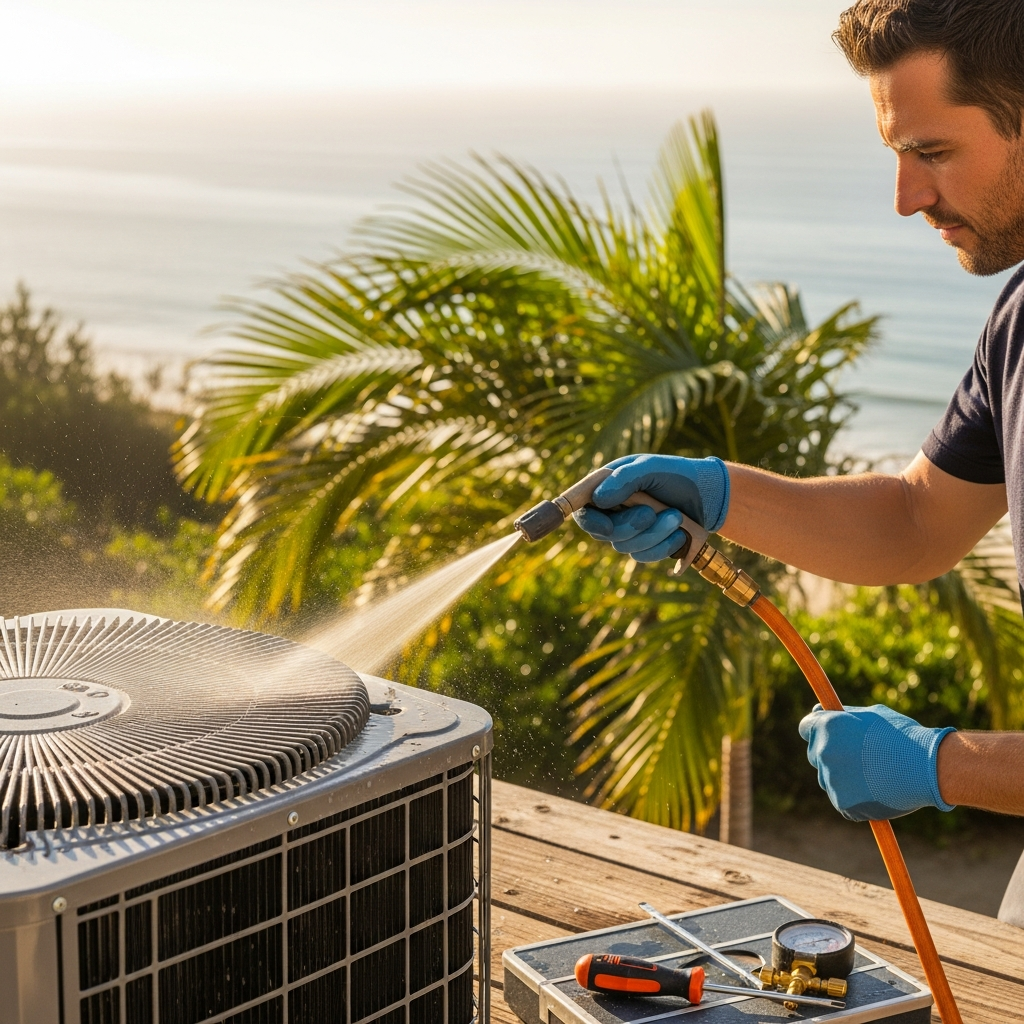
Outdoors, clear space is everything. Malibu’s lush plantings can crowd the condenser after spring growth, and salty dew invites sticky grime that traps leaves and seeds against the fins. Keep at least a couple of feet of breathable clearance on all sides and avoid stacking beach gear or surfboard bags near the unit where they can shed sand. Rinsing the condenser coil with gentle fresh water—never a harsh jet that can fold fins—helps dissolve salt film. Aim for a calm, cool time of day so evaporation is slow and thorough, and allow the unit to dry before heavy operation.
I encourage homeowners near the shoreline to schedule a light rinse every month or so during peak salt exposure periods, and then a more thorough coil cleaning at least annually. Check the top grille for nesting debris or palm threads; these can fall into the fan blades and cause noise or imbalance. If your condenser sits low, consider a slightly elevated pad to reduce splash exposure from irrigation and to discourage sand drift. Malibu’s sea breeze is a gift, but keeping it flowing around a clean, open condenser is what allows your system to convert that outdoor energy into indoor comfort efficiently.
Corrosion Prevention and Hardware Checks
Salt air does more than dirty coils—it corrodes fasteners, contactors, and electrical lugs. Visual inspections matter here. If you see flaking paint on the condenser cabinet, hairline rust at the coil’s bottom rail, or a white, crusty bloom on copper or aluminum, that is early corrosion. Catching it early lets you clean and protect surfaces before they weaken. For electrical components, surface corrosion increases resistance and heat, which compresses component life and can trip breakers on heatwave afternoons.
Coil coatings designed for marine environments can help, but they are not a substitute for regular cleaning and dry airflow. Pay attention to the condition of the fan blade and motor mounts too. Malibu winds can flex these parts over time; a slightly bent blade will hum and vibrate, which can shake other connections loose. A quick seasonal tightening of panels and inspection of rubber isolators keeps the system quiet and kind to your neighbors.
Condensate Management: Keeping Water Where It Belongs
With all the humidity swings we experience, condensate lines work hard. Algae grows faster when warm days follow cool, foggy mornings. If your air handler or coil is above a finished space, a secondary drain pan and a float switch are not optional—they are your last line of defense against a ceiling drip on a Saturday night. Make it a ritual to check the drain outlet outside; if it trickles steadily on muggy days and then stops abruptly, you may have a clog forming inside.
Simple maintenance like a periodic, gentle flush with appropriate cleaning methods helps prevent slimy buildup. Ensure the drain line has continuous downward slope, especially in hillside homes where framing shifts subtly. I have seen lines settle and back-pitch over a season, inviting standing water and musty odors. If you notice gurgling sounds or intermittent drips from the emergency outlet, that is your cue to address the primary line before the next heatwave.
Ductwork and Attics: The Hidden Energy Story
Malibu attics and crawlspaces are notorious for temperature swings. On calm, sunny afternoons, roof decks heat up fast, and poorly insulated ducts soak that heat like a sponge. Any leak in the duct system not only wastes energy, it can pull dusty or salty air into the airstream and redeposit it on indoor coils. During maintenance, look for dark streaks where air escapes, especially at take-offs and plenum seams. Sealing and insulating the ductwork pays dividends in comfort, noise reduction, and system longevity.
In homes near the bluffs where wind drives fine grit under eaves, flexible duct runs can accumulate abrasions. Support those runs well so they do not sag and pool condensation. If you have older metal ductwork, a careful check for rust at seams is worth your time; coastal fog and night air can condense inside unconditioned chases, gnawing at protective coatings. Addressing duct integrity is one of the quietest ways to transform how your AC performs on long, warm evenings.
Thermostat Strategy for Malibu Days
Program your thermostat with Malibu’s daily rhythm in mind. A gentle pre-cool before the mid-afternoon warmup can reduce peak loads and keep humidity in check without aggressive blasts later. On many days, the marine layer returns by late afternoon, letting you raise the setpoint slightly while staying comfortable. Think of it as riding the breeze with your system rather than fighting it. If you have multiple zones, keep them coordinated; cooled air migrating between open spaces in a split-level beach house can confuse sensors and cause short cycling.
Ventilation matters too. On mild days with clean outdoor air, a short window flush in the morning can freshen the house so your system does not have to overdo dehumidification later. When smoke or dust intrudes, keep windows closed, set your fan to auto, and rely on clean filters to protect indoor quality. Your thermostat is a conductor; set it to orchestrate comfort, not chase every temperature blip.
Seasonal Routines You Can Trust
In spring, make outdoor cleaning and a filter refresh your first steps. As summer warms, tighten electrical connections and give the condenser coil a thorough rinse. Before Santa Ana season, confirm that drain lines are clear and that any attic float switches are working, and look over the outdoor unit for signs of windborne debris strikes. After any major wind event, a quick walk-around to clear leaves and check the fan’s freedom of movement can prevent small issues from compounding.
Mid-season checkups are often when I find the quiet problems—a contactor starting to pit, insulation peeling back from refrigerant lines, or a rodent exploring a cozy air handler cabinet. Malibu wildlife is curious; sealing penetrations and keeping mechanical spaces tidy discourages unwanted roommates and the chewing damage they can cause.
Midyear Tune-Ups and Why Timing Matters
Because demand spikes in the first true heatwave, try to schedule professional attention before that week hits. A tuned system glides through the season, and if adjustments are needed—like calibrating airflow or confirming refrigerant charge within specs—it is far easier to do before the phones light up and traffic stacks along PCH. A mid-summer rinse and a quick recheck are especially valuable for homes within direct line of salt spray. It is also the perfect moment to revisit your filter plan and, if needed, upgrade to a type that balances capture with airflow for your lifestyle and floorplan.
If you are building or renovating, placing the condenser where it gets gentle breeze but not direct salt blast is a smart compromise. Shading without choking airflow helps, as does a pad height that keeps the unit a touch above splash zone. Over years, these choices add up to quieter operation and fewer late-night calls when the house is full of guests.
Efficiency, Noise, and Neighborly Cooling
One Malibu hallmark is the way sound travels at night along the canyon walls and across the beach. A clean, well-tuned system is a quiet system. Vibration from loose panels or imbalanced fan blades can echo more than you expect, and what starts as a small hum can become a neighborhood topic by Labor Day. Regular maintenance tamps down noise and keeps the focus on ocean waves instead of condenser fans. It also keeps energy use predictable. When the coil is clean, filters are fresh, and ducts are tight, your system works with gentle confidence, often cycling less and maintaining steadier comfort.
Midway through the season is a good time to make a small promise to yourself: walk outside, listen for changes, and put a hand near the condenser exhaust. The air should feel warm and steady; if it is weak or the unit sounds strained, that is a sign to revisit cleaning. Malibu homes are showcases of light and air—keeping the mechanical side as refined as the architecture completes the picture.
Key Mid-Season Reminder
Amid beach days and canyon hikes, do not forget a mid-summer check of your air conditioning maintenance plan. A few minutes spent checking filter load, listening for unusual fan notes, and confirming that your condensate line is dripping as expected can prevent the kind of surprise that derails a sunset dinner on the deck. Small, timely steps are the hallmark of Malibu-savvy home care.
After the Storm: What to Look For
When the wind has howled and the sky finally clears, give your system a patient once-over. Look for palm fronds caught in the grille, wind-driven sand banked along the coil base, and any signs that panels shifted. Indoors, if your system ran continuously through a dusty event, consider advancing the filter change even if it is ahead of schedule. Your nose will often tell you what the gauges will later confirm; a clean, lightly cool scent means the coil is breathing well, while a musty tinge suggests moisture or growth where it should not be.
Power blips can also accompany storms. If your system stops after an outage, check the breaker and give the unit a few minutes to stabilize before restarting. Rapid cycling after a power event is hard on the compressor. A calm, staged return to normal is safer and kinder to the equipment.
What Not to Do
Resist the urge to pressure-wash your condenser; bent fins reduce capacity dramatically. Avoid stacking decorative screens too close, even if you are trying to hide the unit; aesthetics are important, but so is airflow. Be careful with aftermarket coil coatings applied without proper prep; trapping salt beneath a coating can accelerate the very corrosion you are trying to prevent. And do not overlook the simple step of labeling your filter size and change dates at the air handler; future you will be grateful.
Frequently Asked Questions
Q: How often should I change filters in a Malibu beachside home?
A: Start with a monthly check during peak season and be ready to replace as soon as you see significant darkening or airflow drop. Homes directly exposed to salt spray or smoke often need more frequent changes than inland properties.
Q: What is the best way to clean a salty condenser coil?
A: Use a gentle, fresh-water rinse from the inside-out if accessible, avoiding high-pressure streams that can fold fins. Schedule deeper cleanings during cooler parts of the day and let the unit dry before heavy operation.
Q: Why does my AC seem to make more water on foggy mornings?
A: Malibu’s marine layer raises humidity. When your system starts, it condenses more moisture on the coil, increasing condensate flow. That is normal, but it makes clear drains and proper slope essential.
Q: Can plants near the condenser help with shade?
A: Light shade can help, but plants must not restrict airflow. Maintain generous clearance, and choose species that do not shed fibrous debris into the coil.
Q: Are covers a good idea in the off-season?
A: Full wraps can trap moisture in our coastal climate. If you use a cover, choose a breathable design and remove it well before operation. Many Malibu homeowners skip covers and rely on routine rinsing instead.
Q: My attic is sweltering in August—does that hurt my AC?
A: Yes. Hot attics heat ducts and air handlers, forcing the system to work harder. Improving attic insulation and duct sealing pays off in comfort and energy stability, especially during heat spikes.
Q: What should I do after wildfire smoke events?
A: Replace the filter, run the system on cool with closed windows to capture residual particulates, and consider a professional coil inspection if odors persist. Smoke creates a sticky film that benefits from careful cleaning.
Your Next Best Step
Malibu rewards the homeowner who listens to the rhythms of the coast and builds maintenance around them. If it has been a while since your last tune-up, or if you are ready to shape a plan that respects salt, sun, and sea breeze, connect with local air conditioning professionals who understand our unique climate. With consistent care and a few well-timed checkups, your system will carry you comfortably from fog-kissed mornings to starlit nights, season after season.