Energy savings in Malibu might feel like a balancing act: you want a home that stays comfortable through marine-layer mornings, sunny afternoons, and cool, breezy evenings, all while keeping your system running quietly and efficiently. For many homes, the path to meaningful improvement runs through the ductwork. When we talk about duct replacement in the context of energy performance, we are really talking about tightening the home’s circulatory system so every bit of conditioned air reaches its destination with minimal waste. After years of testing and tuning systems across Malibu—from canyon homes that heat unevenly in late sun to beachfront properties where humidity complicates comfort—I have seen how a carefully designed replacement can transform both the feel of the home and the meter readings.
Saving energy is not a trick or a gadget; it is the cumulative effect of many small, smart decisions. Duct diameter, route length, insulation, sealing techniques, return placement, and final balancing all contribute. When these elements line up, the system runs longer, gentler cycles that maintain temperature without noisy bursts. That steadiness is where efficiency lives.
Where Energy Goes: Leakage, Resistance, and Imbalance
Three culprits commonly undermine efficiency: air leakage, excessive resistance, and poor balance. Leakage is the air you pay to heat or cool but lose through seams, boots, or poorly sealed plenums. Resistance is the invisible friction in the system—tight bends, crushed flex, undersized trunks—that makes the blower work harder. Imbalance is when rooms receive too much or too little air, leading you to adjust the thermostat more aggressively than necessary. In Malibu’s varied architecture, all three show up in different ways, from long, meandering runs in hillside attics to tight soffits in beach homes.
During replacement, we address leakage with mastic-sealed joints, carefully fitted boots, and attention to transitions where ducts meet equipment or registers. We reduce resistance by straightening long runs, using rigid sections where they make sense, and ensuring flex ducts are supported with smooth sweeps rather than sharp kinks. We correct imbalance with accurate room-by-room airflow targets and accessible dampers that allow fine-tuning during commissioning.
Insulation and the Malibu Climate
Insulation matters because temperature differences between the duct and surrounding spaces drive energy loss. In vented attics that heat up under afternoon sun, higher-quality duct insulation pays dividends. In crawlspaces, the goal is to protect against the cool ground and occasional moisture. Malibu’s coastal influence adds nuance: morning marine layers mean materials may be damp to the touch for hours, so vapor barriers and intact jackets help prevent condensation on cold supply lines when you run cooling modes.
Insulation is not only about R-values; it is about continuity and craftsmanship. A beautifully insulated run loses much of its advantage if a final foot near a boot is left thin or if a hanger compresses the jacket. Attention to these small moments separates a merely new system from an efficient one.
Returns, Filtration, and Static Pressure
Many Malibu homes were built with one central return in a hallway. That can work for a simple layout but struggles in expanded or remodeled homes with large great rooms or bedroom wings set apart by doors. Adding or resizing returns reduces static pressure and lets the blower move air at lower effort. The result: quieter operation, less energy use, and better filtration because air passes the filter more uniformly.
Filtration upgrades are often part of an efficiency conversation, especially in a region familiar with wildfire smoke. Higher-efficiency filters can increase resistance if not paired with adequate return area. During replacement, we design returns and filter access so cleaner air does not cost you energy headroom. The sweet spot is a filter you can change easily that captures what you do not want to breathe without forcing the blower to strain.
Testing, Balancing, and Verification
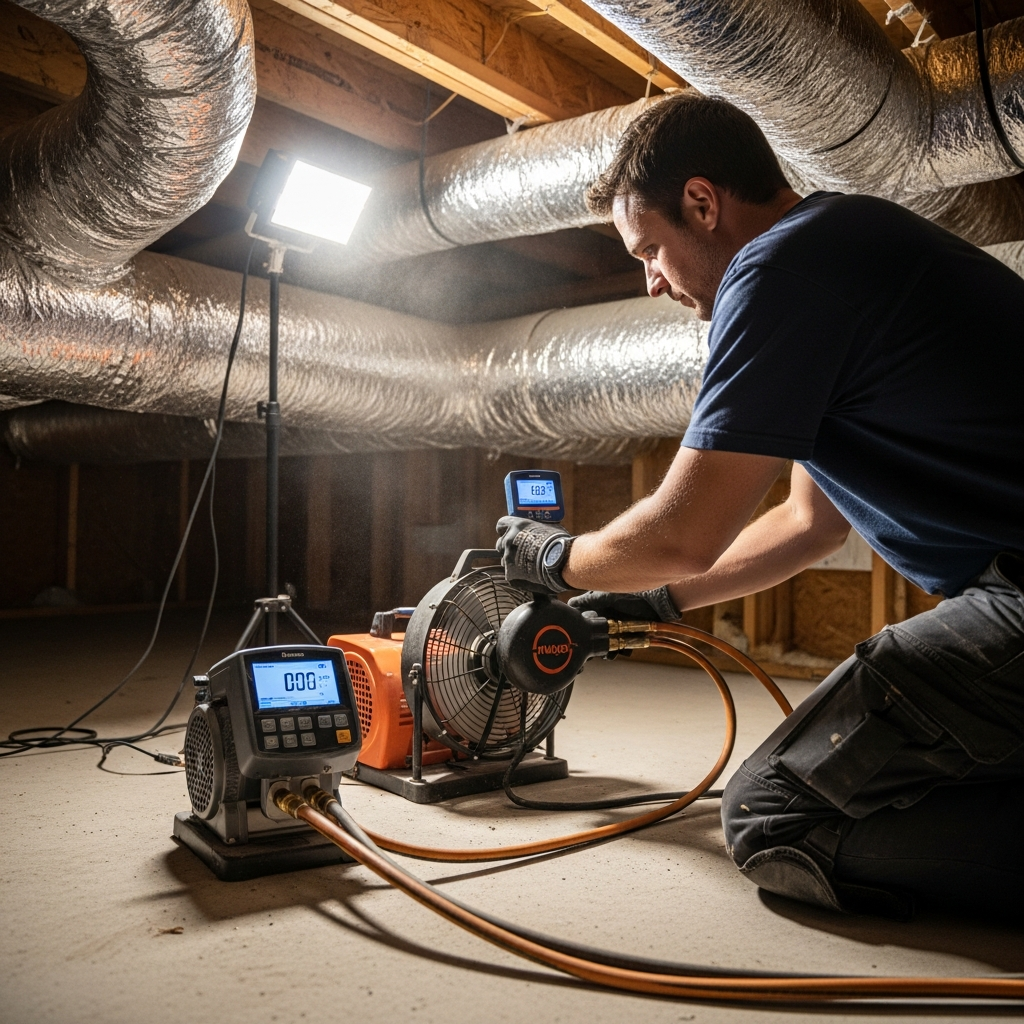
California’s energy code emphasizes measurable performance, and for good reason. Duct leakage testing quantifies tightness. Static pressure readings reveal whether the blower sees an easy path or a brick wall. Balancing confirms that each room receives its share. These steps convert best intentions into verified results. In my Malibu projects, homeowners often remark that after commissioning, rooms feel “even,” doors no longer pop or drift with pressure changes, and the system seems to “cruise” rather than surge on and off. That is the sensation of efficiency.
Documentation matters, too. Notes on damper positions and photos of critical seams serve as a service roadmap. In a community where remodels are common, as-built records help ensure that future changes do not undo your hard-won gains.
Designing for Malibu’s Microclimates
Energy savings depends on tailoring airflow to the way your home gains and loses heat. Oceanfront homes often face large panes of glass and wind exposure, while canyon homes can trap late-afternoon heat on slopes. A thoughtful design weights supply air toward rooms with greater loads and considers return placement to capture the warmest or coolest air first. In multi-story homes, stairwells act like chimneys; managing stratification through diffuser choices and supply strategies reduces the temptation to run the system harder than necessary.
These design choices are not just theoretical. They show up in day-to-day living—how quickly the living room settles after sunset, whether the upstairs bedrooms stay comfortable when the downstairs is cool, whether the kitchen remains pleasant when the oven is on. Designing with these patterns in mind yields an efficient system because it meets real needs without excess.
Equipment Compatibility and the Duct Conversation
Your ducts and your equipment form a team. Even the most efficient heat pump will underperform if paired with a restrictive duct system. Conversely, replacing ducts to suit existing equipment can unlock performance you never felt before. Some homeowners choose to align duct replacement with equipment upgrades, while others start with ducts and enjoy immediate comfort gains. Either path benefits from a duct design that anticipates future equipment so today’s work remains compatible tomorrow.
In coastal Malibu, quiet operation is a core comfort feature. Selecting registers that distribute air without drafts and choosing return sizes that keep blower speeds modest help the system disappear sonically. When the system is quiet and steady, you are less inclined to override settings, which supports energy savings over time.
Mid-Project Insights and Smart Adjustments
Once old ducts are out, reality replaces assumptions. Beams can be deeper than expected, or an attic chase may be blocked. This is the moment for a measured pivot—swapping a tight series of elbows for a smoother route, or slightly upsizing a branch to lower resistance. Midway through a duct replacement project is also a great time to refine return strategies, especially if you have observed rooms that lag or lead in comfort. These tweaks are easier and more beneficial before drywall closes.
Another smart mid-project move is to plan for filter maintenance. If your current filter is awkward to reach, request a return configuration that makes changes simple. Consistent filter care preserves efficiency, and convenience is the best predictor of consistency.
Living With the Results
After commissioning, the most common feedback I hear is that homeowners think less about their HVAC day to day. The thermostat holds steady. Mornings warm gently, afternoons cool without drama, and nights are peaceful. Dusting takes less time because infiltration is down. These are the lived-in signs of an efficient duct system. They also support healthy, long-term energy savings because you do not need to chase comfort with constant adjustments.
Finally, know that energy savings is a journey. Duct replacement is a major step that pairs beautifully with other measures—attic insulation, window improvements, and thoughtful shading. But ducts often deliver the most immediate, noticeable change because they are the arteries through which comfort flows.
Frequently Asked Questions
Q: How much of my energy use is influenced by ducts?
A: Ducts determine how effectively your system delivers conditioned air. Leaky or restrictive ducts force longer runtimes and higher blower effort. Tight, well-routed ducts support steady cycles and lower energy use.
Q: Will new ducts make the house feel different?
A: Yes. Expect more even temperatures, less noise, better filtration performance, and fewer pressure-related door movements. Many homeowners describe the change as a calm, even “cruise” rather than on-and-off surges.
Q: Do I need more returns to be efficient?
A: Not always, but many Malibu homes benefit from added or enlarged returns, especially after remodels. The goal is to lower static pressure and distribute filtration more evenly.
Q: How do you verify energy-related improvements?
A: Leakage testing, static pressure measurements, and final air balancing quantify the gains. We also document damper positions and provide photos of sealed joints for future reference.
Q: Can I phase the work?
A: Yes. With a clear plan, you can address parts of the home in stages while preserving comfort. Phasing is common during larger remodels.
Q: Will new ducts help during wildfire smoke days?
A: A well-sealed, properly filtered system limits infiltration and helps you maintain cleaner indoor air when outdoor air quality worsens.
Start Your Energy-Smart Upgrade
If you are ready to feel steadier comfort and see the benefits of a more efficient system, begin with a conversation grounded in testing and design. A focused project that tightens routes, right-sizes airflow, and verifies performance will pay you back in daily comfort. Take the first step toward duct replacement that prioritizes energy savings, and let your Malibu home run as effortlessly as the coastal breeze.