
Older homes give Malibu much of its soul. From mid-century ranches tucked off the canyons to 1970s beach cottages and Spanish-inspired classics, these houses carry histories in their beams and plaster. They also carry decades of mechanical improvisations—ducts that twist around additions, returns placed for a floor plan that no longer exists, and materials that have simply aged out of reliable service. When I talk with homeowners about duct replacement services for older Malibu properties, the conversation is as much about preserving character as it is about improving comfort. The goal is to respect what makes the home special while quietly modernizing the infrastructure that keeps it livable.
Working in older structures demands patience, curiosity, and a light touch. No two are alike. A living room added in the 1980s might be served by a trunk that squeezes through a slender soffit; a primary suite carved from two smaller bedrooms may rely on an undersized return that hums at night. In attics, you may find a patchwork of flex and metal assembled across eras, each piece reflecting the tools and codes of its time. Replacement is our chance to step back, rediscover the logic of the house, and design a system that feels original even as it performs like new.
Listening to the House Before Drawing the Plan
The first step with an older home is not drawing—it is listening. Where do you feel drafts? Which rooms trail behind? Do doors pop or drift when the system runs? Answers to those questions guide a survey of attics, crawlspaces, and soffits. We count registers, measure returns, peek behind access panels, and—when possible—use small exploratory openings to map hidden routes. On homes with thick plaster or lath-and-plaster ceilings, that exploration must be careful and minimal, preserving finishes until a clear plan dictates where to open fully.
We also look at the history of additions. Malibu homes often evolve over decades. An added family room, a bumped-out kitchen, or a closed-in porch can all leave clues in how ducts run and how air moves. Good design picks up those clues and corrects for them rather than simply replacing what is there.
Respecting Finishes While Accessing Hidden Spaces
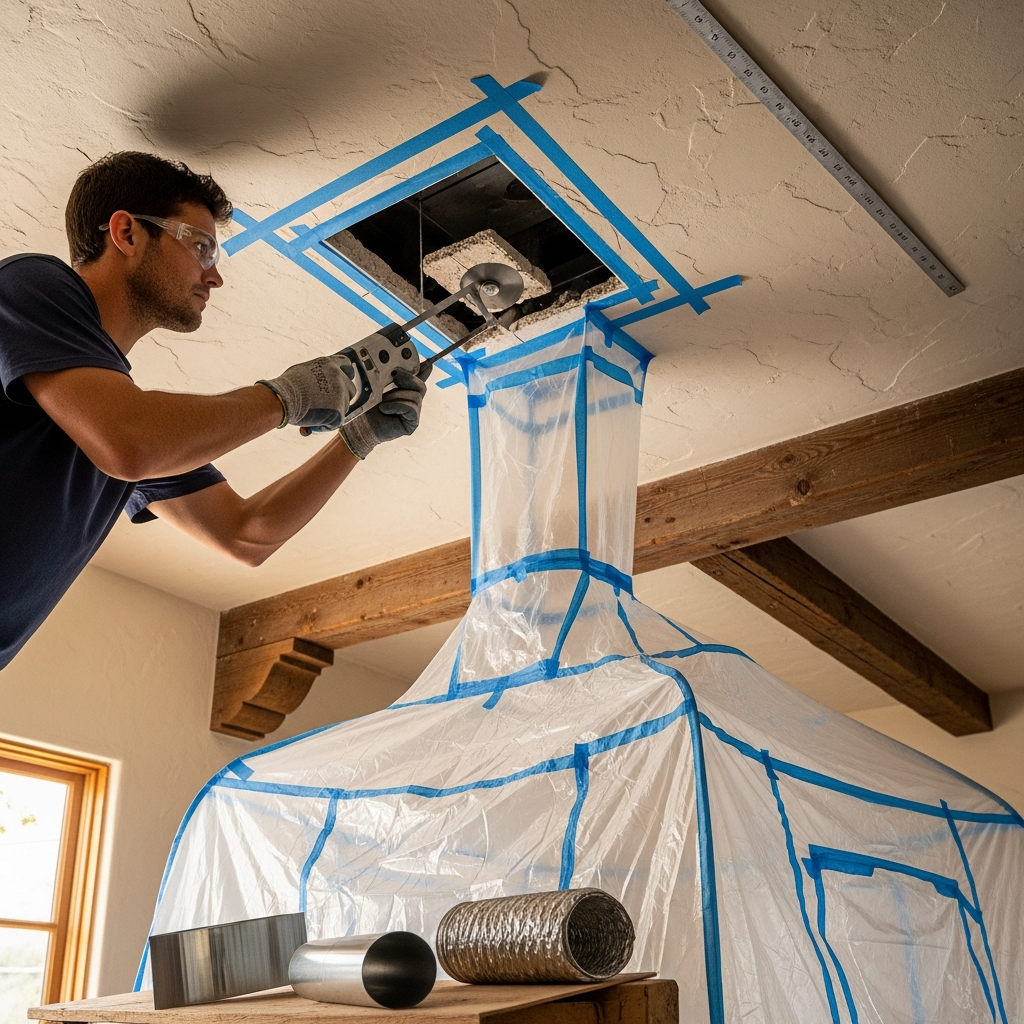
Older homes reward restraint. Where modern drywall forgives, vintage plaster punishes. Experienced crews cut with intention, protect surfaces, and use methods that limit vibration. In attics, we stage walkways to avoid scuffing framing and insulation. In crawlspaces, we protect against soil and moisture, keeping the workspace tidy so dust does not chase us back into the living areas. Each register opening, each return, and each new access hatch is treated as a finish detail, not a rough-in afterthought.
Consider, too, the character of visible grilles and registers. In some homes, an updated diffuser disappears into the architecture; in others, a classic style suits the era better. During replacement, we can often improve performance with minimal visual change by adjusting size, location, and throw without disrupting the aesthetic that drew you to the home in the first place.
Balancing Old Bones With Modern Performance
Older framing can constrain ideal duct routes. Low-slope roofs, closely spaced joists, and stout beams limit options. That is where careful sizing, smooth routing, and selective use of rigid and flex sections earn their keep. A slightly larger branch may reduce velocity noise near a bedroom; a lined return may quiet a hallway that once echoed. Adding a second return or resizing an existing one can lower static pressure, reduce blower effort, and stabilize comfort across rooms that were never equally served.
Insulation and sealing are especially important in older homes. Attics may have patchy insulation, and crawlspaces may pull cool air into ducts. Tight seams, sturdy jackets, and protected hangers reduce leakage and heat gain or loss along the run. The result is not only improved comfort but also a system that stays cleaner inside, because infiltration paths from dusty cavities are closed.
Working Thoughtfully Around Legacy Materials
Many Malibu homes from past decades include materials and methods no longer common today. Part of a responsible replacement is identifying potential legacy concerns and addressing them with appropriate specialists when necessary. That might mean pausing to test suspect materials or coordinating with other pros before proceeding in sensitive areas. The guiding principle is simple: treat the home’s history with respect and act with care so the new system sits safely and confidently within the old structure.
Electrical clearances, framing quirks, and vintage finishes all factor into routing. Good planning reduces the number of penetrations and concentrates access where repairs can be made invisible. When we do open ceilings, we prepare to close them like artisans, matching textures and paying attention to the lines of the room so the system feels integrated rather than imposed.
Testing, Documentation, and the Story of the House
Commissioning is the bridge between intention and reality. Leakage tests confirm the system is tight. Static pressure readings tell us whether the blower sees an easy path. Air balancing ensures rooms receive the supply they need, especially those added decades after the original build. In older homes, these tests are particularly satisfying because they translate a tangle of history into a calm, measured performance.
Documentation completes the story. Photos of sealed joints, as-built routing, and damper positions become a reference for future work. Malibu homes are living projects; knowing where ducts run and why they were sized a certain way will help the next craftsperson respect your home as much as we do.
Comfort You Can Feel, Character You Can Keep
When replacement is done well, you notice what is absent: no buzzing return at night, no chilly corner by the window, no musty whiff after a damp morning. Doors no longer thump when the system starts. Registers exhale rather than hiss. The family spreads out and finds each room equally inviting. Meanwhile, the look and feel of the home remain intact. Mouldings still meet neatly. Ceilings still read as original. You enjoy the house you fell in love with, now easier to live in through the seasons.
Because Malibu is coastal, the benefits extend to durability. Tight seams and robust insulation help resist the subtle, persistent effects of salt air and marine moisture. That care shows up years later when hangers remain solid, jackets intact, and the system still sounds like a hush rather than a rush.
Mid-Project Choices That Make a Lasting Difference
As old ducts come out, we often discover opportunities for small improvements with big payoffs. Perhaps a branch that always whistled can be rerouted with a gentler sweep. Maybe a bedroom return can shift to reduce nighttime hum. The midpoint of a duct replacement service is the perfect time to consider those refinements, while access is open and the design can flex. Bringing homeowners into those decisions ensures the outcome aligns with how the house is actually lived in, not just how it is drawn.
We also use the midstream moment to confirm aesthetics—register styles, grille finishes, and exact placements. A half-inch move away from drapery, or a slight size change to align with a ceiling beam, preserves the home’s visual logic while improving performance.
Living With the Upgrade
Once the new system is balanced, the home takes a deep breath. Mornings warm without drama. Afternoons stay even, even when the sun lights up a wall of glass. Nighttime is quiet. Filters become easier to change, and dust settles more slowly. Older homes reward the investment by feeling younger without losing their story—a better version of themselves that retains the charm and idiosyncrasies that make them beloved.
And because many older homes continue to evolve—new windows, refreshed insulation, a remodeled kitchen—the records from your project will help maintain coherence in future phases. A system designed with tomorrow in mind adapts gracefully rather than resisting change.
Frequently Asked Questions
Q: How do I know my older home needs new ducts?
A: Signs include brittle or crushed flex, widespread air leaks, rooms that never match the thermostat, noisy returns, and visible wear on metal fittings. Testing and inspection provide clear evidence to guide the decision.
Q: Can the work respect vintage finishes?
A: Yes. With careful planning, targeted access, and finish-minded repairs, we protect plaster, mouldings, and architectural details. The goal is performance without sacrificing character.
Q: Will new ducts make the house quieter?
A: Often dramatically. Proper sizing, smoother routing, and lined returns calm the system. Many homeowners report that airflow becomes a hush rather than a hiss.
Q: What about filtration in an older home?
A: A tighter duct system supports better filtration by reducing bypass and infiltration from attics or crawlspaces. During design, we size returns to pair filtration effectiveness with easy maintenance.
Q: Can the project be phased?
A: Absolutely. Many older homes benefit from a staged approach that addresses one wing or floor at a time, coordinating with other renovations to minimize disruption.
Q: Do coastal conditions change how you install?
A: They do. We select materials and sealing methods that resist salt air and moisture, and we pay special attention to insulation continuity and hanger protection.
Give Your Older Home the Quiet Upgrade It Deserves
If you are ready to preserve the character of your Malibu home while elevating comfort and air quality, a careful, finish-conscious project is the way forward. Let us walk the house with you, listen to its story, and craft a plan that brings modern performance to classic architecture. Begin your path to thoughtful duct replacement today, and enjoy a home that feels timeless—because it is, only better.