
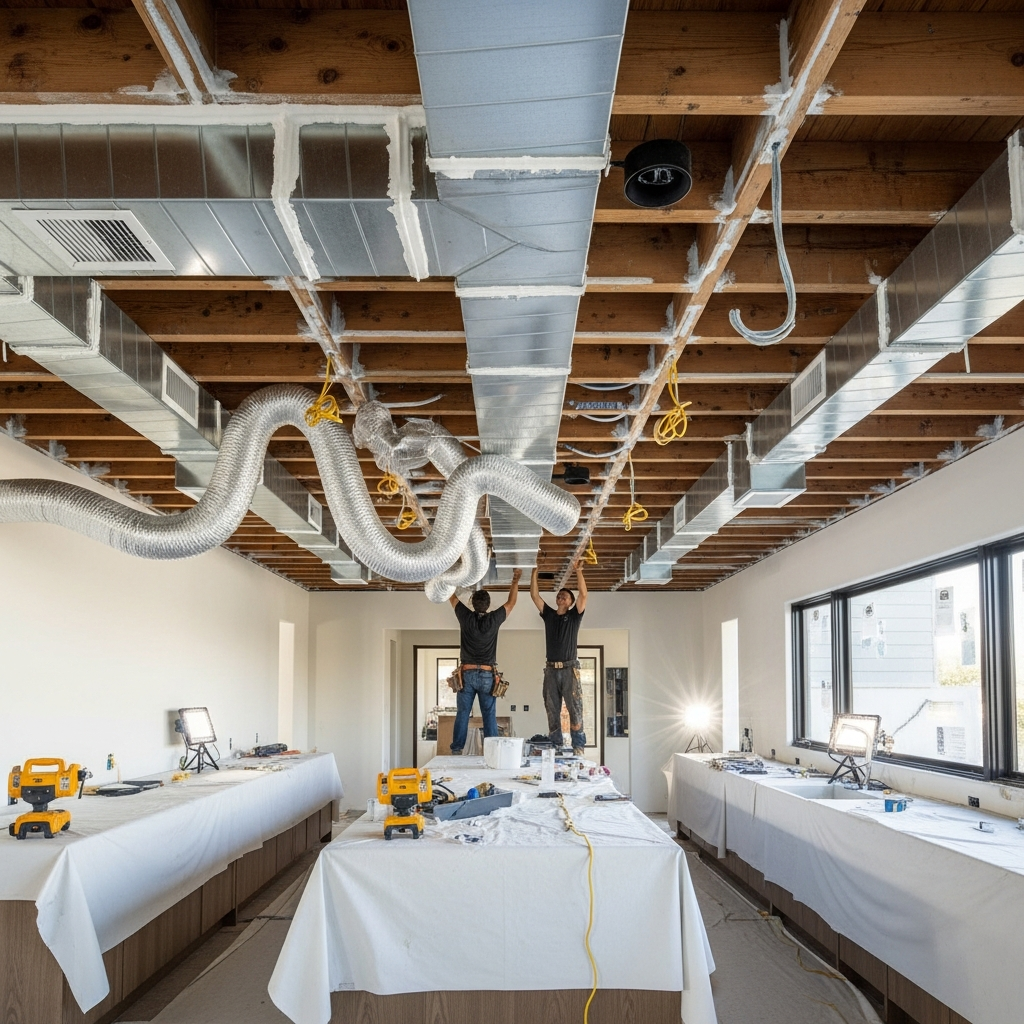
Remodels in Malibu are often about capturing more of what makes the coast special—light, views, and a sense of openness that invites ocean air while keeping the climate inside calm and comfortable. When walls move and rooms are repurposed, the duct system that once fit the home’s older layout may no longer deliver balanced airflow. That is when the conversation shifts from patching to planning, aligning the remodel with a fresh approach to ducts. Even without quoting numbers, we can map the drivers that shape the overall scope so your project flows smoothly from demo to final inspection. For many homes, a well-timed duct replacement during a remodel protects finishes, elevates comfort, and sets your space up for the next decade of easy living.
Remodels offer a rare window: while ceilings are open and trades are on site, you can correct legacy layout issues, right-size returns, and design supply routes that match how the new floor plan will actually be used. The key is sequencing—getting the HVAC team into the conversation early so mechanical design dovetails with framing, electrical, and finishes. With the coastal environment as a backdrop, material choices, sealing strategies, and insulation details also step into the spotlight, ensuring the system stands the test of time.
Aligning Mechanical Design With Architectural Vision
Great remodels start with a clear picture of how people will live in the new space. Are you creating a larger kitchen that feeds into a family area? Converting a closed office into a glassy studio? Those choices alter heating and cooling loads. A skilled designer places supplies and returns to harmonize with new sightlines and furniture plans, selecting low-profile registers where aesthetics demand minimal visual impact. If high ceilings or expanded glazing increase solar gain, trunk sizes and branch counts may shift to deliver even comfort without drafts.
Why Remodels Are the Right Moment for Re-Routing
When drywall is open, you have access to chases and joist bays that are difficult to reach later. This is the time to correct long S-shaped runs that starve corner bedrooms or to move a supply that blows onto a reading nook. It is also the perfect opportunity to upsize or relocate returns so equipment breathes freely. Rerouting during a remodel avoids patchwork surgeries after finishes are installed and minimizes the risk of noise or imbalance that would otherwise require a second round of work.
Material Choices for Coastal Durability
Malibu’s salt air nudges us toward ducts and hardware that resist corrosion. Galvanized metals with proper coatings, robust mastics, and insulation with a dependable vapor barrier help control condensation and prevent early wear. Hangers and saddles are selected to resist rust and maintain long-term shape. In open ceilings where ducts might be partially visible, finishes and profiles are chosen to match the aesthetic while meeting performance goals. The material palette is as much about longevity as it is about integrating gracefully with the architecture.
Sequencing With Other Trades
Remodel schedules can look like dance cards, and HVAC belongs near the front of the line. Rough-in follows framing and precedes insulation and drywall, while final setting of registers and balancing occurs after painting and flooring. The team coordinates with electricians to avoid conflicts in chases, with plumbers to maintain clearances, and with cabinet installers to keep supplies away from future built-ins. This sequencing keeps everyone moving and reduces rework, which is one of the silent drivers of overall project efficiency.
Balancing Open Plans and Quiet Bedrooms
Open living areas crave gentle, even air movement that does not draw attention. Bedrooms ask for quiet, especially at night when ambient noise fades. Good duct design acknowledges both needs. Larger, slower-moving air in common spaces can be paired with carefully located, right-sized supplies in bedrooms to reduce noise. Returns are placed to prevent door slams from changing pressures and to keep air moving without gusts. These decisions show up in daily life as a home that simply feels right, no matter where you sit.
Testing, Documentation, and Inspection
Permits and performance testing bookend the work. Duct leakage testing validates that the new system is tight, while pressure readings and temperature checks confirm that changes in layout did not introduce hidden restrictions. Inspectors appreciate clean rough-ins, labeled runs, and documented balancing when the project wraps. This diligence is a service to your future self as much as to the permit—when you can see test results and know the system meets standards, you sleep better on that first night in the new space.
Integrating Future Upgrades
Remodels are a smart time to anticipate what comes next. If you are considering a future equipment upgrade or a move to a heat pump, design the ducts now for low pressure drops and minimal leakage. Consider stubbing for additional returns or leaving discreet access points where a zoning system might later connect. These modest design choices future-proof the home without complicating today’s work, and they avoid tearing into new finishes later.
Site Protection During a Remodel
Even during construction, Malibu homes often shelter art, instruments, and bespoke finishes. Expect careful coverings, sealed work zones, and mindful pathways that respect landscaping and outdoor living areas. Communication helps—let your team know which rooms need extra attention and where small staging areas can live without interfering with other trades. Good site manners keep morale high across the job and help maintain a steady rhythm as walls close up.
When to Choose Full Replacement Over Partial Adjustments
It is tempting to reuse duct sections that seem intact, but remodels magnify the benefits of a cohesive design. If existing runs are undersized, insulation is fatigued, or the layout contradicts the new plan, a full duct replacement typically delivers better comfort and fewer surprises. While partial reuse can save time in select areas, blending old and new sometimes preserves leaks and noise you are trying to eliminate. A thoughtful evaluation will lay out both paths and recommend the one that best aligns with your remodeled space.
Coordination With Interior Design
Registers, grilles, and visible drops should complement the room. Collaborate early with your designer to choose profiles and finishes that disappear or make a subtle statement, depending on the space. In vaulted areas or rooms with statement lighting, the duct layout can be tuned to avoid visual competition. These small decisions keep the mechanical system in the background, letting architecture and furnishings set the tone.
Living Through the Work
Many Malibu remodels happen while owners occupy parts of the home. Crews plan noisy tasks around your schedule, isolate dust, and ensure daily cleanup. If bedrooms are affected, stages can be sequenced to return them to service as quickly as possible. A good team will keep you in the loop about daily goals so you can make your plans with confidence.
Frequently Asked Questions: Ducts in Remodels
Is it better to design ducts before or after framing changes?
Before. Mechanical planning informs framing, and early coordination prevents conflicts in chases and joist bays. When ducts are considered from the outset, you avoid last-minute compromises that can raise noise or reduce airflow, and the installation proceeds smoothly with fewer surprises.
Can I reuse some ducts to save time?
Possibly, but only if those sections meet the new layout’s demands and pass a thorough inspection for leaks, insulation integrity, and proper sizing. In many remodels, a cohesive plan that replaces aging runs outperforms a patchwork approach, especially when new room functions require different airflow patterns.
How do open floor plans affect duct design?
Open plans encourage slower, well-distributed air to avoid drafts. That often means larger trunks, multiple supplies for big rooms, and thoughtful return placement to keep the space calm and even. Bedrooms still call for quiet, so the design balances the needs of both areas within one system.
What role does testing play at the end of a remodel?
Testing verifies that tightness targets are met and that airflow is balanced in the new configuration. It catches hidden restrictions and confirms that changes did not introduce noise or pressure issues. Documentation of results supports inspections and gives you confidence in the finished system.
How does Malibu’s coastal air change material choices?
Coastal conditions tilt choices toward corrosion-resistant metals, durable mastics, and insulation with a strong vapor barrier. Hardware like hangers and fasteners is selected to withstand salty moisture. These decisions help the system age gracefully, even in homes close to the water.
Can ductwork planning accommodate a future heat pump?
Absolutely. By designing for lower static pressure and reducing leakage now, you create a platform that future equipment upgrades can leverage. Allowing space for additional returns or zoning later keeps options open without disturbing fresh finishes.
Ready to align your remodel with effortless comfort?
Bringing HVAC design into your Malibu remodel early pays dividends in daily life. If you want airflow that matches your new floor plan, quiet bedrooms, and a system built for the coast, let’s talk. We will coordinate with your architect and builder, protect your finishes, and deliver tested performance—anchored by best practices in duct replacement tailored to your project.