Searching for the right team in Malibu can feel like scanning the horizon on a foggy morning—shapes appear and disappear, and it takes a trained eye to know what you are really seeing. If you have typed “companies near me” while considering duct replacement, you already know that logos and promises are easy to come by, but proof of steady, careful work in our coastal setting is rarer. The good news is that Malibu has a strong bench of professionals who pair craftsmanship with local fluency. Knowing how to identify them is the first step toward a system that feels quiet, balanced, and built to last.
Local expertise shows up first in listening. Before a contractor sketches a duct path or names a timeline, you should hear questions about how you live in the home. Which rooms run warm or cool? Where do you notice noise? Do you travel and need the project sequenced around windows when you are in town? The answers to these questions are not small talk; they are the blueprint for a plan that respects your routines and your architecture.
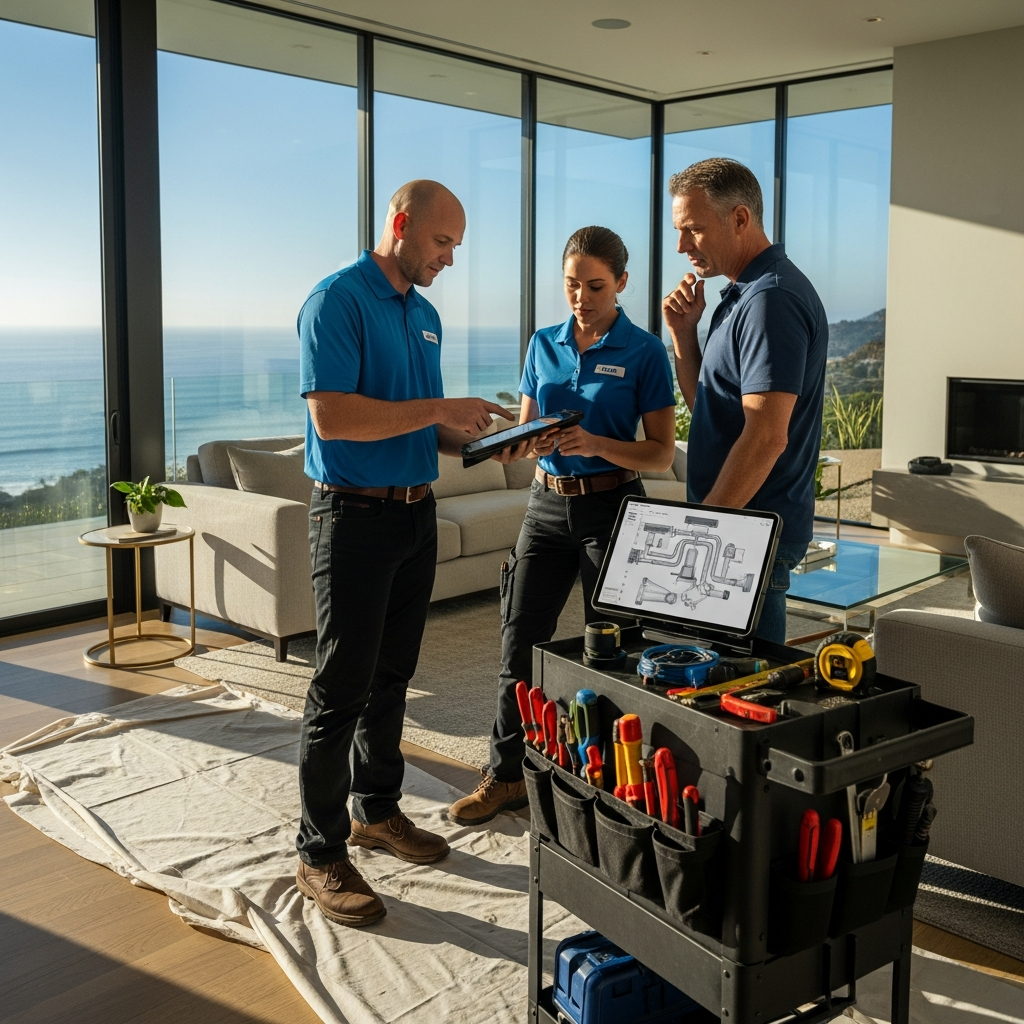
From there, the markers of a strong local company become clearer. They arrive prepared to protect floors and finishes from sand and salt. They take time in the attic and crawl space, documenting with photos and measurements. They speak plainly about design standards and explain how they will verify results at the end. And they make it obvious that they have worked in homes like yours, navigating the same access issues and the same coastal weather that define Malibu living.
What sets true local experts apart
Experience in Malibu changes how a team plans and builds. Pros here account for morning marine layers that keep attics cool and damp, afternoon sun that pushes roof temperatures, and winds that challenge seals and register choices. They select materials with sturdy vapor barriers, rely on mastic sealing over quick fixes, and route ducts with fewer tight bends so airflow stays strong without noise. Aesthetic sensitivity matters too; registers and grilles are chosen to complement interiors, not fight them.
Communication is a close second. A reliable company lays out the sequence of work, assigns a clear point of contact, and shares updates you can follow whether you are on-site or away. You should not have to ask for photos, airflow readings, or summaries; they should be part of the cadence.
From assessment to design: the blueprint phase
The assessment is not a glance at a furnace and a half-step into the attic. It is a measured walk-through, a set of photographs, and a conversation about goals. With those in hand, the designer drafts a duct map using established methods so runs are sized correctly, returns breathe freely, and registers are placed for comfort and quiet. In Malibu’s varied housing stock, that design may also consider how to keep work respectful of original finishes—particularly in older homes with plaster, beams, and custom woodwork.
Design time is also when filtration and return strategies are set. If wildfire smoke is a seasonal concern, or if salt and dust are frequent visitors, the plan anticipates those realities. That is the difference between a swap and a thoughtful upgrade.
Installation with care and coordination
On installation days, local experts orchestrate a smooth sequence. They protect floors, build safe access paths, and move deliberately through removal, installation, sealing, and balancing. If an attic is tight or a crawl space limited, they adjust staging to keep the work steady and the home calm. Throughout, the team maintains a clean environment so your living spaces remain yours, not a jobsite.
Good companies are also attentive to neighbors and community rhythms. If a home sits on a narrow lane, they park with courtesy in mind. If you share a driveway, they coordinate with others. These courtesies are small outward signs of a deeper professionalism.
Verification: the quiet finish that proves performance
At the end of the job, data closes the story. Leakage tests show how tight the ducts are. Airflow measurements at key registers confirm that rooms are getting what the design promised. Static pressure checks ensure the system will run comfortably and quietly. You should leave the project with documentation and a walkthrough that lets you feel the difference.
Permitting and inspections are part of the process too. A competent local company handles them efficiently, communicates when inspectors will visit, and keeps a neat record for your files. It is one more mark of a team that considers the full lifespan of the work, not just the installation day.
How to evaluate companies near you without a long checklist
You do not need a thick binder to choose well. Start with conversation quality: does the company listen and reflect your goals back to you with clarity? Next, look for design intent: ask how they will size and route runs, and how they will measure success. Finally, probe for local savvy: how do they account for salt air, fog, winds, and wildfire smoke? Satisfying answers in those three areas are stronger than a hundred bullet points.
It is equally telling to hear how a company handles constraints. If your schedule is tight, do they propose a phased plan? If you care deeply about preserving finishes, do they explain protection and containment? Confidence grows when plans align naturally with your priorities.
Stories from the field: what experience looks like
One Malibu family with a two-story home near a canyon struggled with an upstairs that ran warm each fall. The local team redesigned the trunk and added a return in the hallway, then balanced supply to bedrooms with quieter registers. The result was a calm, even upstairs, free of the whoosh that had bothered light sleepers. In a beach-adjacent cottage, another crew replaced a patchwork of old duct board and flex. With a clean layout and careful sealing, musty odors vanished and the living room stopped feeling drafty in the afternoons.
These stories share a theme: design-led work, steady communication, and verification. They are simple in concept but powerful in outcome, and they are what you should expect from companies rooted in our community.
What “near me” should actually deliver
Proximity alone is not the goal; presence is. A company that answers the phone, shows up on time, and respects your home delivers a different experience than one that treats Malibu as a stop between other priorities. When a team is truly local in spirit and practice, it shows in how they handle small surprises, how they speak about your home’s quirks, and how they make choices that favor long-term durability over short-term convenience.
In the middle of your search, it is easy to get lost in terminology and options. Bring the focus back to outcomes. You are not looking for a truck and a ladder; you are looking for a partner who can translate your goals into a quiet, balanced system that feels natural in a coastal home. That clarity will help you choose well and feel confident at every step.
Frequently asked questions when choosing a local company
These questions come up often when Malibu homeowners evaluate “near me” options. They are a practical way to compare companies without getting overwhelmed.
What should the initial assessment include?
Expect measurements of key rooms, photos of existing ducts and access points, and a conversation about your comfort priorities. The best assessments result in a preliminary duct map and a clear outline of how success will be verified at the end.
How important is verification?
Essential. Leakage testing, airflow measurements, and static pressure checks confirm that the system performs as designed. Without verification, you are relying on promises instead of proof.
Can companies work around my travel or work schedule?
Yes. Local teams frequently coordinate with clients who are away or working from home. They set check-in times, provide photo updates, and phase work so key rooms are comfortable as soon as possible.
How do companies address Malibu’s climate challenges?
Experienced pros choose materials and sealing methods suited to marine conditions, plan for temperature swings between foggy mornings and sunny afternoons, and consider wind exposure and wildfire smoke when placing returns and discussing filtration.
What are signs a company may not be a good fit?
Dismissive answers about design or testing, vague timelines, and a lack of local references are warning signs. If a team cannot explain how they will protect finishes or manage tight access, keep looking.
Will my home look and feel different after the work?
You should notice calmer, more even temperatures and quieter rooms. Visually, high-traffic spaces should look unchanged, with registers that suit the interior. In utility areas, expect tidy, deliberate work that reflects long-term thinking.
If you are ready to partner with a Malibu company that treats your home like a neighbor’s and proves performance with data, reach out to discuss duct replacement. With the right local experts, the path from first visit to final balance feels clear, respectful, and focused on a single outcome: everyday comfort that lets the beauty of your home take center stage.