
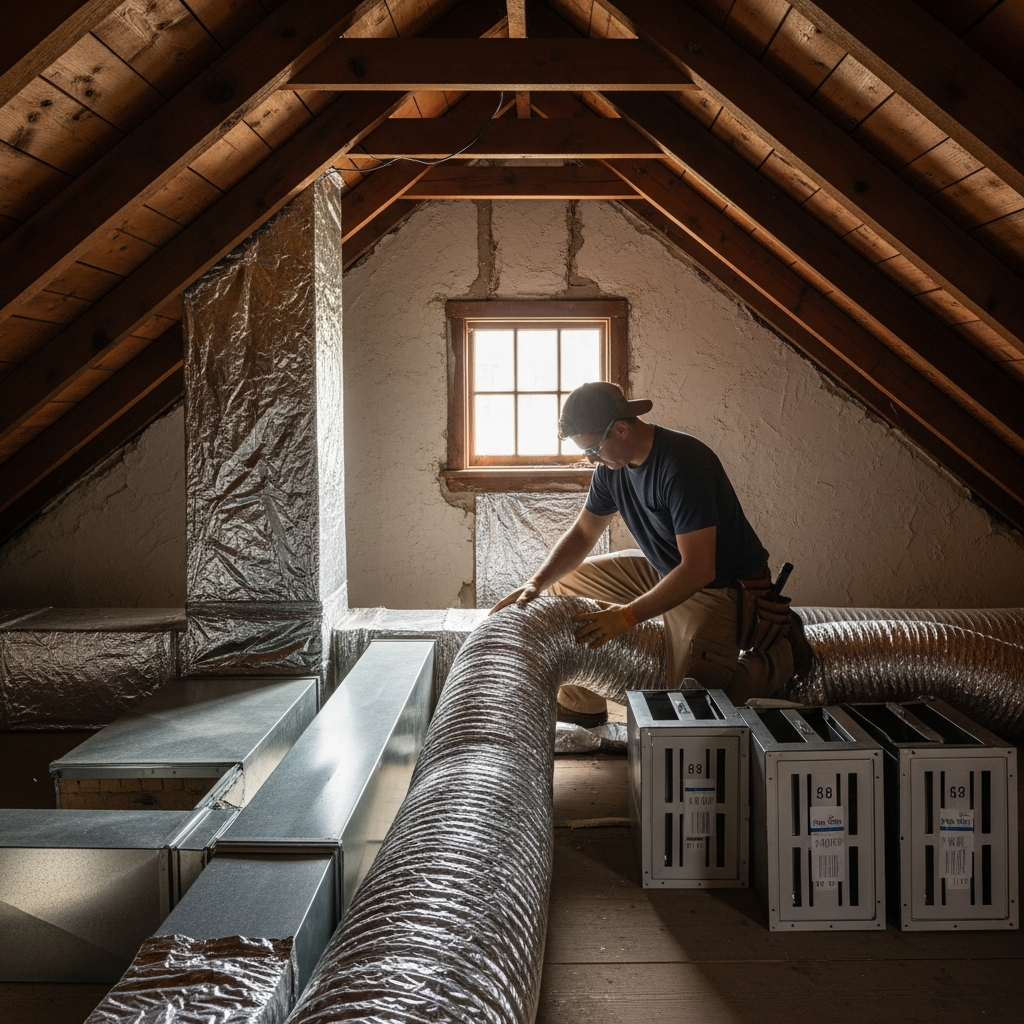
Older homes in Malibu have a character you can feel the moment you step inside: handcrafted beams, plaster walls that soften sound, and windows that frame ocean light in ways modern glass rarely does. With that charm often comes a quieter story in the attic and crawl space—air ducts that have traveled through decades of remodels, salty fogs, and warm canyon evenings. When comfort becomes inconsistent or indoor air begins to carry musty notes, many homeowners start exploring duct replacement, not as a cosmetic upgrade but as a way to protect the health and longevity of a very special house.
Conversations about the financial scope of a duct project in an older Malibu home are best approached through the lens of its history. Every addition, every repair, and every design trend that has passed through the house leaves traces: old boot locations hidden under flooring, duct board patched with a mismatched run of flex, returns that were never quite adequate for modern equipment. Understanding that layered story is the key to planning a project that brings the house forward without stripping away its soul.
It is also vital to respect the construction techniques of the era. Homes built in the middle of the last century often have tighter framing and smaller chases than newer builds. Earlier sheet-metal work may be heavier gauge and still sound, but connections could be sealed with materials no longer considered healthy or effective. Some attics are low and labyrinthine, making every transition a small puzzle. Bringing those realities into the plan ensures that the outcome delivers quiet comfort and clean air without unnecessary disturbance to historic finishes.
Reading the home’s timeline
Before any design work begins, a careful walk-through and attic/crawl assessment tells the story of how air moves now and where it struggles. In older Malibu homes, it is common to find areas where the original duct layout served a different floor plan. A hallway that once closed off may now be open to a family room, changing airflow needs. A former sunroom turned office may have minimal supply air. Identifying these mismatches allows a duct plan to prioritize lived-in spaces while respecting structural constraints that are part of the home’s integrity.
These walk-throughs also flag elements that may require special handling. Insulation types can vary widely, and some older materials are best left untouched or handled by specialists. When that is the case, the plan adapts: new runs might shift to clearer pathways, or limited exposures are scheduled with containment measures that keep the household safe and the workspace clean.
Design with deference to original architecture
In Malibu’s older houses, good design feels almost invisible. That might mean placing a return where it does not intrude on a plaster archway or choosing register styles that harmonize with existing woodwork. On the performance side, careful sizing and routing reduce noise and keep air from being forced through unnecessary bends. Older framing often restricts run sizes, so a thoughtful mix of trunk and branch strategies can preserve the look and feel of the home while quietly delivering more even temperatures.
It is common for older dwellings to have only one return serving a large area. Part of modernizing comfort is assessing whether additional returns would help the system breathe. Balanced airflow is kinder to equipment and rooms alike, and it is usually achievable without altering the character of the interior.
Material choices that respect age and climate
Material selection for older homes near the coast emphasizes durability and gentle handling. Where legacy sheet metal is sound, reworking transitions and adding insulation can integrate it into a new plan. In many cases, though, a full refresh is the better path, replacing tired duct board and brittle flex with materials designed to shrug off salt air and seasonal humidity. Sealing methods matter too. Modern mastics and rated tapes outperform the compounds of decades past, holding tight through expansion and contraction cycles that older systems could not weather.
Noise control has special importance in older homes, where plaster and timber create an acoustic signature you want to preserve. Smooth interior surfaces and correct velocities keep the new system nearly silent. In bedrooms and studies, that can make the house feel more like itself—quiet, composed, and restful.
Testing and verification tailored to vintage structures
Verification is where old meets new in a friendly handshake. Duct leakage testing, airflow measurement, and static pressure checks confirm that the carefully drawn plan is now a carefully built system. In older homes, these checks are especially useful because they catch hidden restrictions behind finish work and help guide small adjustments—opening a damper a little more to a back bedroom, for example—so that comfort is even without resorting to intrusive changes.
Permitting and documentation also play an important role. Maintaining clean records benefits future projects and supports any energy or performance certifications you may seek later. Above all, testing provides peace of mind that the house is breathing better than it has in years.
Indoor air quality in homes with history
Many older homes develop distinct odors over time, not because they are neglected, but because materials have absorbed decades of ocean air, moisture, and everyday living. When ducts pull from or run through those spaces, the airstream can carry what the house has collected. New, tightly sealed ducts break that cycle. Strategic return placement and filtration upgrades further reduce irritants, which matters during wildfire seasons when particles can linger for days. If you or your family members are sensitive to dust or smoke, bringing these considerations into the plan is as important as the routing itself.
Sometimes, homeowners ask whether cleaning alone will do. In homes where the duct materials are failing, insulation is degraded, or the design no longer matches the current floor plan, cleaning tends to offer only a brief reprieve. Replacement, paired with thoughtful design, is how you get lasting, predictable results.
Access strategies that protect finishes
Older homes often feature delicate plaster, original flooring, and custom millwork. Good crews treat these elements like museum pieces, setting up protection from the front door to attic access, building clean containment where needed, and using tools and techniques that minimize vibration and dust. Communication about daily goals and progress is essential so you know what to expect and can plan around quieter moments if you work from home or host guests.
In tight attics, careful staging of materials and clear labeling of runs make a visible difference. Every time a technician avoids an extra crawl across aging joists, you reduce the chance of disturbance below. This is where experience with older Malibu structures shines: knowing when to preassemble, when to reroute for longevity, and when to pause and consult before touching a sensitive area.
Sequencing the work so the home keeps its rhythm
The best projects in older homes feel respectful. They start with a design that accounts for tight corners and fragile surfaces, then move into a steady rhythm of removal, installation, sealing, and balancing. Because these houses often have fewer access points, phasing becomes important. A living room or primary bedroom might be addressed early in the day so those spaces are comfortable by evening. Walkways are kept clear, and rooms are returned to order daily so the household can continue its life while the hidden parts of the home are renewed.
At mid-project, many homeowners appreciate a brief check-in with measurements—airflow readings at a couple of key registers, a look at how returns are breathing, and photos of sealed connections. That transparency builds trust and shows how each step supports the next. It is also a good moment to confirm that the goals you set at the outset are on track. This clarity is a major reason neighbors choose duct replacement rather than a string of small fixes in older houses.
Common signs in older homes that point toward replacement
Beyond the obvious clues—torn insulation, collapsed runs, or noisy registers—older homes often show subtler patterns. You might notice a musty start-up smell that lingers even after cleaning filters and surfaces. Certain rooms may never reach the desired temperature, especially on windy afternoons when infiltration competes with supply air. Registers could rattle or whistle because of mismatched components. When such signs add up, a cohesive plan that respects the home’s age typically produces better outcomes than piecemeal repairs.
If your home was remodeled in stages, note where additions meet the original structure. Transitions at those joints often hide constrictions or ad-hoc connections that sap performance. A replacement plan that smooths those transitions pays you back every time the system cycles on.
Why design matters even more in vintage spaces
Older homes almost always demand more creativity in design. Framing dimensions may not match modern standards, so supply runs need to be carefully sized and routed. Returns, if scarce, must be added with sensitivity to sightlines and finishes. And airflow balance becomes an art, using dampers and diffuser selection to create the sense that every room belongs to the same comfortable whole. When the work is done, guests should feel welcome without ever noticing a grille or hearing a rush of air.
Above all, a good plan recognizes that an older Malibu home is more than a building. It is a steward of memories. Upgrading the invisible parts of the house should feel like a gift to that legacy, not an imposition.
Working safely and thoughtfully
With older insulation, wiring, and framing, safety protocols are non-negotiable. Crews wear appropriate protection, stage work to minimize disturbance, and coordinate with specialists when a particular material calls for a specific approach. The homeowner’s role is simply to expect that level of care and to ask for clear explanations of how sensitive areas will be handled. That partnership builds confidence and keeps the project steady from start to finish.
What you can expect after the upgrade
The day the system is balanced and verified, the difference is tangible. Rooms that once felt disconnected fall into line. Dusting becomes less frequent, and start-up smells vanish. Many homeowners tell me the upgrade changes their relationship with the home; suddenly, comfort is a given, and the house feels truer to its promise. The beauty you see—plaster, timber, light—has a quieter partner in the air you do not see but now feel more clearly.
Frequently asked questions for older Malibu homes
Below are questions that routinely come up when we plan duct projects in vintage houses along the coast. They reflect common concerns about preserving character while improving comfort and air quality.
How do I balance preservation with performance upgrades?
Start by mapping what must remain untouched, such as original plaster or millwork, then build a design that routes ducts through friendlier spaces. With careful sizing and register selection, you can often enhance comfort without altering the look of the rooms. Communication between homeowner and contractor keeps that balance intact throughout the project.
Is cleaning ever enough in an older home?
Cleaning can help in limited cases, especially if the ducts are structurally sound and the issue is primarily surface dust. In many older homes, though, materials have aged beyond their useful life or the layout no longer matches the way the home is used. In those situations, replacement paired with modern sealing and insulation offers a more reliable and lasting improvement.
Will the work disturb my plaster or original finishes?
With proper protection and access planning, disturbance can be kept to a minimum. Experienced crews use containment, padding, and careful routing to preserve finishes. When a small opening is necessary, it is planned and repaired with attention to matching textures and colors.
What kind of verification should I expect in a vintage house?
Expect duct leakage testing, airflow measurements at representative registers, and static pressure checks. These data points confirm the design has been achieved and guide any final balancing. Documentation matters in older homes because it establishes a baseline for future maintenance.
Can I improve filtration during replacement?
Yes. Replacement is an ideal time to select a filtration approach that supports your health goals and Malibu’s seasonal air quality challenges. Upgraded filters and thoughtfully placed returns work together to keep indoor air cleaner, especially during wildfire events and damp, dusty periods.
How do you manage access in tight, older attics?
Staging is key. Materials are prepped outside the attic, runs are labeled to reduce time aloft, and protective pathways are set to avoid undue pressure on aged framing. When spaces are too tight, routing plans adapt to maintain performance while preserving the structure.
If your older Malibu home is sending signals that its hidden airways need a new chapter, take the next step with a measured, respectful plan. Reach out to discuss duct replacement designed for vintage structures—one that honors your home’s story while quietly elevating comfort and air quality for the years ahead.