
Along Malibu’s coastline, duct replacement planning is inseparable from the rhythms of the ocean and the shape of the hills. Salt-laden breezes, marine layer mornings, and Santa Ana wind events all influence how systems are designed, installed, and verified. Homeowners often ask how the coast changes the overall budget picture, and while every property is different, the themes are consistent: protect against corrosion, manage moisture, and design for quiet durability. If you are weighing options for duct replacement, understanding these coastal effects will help you set priorities that pay off in day-to-day comfort and long-term reliability.
Salt air: the slow sculptor of metal and hardware
Salt is relentless. Fine aerosolized particles ride in on onshore winds and settle on roofs, fasteners, and exposed components, even several miles inland. Over time, unprotected metal can pit and weaken, and standard hardware can lose its grip. In duct systems, that means hangers, straps, sheet metal screws, and even bands around flex terminations should be chosen with corrosion resistance in mind. Sealants and tapes likewise need ratings suitable for coastal environments so seams stay tight despite seasonal expansion and contraction. This attention to detail is not cosmetic—it preserves performance and extends the life of the system.
Moisture and the marine layer
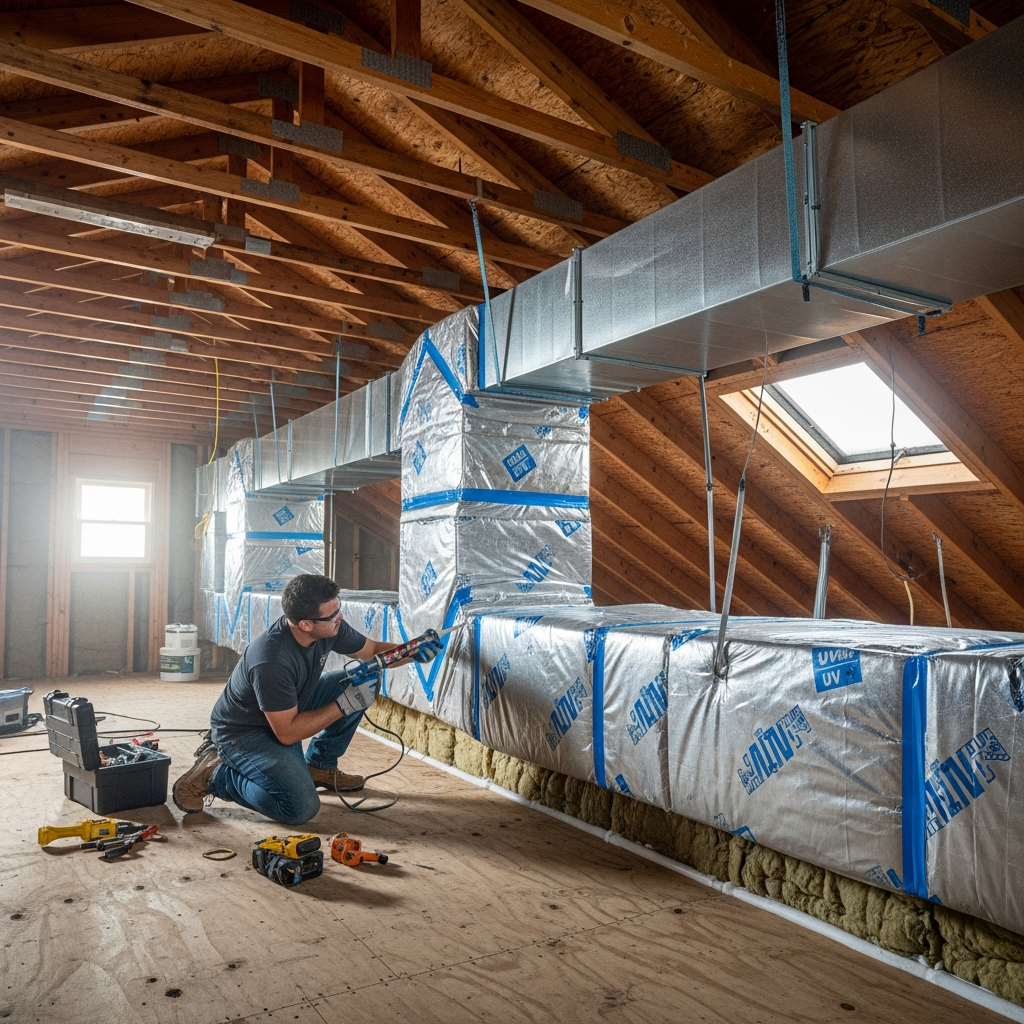
Malibu’s marine layer brings cool, damp mornings that test insulation jackets and vapor control. Ducts that traverse vented attics or crawl spaces need consistent, intact jackets and properly sealed terminations to prevent condensation. In some homes, keeping ducts within conditioned space is possible and can be ideal for both performance and durability. Where that is not feasible, robust insulation and thoughtful routing keep surfaces above dew point and protect building materials from moisture exposure. The smallest gaps can invite trouble over time, so craft and inspection matter.
Wind, wildfire, and resilience
Santa Ana winds, seasonal fires inland, and smoke events call for duct systems that maintain comfort and indoor air quality when outdoor air is challenging. Higher-efficiency filters can help, but only if return sizing and static pressure capacity are designed accordingly. Quiet remains a top priority; the goal is to clean the air without adding hiss. Planning for these realities at the design stage ensures your home feels calm even when the weather is not.
Acoustics: serenity as a design target
Coastal living invites open windows and gatherings that stretch into the evening. The duct system should match that serenity. Achieving near-silent airflow means favoring large-radius turns, generous returns, and balanced branches that do not force velocity at any one diffuser. Lined plenums and careful diffuser selection reduce audible signatures, and corrosion-resistant isolation hardware helps prevent vibration from telegraphing into the structure. The result is a background that feels like the ocean: present, but never intrusive.
Access, architecture, and the coast
Malibu homes often explore bold architecture that can complicate duct routing—floating staircases, vaulted ceilings, clerestory windows, and rooms arranged to capture light and views. Beachfront lots can limit equipment placement, and hillside drives can constrain deliveries and crew parking. These access realities affect staging and sequencing, and they encourage duct pathways that respect both structure and aesthetics. The coastal environment magnifies the payoff for getting these choices right the first time.
Material selection through a coastal lens
Rigid trunks with lined plenums offer durability and quiet along long runs, while flex duct serves as a nimble connector where space is tight. In both cases, hardware that resists salt corrosion is vital. Insulation jackets must be robust, with seams sealed so the marine layer never finds a pathway inside. Mastics and tapes should be selected for longevity in damp, salty air. Done well, these choices create a system that feels new for years rather than months.
Verification: proof against the elements
Measuring performance is not bureaucracy; it is coastal insurance. Duct leakage tests, airflow readings, and balancing confirm the system is tight enough to shrug off seasonal humidity swings and blustery winds without whistling. Documentation brings peace of mind and eases future service, particularly in communities where access must be scheduled and recorded. A system that passes testing once often keeps passing year after year because it was designed and installed with intention.
Hidden conditions common along the coast
Attics near the beach may show early signs of corrosion on legacy hardware, compressed insulation jackets from storage, or stains where condensation formed on cool mornings. Crawl spaces can reveal past rodent activity drawn to the warmth of ducts. Replacement is the moment to correct these issues, switch to sealed returns where wall cavities were used, and route runs to avoid tight kinks that collect dust and reduce flow. Each fix makes the home feel fresher and more predictable in all seasons.
Balancing openness with control
Coastal homes often embrace open plans that blur the line between indoors and out. That beauty can challenge temperature control and noise. Zoning helps, but only if ducts are designed to let zones modulate gently without forcing air at high velocity through a handful of registers. The art is in scaling trunks, branches, and returns so the system can idle quietly most of the time and ramp smoothly when guests arrive or the sun hits glass walls in the afternoon.
Maintenance with the ocean in mind
Coastal maintenance has a rhythm: change filters on schedule, scan visible hardware for early corrosion, and touch up seals where jackets meet boots or plenums. If storage lives in the attic, keep pathways clear to prevent abrasion or crushing of insulation. After large wind events, a quick look for shifted supports or loose terminations pays off. These small routines keep systems steady and quiet year-round.
Choosing partners who know Malibu
Local expertise shows up in little ways: crews who plan around PCH traffic and school runs, who protect floors and stairs in homes that open straight to the beach, and who communicate with neighbors about delivery windows. It also shows up in design decisions that anticipate the marine layer and windy afternoons without sacrificing the home’s aesthetic. The best teams make the process feel like a guided walk on a familiar trail, not a scramble.
Homeowners often arrive at a crossroads mid-project, tempted to refine a diffuser location or expand a return to quiet a bedroom. That is the perfect moment to revisit priorities and confirm the design still aligns with how the home is used. If you are at that stage or preparing for it, taking time to review expert perspectives on duct replacement can clarify which details matter most along the coast.
Frequently asked questions
Do coastal conditions shorten duct system life?
They can if materials and sealing are not selected for salt and humidity. With corrosion-resistant hardware, robust insulation jackets, and thoughtful routing, Malibu duct systems can perform reliably for many years without special fuss.
Will the marine layer cause condensation problems?
Not when jackets are intact, seams are sealed, and surfaces are kept above dew point by design. In some cases, keeping ducts within conditioned space provides extra insurance, but well-executed attic or crawl space runs can also perform beautifully.
Can duct design reduce wildfire smoke intrusion?
Yes. When returns are sized appropriately and the blower can handle higher-efficiency filters, the system can clean indoor air without adding noise. Envelope improvements like door and attic vent strategies complement the duct design for robust protection.
Is there a noise penalty for corrosion-resistant hardware?
No. In fact, high-quality isolation mounts and lined plenums often reduce transmitted vibration and air noise. Quiet is a function of sizing, turns, and sealing more than of hardware material alone.
How often should I inspect coastal ductwork?
Seasonal checks are wise, particularly after windy periods. Look for early corrosion, loose bands, or abrasion where storage brushes against jackets. Routine attention prevents small issues from growing.
If you want your home to feel peaceful and consistent through foggy mornings, bright afternoons, and breezy evenings, design the duct system as carefully as you designed the view. Invite a Malibu-savvy professional to map the pathways, choose materials that shrug off salt, and confirm performance with testing. When you are ready to take the next step, schedule a visit and explore expert duct replacement crafted specifically for Malibu’s coastal conditions.