
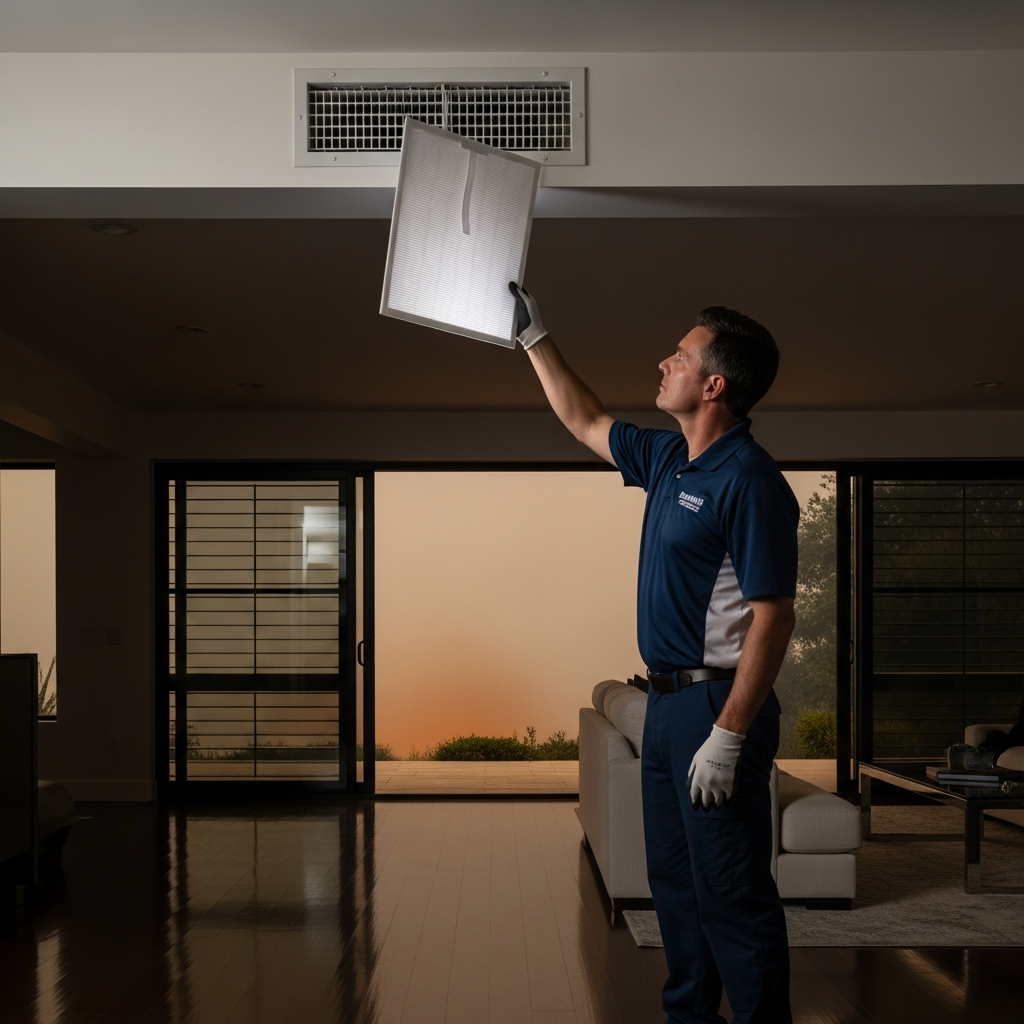
Wildfire season in Malibu carries its own rhythm—the distant hum of aircraft, the way light softens behind a veil of high smoke, and the unmistakable scent that reminds us the Santa Monicas are as alive as the ocean below them. Even when flames are miles away, microscopic byproducts of combustion drift into our neighborhoods and eventually into our homes. That invisible movement is the quiet reason I encourage neighbors to think proactively about air duct cleaning as part of their wildfire readiness plan. It is not only about soot on surfaces or a smoky smell in the sofa; it’s about what accumulates inside the mechanical pathways that move every breath of conditioned air you and your family rely on when windows must stay shut.
When smoke hangs over the coast, the particles we worry about most are fine and ultrafine—PM2.5 and smaller—along with volatile organic compounds that ride alongside. These byproducts behave differently than the sea salt and everyday household dust that Malibu residents know well. They are lighter, more penetrating, and prone to traveling deep into return ducts where they can adhere to dust films and fibrous interior liners. In the days following a smoke event, air may look and smell cleaner, but residues in ductwork persist, waiting to be stirred back into circulation when the blower ramps up on the next hot afternoon.
During active events, best practice is to keep doors and windows closed as much as possible and to run the HVAC in recirculation mode with a high-quality filter. Still, we enter and exit, and the system must breathe. Smoke finds gaps and rides in on clothing and pets. If your ducts already carry a backlog of settled dust, those particles become magnets for smoke residue. After the skies clear, a professional cleaning helps strip those layers, reducing the chance that the smell of smoke lingers long after the incident.
The smell itself deserves a closer look. Odor molecules are stubborn; they absorb into porous materials and bind to residues inside ducts, particularly where humidity spikes help them stick. Malibu’s coastal mornings can encourage this bonding, especially when the system cycles on briefly and cools the duct interior. Over weeks, what started as a faint scent becomes an enduring reminder of a week you’d rather forget. Cleaning interrupts that cycle by removing the films that carry those odors, and it sets you up to pair fresh duct pathways with properly chosen filters and, when appropriate, additional air-cleaning strategies inside the living space.
Understanding Smoke Behavior in Duct Systems
Not all duct systems are created equal, and not all respond the same way to smoke. Homes closer to the water may have more flex duct runs, while hillside properties often rely on longer metal trunks to reach rooms across multiple levels. Smoke behaves differently in these materials. Flex ducts, with their ribbed interiors, provide crevices for particles to nestle into. Metal, while smoother, can cool quickly and encourage temporary condensation that turns dust into sticky films. In both cases, a thorough, methodical cleaning under negative pressure is important to avoid redistributing captured particles back into rooms.
Return-side cleanliness is vital, because that is the intake to your home’s lungs. During wildfire season, occupants often retreat indoors for extended stretches, increasing the runtime of HVAC systems. More runtime means more passes of air through the returns, pulling in any lingering smoke residue from entryways, garages, or rooms where windows had to be cracked for comfort. When schedules allow, a professional assessment before peak season can identify whether the returns are a weak link, so you can address them before air quality dips.
There is also the matter of duct leakage. In older Malibu homes or in those that have weathered multiple renovation cycles, seams and boots can separate over time, especially in attics that experience wide temperature swings. Leaks invite attic dust and, during smoky conditions, ash particles that settled above the living space. Cleaning goes hand-in-hand with sealing improvements; once debris is removed, small repair steps ensure the system doesn’t vacuum contaminants from places it shouldn’t.
From a comfort perspective, a clean duct system is better equipped to deliver consistent temperatures when wildfire smoke forces us to close up and rely on mechanical cooling. Blockages and buildup cause pressure drops and rob end rooms of airflow. When the house is sealed for days, those rooms become stuffy and uncomfortable. Cleaning restores the designed capacity of your ducts so the system can quietly do its job without long, noisy cycles that feel out of sync with your day.
Timing Your Cleaning Around Fire Season
Residents often ask when to schedule service. The ideal cadence is to plan an inspection and, if needed, cleaning in late spring or early summer before sustained heat begins and long run times become the norm. If a smoke event does occur, and you notice persistent odors despite new filters and careful housekeeping, then scheduling a post-event cleaning can shorten the tail of discomfort. Think of it like washing salt spray from a car after a storm—you preserve longevity and restore baseline performance.
Malibu’s calendar has taught us that every season is different. Some years bring light smoke that passes quickly; others deliver a stubborn haze. Flexibility is key. If you hear a faint rattle from a vent, if dust appears at registers even after cleaning the room, or if your filters load up unusually fast, those are your home’s signals. Responding promptly reduces the risk of layers building into something harder to remove later. In the middle of that seasonal strategy, I often share resources that explain professional methods for air duct cleaning so homeowners understand how a well-executed service traps ash and soot without reintroducing them into living spaces.
Don’t forget ventilation and lifestyle factors. When skies are clearer, quick air flushing with open windows can work wonders for indoor freshness. But during smoke events, stick to recirculation and let filtration do the heavy lifting. After the event, housekeeping with a HEPA-equipped vacuum, laundering soft goods, and wiping hard surfaces help ensure that when your ducts are cleaned, the rest of the home doesn’t immediately re-seed them with residue.
Health and Peace of Mind
Wildfire smoke exposure is cumulative. For children, older adults, and anyone with respiratory sensitivities, the difference between “fine” and “comfortable” indoors can be the difference between sleeping well and feeling foggy the next day. Clean ducts don’t solve every indoor air challenge, but they remove a reservoir of captured particles you might otherwise re-breathe for months. Combined with thoughtful filtration and good housekeeping, the result is a home that feels like a refuge, not a reminder of recent stress.
There is also psychological relief in taking action. After days of watching wind direction and app readings, scheduling a service you can control feels grounding. Technicians who know Malibu homes will move carefully around access points, protect finishes, and share what they see—where dust accumulates, which runs look clean, and where small repairs can tighten things up. That transparency gives you a plan, which is priceless in a season defined by uncertainty.
What a Professional Service Should Include
Expect a methodical walk-through and documentation before any hoses or vacuums come out. Registers and returns should be removed and cleaned, duct interiors agitated carefully to dislodge stubborn films, and negative-pressure collection used to capture dislodged material. The work should be contained so it doesn’t become a dust storm inside your home. Afterward, a quick review of findings—leaky seams, insulation gaps, disconnected boots—helps you prioritize next steps that complement the cleaning.
Pay close attention to filter discussions. If you experienced heavy smoke intrusion, your filter likely should be replaced soon after cleaning to prevent a partially loaded media from becoming the new bottleneck. Strategically selecting a filter that your system can handle without raising static pressure too high is part art, part science. That balance preserves airflow and keeps comfort steady without overtaxing the blower.
Frequently Asked Questions
How does wildfire smoke differ from typical household dust in ducts?
Smoke particles are much finer and often bonded with oily or acidic compounds. They penetrate deeper into duct runs and adhere to existing dust films. Removing them requires careful agitation and strong capture so they don’t re-enter the living space.
Should I schedule cleaning before or after fire season?
Both can be appropriate. A pre-season assessment sets you up with clean pathways and reveals leaks that invite attic contaminants. If a significant smoke event occurs, a post-event cleaning can remove residues and help resolve lingering odors.
Will cleaning eliminate the smoke smell completely?
In many cases it greatly reduces or resolves persistent odors by removing the films that carry them. Odors can also live in carpets, drapes, and furniture, so pairing duct cleaning with whole-home housekeeping increases success.
Does running the system during smoke make ducts dirtier?
It can if filtration is inadequate or if fresh-air intakes are active. Using high-quality filters and recirculation mode helps. Afterward, cleaning removes what made it past your defenses.
Can I rely on portable air cleaners instead?
Portable units help room by room, but they don’t address residues inside ductwork or deliver comfort to every room. A combined strategy—duct cleaning, good filtration, and appropriate room air cleaning—offers the most robust protection.
Will cleaning improve airflow to rooms that felt stuffy when windows were closed?
Yes, if debris buildup was part of the restriction. By restoring smooth duct interiors, cleaning reduces pressure losses and helps your system deliver more consistent airflow throughout the home.
Take Back Your Indoor Air
When wildfire season brings smoke to our coastline, your home should still feel like a retreat. If the air indoors has felt heavy or the memory of smoke lingers, schedule a professional assessment and thoughtful service. Start by learning what a complete process looks like with trusted information on air duct cleaning, then line up an appointment so your ducts are clean, your filters are fresh, and your family can breathe comfortably no matter what the wind brings.