
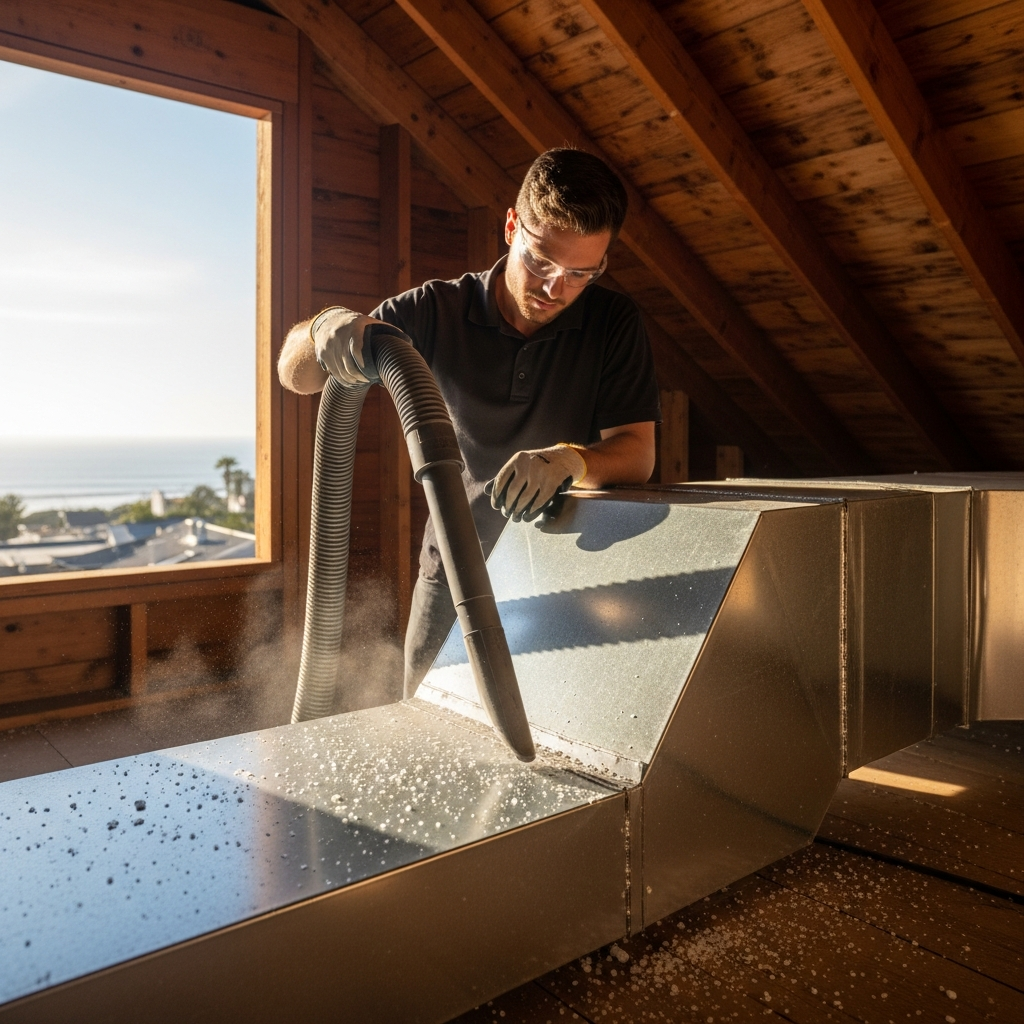
When you live in Malibu, you learn to read the air like a tide chart. Mornings arrive with a gentle marine layer, afternoons lean warm and dry, and by evening the breeze carries a signature mix of ocean salt and mountain sage. That air is our daily companion, and it inevitably finds its way indoors through open doors, leaky seals, and the ever-breathing lungs of your HVAC system. It is exactly why smart homeowners here pay close attention to the condition of their ducts. Early in any conversation about Malibu indoor comfort, I bring up air duct cleaning, not as a buzzword, but as a practical anchor for health, efficiency, and the long-term resilience of our homes perched between sea and chaparral.
Picture a typical week on the coast. A foggy morning adds moisture to fine dust that already lives inside supply runs. Salt crystals from beach days hitch a ride on shoes and towels, then dry and fragment, becoming easily airborne. Pets track in micro-debris from canyon trails. Cooking sends ultrafine particles up and out, and seasonal construction nearby kicks up silica and wood dust. All of this becomes the cargo your HVAC moves around, and when ducts are overdue for cleaning, those particles settle into creases, seams, and boot connections, waiting for the next cycle to send them back into rooms where you breathe, sleep, and unwind.
The benefits of professional duct cleaning start with the obvious: noticeably cleaner indoor air. But here in Malibu, there is something particular about the blend of sea salt, wind-driven sand, and episodic smoke that makes regular attention to ductwork more than a luxury. The minerals and salts in coastal air are mildly hygroscopic, meaning they attract moisture. In ducts, they become tacky surfaces that trap pollen and household dust more readily than you might expect. Over time, that texture can encourage microbial growth if the conditions are right, especially in homes where the HVAC system cycles off for long stretches, allowing humidity to settle inside the metal.
One of the first things homeowners mention after a thorough cleaning is how quickly their homes feel fresher. It is subtle, like the way a room feels after windows have been open to the ocean breeze without the grit. Fewer odors linger from last night’s sauté, and the air doesn’t feel heavy, even on humid days. For families sensitive to allergens, this relief can be meaningful. Your returns are no longer carrying a backlog of particulate into re-circulation, and filters have an easier job. The system breathes like a runner after the training mask comes off, and you can feel the difference when the thermostat calls for cooling on a Santa Ana afternoon.
There is an energy story here as well. Build-up inside ducts narrows effective diameter and roughens the airflow path. The blower has to push harder to achieve the same cubic feet per minute, and that strain spreads through the system—longer run times, more frequent cycles, and added wear on components. In older Malibu homes—especially those built before the latest mechanical codes—ducts may include sharp turns and older flex runs that already slow air. Clean interiors reduce friction losses, which helps restore designed airflow and can improve room-to-room balance so that corners of the house stop running hot while others remain cold.
Understanding Malibu’s Microclimate and Your Ducts
Malibu’s microclimate is defined by coastal humidity, up-canyon temperature swings, and seasonal winds. These forces interact with ducts in ways that matter. High-humidity mornings can condensate on the cooler interior of metal ducts if the system is pulling in damp outside air during short bursts. That moisture binds fine dust into a thin film. Over months and years, that film collects more dust, creating a layered residue that sheds when the blower ramps up, sending a faint sprinkle of particles into your rooms. A cleaning resets the surface to smooth metal or properly maintained interior lining so future dust has less to cling to.
Then there is the salt. Even a mile or two from the shoreline, salt moves on coastal breezes. Inside ducts, salt particulates are abrasive and corrosive. They can wear at seams and develop small points where leaks form. Those pinhole leaks draw in attic dust or crawlspace particles, expanding the problem. A professional cleaner will often notice these vulnerable areas during service, flagging disconnected boots or poorly sealed returns so you can correct them before leakage becomes a comfort or air-quality issue.
Another benefit is noise reduction. When dust mats and small debris pockets gather near dampers or bends, they sometimes vibrate at certain fan speeds, creating a gentle hiss or rattle that you might have grown used to without noticing. After cleaning, homeowners are often surprised by the calmer sound profile of their system. It’s not that the blower got quieter; it’s that obstructions aren’t fluttering and amplifying airflow turbulence in the background.
Malibu homes also tend to host guests—family, friends, and sometimes short-term renters—bringing varied preferences and habits. Doors open and close more frequently, thermostats get nudged, and filters may be changed irregularly. When occupancy rhythm changes, dust loading can increase quickly. A scheduled duct service helps recalibrate the system back to baseline, especially after busy seasons where the house was more active than usual.
Health, Comfort, and Peace of Mind
We talk a lot about contaminants in abstract terms, but the lived experience is personal. If a family member struggles with allergies or asthma, the reduction in airborne triggers after a proper cleaning can be meaningful, particularly in bedrooms and living spaces where we spend most of our indoor time. Cleaner ducts also support better filter performance because filters capture what’s moving, not what’s stuck on interior walls waiting to break loose. Think of duct cleaning and good filtration as partners: smooth, clean pathways allow the filter to do its job with less bypass and fewer re-entrained dust pulses.
There’s also the matter of home care. Malibu architecture frequently blends indoor and outdoor living—large sliding doors, shaded patios, and open kitchens designed for gatherings. These are joys of coastal life, but they invite dust and fine grit inside. Keeping ducts clean is part of caring for finishes, fabrics, and furnishings. Less airborne particulate means less film settling on glass, art, and surfaces you want to protect from the subtler effects of salt and sun.
Some homeowners ask whether upgrading filters alone can substitute for duct cleaning. Filters are essential, and high-quality media can significantly reduce particulate concentration. But filters don’t scrub the interior of your ductwork. If you’ve ever vacuumed a carpet that hadn’t been cleaned in a while, you’ve seen how much more effective regular maintenance is versus relying on one tool alone. Similarly, cleaning the ducts resets the environment so filters can catch what’s new rather than wrestling with a backlog from years past. Around the midlife of an HVAC system, this can be especially important because slightly reduced blower performance due to age magnifies the friction penalty of dirty ducts.
Timing also plays a role in Malibu. Many residents schedule service before peak summer cooling or after seasonal winds, because those events tend to stir up and distribute dust. Pairing a duct cleaning with a system tune-up can identify areas where insulation is thin or where vents show signs of condensation staining. These small observations often lead to inexpensive fixes that keep your home feeling even and clean through a long, dry spell. In the middle of this upkeep cycle, I often point folks to thoughtful resources on air duct cleaning so they can visualize how a professional approach integrates with filter changes, coil care, and sealing improvements.
What to Expect from a Thorough Cleaning
A comprehensive service begins with an inspection. In Malibu’s mix of slab-on-grade and raised-foundation homes, access varies. A careful technician will check return grills, measure static pressure, and examine supply boots for debris patterns that reveal upstream build-up. They’ll confirm that registers are properly fastened and that flex connections aren’t crimped or torn. From there, negative-pressure collection and agitation tools do the actual lifting. The goal is controlled capture rather than stirring dust into rooms. When done correctly, you’ll see the difference around registers and on blower wheels—less residue, clean vanes, and a return to designed airflow.
It is also normal to find small surprises: a child’s marble that rolled into a floor vent years ago, an old fastener, a clump of pet hair lodged at an elbow. These aren’t merely curiosities; they can create whistling or uneven throw from a register. Removing them restores balance, and in older homes with mixed metal and flex runs, it can brighten rooms that once felt sluggish on cooling days.
Follow-through matters. After cleaning, take note of filter condition over the next month. If it loads up unusually fast, it may signal that the job dislodged more than anticipated, or that other parts of the system—like returns or the plenum—need additional attention. A brief recheck keeps your maintenance plan honest and tailored to your home’s realities.
Extending the Benefits
Once your ducts are clean, small habits maintain the win. Shoes off at the door reduces grit. Vacuuming with a HEPA-equipped machine keeps settled dust from re-entering circulation. Replacing or washing filters per schedule—often more frequently in coastal areas—prevents the system from becoming the new gathering place for debris. If you’re renovating, ask the contractor to cap supply and return openings to keep construction dust out; it’s far easier to prevent gypsum powder from entering ducts than to remove it later.
Finally, think of duct care as home stewardship. Just as you rinse salt spray from a surfboard or wipe down patio furniture after a breezy afternoon, the inside of your HVAC benefits from periodic attention. It is a quiet, hidden task with very visible dividends in how your home feels and performs day to day.
Frequently Asked Questions
How often should Malibu homeowners schedule duct cleaning?
In our coastal environment, every three to five years is a reasonable baseline, with the shorter interval for homes closer to the water, those with pets, or households that keep doors and windows open frequently. After wildfire smoke incidents or major renovations, consider moving service up on the calendar.
Will duct cleaning help with persistent coastal odors?
It can, especially when residue inside ducts is trapping and re-releasing smells from cooking, smoke, or damp materials. While odor control also depends on ventilation and source management, a cleaning removes the films that carry and amplify odors.
Could cleaning damage older ducts?
With the right tools and methods, cleaning is gentle on ductwork. The process should include an inspection to identify fragile sections or compromised connections so they can be handled carefully or repaired before agitation begins.
Is it necessary if I replace filters regularly?
Good filtration is essential, but it doesn’t remove debris already bonded to duct interiors. Cleaning complements filtration by restoring smooth pathways so filters capture new particulate more effectively.
Will I notice airflow changes after cleaning?
Many homeowners report more even temperatures and quicker response from vents, especially in rooms at the end of long runs. Reduced internal friction and blockage contribute to a calmer, more consistent airflow.
What about mold concerns in humid months?
Mold requires moisture and a food source. Cleaning removes the dust films that serve as that food source. Pairing cleaning with humidity control and proper system run times helps prevent conditions where mold could take hold.
Ready for Cleaner Coastal Air at Home?
If your Malibu home hasn’t had its ducts evaluated in a while, this is a good season to take a closer look. A thoughtful service restores airflow, eases strain on equipment, and refreshes the feel of every room. Reach out to a trusted local professional and ask for a comprehensive assessment, then schedule a visit that fits your routine. To understand what a well-executed service entails and how it supports long-term comfort, explore air duct cleaning, then take the simple next step of booking your appointment so you can breathe easy with windows open or closed.