
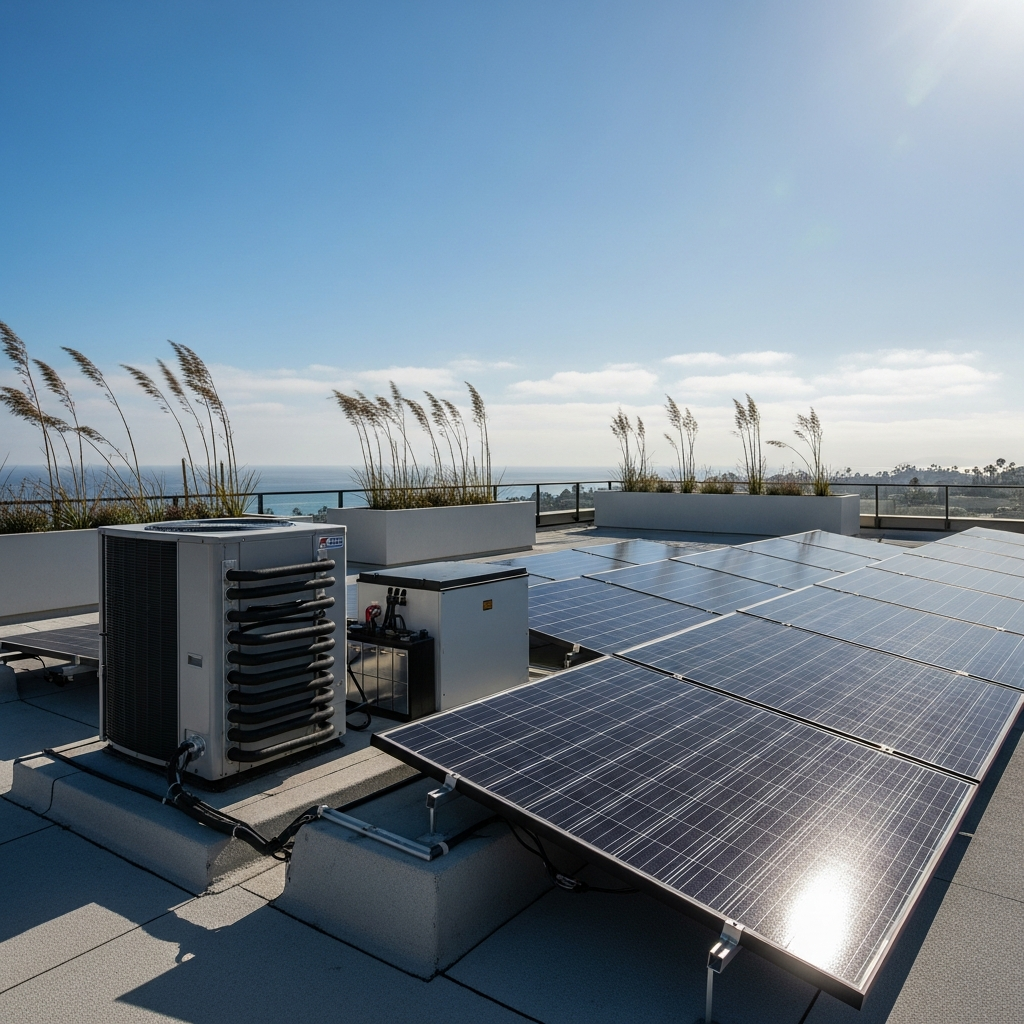
Summer on the Coast and the New Shape of Comfort
Every Malibu summer writes its own story—morning fog that lingers over Surfrider, afternoons when the sand glows white-hot, canyon evenings that bring a cooled hush even after inland temperatures simmer. As the rhythm of these days evolves with shifting climate patterns and growing energy awareness, how we cool our homes is changing just as quickly. You can feel it in the soft hum of variable-speed systems that never quite shut off, in the calm of rooms that hold even temperatures without drafts, and in the way controls consider not only comfort but also the clock and the grid. Trends in cooling here are not fads; they are practical responses to coastal conditions, energy realities, and the desire for interiors that feel as composed as the view outside.
Ask around the neighborhood and you will hear a similar refrain: comfort that plays well with energy use is the new expectation. Whether the house is a glass-forward modern perched above the Pacific or a cedar-shingled cottage tucked near the sand, the march is toward equipment and strategies that do more with less, communicate with utilities when it makes sense, and protect indoor air in a world where seasonal smoke and dust make unexpected cameo appearances. These shifts are changing summer energy use in tangible ways that you can sense in daily life and see in utility dashboards after sundown.
Inverter-Driven, Variable Everything
A decade ago, a system that ran at one or two speeds was the norm. Today, inverter-driven compressors and variable-speed fans set the pace. They whisper rather than shout, holding a steady state that feels natural in Malibu’s capricious weather. The magic is not only quieter operation; it is the way modulation allows longer, gentler cycles that wring out just enough moisture on marine-layer mornings and glide through bright afternoons without overshooting. Fewer on-off jolts translate directly into smoother energy profiles: the home sips instead of gulps, and comfort stays within a narrow, pleasant band.
In practice, that means rooms stop feeling like microclimates of their own. Corners that once lagged behind now track the rest of the space. When wind patterns change at midday, the system does not scramble; it simply trims output. This nuanced behavior is perfect for Malibu, where conditions shift not only week to week but hour to hour. By right-sizing equipment and allowing it to modulate, homeowners trade peaks and valleys for quiet continuity.
Heat Pumps and Coastal Electrification
As the region accelerates toward electrification, high-efficiency heat pumps have become the workhorse of coastal homes. They cool with authority in summer and, on cool nights and shoulder seasons, they warm. The efficiency gains, especially from cold-climate-rated models that still excel in mild winter dips, change the equation for year-round comfort. For Malibu, the added benefit is a smaller mechanical footprint and the ability to pair neatly with rooftop solar and, increasingly, home batteries. The outcome is not just lower operational energy but a system that continues to perform gracefully when the grid asks for cooperation or experiences stress.
There is also a resilience angle. With thoughtful design, a heat pump-based system can ride through Public Safety Power Shutoff events and other interruptions more easily when coupled with storage. Because modulation spreads the load rather than creating spikes, batteries carry comfort longer, and the home keeps its cool even on days that would otherwise feel precarious.
Smart Controls, Time-of-Use, and Demand Response
The newest generation of controls does something both simple and profound: it pays attention to time. Utilities increasingly rely on time-of-use rates that reward off-peak consumption and on programs that nudge homes to ease demand during critical hours. Smart thermostats and integrated controls now schedule pre-cooling in advance of peak windows, then hold temperatures steadily with minimal energy while rates are high. The result is a lived experience that feels the same to you—cool, even rooms—but shifts the energy curve to lower-cost, lower-stress periods.
For Malibu households who host summer dinners, work from home, or manage family routines that change by the week, the elegance lies in automation. Sensors read the temperature and humidity where you actually live, not just in a hallway. The system learns which rooms warm fastest and which stay calm. Then, almost invisibly, it times its effort to meet your preferences while honoring the grid’s needs. It is a social contract built into the machine, and it is changing how the city draws energy across a summer day.
IAQ as a Core Feature, Not an Add-On
Indoor air quality has moved from a side note to a headliner. The combination of marine moisture, seasonal pollen, and the sporadic intrusion of smoke makes filtration and ventilation part of every serious cooling conversation. High-quality filters intercept fine particulates without choking airflow when systems are designed correctly. Balanced ventilation strategies temper and clean incoming air so closing the doors on a smoky afternoon does not translate into stale interiors. The added twist is that modern controls surface IAQ data in a friendly way, letting you know when filtration is making a difference and when it is time for a filter change before comfort slips.
For art-forward and music-filled homes—common along the coast—steady humidity and low particulate counts safeguard instruments, canvases, and finishes. It is not just about breathing easier; it is about preserving the environment where families gather and create. That linkage between wellbeing and preservation is pushing Malibu homeowners to treat IAQ as a primary design requirement rather than a later upgrade.
Low-GWP Refrigerants and Thoughtful Materials
Another quiet shift is the move toward lower global warming potential refrigerants and components that last longer under salt exposure. While you do not feel a refrigerant choice directly the way you feel a temperature change, the industry’s migration to lower-GWP blends and the widespread use of protective coil coatings reflect a broader goal: performance today without compromising tomorrow. In coastal installations, non-corroding fasteners, UV-stable polymer parts, and shelters that deflect direct spray help equipment maintain its efficiency curve over more seasons. Material choices are energy choices when you look at the whole life of a system.
Even the geometry of outdoor placement is evolving. Units are lifted slightly to allow washdown and airflow, fenced with louvered screens that do not stifle, and sited to listen to prevailing winds rather than fight them. These are not showy changes, but they add up to quieter yards and longer service intervals. The energy you do not spend on repair and premature replacement is part of the new summer calculus.
Zoning and Room-by-Room Precision
Malibu’s glass, volume ceilings, and mixed exposures once made even homes with solid equipment feel uneven. Zoning paired with variable capacity has solved much of that. Rather than force the whole house to chase the warmest room, modern systems give each area some autonomy. A sunlit office on the second floor can cool without dragging a shaded guest room along for the ride. That precision keeps occupants comfortable and trims waste at the same time. You sense it in the way the home holds together on bright afternoons: no more cold corners and warm centers, just a single interior climate that feels naturally even.
Designers now often pair a central system with ductless heads for special spaces—a glass pavilion, a studio with separate hours, a gym that warms up quickly. This hybrid approach keeps energy focused where it is needed when it is needed, shaping daily use patterns that are both comfortable and frugal. The math is simple: fewer cubic feet treated unnecessarily means fewer kilowatt-hours consumed.
Solar, Storage, and the Rhythm of the Day
As rooftop solar has spread across Malibu, cooling strategies have adapted to dance with sunshine. Pre-cooling during late morning and early afternoon, when panels are generous, sets the thermal stage for the late-day peak. With home batteries, that strategy extends, allowing the system to flatten the evening ramp while rooms stay even. The coordination becomes a kind of choreography: the house absorbs cool when energy is abundant, then coasts gracefully when the grid is most strained.
In homes without solar, similar timing still matters. Pre-cooling backed by intelligent setpoint management lowers peak demand, and modern systems are better at holding that cool due to tighter envelopes and steady, low-speed operation. Either way, the trend is toward shaping energy use around natural rhythms and utility signals, not merely reacting when the room feels warm.
Data-Driven Maintenance and Predictable Performance
Another development changing summer energy use is predictive maintenance informed by runtime data. Systems now surface coil temperatures, fan speeds, filter status, and fault trends in ways that technicians can interpret before performance slumps turn into hot afternoons. Tiny drifts in efficiency that once hid in the background become visible and correctable. Homeowners experience this as continuity: fewer surprises, less noise, and energy bills that reflect a system holding steady rather than slipping gradually out of tune.
Coastal conditions make this especially valuable. Salt and fine particulates can slowly add a thermal penalty if coils are not kept clean or if filters load faster than expected. Early insight keeps capacity where it should be and helps the equipment maintain its soft-spoken demeanor through the hottest weeks.
Architecture, Aesthetics, and Invisible Comfort
Malibu homes often prioritize the unbroken line between indoors and outdoors. That visual continuity has inspired quieter, more discreet delivery of conditioned air. Linear diffusers that disappear into shadow lines, returns tucked into reveals, and air handlers hidden with vibration isolation make comfort feel architectural rather than mechanical. It is not only about looks; moving air more evenly at low velocities contributes to the stable, modest energy use that defines the best of today’s cooling strategies.
Materials inside the home benefit too. Finishes stay truer, art holds its shape and color, and textiles maintain their hand when moisture swings are kept in check. In this sense, energy trends double as preservation practices. When homes remain stable environments, their contents and structures require less intervention, which is its own form of conservation.
What Should Malibu Homeowners Expect Next?
Looking forward, expect more integration. Cooling will talk to shades that temper afternoon sun automatically, to windows that confirm whether they are closed before a system pushes, and to energy platforms that calculate the most graceful way to keep a house comfortable through peak events. Expect controls to explain themselves more clearly, showing not just setpoints but also how humidity, load, and time are shaping their decisions. And expect equipment to continue quieting down, with outdoor units that feel like background birdsong rather than machinery.
These are not distant possibilities; they are arriving season by season. The thread running through them is respect—for the grid, for the coastline’s particularities, and for the people who call this stretch of the Pacific home. Cooling that honors all three is the shape of Malibu summers now.
How do inverter systems lower summer energy use?
By modulating output to match real-time demand, inverter systems run longer at low speeds, which reduces start-up spikes and avoids overshooting temperatures. The result is smoother comfort and less energy consumed across the day.
Are heat pumps reliable in Malibu’s coastal conditions?
Yes. With protective coatings, corrosion-resistant hardware, and mindful placement, heat pumps perform reliably near the ocean. Their ability to both cool and heat makes them efficient year-round options for the mild coastal climate.
Do smart thermostats really make a difference on time-of-use rates?
They do when paired with a well-designed system. Smart controls can pre-cool during low-rate periods and maintain comfort through peaks, shifting energy use without sacrificing the feel of the home.
What about indoor air during wildfire smoke events?
Quality filtration and sealed ducts help protect indoor air when smoke drifts into the region. Balanced ventilation strategies let fresh air in when conditions improve without allowing particulates to build up when doors and windows must stay closed.
Will low-GWP refrigerants change performance?
Modern systems are engineered around new refrigerants to maintain or improve efficiency and capacity. The transition reflects environmental progress without compromising day-to-day comfort.
How can solar and batteries help with cooling on hot days?
They allow strategic pre-cooling and load shifting. Solar provides abundant midday energy, while batteries carry comfort through evening peaks, keeping interiors steady and reducing reliance on the grid when it is most stressed.
If you want your Malibu home to feel composed while your energy use stays smart and predictable, consider how today’s technologies can serve your spaces and routines. A thoughtful plan will match equipment to architecture, teach controls to respect both comfort and timing, and protect indoor air as the coastline shifts moods. Begin by exploring modern air conditioning solutions, and give your home a summer rhythm that is as calm as the sea beyond the glass.