
Keeping Cool in Malibu Starts With Smart Care
Living in Malibu means waking up to the soft glow over the Santa Monica Mountains, smelling the sea air, and feeling that familiar coastal breeze that drifts in from the Pacific. It also means our homes contend with a unique blend of salt, sand, sun, and seasonal winds that challenge even the best air conditioning systems. I’ve spent years helping neighbors along Point Dume, Carbon Beach, and Malibu Canyon keep their systems humming through foggy mornings, blazing afternoons, and those surprise heat spikes when the valley air rolls west. The heart of it all is thoughtful, consistent air conditioning maintenance tailored to our local environment. When you understand how Malibu’s microclimates affect your equipment, you can take small steps that add comfort, reliability, and efficiency all year long.
These tips come from countless attic crawls, rooftop coil cleanings, and service calls in homes that have seen it all—from salt-kissed oceanfront bungalows to hillside properties buffeted by canyons winds. While every system is different, the principles are the same: protect against corrosion, keep airflow free and steady, stay ahead of seasonal shifts, and pay attention to the sounds and signals your equipment gives you. If you approach your AC like you would a classic surfboard—regularly rinsed, carefully stored, tuned before important days—you’ll be rewarded with smoother performance and fewer surprises when the mercury climbs.
Salt Air, Sun, and the Malibu Microclimate
Malibu’s Mediterranean climate delivers long, dry summers and mild, wetter winters. But the devil is in the daily details. Morning marine layer cools the air and adds moisture, often followed by bright sun that bakes roofs and decks by midday. If you’re close to the water, fine salt crystals can ride the breeze and settle onto outdoor condenser fins. If you’re inland or up a canyon, you may see more dust and pollen, especially in spring when the mountains burst with life. In late summer and fall, Santa Ana winds can drive tiny debris into everything, and during fire season, ash can accumulate quickly on outdoor equipment and within filters. Your maintenance plan needs to account for all of this, adjusting with the seasons so the system doesn’t labor under preventable strain.
Corrosion is the stealthy enemy here. Even a thin salt film on coils can invite corrosion over time, weakening metal and reducing heat transfer. Sun exposure also accelerates wear on electrical components and refrigerant lines if they’re not protected by proper insulation. Keeping vegetation trimmed back, providing gentle shade without blocking airflow, and rinsing coils with low-pressure water on a sensible schedule can go a long way. Think of it as grooming your system for the Malibu lifestyle it lives—outdoor units need regular fresh-water rinses, indoor components need attention during high-pollen and high-traffic months, and filters should be managed like a favorite household staple rather than an afterthought.
Filter Strategy for Beach and Canyon Homes
If there’s one habit I wish every Malibu homeowner would adopt, it’s putting filter changes on the same mental calendar as trash day or grocery runs. Filters stop dust, dander, and salt-laden particulates from nesting in your evaporator coil and blower, but only if they’re fresh and properly sized. In foggy, salty stretches along the coast, you may see filter surfaces accumulate a light gray film faster than expected, especially after a week of onshore flow. Inland, pollen and canyon dust can clog filters in bursts. Inspect monthly in peak cooling season. If your household includes pets, frequent beach traffic, or open-window days, you might increase that cadence.
The choice of filter matters. Higher MERV ratings capture finer particles but can also restrict airflow if your system isn’t designed for them or if you forget to replace them. When air gets choked at the filter, the system compensates by running longer and harder, which can freeze coils, encourage condensation in odd places, and wear out parts sooner. You want the Goldilocks balance: a filter that captures what you don’t want to breathe without turning the air handler into a weightlifter. When in doubt, consult your system’s specifications and consider a mid-range filter you can change consistently. Consistency, more than anything, is what keeps Malibu’s mix of salt and dust from sneaking into the machinery that keeps you cool.
Outdoor Condensers: Space, Shade, and Cleanliness
Walk around your outdoor unit and look at its immediate world. Does it sit beneath a deck that rains down dust? Is it tucked into a hedge that gently sheds leaves into the fan guard? Are there surfboards, kayaks, or garden bins parked against its louvers? Airflow is your condenser’s lifeblood. You want two to three feet of clear space all around and five feet above. If you can provide light shade—think an open lattice or the dappled shade of a trimmed tree—you’ll reduce radiant heat without starving the coil for air. Just be sure nothing blocks the unit’s ability to inhale and exhale freely.
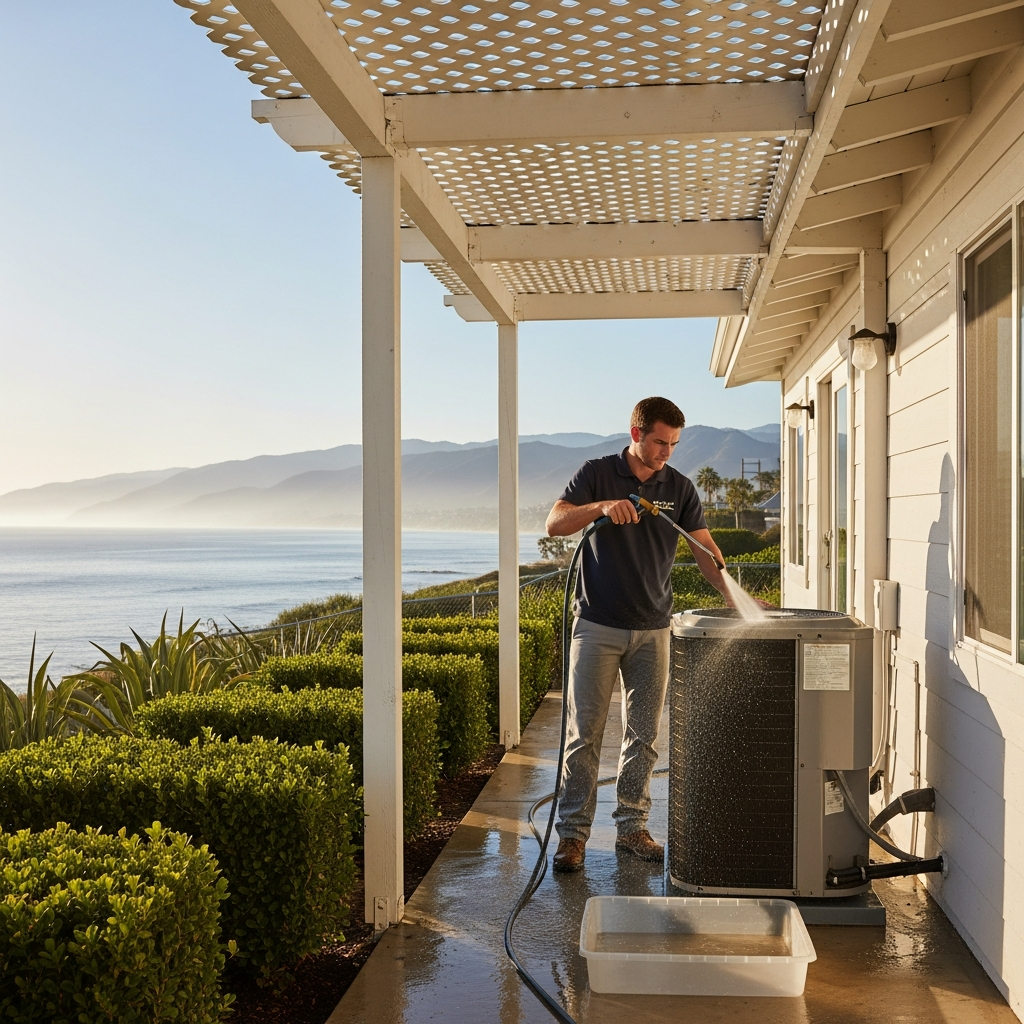
Cleaning is a simple ritual that pays dividends. Cut power at the disconnect, remove large debris, and gently rinse from the inside out with a low-pressure hose when pollen or salt film builds. Avoid blasting the fins; they bend easily, and once flattened, they restrict exchange. If fins are already bent, a fin comb can nudge them back, but take your time. During wildfire season, inspect more often. Ash can look deceptively light but packs tight on coil surfaces, insulating them like a gray blanket. Quick attention after a wind event can prevent weeks of poor performance.
Indoor Components: Coils, Drains, and Ducts
Inside, two quiet heroes need your attention: the evaporator coil and the condensate drain. The coil chills your air and, as it does, pulls moisture from the stream. That moisture has to go somewhere—down the drain. In our coastal environment, where evenings can be cool and damp, that drain line can welcome a slimy biofilm if neglected. A periodic, gentle flush with distilled white vinegar helps discourage buildup, and keeping the area tidy—no storage crowding the air handler—prevents accidental kinks or pulls on the line. If you notice any musty smells or find the drain pan holding water, it’s time to pause, power down, and address the blockage before it overflows.
Ducts tell the story of every season that’s passed through your home. In older Malibu houses, ducts may snake through tight attics or along crawl spaces where temperature swings and critters are part of life. Leaks waste cool air, pull dusty attic air into the system, and force your AC to work that much harder. Sealing obvious gaps at accessible connections and ensuring ducts are properly insulated can recover a surprising amount of comfort. If some rooms always feel hotter or cooler, or if the system is loud in specific locations, that’s your cue to look closer. Balance and sealing go hand in hand, and the result is a quieter, more even cool that feels like ocean air on a calm morning.
Thermostats, Routines, and Seasonal Rhythm
Smart scheduling is the silent partner of good maintenance. Malibu homes see wide day-to-night swings, particularly in shoulder seasons. Use a programmable or smart thermostat to step temperatures gently, not abruptly. If your home opens to those golden late-afternoon rays, pre-cooling slightly before peak heat can help you sail through the evening without a late spike in runtime. For folks who shuttle between the beach and the hills, geo-fencing features can ease the system back when you’re out and welcome you home without blasting the compressor the moment you walk in.
Maintenance and operation dance together. You might turn ceiling fans to a low, steady setting to gently move air; your AC will feel more effective at a higher setpoint if air is circulating. Keep blinds or shades lowered on sun-facing windows during peak heat, and respect the system’s pace—dialing your thermostat way down doesn’t cool faster; it just tells the system to run longer. In our climate, thoughtful adjustments reduce strain, complementing the mechanical care you give the equipment.
Midseason Checkups and When to Call a Pro
Even the most diligent homeowner benefits from a seasonal once-over by a technician who knows coastal systems. Think of it like a tune for your favorite bike before a long ride up PCH. A professional eye will catch early signs of corrosion on coil ends, UV-degraded insulation on refrigerant lines, loose electrical connections, and capacitor wear that can leave you sweating on the hottest afternoon. Midseason checkups are a perfect time to discuss upgrades like better filtration housings, surge protection, or simple airflow tweaks that make a noticeable difference. And if you’re comparing service options, look for techs who speak the language of salt air, wildfire ash, and Title 24 efficiency standards common in California—local familiarity matters.
In the thick of summer, a small reminder helps: maintenance is not a one-and-done task, it’s a steady habit. Building that habit can be as simple as tying tasks to memorable dates—the first June weekend for a coil rinse, the first October weekend to inspect filters before Santa Anas return, or after any big wind event for a quick walkaround. For guidance on setting a cadence that suits your home’s location and lifestyle, bookmarking a trusted resource on HVAC maintenance can keep the essentials top of mind and reduce the chance of avoidable breakdowns.
Small Sounds, Big Clues
Malibu homes are quieter than the city in many ways, which means your system’s voice is easier to hear. A clean, healthy AC hums steadily, cycles predictably, and doesn’t perfume the air with anything odd. Sharp clicking on startup, prolonged rattles, whistling at returns, or a sweet or acrid scent are all clues worth noting. Sometimes, a simple fix—securing a loose panel or reseating a poorly fitted filter—restores the hush. Other times, these sounds suggest a blower starting to lose balance from buildup, a contactor wearing out, a refrigerant leak frosting a coil, or a drain not clearing. Write down what you hear, when you hear it, and what the weather’s doing. Those notes help pinpoint causes quickly if you do need a visit.
Weather Events: After the Wind, After the Fire
We get stretches of perfect, gentle weather, and then Malibu reminds us who’s boss. When strong winds kick up or if wildfire smoke touches the coast, think of your AC like a living lung. After a major wind day, check the outdoor unit for debris, straighten anything that toppled nearby, and peer through the coil fins for obvious buildup. After smoky days, consider replacing filters even if they seem fresh; microscopic ash can clog quickly and hold odors. If your home took on smoke, run the fan with a fresh filter to scrub the air, then switch back to normal cooling routines. A little attention right after these events pays off in better air and a system that isn’t punished for circumstances beyond its control.
Efficiency Without Compromise
Energy efficiency is as much about smoothness as it is about numbers. A well-maintained system glides into cooling instead of lurching. Keep your refrigerator coils clean, seal drafts at doors and windows, and don’t forget the simple physics: heat moves to cool. If your attic is sweltering, your ducts and air handler live in a tougher world; any insulation improvements you make there will reward your AC many times over. If your lifestyle allows, aim for a steady indoor temperature that suits your comfort—often a bit higher than you think—augmented by gentle air movement. Malibu’s evening cool-down, paired with disciplined daytime shading, often lets you nudge setpoints upward without sacrificing ease.
Frequently Asked Questions
How often should Malibu homeowners change AC filters?
During peak cooling, inspect monthly and change as needed. Coastal salt and canyon dust don’t follow the calendar. Beachfront homes or households with pets may change more often, while shaded hillside homes might stretch a bit longer. The key is visual inspection and consistency, especially after wind or smoke events.
What’s the best way to protect outdoor units from salt air?
Provide clear space, gentle shade, and regular fresh-water rinses with low pressure. Avoid aftermarket covers that trap moisture. Keep vegetation trimmed and watch for early signs of corrosion at coil ends and fasteners. Address worn insulation on refrigerant lines so sun and salt don’t accelerate deterioration.
Can I clean my condenser coils myself?
Yes, with care. Cut power, remove debris, and use a soft, low-pressure rinse. Work from the inside out when possible. Avoid harsh chemicals unless recommended for your specific coil material. If fins are bent or corrosion is advanced, call a pro to avoid making matters worse.
Why does my home feel humid on some summer mornings?
The marine layer can push moisture into your home, especially if windows are open early. Your evaporator coil will remove humidity as it cools, but a dirty filter, a slow fan, or an undersized return can make the space feel clammy. Clean filters and proper airflow let the system dehumidify effectively during those fog-bound hours.
Should I schedule professional maintenance every year?
In Malibu, annual service is wise, and semiannual checks are even better if you’re near the surf or endure heavy wind and ash. Pros catch small issues—loose connections, weakening capacitors, early corrosion—before they become downtime on the hottest days.
Is a smart thermostat worth it near the coast?
Yes. Smart controls help you ride Malibu’s daily temperature swings efficiently. Features like pre-cooling, geofencing, and gentle scheduling reduce compressor strain and maintain comfort without constant fiddling. The system runs smarter, and you enjoy steadier indoor conditions.
How do I handle AC use during wildfire smoke?
Close windows, switch to recirculation, install a fresh filter, and run the fan to scrub indoor air. Replace filters more often during and after smoke events. Inspect the outdoor unit for ash and rinse coils once the air clears to restore normal heat exchange.
Whether your home overlooks Surfrider Beach or tucks into the calming green of Ramirez Canyon, nurturing your AC is a lot like caring for the home itself—steady, mindful, and in tune with the coast. If you’re ready to set up a seasonal plan or want a professional eye on a nagging issue, reach out to a trusted local team. Keep your calendar simple, your filters fresh, and your coils clean. And when you want a quick refresher on the essentials, save this link to air conditioning maintenance so your system stays ready for the next warm, golden afternoon when cool air feels like a sea breeze indoors.