
What Factors Determine Coastal AC Replacement Costs in Malibu?
Most people think upgrading a beachside air conditioning system is exactly the same as replacing one in an inland valley, differing only by the square footage of the property. In Malibu, California, however, the microclimate rewrites the rules of mechanical design. The combination of salt-spray exposure, high relative humidity, and strict local environmental standards means a coastal cooling system faces operating conditions that standard off-the-shelf equipment cannot survive.
When planning a system upgrade along the Pacific Coast Highway or up in the canyons, evaluating local variables is the first step toward a reliable investment. Working with an experienced HVAC contractor Malibu ensures that your new equipment is specified to withstand these challenging conditions rather than failing prematurely from corrosion. This guide examines the key variables that influence the design, material selection, and installation process for marine-grade air conditioning systems in our local area.
The Marine Environment: Standard Systems vs. Coastal Builds
The primary factor in the longevity and cost of a beachside cooling system is how well it resists salt-air corrosion. Standard residential air conditioning units rely on bare aluminum fins pressed against copper tubing. When salt-laden air passes through these coils, it triggers galvanic corrosion, a chemical reaction that rapidly degrades the aluminum, breaks the bond between the metals, and eventually causes refrigerant leaks.
To survive in our coastal zone, equipment requires specialized engineering. Homeowners generally choose between two primary approaches when selecting equipment designed to withstand the salt air.
Option 1: Factory-Engineered Marine-Grade Equipment
This approach involves purchasing systems built from the ground up by manufacturers specifically for corrosive environments. These systems feature specialized protective measures applied directly during the manufacturing process.
Factory-engineered coastal units often utilize all-aluminum coil designs (such as microchannel coils) or advanced proprietary coatings applied to the entire heat exchanger assembly. Additionally, the exterior cabinetry is constructed from heavier-gauge galvanized steel or composite materials, secured with stainless steel fasteners instead of standard plated screws. The internal electronics and fan motor assemblies are also sealed to protect delicate components from moisture and salt intrusion.
While the initial procurement cost for these specialized systems is higher than standard equipment, they offer the peace of mind of a comprehensive manufacturer warranty that specifically covers coastal installation. These units are designed to maintain optimal thermal heat transfer throughout their operational lifespan, even when subjected to direct coastal winds.
If you want it handled correctly the first time, consider professional hvac contractor in Malibu.
Option 2: Standard Equipment with Aftermarket Protective Coatings
An alternative strategy involves selecting a high-efficiency standard air conditioner and treating the coils and internal components with an aftermarket corrosion-resistant barrier. These specialized aerosol or dip-applied coatings (such as polyurethane or epoxy-phenolic resins) are applied to the condenser coils before the system is commissioned.
This option provides more flexibility in system selection, allowing homeowners to choose from a wider variety of brands and high-efficiency multi-stage or variable-speed models that might not have a dedicated factory-coastal variant. The barrier coating physically shields the copper and aluminum from salt and moisture contact.
However, aftermarket coatings require meticulous application to ensure complete coverage without restricting the narrow air passages between the condenser fins. Over-application can insulate the coils and slightly reduce the system’s energy efficiency. Additionally, some manufacturers may restrict or void certain parts warranties if aftermarket chemicals are applied to their standard coils, making it critical to coordinate this process through a professional installer.
How Malibu Coastal AC Options Compare
To help visualize the practical differences between these two primary paths, the table below outlines how factory-engineered systems and coated standard systems compare across key technical and operational criteria.
| Evaluation Criterion | Factory-Engineered Coastal Units | Standard Units + Aftermarket Coatings |
|---|---|---|
| Corrosion Resistance Mechanism | Proprietary alloy formulations, sealed cabinets, and factory-applied electro-coatings. | Post-manufacturing spray or dip-applied chemical barrier coatings. |
| Impact on Heat Transfer | None; engineered and calibrated for optimal airflow and thermal performance. | Potential minor reduction in heat transfer if coating is applied too thickly. |
| Warranty Protection | Fully covered under specialized coastal warranties from the manufacturer. | Warranty coverage varies; aftermarket treatments may void standard coil warranties. |
| Equipment Availability | Limited to specific models, brands, and capacity sizes. | Highly flexible; applicable to almost any brand or high-efficiency system. |
| Structural Fasteners & Hardware | Stainless steel or composite hardware prevents cabinet rust-welding. | Requires manual hardware upgrades during installation to prevent rusting. |
| Maintenance Requirements | Standard bi-annual rinsing and inspections. | Requires careful annual inspections to check for micro-cracks in the coating. |
Which Option is Right for Malibu Homes?
Many Malibu homeowners rely on expert hvac contractor in Malibu for exactly this.
Choosing the right approach depends on your property’s exact proximity to the ocean and local topography. For beachfront homes along Broad Beach, Malibu Road, or the Colony, direct exposure to breaking surf and heavy salt fog makes factory-engineered marine-grade systems the most reliable choice. The severe, continuous exposure demands the highest level of integrated protection available.
For homes situated further up in the hills, along the canyons, or shielded behind bluff lines, a high-efficiency standard system treated with a professional aftermarket protective coating often provides excellent protection. At these elevations, the salt concentration is lower, but still high enough to warrant protection beyond standard untreated aluminum coils.
Additionally, keeping an eye out for early warning signs is crucial; if you are currently running an older system, reviewing our guide on signs of coastal AC failure can help you determine if a replacement is becoming urgent. If you are still in the early planning phases, our comprehensive coastal HVAC buying guide provides additional insights on system sizing and technology selections tailored for our local microclimate.
The Malibu Factor: Local Variables Impacting Your Investment
Beyond the choice of equipment coating, several localized factors influence the overall investment required for a system replacement in this area.
Property Accessibility and Architectural Design
Many local homes are built on steep hillsides, elevated on pilings over the sand, or situated on narrow parcels with restricted side-yard access. These architectural realities complicate the installation process. If an outdoor condensing unit is located on a rooftop or an elevated cantilevered platform overlooking the water, specialized rigging equipment or cranes may be required to safely remove the old unit and position the new one.
Structural Mounting and Wind Load Requirements
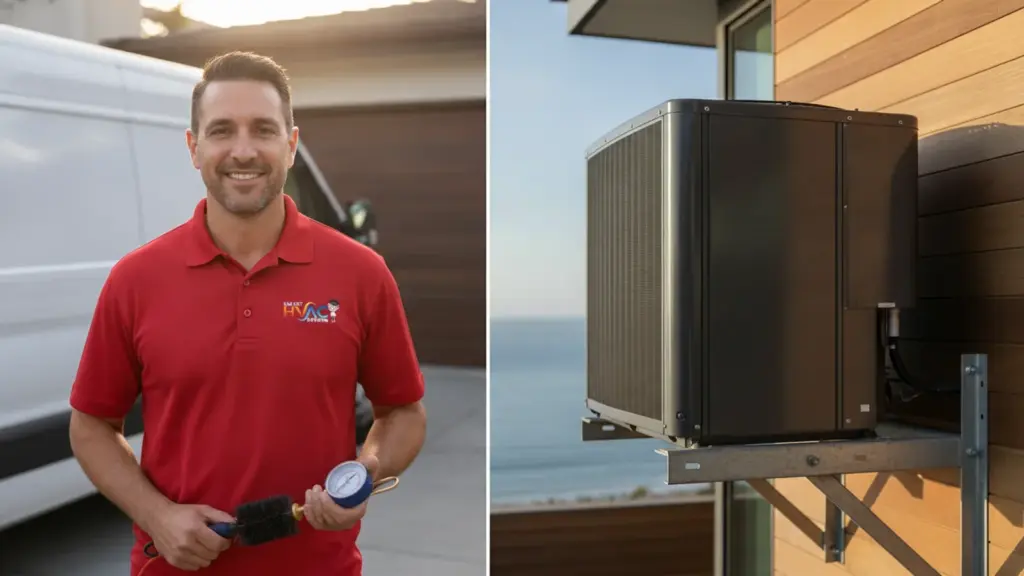
The high winds that sweep off the Pacific Ocean require robust mounting solutions. Condensers must be securely anchored to heavy-duty equipment pads or structural wall brackets designed to withstand local wind loads. Additionally, vibration isolation pads must be integrated to prevent mechanical noise from transferring through the home’s structural framing, especially in multi-level hillside properties.
Ready for the next step? Learn how hvac contractor services in Malibu can help and reach out to the team.
Corrosion-Resistant Line Sets and Electrical Connections
The refrigerant lines connecting your indoor and outdoor units must be protected. Standard rubber line insulation degrades rapidly under intense coastal UV light, requiring heavy-duty cladding or protective pipe chases. Electrical disconnect boxes, conduits, and fittings must also be upgraded to non-corrosive PVC, copper-free aluminum, or high-grade stainless steel to prevent electrical failures caused by salt-air intrusion.
Frequently Asked Questions
How long does a standard air conditioner last in coastal Malibu?
An untreated standard air conditioning condenser installed close to the beach often shows signs of severe coil corrosion and cabinet rust within three to five years, leading to refrigerant leaks and loss of efficiency. Properly protected coastal systems can last significantly longer with regular preventative maintenance.
Can I just wash my outdoor AC unit to prevent salt damage?
Yes, regularly rinsing your outdoor unit’s condenser coils with low-pressure fresh water is highly recommended to remove accumulated salt crust. However, this maintenance should complement, not replace, factory-grade coatings or specialized marine equipment, as washing alone cannot prevent galvanic corrosion in untreated systems.
Does a coastal AC replacement require special permits?
Yes, HVAC replacements require permits and must comply with local building regulations, including California Title 24 energy efficiency standards. Additionally, properties located within specific coastal zones may have strict restrictions regarding equipment visibility, noise levels, and structural mounting safety.
How do multi-split or ductless systems hold up in coastal environments?
Ductless mini-split systems are highly popular in coastal homes because they do not require extensive ductwork, which can suffer from air leaks in humid coastal crawlspaces. However, the outdoor condenser units of these systems still require the same marine-grade coatings and rust-resistant installations as central split systems.
Planning Your Malibu System Upgrade
A coastal AC replacement is a significant investment that requires careful analysis of your property’s exposure level, architectural layout, and local environmental compliance. Selecting the right equipment and protective measures prevents premature failure and ensures reliable indoor comfort during our warmest seasonal transitions. To receive a detailed, professional assessment of your home’s unique requirements, contact a qualified specialist to evaluate your system design today.