How Can You Tell If Your Coastal Malibu Air Conditioner Is Failing?
How do you know when your oceanfront cooling system has finally reached the end of its lifespan? It is the question every homeowner along the Pacific Coast Highway eventually has to ask when the breeze from the ocean stops being enough to keep the indoor air comfortable. In Malibu, California, where the rugged cliffs meet the salt-rich marine layer, local air conditioning systems face environmental pressures that inland units never experience. Recognizing the early warning signs of a failing system can mean the difference between a planned upgrade and an emergency breakdown during a late-summer heatwave.
The Silent Toll of Malibu Salt Air and Moisture
Living along the coastline means dealing with a highly corrosive environment. The very elements that make Malibu a beautiful place to live, such as the daily sea breezes, the heavy morning marine layer, and the high humidity, are notoriously hard on outdoor mechanical systems. Standard air conditioning units are built to withstand rain and heat, but they are rarely equipped to handle constant exposure to airborne salt crystals without specialized care.
When moist, salty air constantly passes through an outdoor condenser unit, it initiates a chemical reaction known as galvanic corrosion. This process accelerated when different metals, like the copper tubes and aluminum fins in your condenser coil, come into contact with salt water. Over time, the aluminum fins weaken, turn to dust, and fall away, leaving the copper tubing exposed and unable to transfer heat effectively. Understanding how these coastal elements interact with your cooling system is the first step in recognizing when it is time to consult an experienced HVAC contractor Malibu to evaluate your home’s system.
1. Flaking, Powdering, and Crumbling Condenser Fins
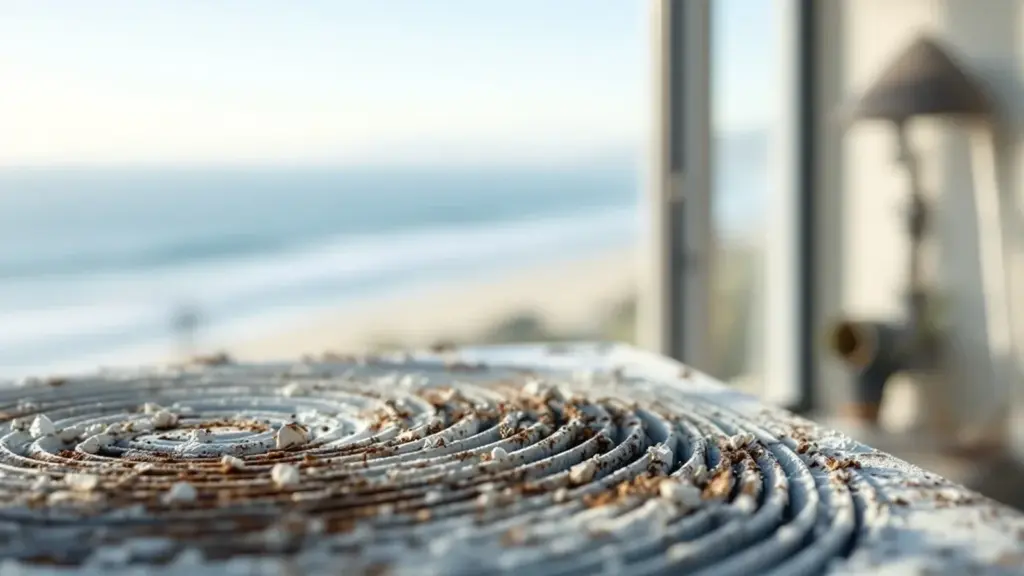
The first physical indicator of a failing coastal air conditioner is the visible decay of the outdoor unit’s heat-exchange fins. If you walk out to your condenser cabinet and notice that the delicate metal grilles look white, powdery, or are literally crumbling when touched, your system is suffering from advanced salt-air corrosion.
These thin aluminum fins are responsible for releasing heat from the refrigerant into the outdoor air. As they deteriorate and fall away, the surface area available for heat transfer shrinks dramatically. This forces your compressor to work twice as hard to cool your home, leading to skyrocketing energy bills and rapid wear on internal components. Once the fins have degraded to a certain point, the damage cannot be undone, and a complete coastal AC replacement becomes the most practical path forward.
2. Frequent Refrigerant Leaks in the Evaporator and Condenser Coils
Are you refilling your refrigerant every spring just to get through the warm months? Constant refrigerant leaks are a classic indicator that your coastal system is reaching the end of its operational life. In oceanfront properties, salt spray does not just damage the exterior fins; it also works its way into the copper tubing of the coils through a process called pitting corrosion.
If you want it handled correctly the first time, consider professional hvac contractor in Malibu.
Tiny microscopic holes form along the refrigerant lines, allowing the pressurized gas to escape. Simply patching these leaks or adding more refrigerant is a temporary fix that can become incredibly expensive over time. Furthermore, operating a system with low refrigerant levels places immense stress on the compressor, eventually causing it to burn out. If your system has suffered multiple leaks over consecutive seasons, it is a clear indication that the metal has lost its integrity and you should begin looking into coastal HVAC replacement options.
3. Decreased Airflow and Struggle Against High Humidity
Malibu summers can bring heavy, humid air that makes the indoor environment feel sticky and warm, even when the thermometer does not show extreme temperatures. A properly functioning air conditioner does two jobs: it lowers the air temperature and removes excess moisture from the air. When a system is failing, you will notice a distinct drop in airflow from your registers and a lingering damp feeling indoors.
This struggle often stems from a combination of clogged indoor blower motors, failing fan motors, or blocked coils that cannot transfer heat. When the system can no longer manage the humidity, your indoor spaces can quickly become breeding grounds for dust mites and organic growth. If your home continuously feels humid despite the system running for hours, it is a strong sign that the equipment has lost its capacity to manage the coastal microclimate.
4. Unusual Noises and Constant Short-Cycling
A healthy air conditioning system should run in predictable, smooth cycles, gently turning on to cool the home and then shutting off once the target temperature is reached. If you start hearing loud rattling, screeching, or clanking noises from your outdoor unit, the internal bearings, fan blades, or compressor valves are likely failing due to moisture penetration and wear.
Additionally, watch out for short-cycling, which is when the AC turns on and off every few minutes without actually cooling the house. This constant starting and stopping places an enormous electrical load on your home’s panel and rapidly degrades the compressor’s start capacitor and winding insulation. Often, short-cycling is the final stage of system fatigue before a complete compressor blowout occurs.
Many Malibu homeowners rely on expert hvac contractor in Malibu for exactly this.
5. Spiking Utility Bills with Diminishing Cooling Performance
If you notice that your monthly electricity bills are rising steadily during the summer months, but your home still feels warm, your system is losing its efficiency. Older systems, especially those that have endured years of salty air, must run much longer to achieve the same cooling effect that a new system can deliver in a fraction of the time.
This drop in efficiency is a direct result of system fatigue. When the coils are corroded, the fan motor is struggling, and the compressor is worn down, the system draws significantly more power while delivering less cool air. Investing in a modern, coastal-grade system can help lower those monthly operating costs while restoring complete comfort to your home.
How Malibu’s Unique Climate and Housing Stock Impact System Lifespan
The geographic location of Malibu creates a highly specific set of demands on residential heating and cooling equipment. Homes built along the immediate coastline, such as those along Broad Beach or Malibu Road, are constantly exposed to direct salt spray, sand, and wind. This direct exposure can reduce the average lifespan of a standard residential air conditioner from fifteen years down to as few as five to seven years if the system does not receive regular rust prevention maintenance.
Additionally, many homes in the hills of Malibu, such as those in Malibu Canyon or near Pepperdine, experience a mix of coastal fog in the mornings and intense heat and dry winds in the afternoons. This dramatic daily temperature and humidity swing forces systems to expand and contract rapidly, putting extra stress on copper joints and electrical connections. Older homes in the area may also have ductwork that was not designed for modern high-efficiency systems, meaning that a failing AC is often compounded by leaky, degraded ducts that waste cooled air before it ever reaches your living spaces.
What to Expect When Replacing a Coastal AC
If you have identified these signs of failure in your own system, planning a replacement before the unit breaks down completely is the best way to ensure a smooth transition. The process begins with a detailed home evaluation to determine the correct cooling load for your space, taking into account sun exposure, window orientation, and local insulation levels.
Ready for the next step? Learn how hvac contractor services in Malibu can help and reach out to the team.
For coastal homes, installing a standard off-the-shelf unit is rarely the best long-term choice. Modern installations in these environments should feature specialized corrosion-resistant coatings on the condenser coils, stainless steel hardware, and protective cabinets designed to withstand marine environments. Working with a professional team ensures that your new system is sized correctly, installed with proper coastal protections, and backed by a robust warranty to give you peace of mind for years to come.
Frequently Asked Questions
Can I just paint my outdoor AC unit to protect it from salt air?
No, you should never paint the delicate aluminum fins or functional parts of your outdoor condenser unit, as paint will insulate the coils and prevent the system from releasing heat. Instead, professional protective coatings must be applied during manufacturing or by certified technicians using specialized, heat-conductive anti-corrosive treatments.
How often should an oceanfront AC system be serviced?
For homes located within a mile of the ocean, professional maintenance should be performed at least twice a year. This allows technicians to wash away accumulated salt crust, inspect the coils for early signs of pitting, and apply protective treatments to extend the life of the system.
What are the primary signs you need a new AC in Malibu?
The most common signs include crumbling condenser fins, recurring refrigerant leaks along the coastal-exposed coils, continuous indoor humidity issues, short-cycling, and a noticeable rise in monthly energy bills despite declining cooling comfort.
Take Control of Your Home Comfort Today
Do not wait for a complete system breakdown during the warmest days of the year. If your cooling system is showing signs of coastal wear, crumbling coils, or failing performance, taking action early can save you time, stress, and money. Contact the experienced team at Smart HVAC System to schedule a comprehensive system assessment, explore your options for a durable, coastal-grade system, and keep your coastal home comfortable all year round.