Finding the Right HVAC Contractor in Malibu: Your Coastline AC Repair vs. Replacement Guide
You step out onto your deck to enjoy the morning breeze off the Pacific, but instead of the quiet rustle of the tide, you are greeted by a harsh, metallic rattle coming from your outdoor condenser unit. The marine layer that makes living in Malibu so beautiful also carries a invisible threat to your home comfort: salt-laden moisture that relentlessly attacks metal components. When your cooling system begins to falter under the weight of this coastal exposure, deciding whether to invest in another repair or transition to a completely new system is one of the most significant home decisions you will face. Partnering with an experienced, licensed HVAC contractor in Malibu ensures you receive an honest, technically sound assessment of your equipment before making that commitment.
The Realities of Coastal Wear on Malibu Air Conditioners
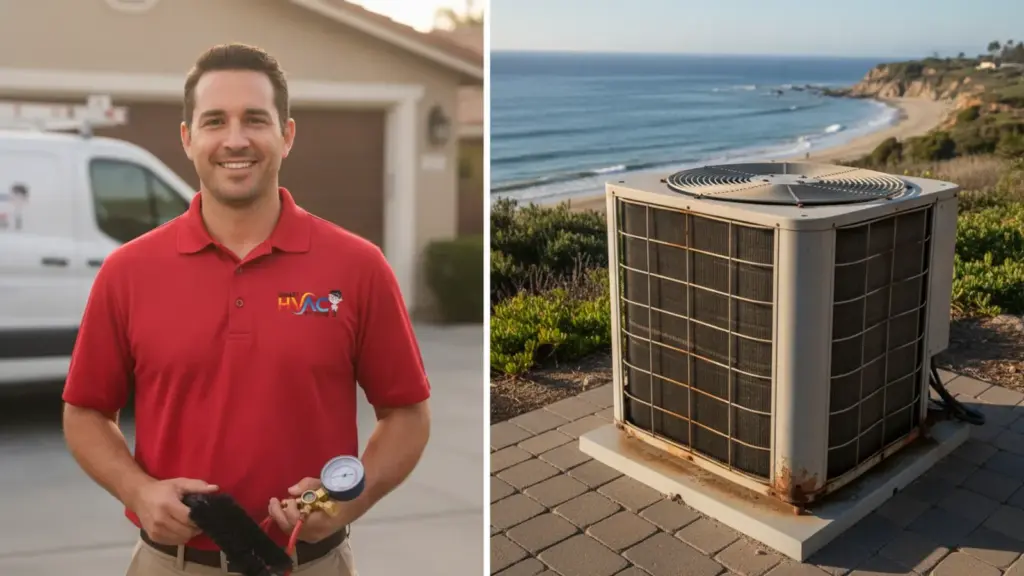
Living near the water means your mechanical systems age differently than those located further inland. While a standard air conditioner in a dry climate might easily reach fifteen years of reliable service, coastal systems face accelerated degradation. Salt spray deposits a thin, highly corrosive film over delicate heat exchange surfaces, initiating a chemical reaction that degrades structural integrity and thermal efficiency.
This relentless coastal exposure primarily targets three areas:
- The Condenser Coils: These aluminum fins are exceptionally thin. When salt accumulates in the tight gaps, it triggers galvanic corrosion between the copper tubes and aluminum fins, leading to a loss of heat transfer capability and eventually refrigerant leaks.
- The Outer Cabinet and Chassis: Steel panels, even when powder-coated, can rust along joints and fasteners, compromising structural integrity.
- Electrical Contacts and Components: Salt air penetrates control boxes, corroding contactors, capacitors, and circuit boards, leading to mysterious intermittent failures.
Understanding these unique challenges is key to determining whether your system can be saved or if it is time to consider an evaluation of salt-air damage to plan your next steps.
Evaluating the Lifespan of Coastal Cooling Systems
In our local microclimate, the standard rules of thumb for HVAC longevity do not always apply. Standard industry literature often suggests waiting until a system is fifteen years old to replace it. However, along the coast, a system reaching its tenth year is often entering its twilight phase.
The lifespan of your system is highly dependent on its proximity to the surf line. Homes located on the beach side of the highway often see systems show severe wear in as little as five to seven years, whereas properties nestled higher up in the canyons may enjoy a lifespan closer to twelve years. When evaluating your equipment, a professional technician looks beyond the manufacture date on the nameplate. We assess the physical thinning of the metal, the degradation of the coil loops, and the operating pressures to determine the true remaining functional life of your unit.
The Malibu Climate and Housing Stock Factor
If you want it handled correctly the first time, consider professional hvac contractor in Malibu.
The housing landscape in Malibu is incredibly diverse, ranging from classic mid-century beach cottages perched on pilings along Malibu Road to sprawling, modern architectural masterpieces tucked into the hills of Point Dume and Carbon Beach. This architectural variation directly influences how we approach home comfort and system design.
In older beach bungalows, space is at a premium. These homes often feature tight utility closets or narrow crawl spaces that make installing large, modern high-efficiency split systems a structural challenge. Many of these properties rely on compact wall-mounted configurations or package units. Conversely, newer, multi-level estates require complex zoning systems with multiple outdoor units to handle the varying solar heat loads coming through expansive floor-to-ceiling glass walls.
Furthermore, our local weather patterns present a unique challenge. While we experience intense marine layers that bring cool, damp, salty air in the mornings, the afternoons can bring warm, dry winds sweeping down from the Santa Monica Mountains. Your system must be robust enough to handle the high humidity of the damp mornings, yet powerful enough to cool the home rapidly when the sun breaks through. This extreme variance in daily conditions makes proper sizing and professional installation critical to preventing premature system failure.
When to Choose Air Conditioning Repair in Malibu
Investing in repairs is often the most sensible path when the underlying system remains fundamentally sound. Minor component failures do not warrant discarding a system that still has years of service left to offer. You should generally opt for professional air conditioning repair Malibu if the following conditions are met:
First, the system is less than eight years old and the coils show only surface-level cosmetic tarnishing rather than deep pitting or metal loss. Second, the issue is isolated to a standard mechanical or electrical component, such as a failed start capacitor, a faulty contactor, or a worn fan motor. These parts are easily accessible and relatively straightforward to swap out.
Additionally, if your system is still covered under the manufacturer’s parts warranty, repairing the unit is almost always the preferred financial choice. Standard warranties often cover major components for up to ten years, meaning your out-of-pocket costs may be limited to labor. Keeping up with regular coastal HVAC maintenance is the most effective way to catch these minor component failures before they escalate into catastrophic issues that damage your compressor.
When to Invest in AC Replacement in Malibu
Many Malibu homeowners rely on expert hvac contractor in Malibu for exactly this.
There comes a point where repeatedly repairing an old, corroding unit becomes a case of diminishing returns. Continuing to patch a system with failing coils or a compromised compressor is often a poor allocation of home maintenance resources. Choosing professional AC replacement Malibu is typically the wisest long-term decision under these circumstances:
If your system relies on R-22 refrigerant, replacement is highly recommended. R-22 has been phased out due to environmental regulations, making any repairs requiring refrigerant addition exceptionally costly. Furthermore, if the outdoor condenser coils are flaking away, crumbling to the touch, or suffering from persistent microscopic leaks, a repair is only a temporary band-aid.
The health of the compressor is another decisive factor. If the compressor fails or is grounded, replacing this central component on an older, rust-worn system is rarely advisable. The labor and part requirements are substantial, and you are still left with an old system prone to subsequent failures in other areas. Upgrading to a modern system also allows you to benefit from advanced coastal protection features, such as epoxy-coated coils and marine-grade cabinets designed to withstand our salty environment.
Comparing the Long-Term Values of Repair vs. Replacement
Making the final choice requires balancing immediate costs against long-term operational expenses. Below is a comparison detailing how different scenarios impact your home comfort and financial planning over time.
| Consideration Factor | Choosing Repair | Choosing Replacement |
|---|---|---|
| Initial Outlay | Lower immediate cost, resolving the specific mechanical failure. | Higher upfront investment for the equipment and professional installation. |
| Energy Efficiency | Keeps the system at its current, likely degraded, SEER2 rating. | Immediately lowers monthly utility bills with modern high-efficiency technology. |
| Warranty Coverage | Typically limited to a brief warranty on the specific part replaced. | Provides peace of mind with robust multi-year parts and compressor warranties. |
| System Reliability | Other aging, salt-exposed components remain at risk of failing next. | Eliminates unexpected breakdown risks and emergency service calls. |
| Coastal Protection | The existing unit remains vulnerable to ongoing salt-air corrosion. | Allows for the integration of specialized coatings and corrosion-resistant alloys. |
While a repair solves the problem today, an upgrade can significantly reduce your monthly energy consumption, often helping offset the initial installation costs over the lifespan of the new system. To explore the financial elements in greater detail, you can read more about coastal AC replacement cost factors to help guide your budgeting process.
The Importance of Professional Load Calculations and Sizing
One of the most critical mistakes a homeowner can make during a replacement is simply matching the size of the new unit to the old one. Over the years, your home may have undergone changes, such as window upgrades, attic insulation additions, or even room remodeling, all of which alter your home’s thermal footprint.
Ready for the next step? Learn how hvac contractor services in Malibu can help and reach out to the team.
An experienced, licensed HVAC contractor in Malibu will perform a comprehensive load calculation, taking into account the orientation of your home relative to the ocean winds, the amount of west-facing glass exposed to afternoon sun, and the local humidity levels. An oversized system will cycle on and off too rapidly, failing to adequately dehumidify your home and putting excessive wear on the compressor. An undersized system will run continuously, struggling to maintain your desired temperature on hot days and inflating your energy bills. Correct sizing is the foundation of a reliable, high-performing coastal comfort system.
Frequently Asked Questions
How does salt air affect my air conditioner’s efficiency?
Salt deposits build up on the delicate aluminum fins of your outdoor coil, acting as an insulating barrier that prevents efficient heat transfer. This forces your system to run longer and work harder to cool your home, leading to increased wear and higher monthly energy bills.
Is it worth repairing an air conditioner that is over ten years old in Malibu?
Generally, if a coastal system is over ten years old and requires a major repair like a compressor replacement or coil repair, investing in a new system is the more reliable and cost-effective choice. The remaining components of the old unit are likely already compromised by salt-air corrosion.
What features should I look for in a new coastal AC system?
Look for systems featuring factory-applied anti-corrosive coil coatings, copper-to-copper connections where possible, marine-grade steel cabinets, and robust warranties specifically covering coastal installations. These features are designed to significantly extend the operational life of your system.
How often should I have my coastal HVAC system serviced?
Due to the aggressive nature of salt air, we recommend professional maintenance at least twice a year for beachfront properties, and at least once a year for homes located further up in the canyons. Regular rinsing of the outdoor coil with fresh water can also help mitigate salt accumulation between service visits.
Secure Your Comfort with a Trusted Local Partner
Navigating the choice between repairing your current air conditioner or investing in a modern, corrosion-resistant replacement does not have to be an overwhelming process. By understanding how the coastal environment impacts your system and partnering with a knowledgeable specialist, you can protect both your home comfort and your investment. Whether you need a precise diagnostic repair to get your system back up and running, or you are ready to explore your options for a highly efficient, marine-grade replacement, we are here to provide clear, professional guidance tailored to our unique local climate. Reach out today to schedule a comprehensive system assessment with our expert team.