
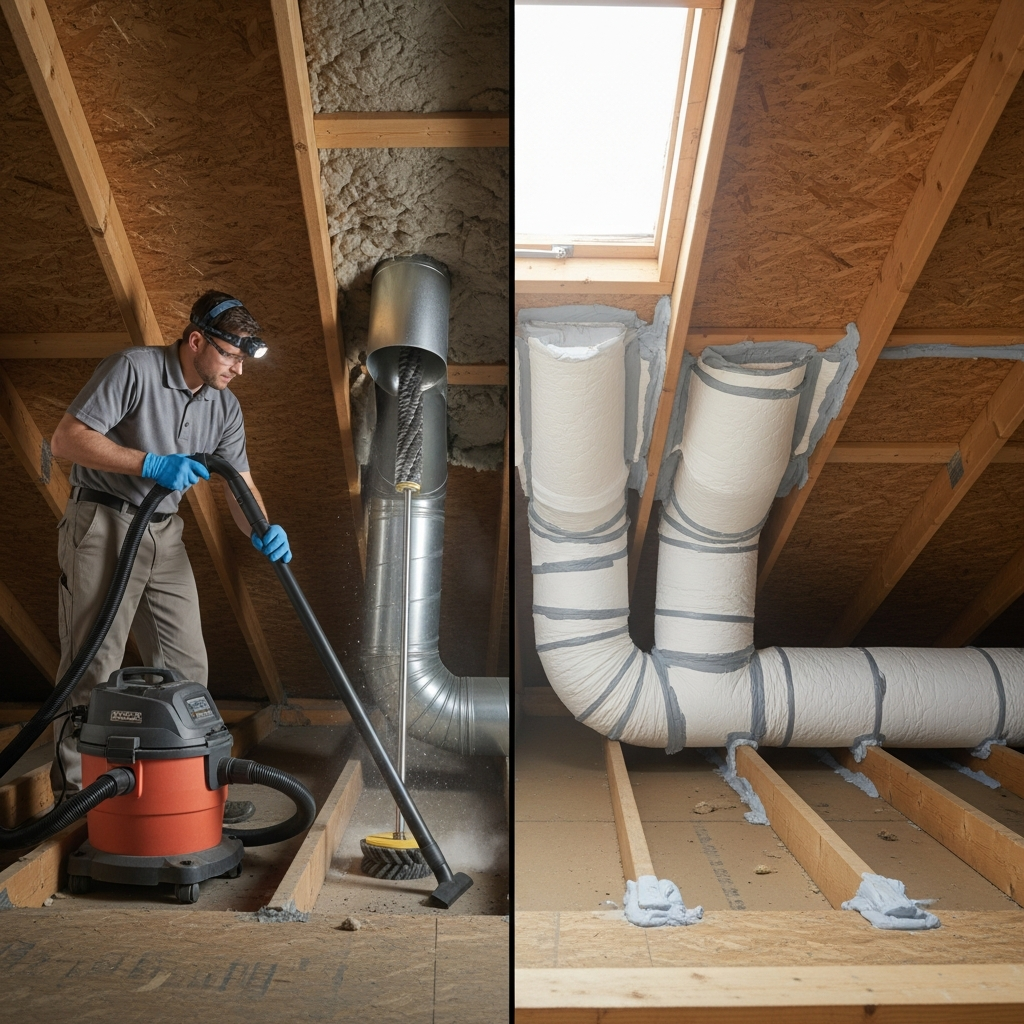
The question comes up often in Malibu: should you clean existing ducts or replace them outright? Our coastal climate, with cool, damp mornings and warm, breezy afternoons, creates conditions that can magnify both the benefits and the limits of each option. For many homeowners, deciding between cleaning and duct replacement is really about diagnosing what is happening in the hidden parts of the home and matching the remedy to the root cause. The right choice prioritizes health, comfort, and durability—three pillars that matter as much here as ocean views and natural light.
Cleaning can be valuable in very specific circumstances. If ducts are structurally sound, properly insulated, and well-sealed, but they have collected dust and debris, a professional cleaning can reduce particulates and odors for a time. Replacement, on the other hand, addresses deeper problems: failing materials, obsolete layouts that starve certain rooms, chronic leakage that pulls attic or crawl-space air into the airstream, and noise that resists tuning. The art is knowing where your home sits on that spectrum.
Before choosing a path, a good local assessment examines materials, connections, insulation condition, and accessibility. In Malibu homes, especially those nearer the ocean, flex duct jackets can show wear from salt and sun exposure through roof vents. In hillside properties, rodents or wind-driven dust can affect vulnerable sections. A careful look reveals whether cleaning will reach the real problem or merely polish the surface of a failing system.
When cleaning makes sense
Cleaning is most effective when the duct network has sound structure and appropriate insulation levels, and when design fundamentals are intact. If airflow is generally strong and rooms are balanced but there is visible dust accumulation at registers or a light, stale smell at start-up, a cleaning can be a reasonable first step. It is also useful after renovations that release drywall dust and sawdust into return paths, provided the ducts themselves are healthy.
However, even in these cases, cleaning should be paired with an inspection to confirm that leakage is not drawing in attic particulates. Sealing gaps and verifying connections with mastic can prevent a quick reaccumulation of debris. In Malibu’s marine environment, maintenance cycles should be mindful of the salt that finds its way into attics; routine checks ensure that minor issues do not become reasons to scrap a still-serviceable system.
When replacement is the better path
Replacement is the stronger choice when the duct materials are degraded, insulation is failing, or the layout never matched the home’s current life. If you can see crushed runs, detached boots, or gaps sealed with aging compounds that no longer hold, cleaning offers little relief. Chronic temperature differences between rooms, whistling registers at reasonable airflows, and persistent dust despite regular filter changes are additional signs that the system’s underlying design or condition is at fault.
In Malibu, wildfire seasons and marine layers add two more considerations. If your ducts have been exposed to smoke infiltration or recurring condensation that has compromised insulation, replacing those sections or the entire network resets the home’s baseline for air quality and comfort. Fresh, well-sealed ducts also prevent future infiltration, which cleaning alone cannot guarantee.
Design and verification: the replacement advantage
When you replace ducts, you gain the opportunity to redesign. That means sizing trunks and branches correctly, adding returns where the system needs to breathe, and choosing registers that reduce noise. In a two-story home, for example, you can address an upstairs that overheats each fall when canyon winds blow warm and dry. In a beach cottage, you can solve the back bedroom that never sees enough supply air. Design, not just new material, is where replacement pulls ahead of cleaning as a long-term solution.
Verification closes the loop. After installation, duct leakage testing, airflow measurements, and static pressure checks confirm that performance targets are met. You get a before-and-after picture that a cleaning cannot provide, and you leave the project with documentation that tells the story of improvement.
Indoor air quality and health considerations
For families with allergies or sensitivities, the choice often leans toward replacement when ducts are older or leaking. Sealed, insulated ducts keep attic dust, rodent allergens, and smoke particulates out of the supply air. Return placement is refined to avoid drawing from spaces with stored items or lingering odors. During wildfire events, a tighter system paired with appropriate filtration offers a measurable difference you can feel and smell.
If a professional inspection finds microbial growth tied to chronic moisture problems in insulation or on interior duct surfaces, replacing affected sections is typically more effective than cleaning. The goal is to eliminate moisture pathways and materials that harbor growth, not simply to remove visible signs.
Cost-of-ownership perspective without numbers
While it is tempting to compare options through a single financial lens, the better question is how each path supports comfort, health, and durability over time. Cleaning may offer a short-term reset if the system is structurally sound. Replacement, by contrast, resets the system’s lifespan, trims hidden losses, and often reduces noise in ways that change daily living. Thinking in terms of outcomes clarifies the decision without chasing short-term savings that do not address root causes.
In Malibu, where coastal conditions can age materials faster than inland areas, the longevity benefits of new, well-sealed ducts carry additional weight. You are not merely addressing today’s issues; you are insulating your home against tomorrow’s conditions.
Environmental and comfort impacts
A tight, well-designed duct system reduces waste and supports consistent temperatures, which is kinder to equipment and the environment alike. You may feel a calmer home where thermostats are less of a tug-of-war, and rooms settle into even comfort more quickly. Cleaning cannot create that balance if the underlying layout is flawed; replacement can.
Noise is another daily-life factor. If whooshing vents and rattling registers have become part of your soundtrack, design-driven replacement usually quiets the home in ways you notice at once. When the ocean is again the loudest thing you hear at night, you will know the system is properly tuned.
What a thorough assessment looks like
A good evaluation starts with your lived experience—where the home feels inconsistent, what you smell at start-up, what noises bother you—then moves to the attic and crawl space. The pro checks material condition, insulation integrity, connection types, support spacing, and the way returns and supplies serve rooms. Measurements of airflow and static pressure complete the picture. With that in hand, you can see whether cleaning aligns with the findings or whether a redesigned system will better serve your goals.
Transparency matters. You should be shown photos and walked through the plan. If the recommendation is cleaning, you will understand why. If it is replacement, you will see how the design addresses the concerns you raised. That clarity helps you choose with confidence.
How Malibu’s setting influences the choice
Our coastal setting makes air movement inside a home more dynamic. Morning fog leaves attics cool and damp, afternoons bake roofs, and offshore winds in the fall test seals and pressure balance. In beach-adjacent homes, the air can carry salt that accelerates wear on jacketing and tapes. Cleaning does not reverse that weathering; it only tidies the interior. Replacement, using materials and sealing strategies chosen for marine environments, creates a system that is better aligned with what the home faces outside.
Wildfire seasons add episodic but intense stress. Smoke infiltration can leave residues that are hard to dislodge completely, especially in porous or degraded duct materials. When that is the case, replacement stands as the surest reset.
Making the decision with confidence
The fork in the road is not about choosing the most elaborate option; it is about choosing the right fix for the right problem. If your ducts are sound and your main complaint is dust that appeared after a remodeling project, cleaning might be perfect. If your complaints include chronic imbalance, noise, visible damage, or odors that persist, a properly designed replacement is the durable answer. Either way, insist on a plan that matches Malibu’s realities and includes clear verification at the end.
In the heart of that decision, you may find it helpful to step back from jargon and remember the outcome you want. A home that feels steady, quiet, and clean is worth pursuing with intention.
Frequently asked questions about cleaning versus replacement
These are the questions Malibu homeowners ask most often when deciding which path to take. The answers reflect our coastal climate and practical concerns in lived-in homes.
How do I know if cleaning will be enough?
If ducts are in good physical condition, insulation is intact, and airflow is generally strong and balanced, cleaning can be effective—particularly after dusty renovations. A professional inspection and basic leakage testing help confirm whether cleaning would address your main concerns.
What signs point strongly toward replacement?
Chronic temperature differences between rooms, visible damage or detachment, failing insulation, persistent odors, and whistling at normal airflows are strong indicators. If the design never matched the home’s current layout, replacement with a modern plan typically yields the best outcome.
Can cleaning fix noise issues?
Cleaning removes debris but does not change duct sizing, routing, or diffuser selection—all key drivers of noise. If noise is a core complaint, replacement guided by proper design is more likely to deliver a quiet home.
Is there a middle path?
Sometimes. Selective replacement of compromised sections, combined with sealing and strategic cleaning of healthy runs, can be a bridge solution. The decision hinges on inspection results and how closely a hybrid plan matches your comfort goals.
How does Malibu’s climate factor into the decision?
Salt air, fog, heat, and wind test duct materials and seals in ways inland climates do not. Cleaning cannot restore weathered jackets or degraded insulation. Replacement with marine-suited materials and robust sealing strategies addresses those conditions directly.
What should I expect at the end of either service?
With cleaning, expect a tidier interior to the ducts and short-term odor reduction if the system is otherwise tight. With replacement, expect verification: leakage tests, airflow readings, and static pressure checks, along with a walkthrough to feel even comfort room by room.
If you are at the crossroads and want a plan centered on your home’s real conditions rather than a generic prescription, reach out to discuss duct replacement or a targeted cleaning strategy for Malibu. With a clear assessment and a design-minded approach, your home can return to the calm, even comfort that makes coastal living such a pleasure.