
When you live and work in Malibu, you begin to understand the rhythm of the ocean air, the way the mornings can be cool and the afternoons warm, and how that dance plays out inside a single-family home. The comfort you feel when you walk through the front door depends on a quiet network of ducts hidden in attics, crawl spaces, and chases. When those hidden airways age, leak, or were never designed quite right to begin with, the home starts sending signals: uneven rooms, long run times, dust, and that nagging sense that your system is laboring. That is usually the moment homeowners begin researching duct replacement and trying to figure out what truly shapes the investment in a coastal community like ours.
Talking through the financial side of a duct project for a single-family home in Malibu is not just about a number; it is about understanding the home’s layout, the climate, the construction details, and the expectations you have for comfort and air quality. As a local, I have seen Spanish Revival homes with sprawling attics, compact beach cottages with impossibly tight crawl spaces, and hillside builds where every run needs to respect a view and a slope. Each one tells a different story, and each one requires a different approach to ensure the result is quiet, efficient, and durable against salt air and seasonal winds.
It helps to begin with the end in mind. Do you want a cooler upstairs in September when the canyons radiate heat? Do you want a quieter system so the ocean is what you hear at night, not the whoosh of air? Are you looking for better indoor air quality because of allergies, wildfire smoke, or lingering mustiness after a damp winter? Framing your goals will shape the scope of the work and, by extension, the budget. From there, the discussion gets practical: where the ducts will run, how they will be sealed and insulated, how air will be balanced from room to room, and what testing will verify the improvement.
How Malibu’s single-family homes shape the duct plan
Malibu’s geography is varied, and so are its homes. A flat lot near the beach typically has an attic with usable pathways, while a hillside property may rely more on crawl spaces and chases that twist past beams and retrofitted shear walls. The access points your technician can use for removal and installation influence how the job is sequenced and how many hands it takes at any given moment. Wide, clear attic walkways are one story; attics interrupted by low trusses and older wiring are another. In a single-family home, we also consider whether the household can be without conditioned air for a day or two, or whether phasing around daily life is essential, especially with small children or elders at home.
Another influence is the age of the home and the lineage of past work. Many Malibu houses have seen at least one remodel. Sometimes past renovations leave abandoned ducts, patched plenums, or a mix of materials that don’t work together. Untangling that history during planning pays dividends because a clean, coherent design avoids friction losses and odd temperature swings later. It can also allow for strategic upgrades like adding a return in a hot upstairs hallway or moving a supply that once blew across a couch instead of into the room.
Materials, insulation, and salt-air durability
Not all ducts are created equal, and coastal air makes that plain. In Malibu, we think carefully about materials that hold up under salty moisture and temperature swings. Quality flexible ducts with robust vapor barriers, smooth interior liners to reduce resistance, and correct gauges of metal for trunk lines can all make a meaningful difference over the long term. Insulation values are selected to protect against attic heat in late summer while keeping condensation at bay on those cool, foggy mornings. Just as important is how components connect: mastic-sealed joints and UL-181-rated tapes are baked into our standard because they stand up against expansion, contraction, and the ever-present coastal humidity.
There is also a conversation to have about mechanical noise. The right combination of trunk sizing, branch takeoffs, and balancing dampers reduces velocity noise. In living rooms and bedrooms where quiet is treasured, that attention to detail is a form of comfort all by itself.
Design first: Manual J, S, T, and D in everyday language
You may hear pros mention Manual J, S, T, and D. Those are the design guides used in California and elsewhere to size equipment, select airflows, choose registers, and lay out ducts. In the real world, they mean your home is measured and modeled so the system is not guessing. Window exposures over the ocean, sunlit patios that bake in the afternoon, tall ceilings, and open stairwells are all inputs. With a good design, the ducts are neither oversized nor strangled by too many bends. This is where the payoff starts: smoother air delivery, rooms that settle at the same temperature, and a system that does not fight itself.
For single-family homes, design also considers how the household moves. If a kitchen and family room are the heart of the home, the registers and returns in those areas get special attention. If a guest wing is used seasonally, zoning or dampers can prioritize everyday spaces. That kind of thoughtfulness belongs in the plan long before a technician steps into the attic with a length of flex.
Code, testing, and verification in Malibu
California’s energy code expects ducts to be tight and well insulated, and Malibu adheres to that standard. A well-run project will include duct leakage testing before and after work, so the improvement is measured. You may hear about HERS verification, airflow targets, and static pressure. Those are simply ways of saying the system will be checked so you can feel—and document—the results. In a single-family home, verification also catches small issues early. If a bedroom is not hitting airflow targets after installation, tweaking the damper positions or adjusting a boot can solve it before the crew leaves.
Permitting is part of the conversation as well. While the homeowner does not need to manage the paperwork, it is helpful to know that legitimate projects observe local requirements, respect wildfire rebuilding considerations where they apply, and are inspected when needed. That sequence keeps your records clean and your home’s future projects simpler.
The coastal climate: moisture, wind, and wildfire smoke
Malibu’s beauty comes with specific HVAC realities. Morning marine layers bring cool, damp air, while afternoon sun can be intense, especially on south- and west-facing rooms. That swing asks a lot of ducts. Good insulation around the ducts reduces condensation risks and protects against heat gain. Sealed connections keep wildfire smoke and attic particulates out of the airstream when our hillsides see a tough season. And appropriately placed returns help the system breathe without recirculating dusty or salty attic air. Thinking about these factors ahead of time is not overkill; it is what makes a system feel invisible and effortless day to day.
In the middle of planning, many homeowners also take time to weigh whether any accessories should ride along. Filtration upgrades, for instance, can elevate indoor air quality during smoky weeks. While those conversations are secondary to the ductwork itself, they are easiest to handle when everything is open and accessible. If you find yourself comparing options, use the project scope meeting to ask your contractor to map trade-offs clearly. That kind of clarity is part of why people pursue duct replacement in the first place: to simplify the path to better comfort and healthier air.
Access, safety, and working in lived-in homes
In a single-family home, everyone wants the project to be smooth and unobtrusive. That starts with protecting floors, setting temporary barriers near attic accesses, and moving vehicles to keep driveways and lanes clear. If pets are part of the family, a plan for their comfort and safety helps too. Good crews hold a quick morning huddle with the homeowner, map the sequence for the day, and check in again before they leave, updating what is done and what is next. When the workday wraps, walkways and rooms should be tidy so the house feels like a house, not a jobsite.
If your attic has older wiring, fragile duct board, or a patchwork of old and new components, that will be noted during the initial assessment. Addressing small hazards first keeps the momentum of the installation going and gives you peace of mind. Malibu’s older homes occasionally reveal surprises—an abandoned junction box, an odd crossover duct, or a tight chase hidden behind finish carpentry. Building in time to manage those findings is part of local experience.
What a typical project sequence looks like
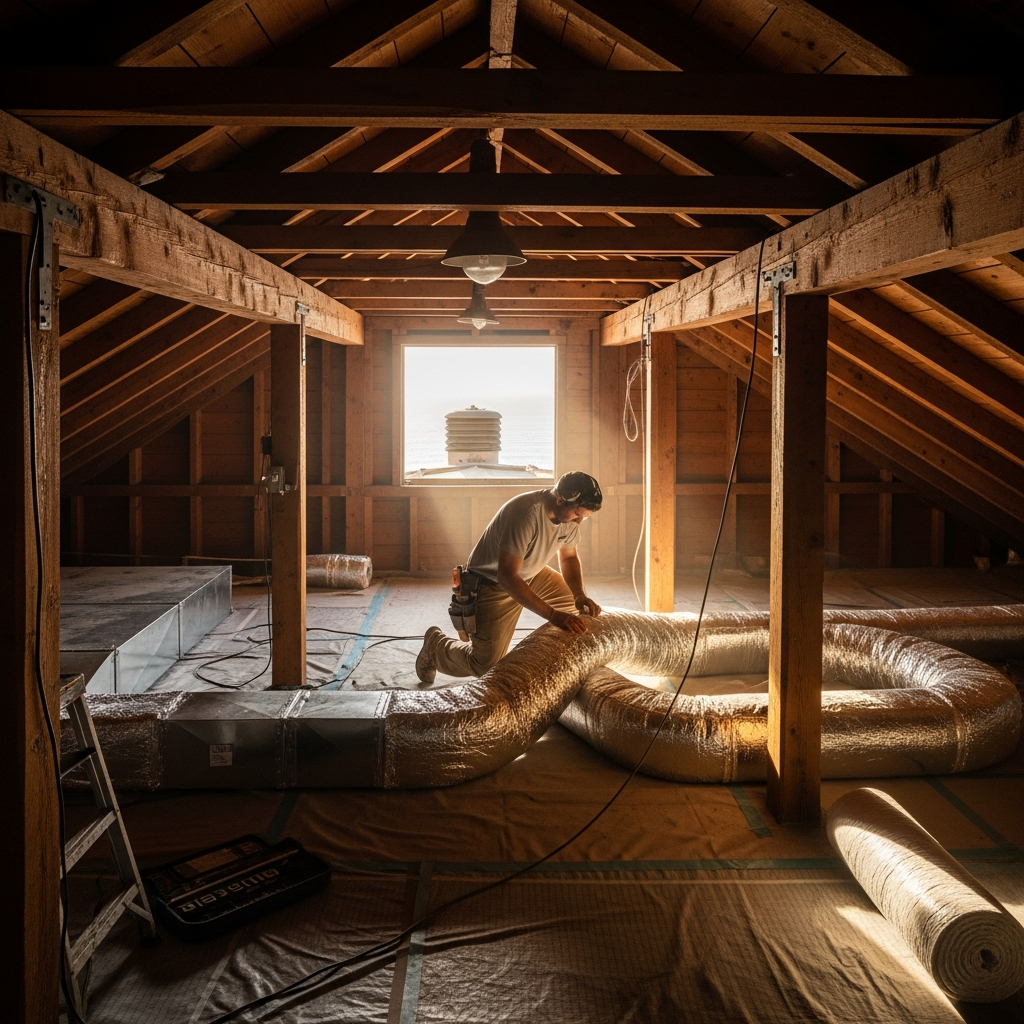
Though every home is different, most single-family duct projects follow a familiar rhythm. The initial visit gathers measurements, photos, and goals. A design pass translates that into a duct map. Materials are staged, registers labeled, and a date is set that works for the household. On installation day, old ducts are removed methodically, plenums are refreshed or replaced, and new trunks and branches are installed with a careful eye on each transition. Balancing dampers are set in accessible spots, connections are sealed, insulation is verified, and then the system is started and measured. Airflow and static pressure readings guide final balancing so the living room, bedrooms, and office all feel right.
After the dust settles, a brief tutorial is worthwhile. Know where your returns are, how to keep them free, how often to check filters, and what seasonal sounds are normal. When the first hot week arrives, you should be able to sit anywhere in the house and feel like temperatures belong to one home, not three different microclimates.
Common signals that point toward replacement
Long before a duct fails outright, it whispers. You may notice a guest bedroom that never warms up, a home office that always runs hotter in the afternoon, or a layer of fine dust on surfaces near certain registers. Sometimes a musty smell on start-up hints at ductwork spending too many years absorbing attic conditions. Add in visible damage—crushed runs, torn insulation, disconnected boots—and you have a picture. When those signals multiply, replacement is often cleaner and more reliable than patchwork repairs, especially if the original layout never matched the way your family uses the space.
Energy bills, while variable, can offer indirect clues as well. If run times seem to climb year over year without a clear change in how you live, the ducts may be asking for attention. Sealing alone can help in some cases, but if insulation is degraded or the design forces air through a maze of bends and constrictions, a fresh start delivers better results.
Balancing aesthetics and performance
In Malibu, the line between engineering and architecture matters. Exposed runs in garages, soffits near living spaces, and the diffusers themselves should look intentional. For single-family homes where design is a point of pride, selecting registers and grilles that complement finishes is part of the plan. Quiet performance is equally aesthetic—when you can only hear the waves at night, the system feels right. That sense of fit, comfort, and invisibility is the hallmark of a well-executed project.
Choosing a contractor with local know-how
Credentials and experience are the foundation, but local fluency is the differentiator. Ask how a contractor approaches coastal installations, what materials they favor in marine environments, and how they verify performance. Request to see a duct map for your project in advance and invite them to explain the airflow strategy. Clear answers signal a team that does more than swap ducts; they tune a living system to your home and climate.
Communication is an asset as well. You want a point person who can talk you through staging, daily milestones, and any discoveries along the way. In single-family homes, that communication reduces stress because the work is happening in the same space where you cook, sleep, and gather.
Aftercare and long-term peace of mind
Once new ducts are in place, a little attention keeps them performing for the long haul. Changing filters on schedule, keeping returns unobstructed, and scheduling a quick performance check before summer and winter help maintain that fresh just-installed feel. If you host large gatherings or have seasonal changes in how you use the home, a tune and balance check after the first year can fine-tune airflows to your real routines.
Think of the project not as a single day but as the start of a new baseline for comfort. Many homeowners find they sleep better, dust less, and spend less time fiddling with thermostats. When the home’s background systems do their work quietly and well, you notice the space more than the equipment.
Frequently asked questions for Malibu single-family homes
Below are answers to the questions I hear most often from neighbors and clients across Malibu. While every home is unique, these will give you a feel for how we approach planning and execution locally.
How do I know if my single-family home truly needs new ducts?
Look for patterns, not one-off annoyances. Multiple rooms with chronic temperature differences, noticeable airflow changes at registers, visible damage or disconnections in the attic, and persistent dust or musty odors point strongly toward replacement. If your system has been repaired repeatedly with only short-lived improvements, a fresh design and installation usually produces clearer, long-lasting comfort.
What makes Malibu’s climate a special consideration for ductwork?
The mix of marine moisture, salt in the air, warm afternoons, and cool mornings puts ducts through frequent expansion and contraction. Materials and sealing strategies that excel in dry inland climates can age faster here. That is why we prioritize robust vapor barriers, thorough mastic sealing, and insulation levels that reduce condensation risk and heat gain.
Will I have to leave my home during the project?
Most single-family duct projects in Malibu are completed while the household remains in place. Crews stage access carefully and coordinate phases so living areas stay usable. If extreme heat is forecast or if a vulnerable family member needs steady temperatures, we can schedule around weather windows or set up temporary comfort measures to bridge the gap.
How long does a typical project take for a single-family residence?
Timelines vary based on access, design complexity, and any discoveries during removal. Many projects fit into a short window, with testing and balancing adding polish at the end. The most accurate picture comes from a site-specific plan that maps the sequence room by room and identifies any tight areas that may slow progress.
Can I improve indoor air quality at the same time?
Yes. Replacement is an ideal moment to elevate filtration, address return placement, and ensure that leaks pulling attic or crawl-space air into the system are eliminated. If wildfire smoke is a seasonal concern, discussing filtration strategies during planning ensures compatibility and avoids later rework.
What should I expect the day the new ducts go in?
Expect clear communication, floor protection, and a quick review of the day’s plan. You will see old ducts come out first, then new trunks and branches assembled, sealed, and insulated. As the day winds down, the crew will start the system, measure airflow and static pressure, and fine-tune dampers so rooms settle evenly.
How do you confirm the new system is performing as intended?
Verification includes duct leakage testing, airflow measurements at key registers, and static pressure checks. These data points guide balancing and confirm that the finished system aligns with the design. You will receive a summary so you know exactly how the home is performing.
If you have been weighing whether now is the right moment, consider what comfort means to you over the next few seasons. If you are ready to explore a plan tailored to your home, reach out and start a conversation about duct replacement that puts Malibu’s unique conditions and your family’s routines at the center. A short visit, a thoughtful design, and a careful installation can transform the feel of your home in ways you notice every day.