
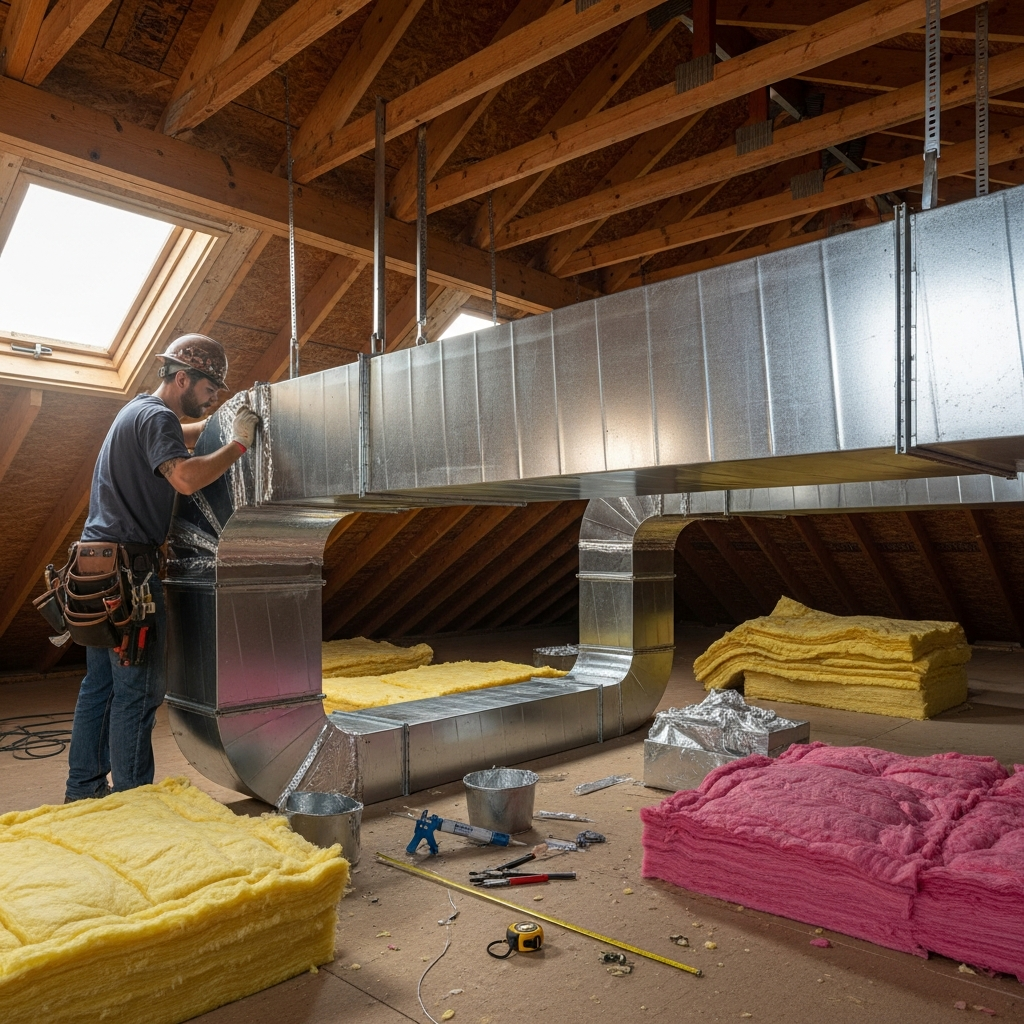
Walk a Malibu beach path at dawn and you can taste the ocean in the mist. That same salty breath that makes the morning beautiful is what tests our building materials day in and day out. For duct systems, the answer along the coast is often sheet metal: durable, shape‑true, and quiet when it is detailed with care. Replacing ducts in sheet metal for Malibu homes is not about swapping one material for another; it is about building a distribution network that thrives in salt air, stands steady in wind, and fits the architecture without drawing attention to itself. From the first design sketches, we frame the project around performance, longevity, and the fundamentals of well‑executed duct replacement so homeowners understand what they are getting and why it will last.
Sheet metal has a reputation for strength, but its real superpower is predictability. Long trunks hold their shape across spans, transitions can be fabricated to exact geometry, and interior surfaces remain smooth so air can glide quietly. Along the Malibu coast, that predictability is priceless: wind‑shaken roofs, temperature swings, and seasonal humidity all try to flex a system; rigid components push back and stay aligned. The result, when properly supported and sealed, is a system that keeps pressure stable and noise low as the years add up.
Salt air as the design brief
Salt crystals ride the breeze and settle on everything from deck rails to roof fasteners. Inside attics and under floors, they look like a faint dusting until a wet week intensifies their effect. That is why sheet metal replacement near the ocean begins with a conversation about coatings, hangers, and sealants as much as about duct size. Galvanized steel provides a strong baseline; in particularly exposed zones, we consider additional protective measures on hardware and supports. The outer jackets of any adjacent insulation should resist humidity and UV where daylight sneaks into ventilated cavities. Vapor control at the right plane is essential so that cool supply air in summer does not set the stage for condensation.
Sealing is a strategy, not a single step. Mechanical fastening is followed by mastic at seams and joints; tapes are chosen for mechanical systems, not general purpose. The aim is a tight envelope that resists seasonal movement without letting go. That tightness pays off twice: it preserves efficiency and it keeps attics and crawlspaces from becoming accidental air sources, an especially welcome benefit during weeks when regional smoke or high pollen ride in from beyond the coast.
Fabrication and fit that respect architecture
Malibu homes frequently feature clean lines and careful alignments: registers in dialogue with lighting, shadow gaps that conceal structure, and ceiling planes that seem to float. Sheet metal’s ability to be fabricated to exacting dimensions lets duct boots land square and level so grilles sit flush and true. Where a trunk must snake past a skylight chase or a steel frame, we can pre‑build sections that pass cleanly without resorting to awkward kinks. Those choices show up not only in performance but in the way the home feels—no buzzing transitions, no hissing elbows, no registers that snag the eye.
Acoustics matter, especially in bedrooms and media spaces. Smooth interiors reduce turbulence, and when a section borders a sensitive room, we can add lining strategically to damp sound without sacrificing airflow. Properly sized supply and return paths keep velocity in a comfortable range and help eliminate that “falling air” sensation in high rooms near the water where temperature differences can be pronounced.
Support and bracing for wind and time
On bluffs and open lots, wind exposure is real. Ducts may not move like tree branches, but the structures that hold them experience loads that can translate into vibration if supports are flimsy. We choose hangers with coatings that resist corrosion, pad where needed to prevent squeaks, and brace long runs laterally so alignment stays steady. In homes on piers or spans above open space, seismic strapping and cross‑bracing keep trunks honest through seasons of breeze and the occasional tremor.
Access planning is part of support strategy. We want critical connections and dampers reachable for commissioning and future service without gymnastics. Tidy, high runs in crawlspaces reduce moisture exposure and keep the network cleaner. In attics, planning keeps ducts out of the lowest, dampest bays and preserves insulation coverage so thermal performance stays predictable.
Coordination with other trades and finishes
Sheet metal’s precision shines when it meets finish work. We coordinate with electricians, low‑voltage teams, and fire sprinkler installers so ceiling layouts remain elegant. Where a register shares a ceiling with recessed lighting or a speaker, we site ducts and boots so the rhythm feels intentional, not crowded. On projects with fine millwork, we pre‑fit transitions so grilles land centered and square, and we document placements to guide paint and trim teams. That collaboration is invisible when done right—which is the point.
Permitting and documentation are similarly quiet but crucial. California’s energy code expects duct performance to be verified, and Malibu’s inspectors appreciate clear plans followed by clean execution. Commissioning—measuring pressures, confirming airflow, and documenting leakage with a HERS rater when required—proves that the system is not just well made but well tuned. Those records become part of the home’s story for future appraisals or remodels.
Hybrid systems where they make sense
Even in sheet‑metal‑led projects, there is room for thoughtful flexibility. Short, well‑supported flexible branches at the last few feet to terminals can help with vibration isolation and allow perfect grille alignment in tight framing. The key is proportion: rigid trunks handle distance and maintain shape; flex handles finesse. Both are sealed and supported to the same high standard so performance is consistent end to end. In Malibu’s coastal air, material transitions are detailed with care so jackets, vapor barriers, and mastic work together.
Return air deserves as much attention as supply. Sizing returns to actual airflow needs, avoiding sharp transitions, and lining where appropriate keeps noise low and pressure balanced. Bedrooms with pocket doors, offices with frequent door cycles, and great rooms that open wide to decks all inform return placement so the system breathes with the way the home is used.
Air quality and the coastal edge
Onshore breezes feel clean, but “clean” changes flavor during pollen spikes or regional smoke. Tight ducts help by keeping attic and crawlspace air from intruding through unintended pathways. Filter access at returns encourages on‑schedule maintenance, and the option to step up filtration—matched to blower capability—adds resilience during tough weeks. At the same time, good sealing prevents conditioned air from leaking into cavities where moisture could condense, protecting both performance and the building enclosure.
Noise control is part of air quality’s feel. With sheet metal, we avoid whistling by keeping transitions graceful and velocities reasonable, especially near sleeping or study areas. We add isolation near equipment to stop vibration before it travels, and we keep long, straight runs where a home’s plan encourages them to avoid the turbulence that drives sound.
Project rhythm homeowners can live with
We stage work to respect routines: rooms returned to order at day’s end, pathways protected, insulation restored neatly. In attics, temporary lighting and platforms keep work safe and clean; in crawlspaces, we keep runs high and away from moisture. Deliveries are timed to Malibu’s access realities—narrow drives, limited parking, and weather that can shift quickly. Communication is constant and plain‑spoken so you know what is happening and why.
Commissioning closes the loop. We set dampers, verify pressures, and measure airflow so quiet comfort is proven, not assumed. We also provide a simple as‑built diagram and photos of key transitions. That documentation saves time later and gives you confidence that the system behind the grilles is as careful as the finishes you see.
Frequently asked questions
Q: Why choose sheet metal for coastal duct replacement? A: Predictable shape and smooth interiors keep airflow steady and quiet, while robust supports and corrosion‑aware hardware help the system endure salt air and wind exposure.
Q: Is all‑rigid always better? A: Not always. Rigid trunks paired with short, well‑supported flexible branches to terminals often deliver the best blend of durability, acoustics, and alignment finesse. The key is proportion and execution.
Q: Will sheet metal ducts be louder? A: Properly sized and routed sheet metal systems are typically very quiet. Noise arises from turbulence and velocity, not from the material itself. Smooth transitions, lining where appropriate, and balanced airflow keep sound in check.
Q: How do you protect against corrosion? A: We specify coated fasteners and hangers, choose sealants and jackets that handle humidity, and keep ducts out of the dampest attic and crawlspace zones. Good sealing also prevents salty air from infiltrating joints.
Q: What about wildfire smoke? A: Tight ducts and accessible filtration give you control. When regional air quality dips, sealed distribution prevents unintended air from attics and crawlspaces, and filter upgrades—matched to equipment—help reduce particulates indoors.
Q: How disruptive is the process? A: We phase work in occupied homes so spaces return to order daily. The exact schedule depends on access and scope, but the experience should feel organized and respectful of your time and finishes.
Let’s build a coastal‑tough system
If your current ducts show age, if rooms never quite balance, or if you are planning a remodel that deserves a distribution network with the same craft as the architecture, let’s talk about a sheet‑metal‑led plan shaped for Malibu. We will listen, design, fabricate, and verify so comfort is quiet and dependable. When you are ready to start a conversation grounded in coastal realities and careful duct replacement, we are ready to help.