
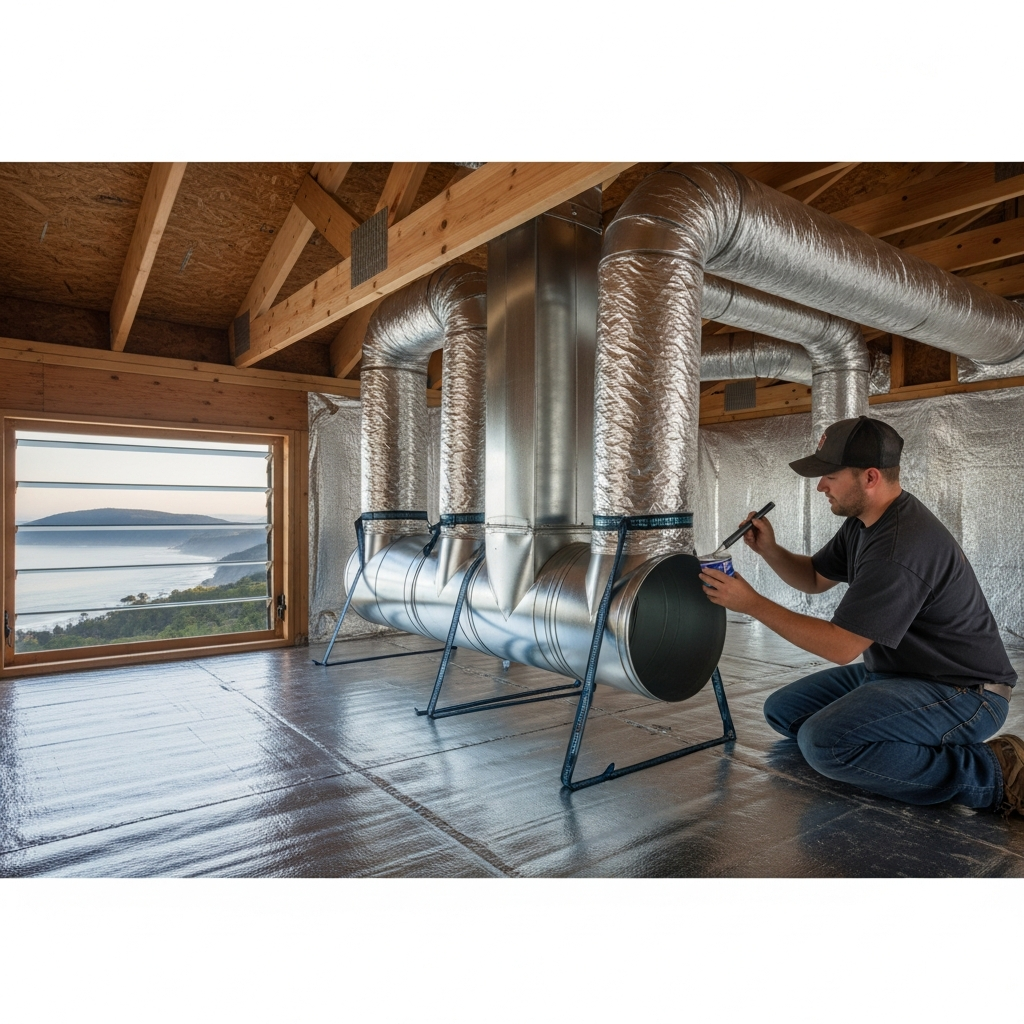
Living steps from the Pacific reshapes the way a house breathes. In Malibu, ocean air glides through canyons, gathers salt and moisture, and presses gently but persistently into every seam a home offers. When we talk about HVAC duct replacement here, we aren’t just talking about moving air from point A to point B; we’re designing a resilient airway that stands up to salt, fog, sun, wind, and the changing rhythm of coastal life. If you’re beginning to explore duct replacement for a Malibu property, the path forward starts with understanding the coast itself—how it influences materials, layout, sealing, and the little choices that add up to comfort you can feel every day.
Why Coastal Conditions Demand a Different Approach
Malibu’s weather isn’t only about temperature. It’s about particles—fine salt spray borne on breezes, moisture that condenses in shade and vanishes in sun, and winds that funnel through canyons with surprising force. Attics and crawlspaces become microclimates, often running hotter, cooler, wetter, or dustier than living areas. Ducts that thrive here respect those microclimates. Jackets need to resist moisture intrusion, seams must hold fast despite daily temperature swings, and supports should prevent sagging or abrasion where stiffening can occur over time. It’s the difference between a system that works on day one and one that keeps working elegantly through many Malibu summers and winters.
Material Choices Built for the Coast
Not all duct materials are equal near the ocean. Where salt and humidity expand their reach, right-sized flexible duct routed cleanly and supported properly can deliver quiet, efficient airflow, while well-protected metal components provide crisp transitions and durable plenums. Mechanical connections that are crimped and screwed, then sealed with robust mastics, provide a belt-and-suspenders approach that resists creep and cracking. Insulation that maintains its R-value even when humidity rises helps ensure comfort during those foggy mornings when cool, damp air rolls inland before noon.
Design for Evenness, Not Just Capacity
Coastal homes present a design puzzle: big windows to frame sunsets, open plans that merge kitchen and living, and secondary spaces tucked into corners where breezes linger. The duct system must give each room what it needs without overplaying to the sunniest zone. Proper sizing of branches, smart placement of returns, and diffuser selection that suits each room’s function all come together to eliminate hot and cool pockets. When a system is designed to the house—not just the square footage—you feel a steadier, more natural kind of comfort.
Air Sealing Is Your Quiet Superpower
On the coast, sealing is more than energy efficiency; it is protection against intrusion. Tiny leaks in returns can pull salty attic air into the home, and supply leaks can feed conditioned air into spaces that don’t serve your comfort. The right mastic, applied with intention at every joint, paired with mechanical fastening and disciplined tape use, creates a system that resists the daily tug-of-war between cool nights and warm afternoons. The benefit is tangible: quieter operation, fewer dust streaks around registers, and a home that maintains its setpoint without drama.
Attic and Crawlspace Realities
Malibu’s architecture is eclectic. Some homes have generous attics with decent access; others have tapered rafter spaces that barely admit a body. Crawlspaces can range from clean, insulated, and dry to sandy voids with periodic moisture. These realities shape both design and installation. Routing choices may favor shorter, straighter runs that traverse the most stable areas, and supports are tailored to the structure, preventing compression that adds resistance. Vapor management strategies—insulation jackets that resist dampness, attention to terminations and boots—keep the system’s shell healthy even when the ocean reminds us who’s boss.
Noise Control for Open-Plan Living
Coastal homes invite conversation and quiet. Oversized diffusers, smooth transitions, correct register throws, and properly sized returns reduce turbulence and pressure spikes that create hiss or rumble. Flex duct that is gently stretched and curved rather than bunched or kinked keeps airflow laminar. The result is a system that fades into the background while the soundtrack of the evening becomes the ocean outside the window, not a grille inside the ceiling.
Corrosion Awareness and Fasteners
Salt does not care about your schedule. Exposed ferrous metals will attempt to rust, and thin protective layers can degrade faster than you expect. Choosing fasteners and hangers suited to coastal exposure, protecting cut edges, and avoiding dissimilar metal contact where possible help prevent the slow creep of corrosion. Good practice extends to how ducts are supported and how plenums interface with air handlers, with careful attention given to condensation management so moisture never lingers where it can do harm.
Permits, Testing, and Code Nuances
Proper permitting and verification are not red tape; they are the official handshake that confirms design and execution meet today’s standards. Malibu’s coastal and hillside realities may add specific requirements for access, vent terminations, or wildfire-related exterior components. Performance testing after installation isn’t an optional flourish—it’s the proof that sealing, sizing, and balancing are working as a unified system. You’ll receive documentation that matters when you sell, refinance, or plan future upgrades.
Comfort Beyond the Thermostat
Comfort on the coast isn’t just a number; it’s how the space feels when the fog returns or the Santa Ana winds rise. Proper duct replacement creates an envelope of steadiness. Air moves without calling attention to itself. Temperatures settle so gently that you forget about them. Odors clear more quickly because returns are placed and sized to cycle air efficiently. This is the lived experience a coastal-appropriate duct system delivers, and it is why so many Malibu homeowners describe the change as a deep exhale for the house.
Working in Lived-In Homes
Most replacements happen in homes where life goes on around the work. Protecting floors and furnishings, isolating attic access with dust barriers, and scheduling the noisiest tasks when the household is out are part of a respectful process. Great crews leave a light footprint: clear labeling on new runs, photographs for your records, and small touches like carefully reinstalled grilles that align with room aesthetics. The goal is to leave you with a home that looks untouched and feels transformed.
When a Redesign Is Wiser Than a Swap
If your home has changed—rooms opened up, an addition added, or a garage converted—then a simple one-for-one replacement may not serve you. In these cases, a redesign pays dividends: new branch sizes, return adjustments, or register relocations that match how you live now. This is especially true for coastal properties where glazing and prevailing winds carve the house into zones that deserve individual attention.
Mid-Project Communication
During installation, questions naturally arise. Homeowners often ask about the shape of a particular run, whether a register can be moved for better symmetry, or how to keep a certain closet quieter. These conversations are welcome and healthy. A responsive team will show you photos from the attic or crawlspace, explain choices in plain terms, and confirm how testing will verify the outcome. If you’re comparison shopping or weighing options, reviewing local duct replacement services with an eye toward coastal experience helps separate marketing from mastery.
Maintenance Mindset for Coastal Longevity
Once installed, a coastal-ready duct system asks for simple habits: timely filter changes, quick visual checks around registers for dust streaks that might hint at a seal to revisit, and attention to attic or crawlspace conditions after major weather events. The infrastructure should be robust enough that these become brief check-ins rather than chores. If you hear a new noise or sense airflow has shifted, a quick inspection can catch a loose grille or a disturbed support before it turns into a performance issue.
The Payoff You’ll Notice First
Most Malibu homeowners first notice the quiet. Then they notice the evenness—no more chasing the temperature in that far bedroom or overcooling the living room to help the kitchen. Next comes the indoor air quality lift. When returns are sealed and balanced, the home feels fresher, and dust seems to settle less aggressively. Add in the aesthetic calm of grilles that fit the space, and the overall effect is a house that supports the coastal lifestyle rather than fighting it.
FAQ
How do coastal conditions actually affect ducts? Salt and moisture accelerate wear on materials and seals. Daily temperature swings can stress joints. A coastal-ready system uses the right materials and sealing strategies to withstand those forces for the long haul.
Are flexible ducts appropriate near the ocean? Yes, when correctly sized, supported, and sealed. In many Malibu attics, flex enables clean routing with gentle curves that maintain quiet airflow. The key is disciplined installation and high-quality jackets.
Can duct work reduce cooking and ocean odors indoors? Strategic return placement and balanced airflow help move stale air out more effectively. When combined with proper filtration, many homes experience cleaner, more neutral air.
Will new ducts make my system run less often? Often, yes. Reduced leakage and improved distribution mean the system reaches and maintains setpoints more easily, so cycles can be shorter and calmer.
What kind of documentation should I expect? You should receive permits, inspection records, and testing results that confirm sealing and performance. These documents are valuable for future real estate and renovation planning.
Begin Your Malibu Upgrade
If your home is ready for a quieter, cleaner, and more resilient way to move air, we’re ready to help. We’ll walk the property, study the microclimate around your rooms, and propose a design that respects your architecture and the ocean outside your door. Start the conversation today about duct replacement tailored to coastal living, and let’s create comfort that feels as natural as the sea breeze.