
When you live in Malibu, you get to enjoy ocean breezes, golden light at sunset, and that distinct blend of canyon calm and coastal energy. But those same breezes and canyons move dust, salt, pollen, and wildfire particulates through our homes, settling in places we don’t often think to look—like our HVAC return boxes and supply runs. That is why the search for trustworthy, local air duct cleaning isn’t just a convenience; it is part of caring for a Malibu home so it can handle our unique microclimates. If you have ever stepped into your living room after a week of marine layer and noticed a faint mustiness, or you have watched a sunbeam reveal fine dust floating where your family gathers, you already know how important clean airflow can be.
Finding the right provider starts with understanding Malibu’s neighborhoods and the realities of living between mountains and ocean. Homes on Point Dume face salty air and steady breezes that ferry fine sea spray indoors; homes in Malibu Canyon encounter a constant stream of canyon dust, especially during dry stretches; and hillside residences tucked above the Pacific Coast Highway can experience strong wind eddies that push debris into soffits and vents. The right professional will ask about these environmental factors before they ever quote a timeline. That curiosity is a good sign—they’re preparing for the exact conditions your system endures.
What a Malibu-savvy technician understands
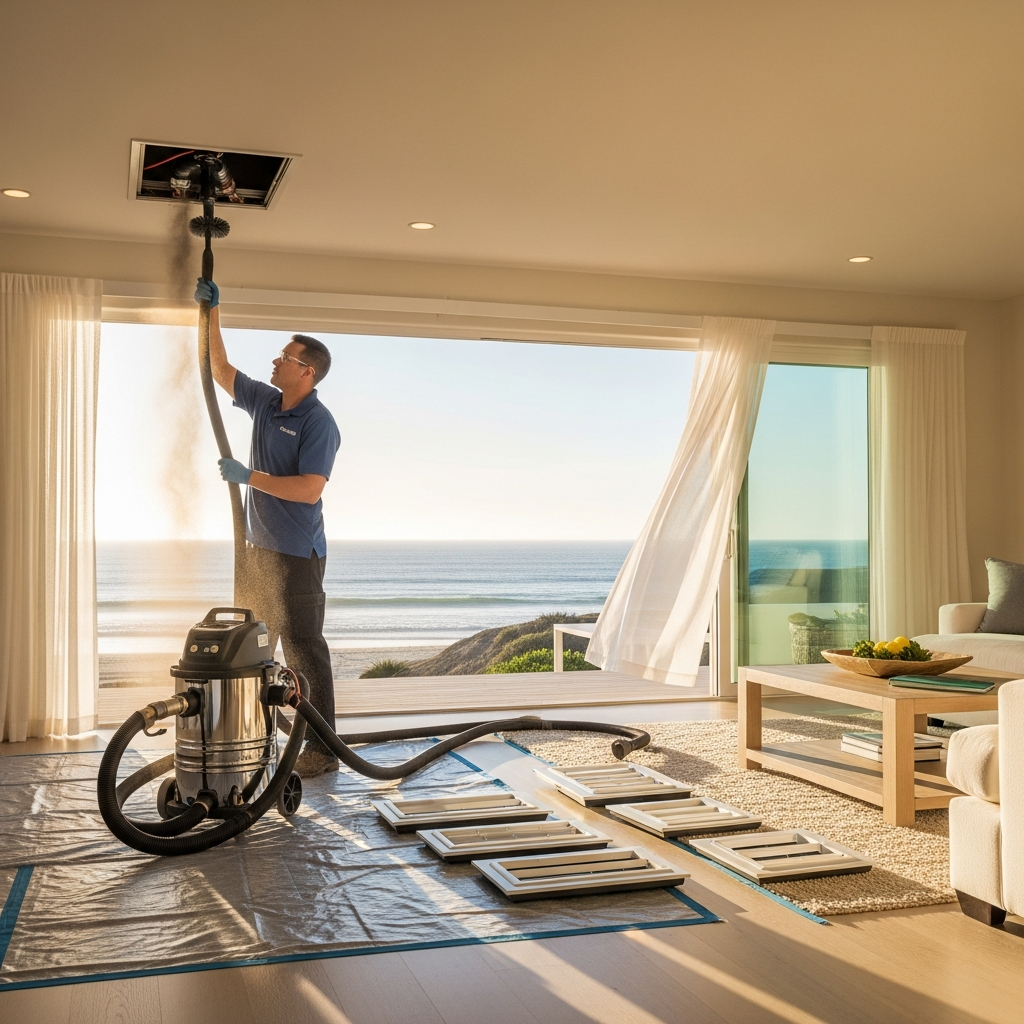
A technician who works in Malibu regularly will arrive expecting certain quirks: long duct runs in multilevel homes, mechanical rooms with limited access, and registers installed to capture cross-breezes in open, glass-heavy floor plans. They’ll bring sectional vacuum equipment for tight spaces, lay down protective coverings for high-traffic wood floors, and stage negative air machines in ways that keep sea air out while they work. You should also hear them talk about containment and cleanup—how they’ll isolate the work area so the rest of your home stays calm, and how they’ll confirm that each run is truly clear before moving on.
When you are evaluating contractors, ask them to describe the flow of a standard visit. An experienced tech will explain the pre-inspection, photo documentation, register removal, agitation method for debris (such as brush or air whip), negative-pressure vacuuming, and the final verification. If someone skims over those steps, or cannot say how they’ll protect return plenums near salty exterior air, keep looking. The best fits are happy to explain their sequence because they know clear steps build trust.
How to prepare your home for a smooth appointment
Because many Malibu homes blend indoor-outdoor living, prep can make a big difference. Clear the areas around your returns and supply registers, especially those set near sliders and large fixed windows where sand and salt can gather at the thresholds. If you have an art collection or coastal artifacts displayed along hallways where ducts may run, consider temporarily relocating anything delicate. A considerate crew will help protect your furnishings, but a few minutes of preemptive organizing make the day easier for everyone.
Parking can be tight along winding streets from Latigo Canyon to Big Rock. Let your provider know about any driveway limitations and where they can stage equipment to minimize hose lengths. In hillside neighborhoods, some homes share private lanes—give a heads-up about access windows so crews can arrive without causing a traffic jam. These small logistics conversations are one of the best indicators you are working with a team that respects the rhythms of Malibu living.
What real results feel like inside a coastal home
After a thorough cleaning, the first thing most homeowners notice is the quiet. Air moves without that faint rustle of dust, and the space feels clearer. It is not perfume; it is the absence of stale particulates that had been collecting over seasons. In Malibu, where we spend so much time with windows open, it’s easy to underestimate how much dust and sea salt settle in a home’s hidden paths. Once cleared, your HVAC system no longer strains to push past that buildup. Rooms that once felt slightly stuffy in the late afternoon cool more evenly, and those with vaulted ceilings benefit from steadier airflow that does not recirculate fine grit.
Local technicians often remark that post-cleaning airflow in ocean-facing rooms can be the most dramatic. That is because wind-driven salt and aerosolized minerals can cling to the inner surfaces of ductwork, catching other particles and creating a film. Removing that residue takes the system out of perpetual “low tide” mode and restores the neutral baseline your filters were designed to maintain.
How to compare providers without a spreadsheet
You don’t need to become an engineer to make a good choice. Focus on three simple qualities: communication, respect for your space, and proof of work. Communication means they listen to your concerns—whether it’s wildfire ash from last fall, a musty downstairs guest suite, or a pet dander issue—and they respond with a clear plan. Respect means boot covers, drop cloths, and proactive planning around your family’s schedule. Proof of work means before-and-after photos of your actual ducts, not stock images, and a walk-through that lets you feel the difference at the registers.
If a company promises an instant fix without asking about the age of your system, filter type, or your location—Bluffs, Malibu West, or the Civic Center corridor—they may be overlooking the context that defines how your home breathes. Malibu is as much a climate as it is a city. The best partners treat it that way.
The role of filtration and maintenance after cleaning
Cleaning is the reset. Filtration and maintenance are the rhythm. Once your ducts are clear, ask your technician which filter options suit your equipment and your style of living. Some homes near the shore benefit from a slightly more frequent filter change, especially during spring winds and late-summer heat spikes. If your home was built or remodeled with high-efficiency windows and tight envelopes, confirm that your fresh air intake is properly balanced so your system does not draw unfiltered outside air through unintended gaps.
It also helps to set a seasonal habit. At the start of wildfire season, check your filters and walk your registers, making sure nothing has shifted or become blocked by furniture. After periods of heavy marine layer, note whether you smell any dampness and ventilate accordingly. These small practices help extend the gains you receive from a professional cleaning.
What a visit day can look like
On the morning of your appointment, the crew typically begins with a quick survey and a conversation about any special concerns—an infant’s nap schedule, a work-from-home call in the afternoon, or a sensitive pet who needs a quiet zone. They’ll photograph key access points and agree on a sequence that keeps your day moving. You may hear the gentle hum of negative-air machines and the rattle of brushes as they loosen debris. A well-coordinated team will move like stagehands, appearing and clearing with minimal fuss. Midway through, they may show you progress photos so you can see the contrast. That transparency gives you confidence, especially if you have had lingering doubts about what’s actually happening inside those hidden channels.
In the middle of the visit, when agitation work transitions to verification, you might even notice the rooms feel calmer. The reduction in particulate load can be subtle yet noticeable. That is the moment many homeowners feel glad they prioritized air duct cleaning before the next season’s demands arrive.
Common questions to ask before booking
Ask how long the visit will take and whether your HVAC must be off for the entire period. Clarify which vents and returns are included so there are no surprises, and request a simple explanation of how they’ll handle older duct materials, particularly in homes with original construction from Malibu’s early growth years. If you’ve had rodents in the past, ask how they’ll document any findings and whether they coordinate with pest professionals for sealing. You want a team that sees the whole picture, not just the shiny finish.
FAQ: Finding the right air duct cleaning near you
How do I know a provider really understands Malibu conditions?
Ask them to describe how sea salt, canyon dust, and wildfire ash affect ducts. A local expert will have real examples and tips on staging equipment in tight hillside lots, protecting floors in oceanfront homes, and balancing airflow in large open rooms. Listen for specifics, not generalities.
Will cleaning disrupt my day?
A thoughtful crew can stage work to fit around your rhythm—tackling bedrooms while you’re out for a beach walk or hitting living spaces while you run errands. You’ll hear equipment, but with doors closed and containment in place, it can be surprisingly manageable.
What should I do right after the service?
Start fresh with a new filter, run your system to enjoy the improved airflow, and crack windows briefly if the day allows. Take a moment to feel each room. Your senses will often tell you the story that photos can’t capture.
Can I clean ducts myself?
You can dust registers and change filters, but accessing the full duct network safely and effectively requires specialized tools and containment. DIY efforts tend to move dust around rather than remove it, which can make matters worse.
How often should Malibu homes schedule cleaning?
Frequency depends on lifestyle and exposure. Many locals find a multi-year cycle works, with check-ins after major wildfire events, renovations, or periods of unusual humidity. Your technician can suggest a plan based on your home’s history.
Final steps to breathe easier
If you have been putting this off, consider this your nudge. A single well-planned visit can reset your home’s airflow and bring back that clear-coast feeling we all love. When you are ready to bring in a careful, Malibu-minded team for thorough air duct cleaning, reach out and schedule a time that fits your week. Your home—and everyone who breathes inside it—will thank you.