
Talking about the cost of air duct cleaning in Malibu without naming numbers may seem unusual, yet it is often the most useful way to set expectations. Every home along our coastline is its own small ecosystem, shaped by salt air, canyon winds, wildfire seasons, and open-air living. Because of that, the value of a thorough service lies less in a single figure and more in the scope, approach, and care a team brings into your home. If you understand what shapes the work, you will understand what you are investing in—and you will be better prepared to choose the right partner for your space.
Let’s start with the local landscape. Malibu homes stretch from vintage beach cottages near the sand to expansive hillside builds nestling into chaparral. Duct systems in these homes can be straightforward runs in a crawlspace or elaborate pathways that weave through vaulted ceilings, steel beams, and conditioned attics. Then add sea salt and airborne minerals that cling to metal, pepper-like canyon dust that rides down Kanan and Latigo, and the occasional wave of smoke particulates after a nearby blaze. The cleaning approach for one home may not suit another, and that is why a thoughtful assessment is the foundation of a successful visit.
What “scope” really means here
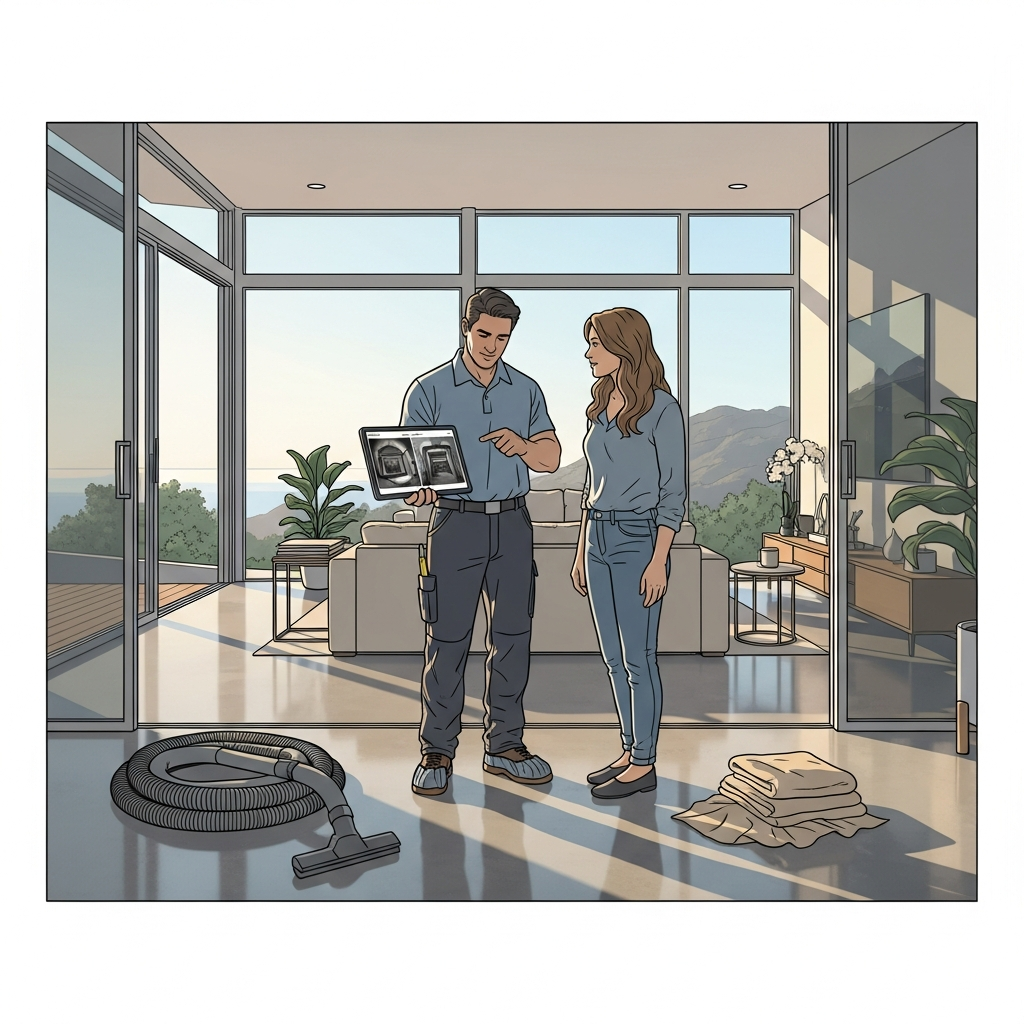
When a professional talks about scope in Malibu, they are thinking about the number of supply registers and returns, the length and layout of duct runs, access points, and the type of materials in play—rigid metal, flexible ducts, or fiberboard. They are also considering your home’s rhythms. Many Malibu families work and learn from home; crews plan their sequence to manage sound and maintain indoor comfort. They will evaluate how to bring equipment up a hillside driveway, how to protect wide-plank floors or polished concrete, and how to navigate glass-heavy architecture without disrupting furnishings.
A quality team will outline their process in plain language: inspection, containment, negative-pressure setup, agitation of debris, extraction, and verification. They will talk about how they keep salt air out during the job and how they document progress with photos from inside your ducts. When your provider can describe the “why” behind each step, you are getting a window into the value of their work.
Factors that influence the work in Malibu
Several local realities shape the project. Proximity to the ocean increases the likelihood of salt residue, which can trap other particles and require more thorough agitation. Homes in canyons see seasonal dust surges, especially after dry winds. Houses near recent burn scars may have fine soot embedded in returns and coils. Accessibility matters as well; a system that is easy to reach from a garage mechanical room is not the same as a system split across multiple floors with rooftop access. None of these details are problems—they are simply part of doing the job right in our area.
Timing can also play a role. During wildfire season or after heavy winds, reputable teams book out quickly as homeowners act to protect indoor air. Booking thoughtfully, perhaps after the first rush, can provide a calmer experience. But do not wait if your family’s comfort depends on a reset now. Clear communication with your provider will help you find a window that suits your life.
What to expect during a visit, step by step
On arrival, technicians walk your home with you, noting concerns like persistent musty smells in a downstairs suite, dust plumes when a system starts up, or rooms that feel stuffy by late afternoon. They’ll identify registers and returns, lay floor protection, and set containment where needed. Negative-air equipment and HEPA filtration help ensure that loosened debris moves out of your ducts and into sealed collection units, not into your living space.
Agitation methods vary based on duct material and condition. Soft-bristle brushes, air whips, or compressed-air tools dislodge residue without damaging the interior surface. As sections are cleared, technicians verify progress visually and often share photos so you can see the transformation. In homes along the shore, you may hear them comment on salty film along certain runs; inland, they may note dust accumulation near attic entries where wind has pushed particulates through minute gaps.
Midway through, you will likely notice the air feeling calmer. If your system was straining before, the difference can be surprisingly immediate. Many homeowners choose this moment to talk about future maintenance rhythms, filtration upgrades, or the best times of year to schedule follow-up work.
Value beyond the appointment
The benefits of a well-executed cleaning echo over time. Airflow becomes more even. Filters last closer to their intended cycle because they are not catching months or years of accumulated debris all at once. Your HVAC equipment runs more comfortably, and rooms where you gather—kitchens that open to decks, family rooms under skylights—feel quieter and fresher. In Malibu, this matters because we live with open doors and sandy feet; we invite the coast inside, and then we ask our systems to restore balance each night. A reset restores that balance more effectively.
One of the most overlooked aspects of value is the human factor. A team that respects your space—from the way they park on a narrow hillside lane to how they protect artwork and cabinetry—reduces stress. They build trust with clear before-and-after documentation and a walk-through of any findings, like disconnected duct sections or poorly sealed returns. Addressing those small issues can make a larger difference than any single number on an estimate.
How to talk with providers without fixating on a figure
Ask for clarity, not just a quote. Invite the provider to explain what is included, how they verify results, and how they handle homes like yours—oceanfront, canyon, or hillside. Share your concerns openly: allergies, pet dander, a new baby’s nursery, a recent remodel. The more context they have, the more precisely they can tailor the work. If they offer optional add-ons, ask why they matter in your case and how they will be documented. The conversation should feel collaborative, not pressurized.
It also helps to ask about scheduling flexibility. Malibu weather can shift quickly; a foggy morning can turn into a warm, dry afternoon. An adaptable team can time certain steps to keep indoor comfort high, working first in less-used rooms or sequencing louder tasks while you are out.
Preparing your home to make the most of the visit
Before the crew arrives, move fragile items away from registers, clear access to returns, and note any specific concerns so you remember to mention them. If you have areas where sand often collects—near sliders out to the deck, for example—give them a quick sweep so the crew does not have to work through fresh debris at the threshold. In hillside neighborhoods, confirm parking and access, and in gated communities, arrange entry ahead of time to avoid a last-minute scramble.
In the middle of your appointment, as the team transitions from agitation to verification, it is a good moment to revisit your goals. If better airflow to an ocean-facing bedroom was a priority, ask to feel the difference at that register. And take pride that you opted for thoughtful air duct cleaning over hurried work. The attention you give to this step will echo through daily comfort.
FAQ: What to expect in Malibu
Why do Malibu homes need special attention?
Our mix of salt air, canyon dust, wildfire particulates, and open-plan architecture creates a unique environment for HVAC systems. Cleanings must account for residue that traps other particles and for access challenges in multilevel homes.
How long does a typical visit take?
It varies based on layout and access, but a thoughtful team will give you a time range and keep you updated as the day progresses. They can often sequence work to accommodate meetings, naps, or school pickups.
Will I notice a difference right away?
Many homeowners feel cleaner, calmer air shortly after the system starts back up. The change can be subtle at first and then more apparent over the following days as dust resettling diminishes.
What can I do to maintain results?
Change filters on a schedule suited to your location, ventilate wisely during heavy marine layer days, and keep registers clear of furniture and rugs. A brief seasonal check helps preserve the reset.
Is this worth prioritizing even if my home is usually open to the breeze?
Yes. Open windows invite particulates that filters are designed to manage. A thorough cleaning restores the system’s baseline so it can handle Malibu’s beautiful, complex air more effectively.
Make your next step count
If you are weighing your options, focus on the quality of the process and the experience of the team, not on any single line item. When you are ready to book careful, well-documented air duct cleaning that respects your Malibu home and your time, schedule a visit and breathe easier with confidence.