
Coastal Homes, Coastal Air
To love Malibu is to love the air itself: mornings softened by the marine layer, afternoons brushed by a breeze off the Pacific, and evenings that slip into calm as the surf evens out. Those beautiful shifts also shape the air inside your home. Coastal living means salt, moisture, and fine particulates are steady companions, and over time they find their way into the hidden channels behind your registers. Thoughtful, standards-based air duct cleaning designed for coastal conditions helps your system move smoothly through the seasons, protects materials from unnecessary wear, and keeps your home feeling like the refuge you built it to be.
Salt, Moisture, and the Materials Behind the Grilles
Beachfront and near-coastal homes face two intertwined forces: salt crystals and moisture. Salt rides the air as fine spray and dries into microscopic crystals that cling to metal and gather on surfaces near exterior doors and sliders. Moisture condenses on cool metal, particularly during marine layer mornings when warm indoor air meets lightly chilled ductwork. Inside the ducts, these forces can make dust stickier and deposits heavier, complicating removal if years go by without attention. During a professional cleaning, techs consider not only what’s in the ducts but how the ducts are made—sheet metal trunks, flex branches, fiberboard transitions, or lined sections—and choose agitation that respects those materials while dislodging stubborn accumulations.
Architecture That Embraces the Ocean—And Its Air
Malibu’s architecture celebrates openness: wide sliders, corner glass, and courtyards that invite breezes to move through. That joy comes with airflow patterns that pull exterior air inside more than inland homes might. If your evening includes opening the house to the sunset, you’re also welcoming fine sand and sea salts that settle on floors and get drawn toward returns as your system cycles. In hillside homes, long runs and split levels can add turns and branches that become natural settling points. A trained crew maps these patterns with a quick inspection—where returns sit, how rooms connect, and how the system zones—so the cleaning sequence reaches every branch that needs attention.
Methodology Built for the Coast
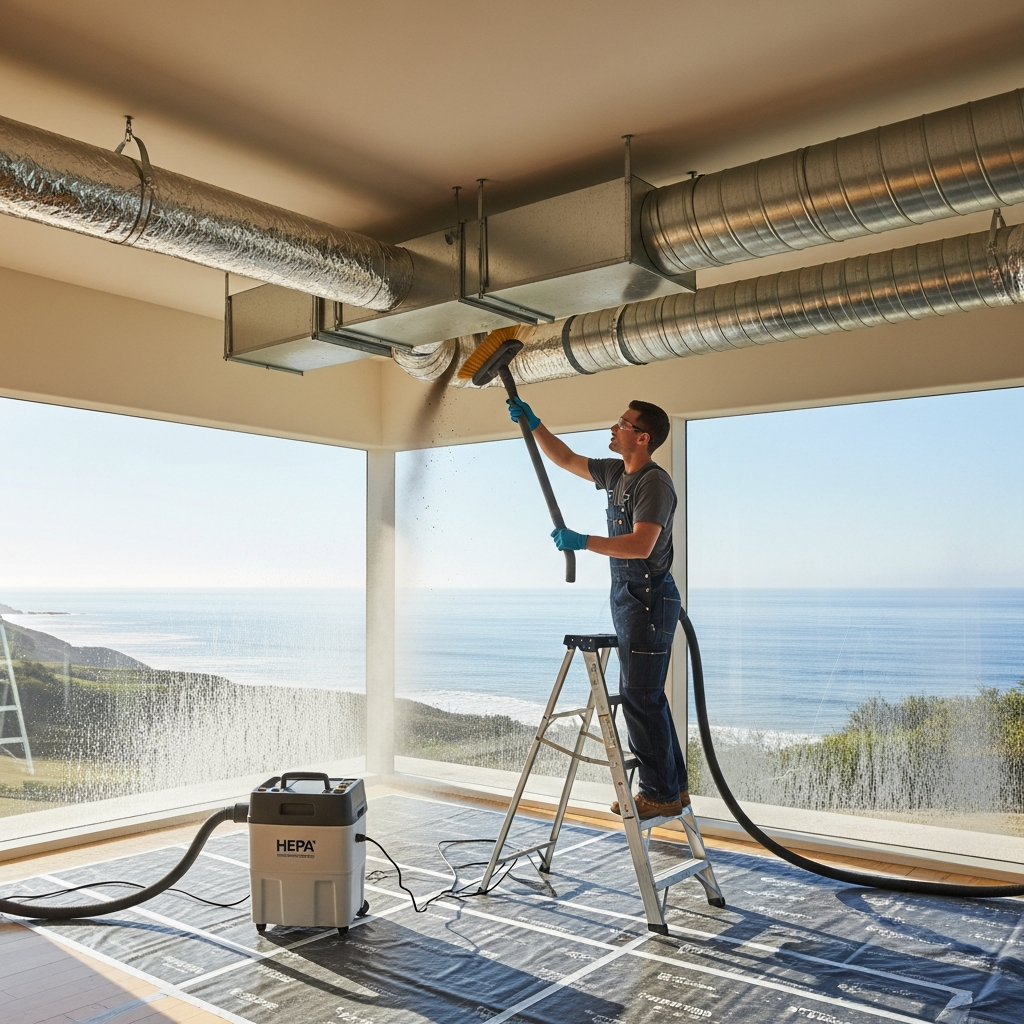
Coastal-focused cleaning pairs strong negative pressure with contact agitation chosen for your duct materials. Sheet metal responds well to rotary brushes that reach corners and laps; flex duct needs gentler heads and moderated airflow that lifts debris without stressing liners. Lined segments and acoustical sections call for surface-safe agitation that respects the substrate. Throughout, HEPA-filtered containment keeps dislodged material moving in one direction—out of your home. Register edges and surrounding surfaces are vacuumed and wiped with care so the room you love stays as beautiful as you designed it.
The Marine Layer’s Hidden Effects
That ethereal morning fog changes the job in quiet ways. It can make pathways slick, which is why crews lay down sturdy, moisture-tolerant protection at thresholds and along common routes. It can add a trace of dampness to registers and grilles, so wiping and drying steps are added as each area is addressed. For systems that run overnight, slight condensation inside metal trunks may combine with dust to form a thin, tacky film. Removing this requires patient, repeated passes under containment rather than heavy-handed scrubbing. The difference you feel after a gentle, thorough approach is a smoother, quieter start-up and a fresher inhale when the blower engages.
Wind Events and Wildfire Seasons
Coastal winds and seasonal wildfire smoke are realities we plan for. When winds lift beach sand or canyon dust, returns can show load increases quickly. After regional fire events, ultrafine soot may settle in returns and move into trunks if the system was running. Responsible crews respond with HEPA containment, careful brush selection, and a methodical sequence that addresses returns and main trunks first, then branches feeding the most-used rooms. A coordinated filter change and a check of the coil housing finish the reset so residual odors fade and airflow remains within equipment specifications.
Protection for High-Value Finishes
Coastal homes often blend stone floors, custom millwork, and art collected over years. The best teams are as proud of their protection as of their cleaning. Expect padded contact points, stable floor coverings that handle damp mornings, and quiet hose routes that avoid rubbing on trim. Registers are labeled and reinstalled with care so every room looks at least as good as it did before work began. This is the craft that keeps the day calm and your home feeling untouched even as the hidden work proceeds.
What “Clean” Means in a Coastal Context
Inland homeowners often talk about dust; at the coast, cleanliness also means limiting the subtle stickiness that salt and moisture can create. After a thorough project, supply registers look crisp, returns lose their dark streaks, and the first few minutes of airflow feel lighter. The difference is cumulative rather than dramatic—a slight quieting of turbulence, a steadier temperature, and an absence of that faint stale note at the start of a cycle. It’s the kind of change you notice late at night when the house is still.
Filters, Sealing Small Leaks, and Airflow
Keeping gains in a coastal home involves a filter strategy and attention to small air leaks. Choose filters with a rating your blower can comfortably handle, and set a change schedule that matches open-door living and visiting friends and family. Sealing minor duct leaks with mastic after cleaning can reduce the pull of salty, moist air into unconditioned spaces and keep conditioned air where it belongs. A well-sealed, well-filtered system not only stays cleaner longer but can also feel quieter because air moves through designed paths without whistling through gaps.
Older Homes and Gentle Approaches
Many of Malibu’s most charming homes date back decades, with ducts routed through spaces that weren’t designed for easy access. Gentle methods and patient progress shine here. Technicians will identify fragile transitions, aging insulation, or fiberboard that needs extra care. The goal is to lift debris without stressing materials—avoiding dents, tears, or delamination—so the system emerges cleaner and intact. In some cases, limited encapsulation of frayed interior surfaces may be considered after cleaning, but only when compatible with materials and applied with restraint.
New Builds, Open Plans, and Long Runs
Modern coastal builds often feature long, open rooms and concealed runs to keep ceilings pristine. Those sleek lines can hide lengthy ducts with multiple elbows and branches that need thoughtful sequencing to reach. Experienced crews plan agitation passes from the furthest branches back toward the trunk under sustained negative pressure. They verify results with representative images so you can see what changed even in spaces you’ll never crawl through yourself.
Seasonal Rhythm: Planning the Year
Coastal homeowners benefit from a rhythm that follows the year. A check just after the windiest season and another after peak wildfire risk can keep the system steady. If you embrace evening sea breezes with sliders open, plan filter changes that align with those months. If you travel and the home sits closed for weeks, a pre-return check ensures a smooth restart. Periodic, well-timed air duct cleaning supports that cadence so indoor air keeps pace with the seasons outside.
Communication That Matches the View
Good work is calm work. Crews that thrive on the coast speak in specifics without drama: which rooms come first, where containment will be set, when a bit more noise will happen, and what images you’ll see later. They also invite your input—priority rooms for guests, sensitive finishes, or preferred timing—so the day flows around your life. That partnership matters as much as any tool.
Frequently Asked Questions
Do coastal homes need professional care more often?
Lifestyle and exposure drive the interval. Salt and moisture can encourage stickier deposits, and open-door living adds load. Many homeowners find that a two- to three-year cadence works, adjusted after wind or smoke events.
Will the work be messy with the marine layer present?
With proper containment and moisture-tolerant protection, no. Technicians account for damp mornings and keep debris moving into HEPA capture so living spaces remain clean.
Can delicate finishes near the beach be protected?
Yes. Reputable crews pad contact points, route hoses thoughtfully, and clean around registers before reinstalling them. Communication about sensitive items ensures the right protections go down.
What about odor after wildfire smoke?
Addressing returns and trunks under containment, followed by select branches in high-use rooms, reduces residual odor. A coordinated filter change and coil check typically complete the reset.
How will I know the work made a difference?
Expect crisper-looking registers, steadier airflow, quieter start-ups, and a fresher first breath when the system cycles. Representative images provide visible proof of what changed inside the ducts.
If you want the ocean air outside to inspire rather than intrude, partner with a local team that understands coastal materials, protects every finish, and delivers standards-based air duct cleaning with calm precision. Your home will feel lighter, your system will run smoother, and you’ll breathe more easily through every season by the sea.