
If you live in Malibu, you know our coastal rhythm well: cool, misty mornings that turn into sparkling afternoons, then a sudden warm push as the marine layer retreats and the canyon breezes stir. It is beautiful, but it is also a unique test for air conditioning systems. Over time, I have seen the same avoidable missteps repeat from Broad Beach to the Point Dume headlands, from the blufftop estates over Surfrider to the tucked-away homes in Malibu Canyon. In this guide, I will walk you through the air conditioning maintenance mistakes that quietly drain comfort and reliability in Malibu homes, and I will show you how small changes can preserve performance, protect your equipment from salt-air wear, and keep your indoor climate reliably calm even when the Santa Anas roar. If you have ever wondered how to keep your system steady from June heat to October winds, the journey starts with thoughtful habits and timely care, often anchored by simple, preventive steps like scheduling your next air conditioning maintenance before the season turns.
Let us begin by acknowledging that Malibu’s weather is not just a matter of temperature. The ocean adds salt to the air, the marine layer adds moisture, and hillside microclimates add variation. That mix encourages corrosion on outdoor units, accelerates grime on coils, and invites fine particles into the ductwork. Add to that our wildfire seasons, where smoke and ash can move through canyons overnight, and you see why a one-size-fits-all maintenance routine, borrowed from inland suburbs, misses the mark here.
Waiting for the first heat wave before thinking about maintenance
One of the most common mistakes is procrastination. When the first warm weekend arrives and the beaches crowd up, the instinct is to set the thermostat low and hope for the best. Unfortunately, heat waves stress an AC system that has not been checked since last summer. Motors run longer, refrigerant issues get worse quickly, and small airflow restrictions turn into poor cooling. In Malibu, the window between spring’s coastal fog and summer’s warmer pattern is precious. Use it. Early-season tune-ups catch frayed capacitor leads, worn contactors, or buildup on the outdoor coil before the heat magnifies each weakness. A gentle rinse of the condenser cabinet in spring, done carefully from the inside out, sets your system up to handle the sunny afternoons that draw everyone onto PCH.
Assuming the filter is fine because the home feels clean
Malibu homes often feel pristine with sea breezes and open windows, but coastal air carries fine salt, pollen, and sometimes soot. Filters capture that, and they can load up faster than you think, especially during Santa Ana events or wildfire smoke intrusions. A dirty filter restricts airflow; the system has to work harder, increasing energy use and wear. I often find filters installed months ago and forgotten—particularly in homes used seasonally or listed as short-term rentals. Even if the home sees light occupancy, check monthly during peak season and be realistic about pets, beach sand tracked inside, and salty air. Choose a filter with the right balance between filtration and airflow; a very high MERV filter in a system not designed for it can pinch airflow and create new problems. Better to select a properly rated filter and replace it frequently than to over-restrict the return and cause the evaporator coil to freeze.
Washing the outdoor unit with a pressure washer
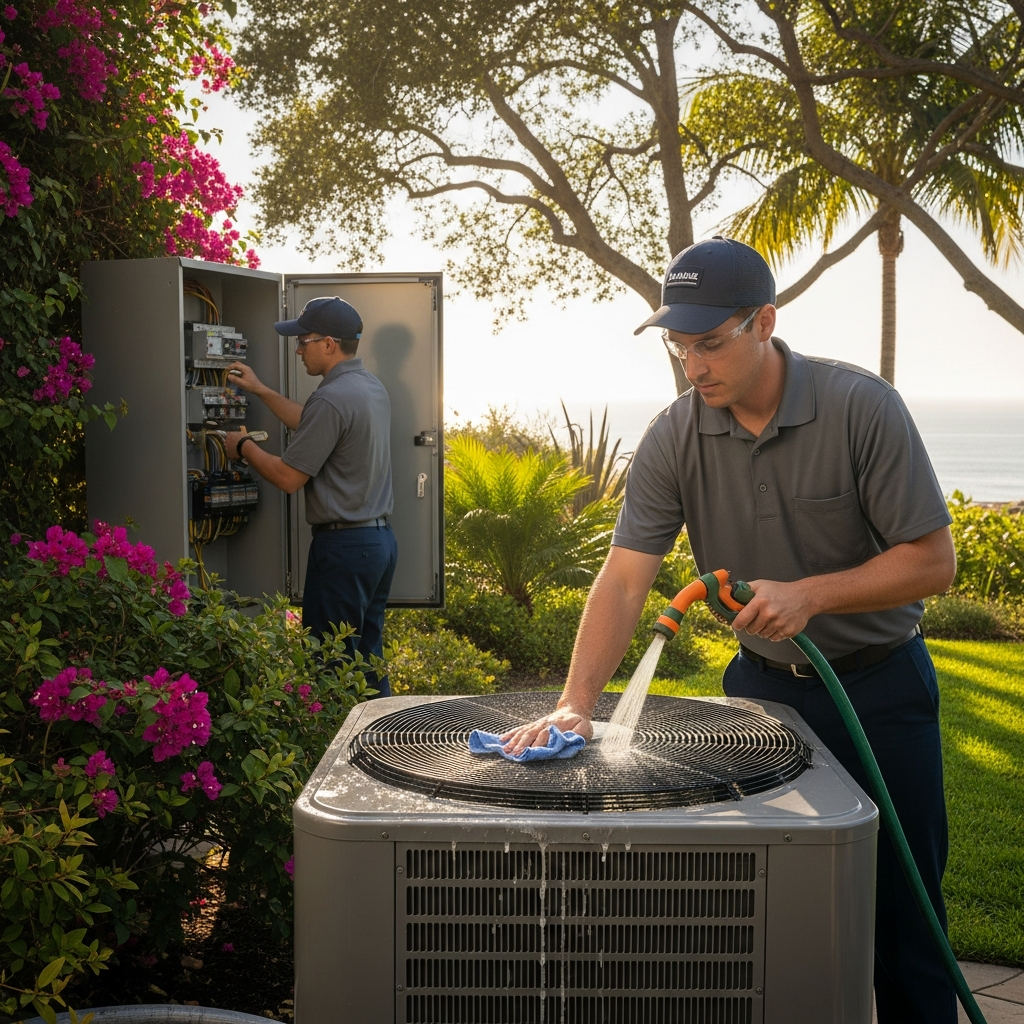
Salt tastes success on thin aluminum fins, and Malibu’s outdoor condensers pay the price. Homeowners sometimes try to help by blasting the cabinet with a pressure washer, thinking more force equals more clean. Unfortunately, this can fold fins flat, drive water into fan motors, and even push debris deeper into the coil. A soft rinse with a garden hose, applied from inside the cabinet outward after removing the fan assembly, is smarter and gentler. Let the coil cleaner do the work, not water pressure. Protect the electrical compartment from spray and give the unit time to dry before restarting. Because of our salt air, consider a manufacturer-approved corrosion inhibitor or a light, even application of coil protectant after cleaning, especially for properties a short walk from the shore.
Blocking airflow with landscaping and coastal decor
Malibu landscapes are stunning: rosemary hedges, succulents, bougainvillea, and thoughtfully placed windscreens. But the condenser needs clear breathing room. Plantings or decorative screens too close to the cabinet recirculate hot air and reduce heat rejection. Add salt-laden marine moisture and a bit of wind-blown debris, and the coil can cake up surprisingly fast. Maintain open space around and above the unit, and clear away surfboards, garden tools, and beach chairs that tend to find their way nearby after a spirited day on the sand. Likewise, avoid placing the outdoor unit in an enclosed nook where the sea breeze cannot sweep warm air away.
Overlooking the condensate drain and pan
Malibu’s morning fog makes for magical light, but it also means higher humidity before the sun burns through. Your air conditioner pulls moisture from the air; that water needs a clear path out. I have seen more than a few ceiling stains and closet floods caused by a neglected condensate drain line that finally clogged on a humid day. A simple seasonal flush with a mild vinegar solution, a check of the trap, and confirmation that the float switch trips properly go a long way. If your air handler lives in a tight attic above a prized living space, the safety of that small switch is more important than most people realize.
Skipping professional checks of refrigerant charge and electrical components
A system can cool while still hiding borderline electrical components or a slightly off refrigerant charge. In coastal environments, contactors pit, terminals corrode, and capacitors drift out of spec faster than expected. Visual inspections help, but a meter is your friend. A professional test of superheat, subcooling, voltage drop, and amp draw reveals if the system is healthy. Too many homeowners rely on a “feels cool enough” test until the day it doesn’t. When that day lands in the middle of a heat wave, every minute without comfort feels longer. This is where proactive steps, from careful coil cleaning to mid-season checks, pay off, and a mid-year reminder like an easy online booking for maintenance service helps keep things on schedule without guesswork.
Closing supply vents to “push more air” to other rooms
It seems logical to close vents in rarely used rooms to nudge more air elsewhere. However, closing vents increases system static pressure. In many Malibu homes, ducts snake through hot attics or tight crawl spaces; added resistance makes the blower work harder. High static can reduce cooling on the remaining open vents, create noise, and strain the blower motor. It can also encourage duct leakage at weak joints. Better paths include balancing dampers, sealing leaky ducts, or adjusting blower settings within design limits. If a part-time office or guest room does not need constant cooling, consider a programmable thermostat that tempers output rather than blocking airflow.
Ignoring duct leakage and insulation in coastal attics
Many Malibu roofs sit above generous living volumes, with ducts tucked into attics where summer heat and radiant gain are real. Leaky or poorly insulated ducts bleed cool air into those hot spaces, forcing longer run times and uneven comfort. Because coastal humidity can sneak into attics, insulation sometimes compacts or shifts. A quick look for disconnected flex duct, gaps at plenums, or compromised insulation returns dividends in quieter operation and steadier performance. Seal with mastic, secure joints with screws and proper collars, and confirm that attic vents and baffles are doing their job.
Relying on outdated thermostats and vague settings
Old thermostats and haphazard schedules translate to inconsistent comfort, especially where days begin cool and end warm. In Malibu, a coastal morning might not call for cooling until early afternoon. Smart, well-calibrated controls bring nuance. Aim for gentle setpoint adjustments and leverage setbacks based on occupancy. Quick drops to a low setpoint force long cycles and can make indoor air feel clammy when the marine layer lingers. A properly placed thermostat, away from sun-washed windows or drafty doors, also reads the space more honestly.
Neglecting wildfire smoke preparation
Every few seasons, smoke rolls across our hills. Even if flames are far away, fine particulates drift into town. When that happens, filters saturate much faster. Many homeowners overlook this surge in particle load and keep a normal replacement cadence. The result is restricted airflow when the system is already under stress. Keep a small reserve of compatible filters, consider a higher filtration strategy that your system can actually handle, and watch fan run times. After smoke events, inspect the indoor coil and blower wheel; what passes the filter often accumulates there over time.
Forgetting surge protection and electrical health
Malibu’s power fluctuations during wind events can be rough on HVAC electronics. A simple, properly installed surge protector provides a safety net for the control board, compressor, and smart thermostat. Loose connections, corroded lugs, and aged breakers inside the disconnect box also deserve attention. Each spring, confirm tight terminations and clear rust so that voltage stays steady and components last.
Underestimating the ocean’s slow, steady impact
Salt crystals are tiny but relentless. They lodge in the coil, settle on fan blades, and creep under paint. The fix is not complicated; it is consistency. Gentle rinsing, timely neutral cleaning, and occasional protective coatings extend outdoor unit life. When selecting a replacement system, consider coastal-rated cabinets and hardware. Stainless fasteners, powder-coated guards, and well-sealed electrical compartments are not bells and whistles by the shore; they are common sense.
Letting the condensate pump labor in silence
In many hillside homes, an air handler lives below the finished space and relies on a condensate pump to lift water to a drain. Those small pumps work until they do not, and failures tend to show up when humidity spikes. Test the pump at the start of the season by adding water to the pan and watching the float trigger. Listen for rough bearings or stuttering. A good pump is quiet confidence; a weak one is an invitation to overflow on a day when you least expect it.
Assuming any cleaner is safe for coils and finishes
Use coil cleaners designed for the material and environment. Harsh agents can etch aluminum and accelerate corrosion, especially in salty air. Rinse thoroughly and avoid residues that attract dust. For painted cabinets, choose mild detergents and soft brushes. Over-scrubbing a powder-coated finish can open a path for salty moisture to infiltrate. Treat shrouds, fan blades, and guards with the same care.
Overlooking line set insulation and UV damage
Sunlight along Malibu’s south-facing walls is strong. The foam insulation around refrigerant lines gets brittle and cracks. Exposed suction lines sweat and lose energy as heat sneaks in, reducing system efficiency. A simple re-wrap with UV-resistant insulation restores performance. While you are there, check flare connections for corrosion and confirm that wall penetrations are sealed against pests and moist air.
Expecting ducts to be clean forever after one service
After a renovation or smoke event, duct cleaning can help. But it is not a permanent cure-all. Think of ducts like a highway: if the on-ramps (filters and returns) are well-managed, traffic flows cleaner. If filters are neglected or return grilles collect beach sand and pet hair, fine debris will swirl and settle again. Focus on upstream prevention and periodic inspections rather than assuming one deep clean buys a decade of spotless supply air.
Misjudging noise as “just Malibu wind”
Our coastal breezes can whistle, but mechanical sounds have a signature: a metallic click that lasts too long, a low hum that turns into a growl, or a fan that ramps up then down for no clear reason. These are early warnings from your system. Investigate new sounds promptly. Addressing a vibrating panel, an imbalanced fan blade, or a slipping belt now avoids a larger repair during a heat wave or weekend gathering. The quiet hum of a happy system should blend with the surf, not compete with it.
Forgetting to look up—attic and roof realities
Roofs in Malibu soak up long hours of sun, then radiate heat into the evening. Attic temperatures can stay high even as the ocean breeze cools the yard. Your ductwork and air handler live in that environment. Summer inspections should include a look at attic ventilation, radiant barriers if present, and the general condition of the platform under the air handler. Loose platforms transmit vibration and noise into living areas. Add earthquake bracing where appropriate and confirm that maintenance clearances remain accessible after any remodels.
Trusting luck instead of a simple maintenance calendar
Most homeowners do not need to become HVAC technicians. What helps is a calm, repeatable routine and a few reminders. Create a seasonal calendar with tasks like rinsing the condenser, checking the filter, testing the condensate safety switch, and scheduling professional service in spring. Add a mid-summer glance at the outdoor unit, especially after windy days or get-togethers where yard furniture may have drifted too close. When a habit is easy, it sticks, and that is the real secret to reliable comfort along our coast.
Frequently asked questions
How is Malibu’s marine layer hard on AC systems? The marine layer carries moisture that encourages corrosion and helps dust adhere to coils and fins. Combined with salt from sea spray, it accelerates wear on outdoor units. Regular, gentle rinsing and periodic protective treatments reduce the impact.
Do I really need to change filters more often here? Yes, particularly during wildfire smoke or windy events when fine particles surge. Even with light occupancy, inspect monthly in summer. Replace as soon as you see significant loading rather than waiting for an arbitrary date.
Is it safe to hose off the outdoor unit? Yes, with care. Turn off power, avoid the electrical compartment, remove the top if possible, and rinse from inside outward with a gentle stream. Never use a pressure washer on the coil fins.
What thermostat setting works best near the ocean? Aim for steady, moderate setpoints and avoid sharp setbacks that cause long recovery cycles. Let the morning cool carry you and allow the system to maintain a comfortable range in the afternoon rather than chasing big swings.
How can I prepare for wildfire smoke days? Keep a stock of compatible filters, consider higher-efficiency filtration if your system can handle it, and run the fan to circulate through the filter when air is smoky. After the event, inspect the filter, evaporator coil, and blower for buildup.
Should I close vents in unused rooms? No. Closing vents raises system pressure and can reduce performance. Instead, consider balancing airflow, sealing ducts, or using smart scheduling to match cooling to occupancy.
Do outdoor units need special coatings near the beach? Coastal-rated components and protective coatings help slow corrosion. Even without special hardware, careful cleaning and periodic protectant application add years to a system’s life by the ocean.
Plan reliable comfort for your Malibu home
Malibu’s beauty should be enjoyed, not wrestled with through AC breakdowns. A few wiser habits—timely filter changes, gentle coil care, mindful drainage, and a professional eye on refrigerant and electrical health—turn worry into confidence. If you are ready to turn best practices into a dependable routine, schedule your next AC maintenance and step into summer knowing your home will feel as calm and steady as the sea at dawn.