
Walk any Malibu street and you’ll feel how much the environment shapes our homes. Salt air comes in waves, the marine layer pushes and pulls, and sunshine can be brilliant one hour and filtered the next. As a local HVAC professional, I’ve watched these rhythms inspire an evolution in how we design and install cooling systems. Today’s most compelling projects combine quiet, efficient equipment with coastal-ready materials and smart controls, creating indoor spaces that feel calm, clean, and resilient. If you’re considering air conditioning installation, it helps to know the trends that are proving themselves in Malibu’s real-world conditions.
Trends tend to stick when they earn their place. Here, that means systems that match microclimates, respect view corridors, and keep noise to a whisper. It also means thinking beyond equipment to integrate filtration, dehumidification, and energy management. The result is comfort that’s both intuitive and future-forward, designed to thrive in our coastal landscape.
Inverter Heat Pumps as the New Standard
Perhaps the most important shift is the rise of inverter-driven heat pumps. These systems modulate their output continuously, which keeps indoor temperatures steady and noise levels low. For Malibu homes that see large glass areas and shifting solar gain, the ability to adapt quietly is transformative. Rather than roaring on and off, an inverter unit hums along, removing heat gently and efficiently. In winter, it reverses to provide heat that feels even and soft, which suits our mild climate perfectly.
This trend overlaps with California’s broader move toward electrification and higher efficiency standards. SEER2 and HSPF2 ratings give a more realistic measure of performance under today’s testing protocols. When paired with well-sealed ducts and thoughtful commissioning, inverter heat pumps deliver efficiency you can feel—rooms that don’t spike in temperature and a system that sips power instead of gulping it.
Side-Discharge and Low-Profile Outdoor Units
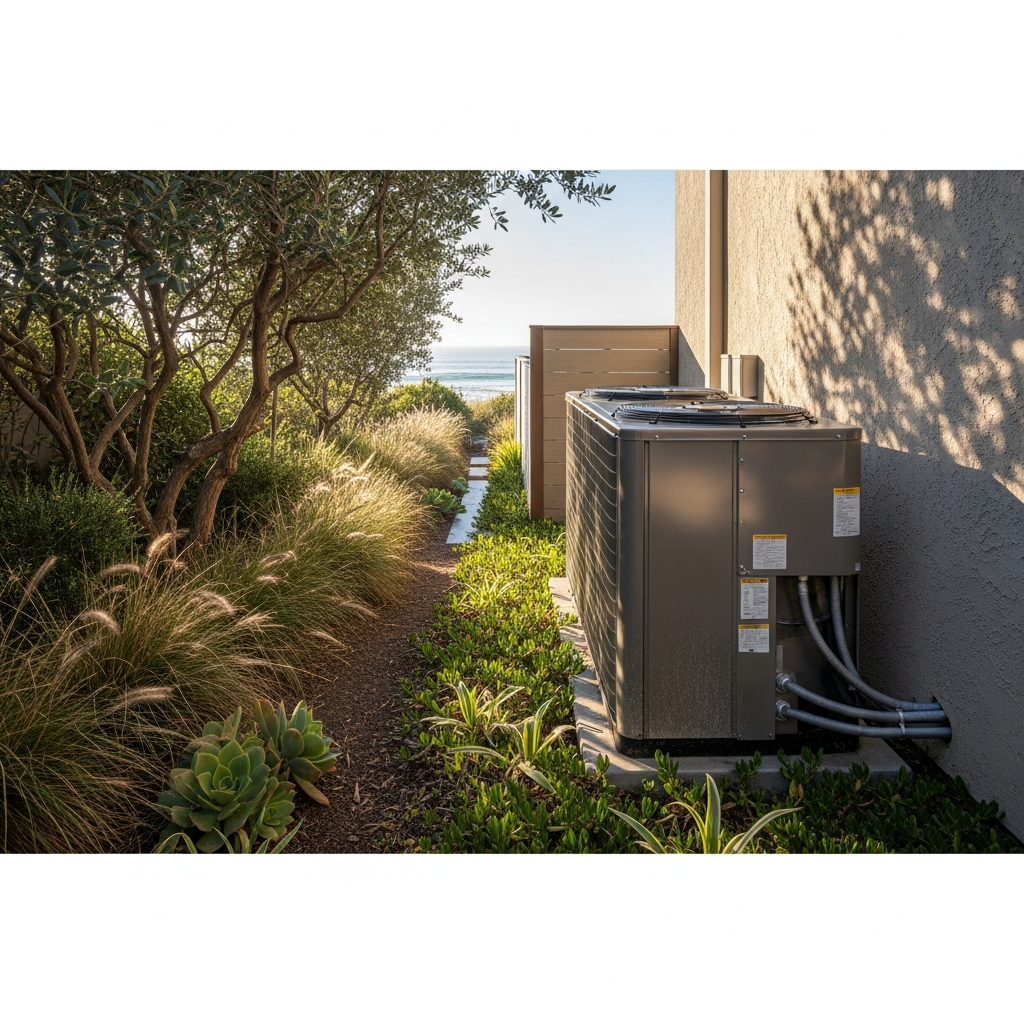
Malibu homes often prioritize outdoor aesthetics and view corridors. Side-discharge condensers and low-profile outdoor units answer that call. Their compact form factor makes them easier to tuck beside a garage or behind landscaping without blocking lines of sight. They also tend to be quiet, which matters in neighborhoods where evening stillness is part of the experience. When we combine these units with corrosion-resistant coatings and stainless hardware, they stand up better to salt air while staying visually discreet.
Placement remains a craft. We plan for airflow, avoid sprinkler overspray, and leave service clearance while preserving the home’s look. It’s a careful balance of performance, durability, and design—very much in the Malibu spirit.
Coastal-Ready Materials and Protective Details
Salt air is a constant teacher. Modern installations lean into coated coils, UV-stable insulation, sealed penetrations, and hardware that resists rust. We elevate condensers on stable pads that shed water and keep leaf litter from gathering under the unit, and we route refrigerant lines where sun and surf can’t beat them up. These choices don’t draw attention, but they stretch the life of the system and keep service effortless. After a few fog-heavy seasons, the difference in appearance and performance is obvious.
We also see more clients opting for gentle rinse routines and seasonal checkups focused on coastal wear. That rhythm, combined with smart materials from day one, adds years to the equipment’s useful life.
Integrated Air Quality: From Wildfire Readiness to Everyday Cleanliness
Air quality has become a front-and-center design goal. Filtration upgrades, deeper filter cabinets, and tight return plenums support cleaner air on smoky days and during pollen bursts. Some projects incorporate dedicated outdoor air with filtration that refreshes interiors without inviting dampness. The key trend is integration—designing filtration and ventilation as part of the installation rather than a bolt-on afterthought. This produces quieter operation and better results, with filters that are easy to access and replace before big heat or smoke events.
During Santa Ana conditions, many residents report how much calmer their spaces feel with steady filtration and balanced airflow. That sense of refuge is a hallmark of today’s best installations.
Smart Thermostats, Zoning, and Demand-Aware Cooling
Another trend is smarter control, not only for convenience but for cooperation with California’s grid. Thermostats learn patterns, geofence your arrival from the PCH, and pre-cool during solar-strong hours. Zoning lets you focus cooling on the rooms in use, often upstairs in the afternoon and living spaces in the evening. These tools cut energy use while sharpening comfort, and because inverter systems prefer longer, lower-speed operation, they dovetail nicely with strategies that avoid big swings in temperature.
For Malibu’s architecture—guest suites, studios, and ADUs—ductless mini-splits remain popular. They handle unique spaces beautifully and install with minimal disruption, especially where running new ducts would be impractical or intrusive. Many homeowners mix ducted and ductless zones to fit the home’s needs without compromising aesthetics.
SEER2, Commissioning, and the Quality Gap
Efficiency ratings tell only part of the story. The other part is installation quality. A clear trend in Malibu is rigorous commissioning: duct leakage testing, static pressure checks, and confirmed refrigerant charge. Systems that are tested and tuned simply work better. They’re quieter, they run cleaner, and they last longer. The new SEER2 testing procedures align with those realities, but it’s the on-site verification that closes the loop between equipment capability and day-to-day comfort.
This is where Title 24 and inspection processes shine. They ensure that ducts are sealed, returns are sized correctly, and airflow is balanced. That structure supports lasting performance instead of quick fixes that fade after the first season.
Design Sensitivity: Architecture, Acoustics, and View Preservation
Malibu’s visual language—glass, stucco, warm woods, and framed ocean views—demands discretion. Hidden line sets, carefully chosen grilles, and return locations that avoid wall streaking are all on-trend. Acoustically, we favor equipment that keeps nighttime decibels low and duct designs that don’t telegraph sound between rooms. We’re also thoughtful about where condensers sit relative to neighbors and reflective surfaces. These refinements matter as much as the equipment in shaping how the system feels and sounds.
In remodels and new builds, coordination with architects and builders is increasingly common. Thinking about cooling early helps us hide infrastructure gracefully and create spaces that feel calm and complete when the keys are handed over.
Refrigerant Transitions and Future-Proof Choices
Another trend, quieter but significant, is the shift in refrigerants. As industry adopts lower global warming potential options, choosing equipment that accommodates these changes gracefully becomes wise. Malibu clients often ask about forward compatibility, and the answer lives in selecting trusted equipment, clean installation practices, and serviceability. Systems installed with attention to detail—clean brazing, proper evacuation, and moisture control—age more gracefully through industry transitions.
Future-proofing also includes surge protection and electrical work that anticipates smart home integration. As software-driven thermostats and connected components update over time, a stable electrical foundation keeps everything synchronized.
The Malibu Middle Way: Performance Without Drama
If there’s a single thread running through all these trends, it’s the pursuit of performance without drama. A great system doesn’t shout; it just makes life smoother. Rooms feel even. Glassy spaces don’t overheat at sundown. The house smells fresh after a blustery day. The condenser sits quietly where you barely notice it. And during heat waves or smoky spells, the system steps up, keeping your home steady while the outside world does what it will.
Frequently Asked Questions
What’s driving the shift to inverter heat pumps?
Inverter heat pumps match their output to your home’s real-time needs. That means tighter temperature control, lower energy use, and less noise. In Malibu’s variable conditions and light winters, they offer year-round comfort with minimal fuss.
Are side-discharge condensers worth it near the coast?
Yes, particularly where space and views are at a premium. Their compact, low-profile design makes placement more flexible, and when paired with coastal coatings and good siting, they hold up well to salt air while staying quiet and discreet.
How does commissioning change the outcome?
Commissioning verifies that your system is performing as designed—ducts are sealed, airflow is balanced, and refrigerant charge is correct. The result is a quieter, cleaner, and more efficient system. It’s the difference between theoretical performance and the comfort you actually feel.
Can I mix ducted and ductless zones?
Absolutely. Many Malibu homes blend ducted systems for main living areas with ductless heads for studios, guest rooms, or spaces with unique needs. It’s a flexible way to match the cooling strategy to the architecture without compromising aesthetics.
What should I ask about materials and corrosion protection?
Ask about coated coils, stainless or non-corrosive fasteners, UV-resistant insulation, and sealed penetrations. Confirm drainage and clearance around the condenser, and consider a gentle rinse routine during heavy salt periods. These steps add years to the equipment’s life.
If you’re exploring next steps and want a calm, coordinated path from concept to comfort, let’s talk about which trends best suit your property. We’ll align aesthetics, efficiency, and coastal durability, and we’ll handle the details that make systems feel effortless. When you’re ready to plan your air conditioning installation, we’re here to help you capture Malibu’s best qualities indoors, every day of the year.