
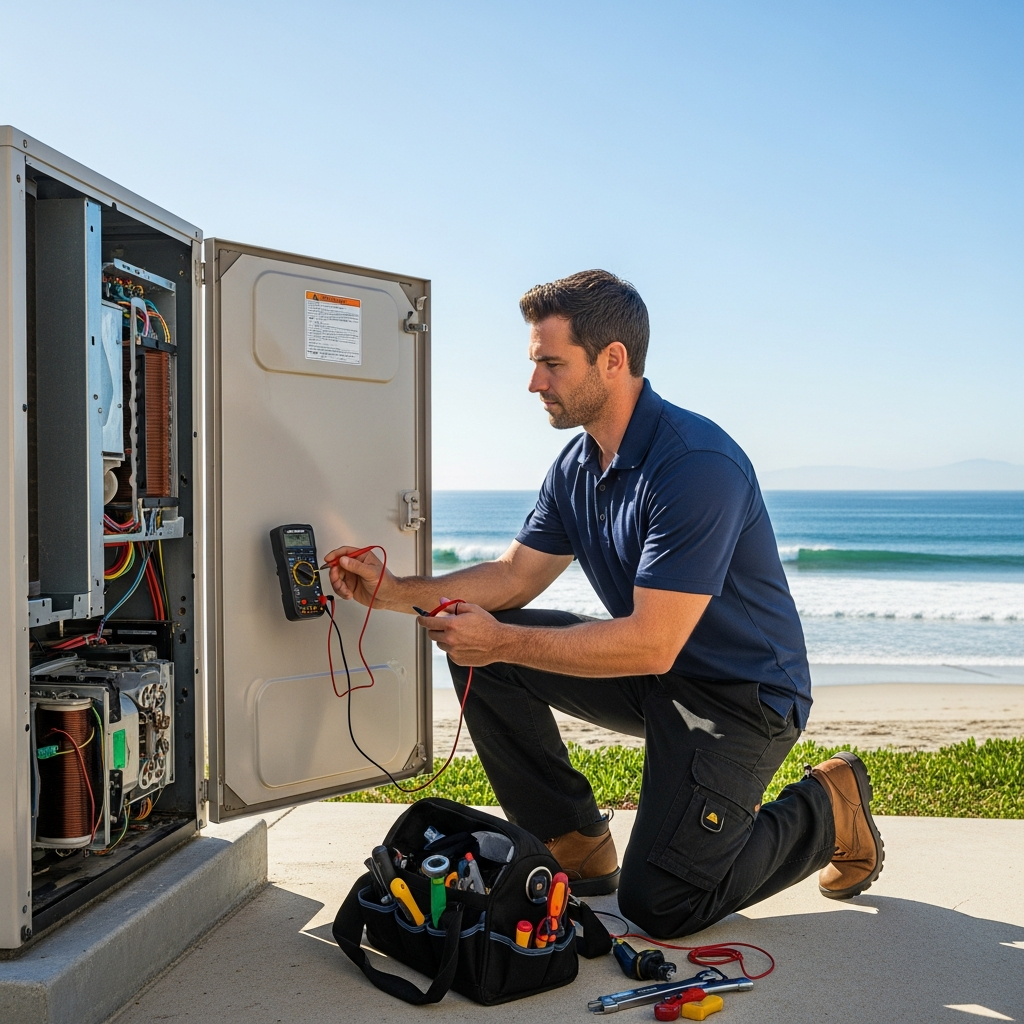
When the breeze stalls and the afternoon sun leans hard against your windows, a quiet home suddenly feels warm and restless. In Malibu, where days can start under a cool marine layer and end in beach-bright heat, a dependable system is less a luxury and more a steady companion. Fast air conditioning repair “near me” is what people search when a breaker trips, a fan won’t start, or the thermostat shows a stubborn error. Having helped homeowners from the flats off PCH to hillside homes above Point Dume, I can tell you that speed in Malibu is about more than a van on the road—it’s about preparation, diagnosis, and communication. To set the stage, it helps to revisit the heart of air conditioning so you can separate quick fixes from issues that deserve a careful hand.
Speed starts long before a technician pulls into your driveway. It begins with a clear description of symptoms: Is the outdoor unit running but the indoor air warm? Do you hear a click but no fan spin? Did the issue follow a recent power blip or an unusually humid day? The more detail you share at the outset, the better the triage. In Malibu, I also consider the home’s microclimate. Salt air can corrode small electrical components, canyon dust can clog a neglected filter faster than you expect, and long duct runs in hillside homes can exaggerate otherwise minor problems.
What “Fast” Really Means
Fast is not frantic. The right approach is organized and methodical, because haste is the enemy of durable repairs. On arrival, a good technician confirms the complaint, checks airflow and filtration first, and works outward through controls, capacitors, contactors, and motors. Many no-cool calls resolve with a failed capacitor or a clogged drain safety switch. Others reveal a thermostat misconfiguration after a battery swap. The trick is to move briskly through the diagnostic tree without skipping the simple steps that save time and money.
In Malibu’s salty air, outdoor components deserve special attention. Even a robust condenser can develop surface oxidation on connections that interferes with signal and power. I carry the right brushes and protectants to clean and secure those points, and I watch for signs the unit needs a rinse. A modest coil clean at the right moment avoids longer cycles and wasted energy on a day that’s already warm enough.
Common Repair Calls and What to Expect
On the coast, we see plenty of calls for systems that won’t start after a cloudy morning finally breaks into sun. The equipment spent hours coasting at low duty, then suddenly needed to ramp. A weak capacitor or a pitted contactor may falter at that moment. Blower motors inside are another frequent culprit; when filters clog and returns are undersized, motors work harder, heat up, and age faster. In canyon homes, I see drain lines that slope imperfectly and trip float switches during humid spells—an easy fix once you know where to look.
Thermostat issues are more common than you might think. A stat mounted in direct sun or near a warm kitchen reads high and overcooling follows; a stat near an open door during an evening breeze reads low and your bedroom never quite settles. Quick relocation or the addition of remote sensors can transform comfort. During smoke events, filters capture more particulates than normal and quickly restrict airflow. Replacing or upgrading them after a heavy smoke day is faster than chasing the downstream issues they cause.
After-Hours and Weekends
Malibu life doesn’t obey nine-to-five. Beach days, dinner parties, and weekend guests mean cooling matters after hours. While I can’t promise every part will be on a truck at ten at night, I can promise that a seasoned local tech will stabilize the system when immediate comfort is at stake. That might mean getting a condenser running on a temporary part until the exact match arrives, or configuring the system to provide partial cooling that keeps bedrooms tolerable overnight. Clear communication about what is temporary versus permanent keeps everyone aligned.
Repairs on hillside properties sometimes require extra coordination for access. A long, narrow driveway or a gated entry isn’t a barrier—it just needs a heads-up so the right vehicle and tools are ready. Good teams call when they are en route, confirm gate codes, and stage equipment efficiently so you aren’t waiting while someone hikes back to the van for a forgotten meter.
Preventing the Next Emergency
The most satisfying “fast repair” is the one you don’t need next month. After resolving the immediate issue, I like to review causes and discuss small changes that make breakdowns far less likely. That could be a reminder about filter changes during Santa Ana winds, a coil rinse schedule for a home close to the spray, or a gentle suggestion to enlarge a starved return. Sometimes, the solution is as simple as moving a thermostat and programming gentle setbacks so the system isn’t asked to sprint from zero every afternoon.
Owners often ask whether to replace a part or preemptively service adjacent components. It’s a fair question. If a contactor is pitted and the capacitor tests borderline, doing both now is quicker than a second visit, and it’s cheaper than losing a weekend to a second outage. Malibu’s environment magnifies small weaknesses; a cautious approach isn’t overkill here—it’s smart stewardship.
Communication That Saves Time
From the first call, share the age of your system, the last time anyone serviced it, and any recent electrical events like a tripped breaker or a power surge. Mention if you heard unusual sounds, smelled something sharp near the condenser, or saw water in the secondary drain pan. Photos help. I’ve diagnosed more than one failure from a homeowner’s quick snapshot of a frost-covered line set or an error code on a thermostat. That head start turns a “let me check everything” visit into a “let me confirm and fix” visit.
When I arrive, I walk the home and talk through the day’s weather, your settings, and what you’ve already tried. Simple checks—verifying the breaker, ensuring the switch at the air handler is on, confirming the thermostat is set to cool—avoid the occasional false alarm. Once the basics are done, we move into the heart of the system with meters, gauges, and eyes tuned to the small details that separate a guess from a diagnosis.
Midpoint Reality Check
About halfway through a repair, I like to pause and review findings. If we’ve confirmed a failed part, I’ll outline replacement options. If we’re still tracing a more elusive fault, I’ll explain why we’re testing the next component. Homeowners appreciate that clarity, especially when guests are arriving in a few hours and the living room still feels warm. It’s also a good time to revisit how air conditioning responds to Malibu’s microclimates—why a variable-speed fan might smooth out evening comfort, or how a simple return upgrade can quiet a restless bedroom.
The Little Things That Make Big Differences
Good repairs are tidy. Wires are dressed neatly, disconnects close securely, and panels seat without rattles. Outdoor units are wiped down and areas cleared of leaves that can creep into coils. Inside, drain pans are dried and float switches tested. These habits aren’t fluff; they reduce callbacks and help your system start clean after a fix. I leave owners with practical notes—filter type and size, date of service, and any watch items—so you’re not guessing months later.
Malibu’s calm demands quiet systems. If I can adjust blower speed to settle a whistling vent or realign a grille that buzzes, I do it right then. You may have called about cooling, but comfort is a package deal; sometimes the difference between “fine” and “perfect” is a fifteen-minute adjustment.
Frequently Asked Questions
Q: What should I check before calling for repair? A: Confirm the thermostat is set correctly, the breaker hasn’t tripped, the air handler switch is on, and the filter isn’t clogged. If a drain pan shows water, switch the system off and call—your safety switch may be doing its job.
Q: Why does my system fail more often near the beach? A: Salt air and moisture accelerate wear on small electrical parts and coils. Regular rinses, protective coatings, and attentive maintenance slow that process dramatically.
Q: Can you really fix things fast on weekends? A: Many issues can be stabilized or resolved quickly with on-truck parts. When a specialty part is required, we implement a safe temporary solution and schedule the final repair as soon as the correct component arrives.
Q: My vents blow air, but it isn’t cool—now what? A: That could be a refrigerant circuit issue, a thermostat or control fault, or a compressor problem. We’ll confirm airflow first, then move through electrical and refrigeration checks to isolate the root cause.
Q: How can I avoid the next breakdown? A: Stay on top of filter changes during dusty or smoky periods, schedule routine checks before peak season, rinse coastal coils, and address small issues like weak capacitors before they sideline the system on a hot afternoon.
Q: Is it safe to run the system if I hear a new noise? A: If the sound is sharp, grinding, or metallic, switch the system off and call. Gentle humming or airflow changes may be normal, but new harsh noises deserve immediate attention to prevent damage.
Your Next Step
If your system is struggling today—whether you’re near Carbon Beach or tucked into a canyon—don’t wait for the next heat wave. A fast, focused visit can settle the issue and set you up for smoother seasons ahead. Share symptoms clearly, be ready with recent service history, and let a local expert bring calm back to your rooms. When you want dependable help and modern air conditioning guidance delivered with Malibu’s pace and care, reach out and get your comfort back on track.