
Choosing a central air conditioning system in Malibu is an exercise in harmony—balancing coastal weather, architecture that blurs indoors and out, and a lifestyle that values quiet, effortless comfort. From the sea-level flats along PCH to the terraces above Trancas, homes here ask for systems that modulate gently, resist salt air, and disappear into design. If you are weighing your options, a clear tour of what’s possible will help you match technology to the way you live. Early on, it also helps to anchor your thinking with the fundamentals of air conditioning, because understanding how heat is moved, how airflow is managed, and how humidity is controlled will shape every good decision to follow.
Malibu’s microclimates create a surprisingly wide spread of needs. Morning marine layers keep some neighborhoods mild until late morning, while sunlit slopes heat quickly. Canyons channel breezes but also complicate equipment access and duct runs. Salt air closer to the water challenges outdoor units in ways inland homeowners rarely consider. All of that context bends the shortlist of viable central-system options in practical ways.
High-Efficiency Split Systems
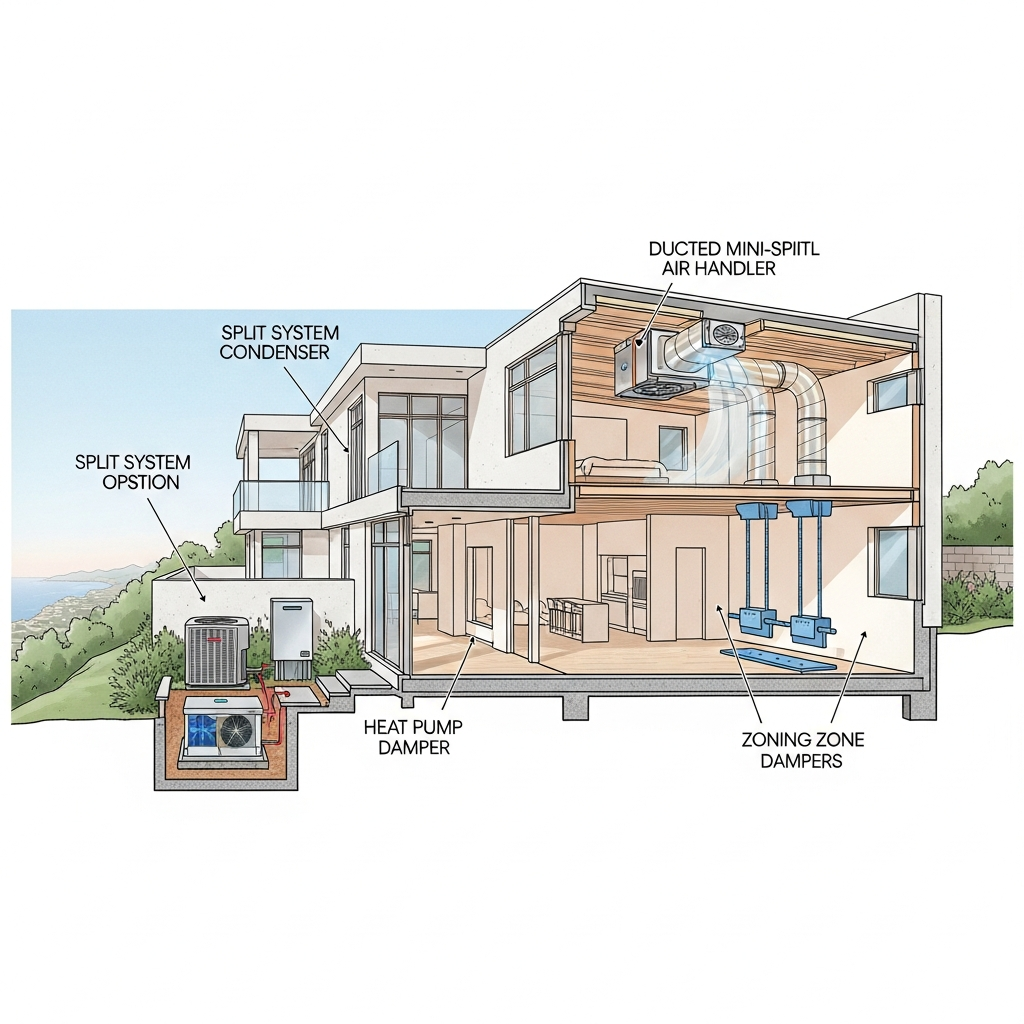
The backbone of many Malibu homes remains the classic split system: an outdoor condenser paired with an indoor air handler or furnace. The best modern variants use variable-speed or two-stage compressors and ECM blowers to smooth temperatures and reduce noise. When properly sized and paired with generous return air and well-sealed ducts, they deliver a kind of background comfort that simply feels right. Coastal-rated coils and protective finishes are must-haves near the beach; they slow the salt’s steady nibble at metal edges.
Placement is half the art. On ocean-facing homes, we look for tucked-away corners that cut down on direct onshore winds. In hillside lots, we may design raised pads to steady equipment on irregular terrain or to keep condensers out of leaf drifts. Adequate clearances and thoughtful line-set routing make service simpler and quieter, preserving the system’s elegance through the years.
Heat Pump Central Systems
Given Malibu’s mild winters, heat pump central systems are compelling. They cool in summer and provide comfortable, efficient heating when evenings cool, all without the blast of high-stage heat you might associate with colder regions. Pairing a heat pump with zoning is particularly effective in larger or multilevel homes where living spaces are distributed across floors and wings. The result is even, quiet conditioning that reflects how you actually use rooms throughout the day.
Hybrid systems—heat pump plus a backup heat source—are another option for those who want a safety net during rare cold snaps. Controls decide automatically which source to use, prioritizing efficiency and comfort without homeowner intervention.
Ducted Mini-Splits and Light VRF
For architecturally sensitive homes or remodels that make traditional ductwork difficult, ducted mini-splits or light VRF systems offer a powerful blend of discretion and control. These systems use compact air handlers tucked into soffits, closets, or small mechanical spaces, feeding short, hidden ducts to nearby rooms. Because compressors and indoor units modulate elegantly, they maintain steady temperatures and excellent humidity control, and they are famously quiet—perfect for bedrooms with ocean views where silence matters as much as cool air.
Design finesse makes these systems shine. Aligning supply and return grilles with millwork, pairing line-set covers with stucco tones, and planning service clearances from day one preserves the home’s aesthetics. The reward is comfort that guests don’t notice because it feels natural and looks invisible.
Zoning and Airflow Strategy
Central systems in Malibu benefit from zoning, especially in homes stretched along a ridge or stacked vertically. Zoning lets the system focus where life happens—kitchens and family rooms in the afternoon, bedrooms at night—without over-conditioning unused areas. Success depends on more than dampers; it comes from duct design that keeps static pressure in check and from returns sized to match. I often add a dedicated return to rooms that have long suffered from uneven temperatures, and the difference can be night and day.
Return placement is a subtle art. A return that sniffs sun in the afternoon will read warm, asking for more cooling than the rest of the floor needs. A return near a draft or open door may read cool, starving a room of comfort. Adjustments of just a few feet can transcend their modest cost in improved feel.
Indoor Air Quality and Coastal Living
Wildfire smoke and Santa Ana winds have taught Malibu homeowners to value filtration. Central systems with high-MERV media cabinets catch fine particles without forcing blowers to strain, provided the ducts and returns are designed with that goal in mind. Some projects benefit from whole-home filtration or UV-C products, but choice and placement are everything—done casually, they add noise and pressure; done thoughtfully, they vanish into the system and deliver cleaner air, especially during those weeks when closing windows is the only sane choice.
Ventilation matters, too, particularly after remodels that tighten envelopes. Energy recovery ventilators can refresh indoor air while balancing temperature and humidity, keeping that ocean-fresh feel even when the house is sealed against smoke or heat.
Title 24, HERS, and Doing It Right
California’s Title 24 standards and HERS testing are less about red tape and more about performance. They insist on duct sealing, verified refrigerant charge, and sensible fan power. In Malibu, compliance dovetails with common sense: tight ducts keep salty air out and cool air in; correct charge protects compressors and improves dehumidification; measured fan power keeps systems quiet. When homeowners see these rules as allies rather than obstacles, projects run smoother and results feel better.
Permitting in LA County is straightforward when the plan is complete. If an HOA oversees your property, sharing equipment cut sheets and sound ratings early heads off surprises. A good contractor will manage these steps so that by the time installers arrive, the path is clear and the only thing left is the work itself.
Mid-Project Checkpoints
At the project’s midpoint, I like to stand in the rooms where you spend the most time—kitchens, family spaces, and bedrooms with cherished views—and confirm that grille locations, thermostat placement, and zoning logic match how you live. It’s the perfect moment to ask if a subtle change could make daily life easier. Perhaps the family room deserves its own sensor, or a return could be quieted with a different grille pattern. It’s also a natural time to revisit how air conditioning will feel during those classic Malibu days that flip from cool to warm and back again.
Maintenance Woven Into Design
Central systems last longest when service is simple. I favor filter cabinets at hip height rather than ceiling grilles you dread opening. I plan drain cleanouts so a quick service visit can keep lines clear before summer. Outdoors, I leave space around condensers for rinsing and choose placements that minimize leaf buildup. These choices are invisible to guests but invaluable to owners; a system that is easy to care for is a system that keeps its promises year after year.
Smart thermostats and gentle schedules align well with Malibu’s rhythm. Rather than abrupt temperature jumps, a well-tuned system ramps gracefully before you return from the beach and relaxes after sunset. That kind of choreography saves energy, reduces wear, and, most importantly, makes comfort feel natural.
Frequently Asked Questions
Q: Which central option is quietest? A: Ducted mini-splits and variable-speed split systems are exceptionally quiet when designed properly. With generous returns, sealed ducts, and thoughtful placement, either can all but disappear acoustically.
Q: Do I need zoning? A: If your home spans multiple levels or long wings, zoning nearly always improves comfort and efficiency. It prevents one area from dictating how the entire home is conditioned and lets you tailor settings to daily use.
Q: What protects equipment near the ocean? A: Coastal-rated coils, protective coatings, regular rinsing, and placements shielded from direct onshore winds. Pair those with stainless hardware and good clearances, and outdoor units age gracefully.
Q: Can I reuse existing ducts? A: With testing and selective upgrades, many homes can. Sealing leaks, resizing returns, and removing bottlenecks unlock the potential of new equipment. When ducts are beyond salvaging, compact ducted options offer elegant alternatives.
Q: How does Title 24 affect me? A: It ensures the system you buy performs as intended—tight ducts, correct charge, and sensible fan power. It adds structure to the process and protects your comfort over the long haul.
Q: What about wildfire smoke? A: Plan filtration up front. High-MERV media with accessible cabinets, well-placed returns, and optional whole-home filters keep air cleaner during smoke events without imposing constant noise or maintenance headaches.
Your Next Step
If you are exploring central options for a Malibu home—whether you overlook Surfrider or live high above Trancas—begin with a conversation about design, lifestyle, and the character of your property. Walk your rooms, talk about morning sun and evening breezes, and let those realities guide the choice. When you want a system that vanishes into architecture and delivers quiet, steady comfort, connect with a local expert and see how modern air conditioning can be tuned to your life by the coast.