
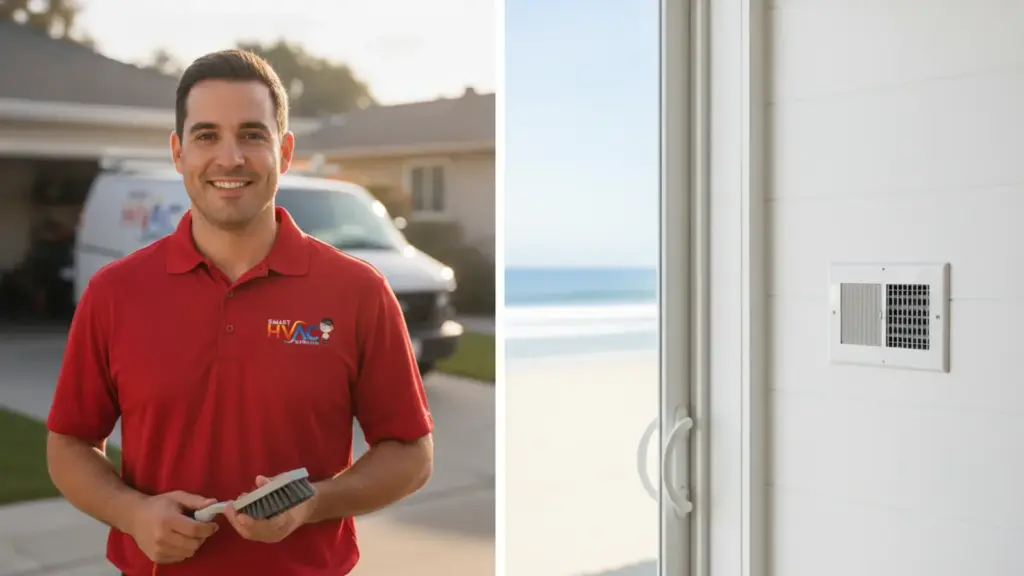
Post-Beach Cleaning Ventilation Maintenance for Malibu Homes
Imagine sliding open your glass patio doors on Broad Beach Road to catch the afternoon tide, only to notice a fine, gritty layer of golden sand settled over your living room coffee table just hours later. In Malibu, the very elements that make coastal living spectacular, namely wind, sand, and heavy salt spray, are constantly trying to find a home inside your central heating and cooling system. Whenever you return from a day of surfing Surfrider Beach or hiking the Zuma Canyon trails, microscopic silica and moisture ride in on your clothes, beach gear, and pets, eventually getting pulled right into your return air vents.
Without targeted beachfront care, this daily accumulation creates a destructive paste inside your ductwork. Salt moisture binds loose sand particles together, coating the interior of your metal or flexible ducts and accelerating systemic wear. Implementing a structured post-beach cleanup routine and maintaining your ventilation system preserves indoor air quality and protects your valuable home comfort equipment from premature failure. To keep your coastal home running efficiently, use this comprehensive checklist for oceanfront duct maintenance and ongoing ventilation care.
The Post-Beach Entryway and Air Vent Checklist
Preventing sand and salt from entering your ductwork starts at the primary entry points of your home. By stopping debris at the threshold, you dramatically reduce the workload on your HVAC filters and internal duct networks.
- Establish a dedicated outdoor rinse station: Wash down wetsuits, surfboards, bodyboards, and sandy feet with fresh water before anyone steps onto the deck or patio. Saltwater residue left on gear dries into fine salt crystals that quickly become airborne indoors.
- Implement a strict double-mat entry system: Place a heavy-duty, coarse-coir mat outside your main beach-facing doors to scrape off heavy sand, followed by a microfiber capture mat directly inside to absorb remaining moisture and fine salt dust.
- Vacuum transition zones daily: Focus on mudrooms, entryways, and sliding door tracks using a vacuum equipped with a sealed HEPA filter. This prevents fine beach dust from being kicked back into the air where return vents can pull it in.
- Groom pets outdoors after beach runs: Brush down dogs outside to remove embedded sand and salt from their coats, as pet dander laden with coastal salt is highly corrosive when drawn into the HVAC system.
- Keep beach gear stored in localized zones: Store towels, chairs, and umbrellas in an outdoor shed or a sealed garage cabinet rather than carrying them through carpeted areas of the home where dry sand can shake loose.
The Coastal Air Filter and Return Vent Checklist
Your return vents act as the lungs of your Malibu home. Because coastal air carries high humidity and corrosive salt compounds, standard filtration habits must be adapted to prevent premature system clogging.
If you want it handled correctly the first time, consider professional air duct cleaning in Malibu.
- Inspect air filters every three weeks: Check filter surfaces frequently during high-use summer months. The combination of damp marine air and fine sand can clog a standard pleated filter much faster than in inland environments.
- Choose the correct MERV rating for coastal debris: Use high-quality MERV 11 to MERV 13 filters to capture fine salt particles and micro-sand without overly restricting the airflow of your system.
- Wipe down return vent grilles weekly: Clean the exterior metal slats of your return registers with a damp microfiber cloth to remove built-up dust and salt crust before it has a chance to pull through the filter.
- Verify filter seal integrity: Ensure there are no gaps around the edges of your filter frame when installing. Coastal air pressure fluctuations can bypass loose filters, sending raw sand directly into your blower motor and coil cabinet.
- Keep return vents completely unobstructed: Avoid placing low-profile coastal furniture, decorative baskets, or indoor plants directly in front of return registers, which forces the system to pull air from floor cracks where heavy sand settles.
Malibu-Specific Environmental Considerations
The geography of Malibu, stretching along a narrow strip between the Pacific Ocean and the dry Santa Monica Mountains, subjects homes to a unique double-threat of marine moisture and mountain dust. Understanding these local factors is critical for protecting your HVAC system.
- Monitor relative humidity levels: Keep indoor humidity below fifty percent using a dedicated dehumidifier or your system’s dry mode. High humidity combined with airborne salt creates an aggressive electrolyte solution that accelerates corrosive damage inside metal ductwork.
- Seal coastal breeze bypass points: Check the weatherstripping on beach-facing French doors and expansive glass walls. Leaks allow salty marine air to seep in constantly, bypassed filters, and deposit moisture directly into your duct system.
- Prepare for Santa Ana wind events: Close all windows and switch your HVAC system to 100% recirculation mode when dry desert winds blow dust from the canyons toward the coast. This prevents fine ash and mountain silica from mixing with existing coastal salt inside your vents.
- Protect outdoor condenser units from salt air: Hose down the outdoor unit cabinet with fresh water monthly to rinse away salt crust from the condenser coils, ensuring you do not spray water directly into the electrical control panel.
The Professional Ventilation Maintenance Checklist
While daily homeowner habits greatly reduce dirt accumulation, fine salt and silica will inevitably bypass basic filtration over time. Professional intervention is required to address deep-system buildup.
- Schedule specialized local assessments: Partner with an experienced malibu hvac contractor who understands the unique wear patterns caused by local coastal microclimates.
- Clean internal evaporator coils regularly: Have a technician inspect and clean the indoor coil, where damp salt residue often clings, restricting airflow and encouraging biological growth.
- Inspect structural duct connections: Check duct joints for signs of rust or seal failure, especially in crawlspaces or attics exposed to unconditioned marine air.
- Assess ductwork for structural corrosion: Examine metal duct joints for signs of white, powdery rust, which indicates that coastal salt air is actively degrading your duct system.
- Plan for periodic deep cleaning: Schedule a professional air duct cleaning malibu ca every few years to remove accumulated sand, salt crust, and dust that household vacuums cannot reach.
Many Malibu homeowners rely on expert air duct cleaning in Malibu for exactly this.
Frequently Asked Questions
Can I use a household vacuum to clean inside my air vents?
You can use a household vacuum with a brush attachment to clean the exterior grilles and the first few inches of the duct opening. However, standard household vacuums lack the hose length, specialized agitation tools, and high-velocity negative pressure needed to clean the entire duct run without damaging flexible duct liners.
How does salt air damage the inside of my ductwork?
Salt air carries microscopic moisture droplets loaded with sodium chloride. When this salty air enters your ventilation system, the moisture evaporates, leaving behind a sticky salt residue that attracts dust and sand while chemically attacking metal surfaces, leading to oxidation and structural weakness.
How often should oceanfront homes have their ducts professionally cleaned?
While inland homes can often go longer between cleanings, beachfront properties generally require professional duct inspections and cleaning every two to three years. The exact frequency depends on how often doors are left open to the ocean breeze, the presence of pets, and the efficiency of your daily filtration. You can learn more about the pricing dynamics of these specialized services in our guide on coastal duct cleaning cost factors.
Protect Your Coastal Investment
Consistently managing the sand and salt that enters your home is the most effective way to extend the lifespan of your heating and cooling system. When oceanfront living takes a toll on your ventilation, schedule a comprehensive system assessment with the experts at Smart HVAC System to keep your coastal indoor air clean, fresh, and salt-free.