
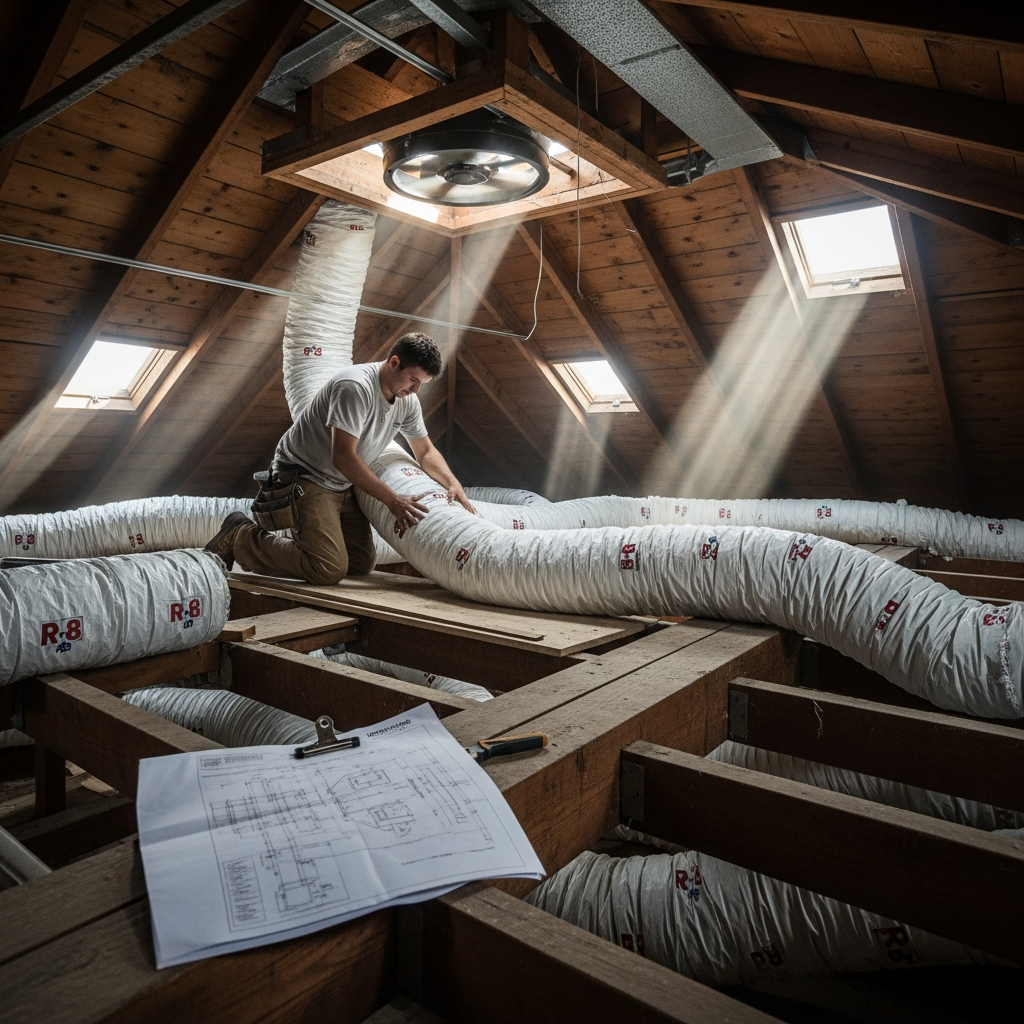
Energy Savings Start Where You Least Expect Them
In Malibu, we tend to think energy efficiency begins with shiny new equipment, rooftop solar, or maybe a smarter thermostat. But the quiet hero often lives out of sight in the attic or crawlspace. The network of ducts that carries conditioned air throughout your home can be the difference between an HVAC system that sips energy and one that constantly gulps. Many local homeowners are surprised at how dramatically comfort and efficiency improve after a thoughtful, professionally executed duct replacement. When the marine layer lingers in the morning and the sun blazes in the afternoon, your system is working across a wide range of conditions, and well-designed ducts help it glide through those swings without wasting energy.
Living near the Pacific shapes every part of home performance. Salt-laden breezes, dramatic day-to-night temperature shifts, and those memorable Santa Ana events each impose their own demands on HVAC. If your ducts leak, constrict airflow, or conduct heat like a bare copper pipe, you end up paying for lost air and unnecessary runtime. Conversely, tight, properly insulated, and right-sized ducts turn every watt your system uses into useful comfort. That’s why energy savings from duct work changes are often immediate and surprisingly noticeable, not just on paper but in the way your home feels from room to room.
Why Leaky or Undersized Ducts Waste Energy
Imagine trying to hydrate while your water bottle has a dozen pinholes. That’s a lot like cooling or heating a home with leaky ducts. The blower motor ramps up to push the right volume of air, yet a chunk never reaches the rooms you live in. Every cubic foot of conditioned air that escapes into the attic or crawlspace is paid for with electricity or natural gas but provides no benefit. When leakage coexists with undersized or poorly laid out trunk and branch lines, the system’s static pressure climbs, the blower draws more power, and efficiency drops. The result is uneven temperatures, long run cycles, and a thermostat that seems unwilling to honor the setpoint.
Another culprit is conduction—heat transfer through the duct walls themselves. In a hot attic, a metal duct without adequate insulation becomes a warming coil for cool supply air before it reaches your living room. During cool coastal nights, the reverse is true: precious warmth is shed into unconditioned spaces. The physics is persistent and impartial. If ducts are thin, crushed, or missing insulation, you pay for thermodynamics you never asked for. Replacing these weak links with modern, well-insulated ducting curbs conductive losses and lets your HVAC system deliver air that is closer to the temperature it left the air handler.
Malibu-Specific Factors That Magnify Losses
Homes in Malibu are perched on bluffs, nestled in canyons, or spread along the shoreline, and each microclimate magnifies certain duct issues. Cliffside homes may fight steady winds that infiltrate and exfiltrate through tiny gaps, making balanced airflow more critical. Beach-adjacent properties endure persistent salt exposure that can corrode metal straps, fittings, and older flex duct outer jackets, opening pathways for leakage and degradation. Hillside residences commonly include longer duct runs to reach distant rooms, raising static pressure and compounding the effects of poor layout. These conditions make accurate sizing, smooth routing, and careful support of ducts more than best practices—they are essential for durability and efficiency.
Local building envelopes also vary widely. Mid-century flat-roof gems can leave limited room for duct insulation or require creative routing to avoid structural members. Mediterranean-style homes with high ceilings benefit disproportionately from well-balanced air delivery that prevents stratification. In each of these scenarios, the energy stakes are high: one kink, one poorly sealed joint, or one long, uninsulated run can undercut an otherwise efficient HVAC system. A properly designed replacement eliminates those hidden drags and gives your equipment a fair chance to perform at its rated efficiency.
What New Ducts Change on Day One
A thoughtful duct replacement transforms how your system operates from the first hour. Because leakage is reduced and static pressure is tamed, the blower doesn’t have to work as hard to move air. That means fewer energy-hungry peaks and smoother operation even on those hazy summer afternoons when the sun is intent on warming every corner of the house. With improved airflow, supply temperatures stabilize, coils operate closer to their design conditions, and dehumidification can improve, which makes the air feel more comfortable at slightly higher setpoints. You end up using less energy for the same or better comfort, a rare win-win in home performance.
Another immediately noticeable change is room-to-room consistency. Where one bedroom used to run warm and the family room ran cooler, newly balanced ducts deliver air in proper proportions. Instead of stretching run times to overcome imbalances, the system cycles naturally. The thermostat clicks off when it should rather than overshooting because a stubborn room lagged behind. This synchronization between equipment and distribution is the heartbeat of efficiency: it reduces wasteful overcooling or overheating, saving energy without you having to think about it.
The Diagnostics Behind Real Savings
Lasting savings come from precision, not guesswork. Before replacement, pros often test for leakage and measure airflow, mapping where the system is falling short. Static pressure readings reveal choke points and undersized trunks, while temperature splits and room measurements point to branches that need resizing. After installation, the same diagnostics confirm that targets have been met. This isn’t about swapping old for new; it’s about engineering a pathway for air that matches the needs of your home and your equipment.
Verification matters because every Malibu home is a one-off. Attic insulation levels, venting strategies, architectural quirks, and even where the sun tracks across your windows affect airflow needs. When ducts are replaced with this specificity in mind—accounting for turns, lengths, fittings, and register placement—the system operates in its sweet spot. Efficiency isn’t an abstract rating on a brochure; it’s the measured reduction in blower effort, the cut in leakage, and the genuine improvement you feel as rooms come into equilibrium faster.
Efficiency Meets Comfort and Health
Energy efficiency is inseparable from indoor air quality and comfort. Tight ducts prevent attic dust, insulation fibers, or coastal particulates from being sucked into return lines and distributed around your home. Improved sealing also curbs infiltration paths that could otherwise draw smoky air during wildfire events or moist air during marine layer mornings. As airflow becomes more predictable, filtration works better because the right volume of air consistently passes through your filter media. That combination—cleaner intake and steadier filtration—means your lungs and your HVAC coils do less work for the same outcome.
There is also an emotional comfort in predictability. When you know the guest room won’t be ten degrees warmer than the hallway, you’re less tempted to keep punching the thermostat down. That behavioral shift multiplies the mechanical savings already earned by the new ducts. Midway through any thoughtful project design, it’s wise to revisit goals and make sure the plan threads the needle between performance and practicality. It’s often here that homeowners choose to pair smart controls or zoning with ductwork replacement, capturing extra efficiency gains by aligning airflow and runtime to real patterns of use.
Design Details That Pay Off
In duct design, little details deliver big dividends. Long, gentle bends instead of tight turns reduce turbulence and pressure drops. Properly sealed connections with quality mastic or gaskets prevent those sneaky 2 to 5 percent leaks that add up across a network. Adequate support spacing keeps flex ducts from sagging, preserving their intended diameter and capacity. Register placement tuned to room geometry helps mix air where people actually sit and sleep, preventing hot and cold pockets that invite overcorrection at the thermostat. Each of these moves adds a few percentage points of efficiency; together they unlock the system’s full potential.
Insulation is another make-or-break element in Malibu’s climate. Attics can run hot in the late afternoon sun, and even coastal breezes don’t erase the temperature difference between conditioned air and ambient air surrounding the ducts. Upgrading to modern insulation levels dramatically curbs conductive losses, which is particularly helpful during short, frequent cycles when every second of transport matters. The less the air changes temperature in transit, the more accurately your equipment can do its job at the coil. Accuracy is efficiency.
From Retrofit to Resilience
Energy savings matter every day, but they also matter most on the worst days. During heat waves, PSPS outages, or smoke events, a well-balanced and tight duct system lets your HVAC do more with less—sometimes literally with less if you are using backup power. When the distribution system is optimized, pre-cooling strategies work better, and the cooled air you stored in the thermal mass of your home stays put longer. If your schedule takes you away for the day, a steady, dialed-in system can coast efficiently, preserving comfort for your return without long, wasteful catch-up cycles.
Resilience is also about longevity. Ducts that are properly sized, supported, and protected from corrosion won’t slump, rip, or unravel as quickly. That reduces the likelihood of energy-wasting damage over time. In short, you’re not only buying lower utility use today; you’re purchasing fewer headaches and performance dips tomorrow. The savings compound as the years go by and your system ages gracefully instead of fighting physics at every turn.
Setting Expectations for Measured Savings
Every home’s baseline is different, so savings vary. If your existing ducts leak significantly or strangle airflow, the improvement can be dramatic. If your existing system is merely “okay,” the gains may be more incremental but still tangible. Either way, the path to energy savings is straightforward: reduce leakage, optimize pressure, cut conduction, and balance delivery. Malibu’s microclimates give us a stress test almost every week, so performance improvements don’t hide—they show up in steadier temperatures, quieter operation, and gentler cycling you can both hear and feel.
It’s also useful to remember that your HVAC equipment’s published efficiency assumes an ideal distribution system. Real ducts are rarely ideal. Replacement is your chance to move closer to the conditions under which your equipment was rated. When airflow matches the design, engineering promises stop being theoretical and start being your day-to-day reality.
Frequently Asked Questions
How quickly will I notice energy savings after new ducts are installed?
Most Malibu homeowners notice immediate changes in comfort and quieter operation, with energy savings reflecting in utility statements over the first couple of billing cycles. The exact timeline depends on your usage patterns, weather, and how compromised the old ducts were, but improved balance and shorter run times typically show up right away.
Do new ducts help with humidity and that coastal “clammy” feeling?
Yes. When airflow is correct and leakage is minimized, your system’s coil can remove moisture more effectively, making the home feel comfortable at slightly higher temperatures. That combination reduces total runtime and saves energy without sacrificing comfort.
Is attic insulation still important if I replace the ducts?
Absolutely. Duct replacement and attic insulation complement each other. New, well-insulated ducts reduce conductive losses along the air path, while attic insulation reduces overall heat flow into or out of the home. Together, they amplify energy savings and comfort.
What if my home has architectural constraints that make routing difficult?
Many Malibu homes do. Skilled designers accommodate beams, low rooflines, and complex layouts with a combination of creative routing, proper fittings, and occasionally short trunk reroutes. The goal is always to preserve diameter, minimize sharp bends, and protect insulation—choices that maintain efficiency even in tight spaces.
Will duct replacement help with wildfire smoke infiltration?
It can. Tighter return and supply ducts reduce pathways for polluted air to enter the system from the attic or crawlspace, and improved airflow makes filtration more consistent. While no duct system can solve every air quality challenge, a well-sealed network is a strong foundation for better filtration outcomes during smoke events.
Talk With a Local Expert About Your Home
If you’re ready to turn wasted energy into comfort you can feel, let’s start with a conversation about your house, your routines, and your goals. A short assessment can reveal where your system loses efficiency and how a tailored plan can bring it back into balance. When you’re prepared to take the next step, explore the possibilities with professional duct replacement designed around Malibu’s climate and your lifestyle.