
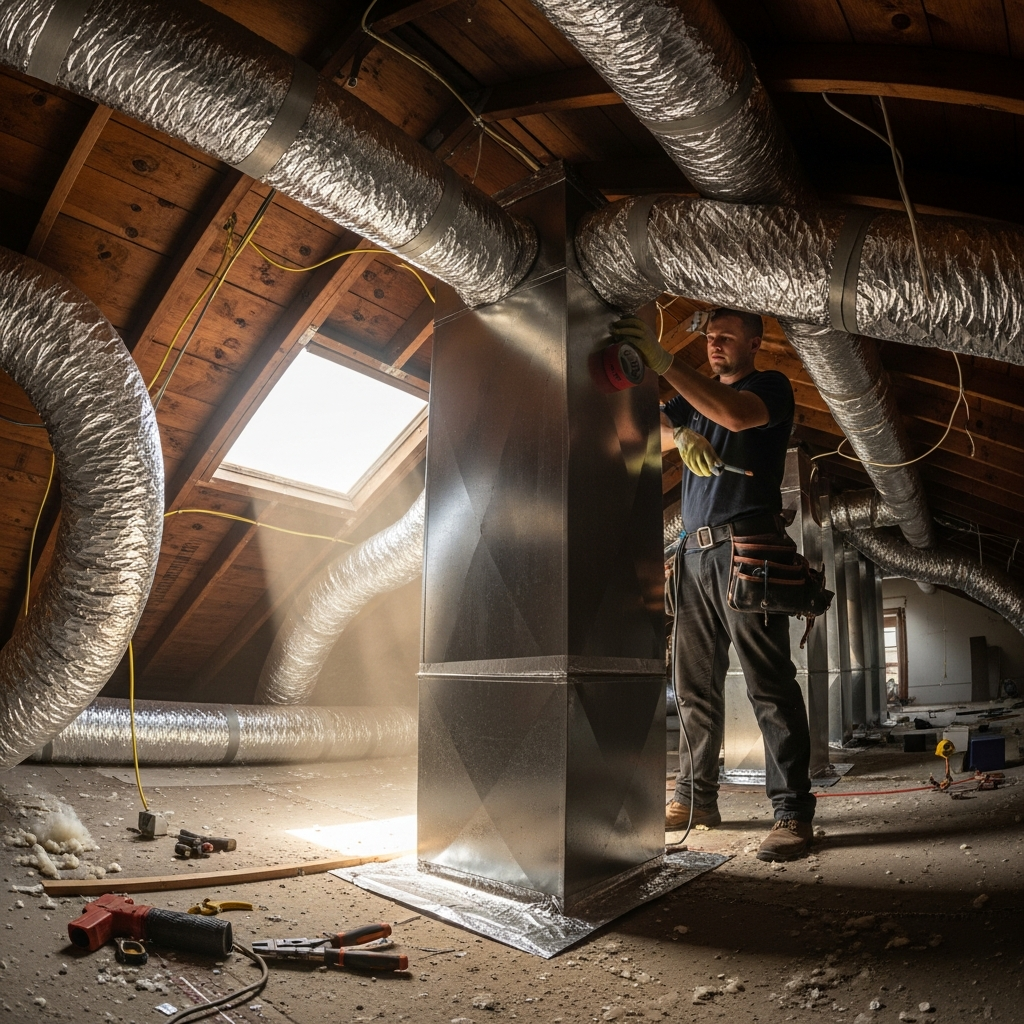
What Beach Homes Teach Us About Airflow
Spend enough time crawling through attics above oceanfront rooms and you start to recognize patterns. Malibu’s beach homes, as stunning as they are, often hide duct systems that have quietly suffered under salt, moisture, and shifting structures. When we approach beach home duct replacement, we bring a catalog of lessons learned from years of coastal work. The goal is not only to swap old for new, but to resolve the root issues that have long kept comfort one step out of reach in these extraordinary properties.
Beach houses live differently. Sliding doors open to the surf, ceilings vault to capture light, and rooflines adapt to sightlines. All that beauty creates complex air pathways. Original installations frequently compromised, accepting tight bends, long runs, or crowded plenums because there was simply no other way to tuck ducts out of sight. Replacement is our chance to unwind those compromises, finding straighter paths, more generous returns, and seals that finally hold under coastal conditions.
Corrosion: The Slow, Salty Saboteur
Even when metal never sees direct spray, the aerosolized salt in coastal air accelerates corrosion. Plenums develop surface rust that eventually pits and leaks. Sheet-metal screws seize and break. Transition boxes weaken at corners. I have seen plenums so fragile that fingertip pressure left dents, a sure sign the system is bleeding conditioned air into the attic. Replacement must begin with corrosion-resistant components and hardware, paired with sealants that do not dry and crack under cycles of humidity and heat.
We also plan for dissimilar metals that can set up galvanic reactions. Thoughtful material selections and isolators prevent hidden chemical battles that, over time, turn seams into sieves. The objective is durability measured in decades, not seasons.
Flex Duct Sag and Compression
Flexible ducting is ubiquitous because it installs quickly and can navigate tight spaces. On the coast, though, we regularly find runs that have sagged between support straps or been compressed under storage boxes in attics. Both conditions slash airflow. In replacements, we use proper strap spacing and gentle arcs to maintain the inner liner’s full diameter. Where long runs would invite future sag, we re-route or transition to rigid sections for stability.
Compression around boots is another frequent flaw. Painters, electricians, and the inevitably busy life of a home can push insulation and flex out of shape, especially near registers. We rebuild those transitions so air flows smoothly into rooms without the telltale roar or whistle of a pinched connection.
Undersized Returns and Starved Systems
Beach homes often prioritize clean ceilings and minimal visual clutter, and that aesthetic can leave systems starved for return air. Undersized returns force fans to work harder, creating noise and reducing delivered airflow to rooms. The problem compounds when filters are upgraded for smoke or allergen seasons. Replacement offers the chance to add or enlarge returns so static pressure falls into the ideal range. Homeowners are always surprised at how much quieter and steadier the system becomes once returns can breathe.
Right-sizing returns also improves filtration performance. Air moves evenly across the filter media, capture improves, and energy use falls because the fan no longer labors against a bottleneck. It is one of those fixes that touches comfort, air quality, and efficiency simultaneously.
Leaky Boots at the Ceiling Plane
Another common issue is leakage where supplies meet the ceiling or wall. Over time, caulks and tapes fail, and gaps open around the boot perimeter. Conditioned air sneaks into the ceiling cavity while dusty attic air is pulled into the supply stream. The symptoms show up as dirty rings around grills or fine dust accumulating faster than it should. During replacement, we treat the ceiling plane as a critical air barrier, sealing boots to drywall with durable products and confirming tightness before grills go on.
The payoff is immediate. Rooms receive the air they were promised, and the supply stream runs cleaner. The home feels less drafty because you are not inadvertently pressurizing ceiling cavities or pulling air from places that should remain isolated.
Plenum Bottlenecks and Awkward Transitions
In pursuit of hidden infrastructure, original installers sometimes tucked plenums into undersized chases or created awkward transitions that choke flow. I have opened platforms to find sharp, right-angle entries into trunks and wyes jammed near elbows—recipes for turbulence and noise. Replacement frees us to redesign those junctions with smooth, gradual transitions that maintain velocity without punishing the fan. The sound difference alone can be startling, especially in quiet beachfront homes where the ocean’s hush deserves not to compete with a whooshing register.
When we resolve a bottleneck, the ripple effect across the system is large. Branches previously starved now receive design airflow, and rooms that once felt like outliers finally join the comfort chorus. It is a reminder that a duct system behaves as one organism; improve a central restriction and everything downstream benefits.
Pest Intrusion and Contamination
Crawl spaces near the coast attract life. Rodents and insects find their way into compromised ducts and insulation, leaving behind damage and contamination. Even when cleaned, lingering odors and particulates can persist in older ductwork. Replacement wipes the slate clean. We remove contaminated sections, seal entry points, and ensure that new materials and connections resist intrusion. Homeowners frequently notice an immediate improvement in indoor air freshness once the new network is commissioned.
Prevention matters as much as cure. We choose robust outer jackets and ensure that terminations and connections leave no easy footholds for curious critters. A sealed, elevated run in a crawl space is far less inviting than a slumped, loosely strapped one.
Moisture, Mold, and Musty Odors
Marine layers and cool nights encourage condensation on and around ducts, particularly where insulation is compromised. That moisture can lead to mold on outer jackets and musty smells migrating into living spaces. During replacement, we correct insulation gaps, choose appropriate R-values, and ensure vapor barriers are continuous. The change is not just technical; it is sensory. The air feels drier and cleaner, and surfaces no longer hold that faint coastal dampness indoors.
Controlling moisture also supports energy efficiency. When ducts stay dry and insulation remains fluffy, heat transfer slows and the system maintains setpoints with less effort. Comfort becomes easier and more consistent.
Misplaced or Missing Balancing Dampers
Some beach homes have dampers buried where you cannot reach them or missing entirely. Without access, fine-tuning airflow after installation becomes guesswork. Replacements bring dampers into accessible locations so we can dial in room-by-room balance. The result is a home where bedrooms and living areas share the load smoothly, and tweaks after a season of living are easy rather than invasive.
This accessibility makes long-term maintenance a conversation instead of a project. If a room’s use changes—a nursery becomes a home office, for instance—rebalancing is fast and tidy.
Noise from Turbulence and High Static Pressure
Noise is a complaint I hear often in beachfront properties where serenity is prized. Whistling returns, roaring supplies, and thumps at startup signal turbulence and high static pressure. Replacement addresses the root causes: undersized returns, crushed or kinked branches, and abrupt transitions. By smoothing the pathway and giving the fan room to breathe, we let the ocean soundtrack carry the day while the HVAC system fades into whisper-quiet support.
Quiet is an energy story, too. Fans running at comfortable, lower speeds save energy and wear less. When the network is calm, equipment follows suit.
Mid-Project Discoveries and Course Corrections
Even with thorough planning, beach homes reveal surprises once work begins. Hidden chases, structural beams, and remodel artifacts appear as we open access. The difference in a successful project is responsiveness. We adjust routing, fabricate transitions on the fly, and keep homeowners in the loop about choices that elevate long-term performance. At this stage, I often recommend engaging teams that specialize in reliable duct replacement for coastal properties, because muscle memory from past beach projects helps us solve puzzles efficiently.
Transparency breeds trust. When homeowners see why a particular turn radius or return size matters, they appreciate that craftsmanship—those quiet details—are what create a home that feels settled and effortless.
What Success Feels Like After Replacement
When the dust sheets come down and the system starts, success shows up quickly. Rooms equalize, the register sound softens to a sigh, and the thermostat becomes background. Bedding smells fresher, floors collect less dust, and the home rides Malibu’s daily swings without drama. Even the psychological feel of the space changes; with air moving as it should, the house seems to exhale tension and inhale calm.
That sensation is durable because it is built on a network that resists our coastal stressors. Materials hold up, connections remain tight, and maintenance becomes light-touch routine rather than a cycle of patches and frustrations.
Frequently Asked Questions
Why do beach homes need duct replacement more often?
Salt-laden air, moisture cycles, and complex architecture accelerate wear on duct materials and connections. Leaks, corrosion, and sagging appear sooner than in inland homes. Replacement resets the system with components and designs chosen to resist those specific coastal stressors.
Can I just seal what I have instead of replacing?
Targeted sealing helps if degradation is limited. But when insulation is compromised, runs are crushed or poorly routed, or contamination is present, replacement is the honest fix. It lets us correct layout flaws, restore cleanliness, and install durable materials suited to the coast.
How do you keep new ducts clean during and after installation?
We cap open ends during work, clean plenums before startup, and commission the system with clean filters. Ongoing, the sealed network prevents dusty attic or crawl-space air from entering the stream, keeping ducts cleaner for the long term.
What if my ceiling design leaves little space for ducts?
We lean on compact layouts, carefully sized branches, and where needed, short sections of rigid duct to maintain shape in tight spots. Creative routing paired with smooth transitions prevents the contortions that create noise and energy loss over time.
Will replacement reduce noise from my system?
Yes. By right-sizing returns, smoothing transitions, and eliminating kinks and compressions, we reduce turbulence and static pressure. The system runs quieter at lower fan speeds, restoring the tranquility that beach homes value.
How do you handle moisture and mold risks?
We select insulation with appropriate R-values, ensure continuous vapor barriers, and eliminate infiltration paths that pull moist air into the system. The result is drier duct surfaces and indoor air that feels fresher, especially during marine layer mornings.
Is there a best time of year to replace ducts?
Milder seasons make for easier scheduling, but the right team can handle replacements year-round. Planning ahead avoids rush decisions and allows for thoughtful design, which pays off in comfort and durability.
What improvements will I feel first?
Even temperatures throughout the home, a marked drop in noise, and cleaner-feeling air. Many homeowners also notice that the thermostat becomes a set-and-forget companion rather than a lever they keep adjusting to chase comfort.
Ready for a Quieter, Cleaner Malibu Home
If your beach house has been hinting—or shouting—that the duct system needs attention, take the next step with confidence. Invite a coastal-savvy team to walk the home, measure airflow, and propose routes that respect your architecture. When you are ready, partner with specialists who focus on Malibu duct replacement specialists and let your home trade its hidden struggles for an easy, ocean-breezed calm that lasts.