
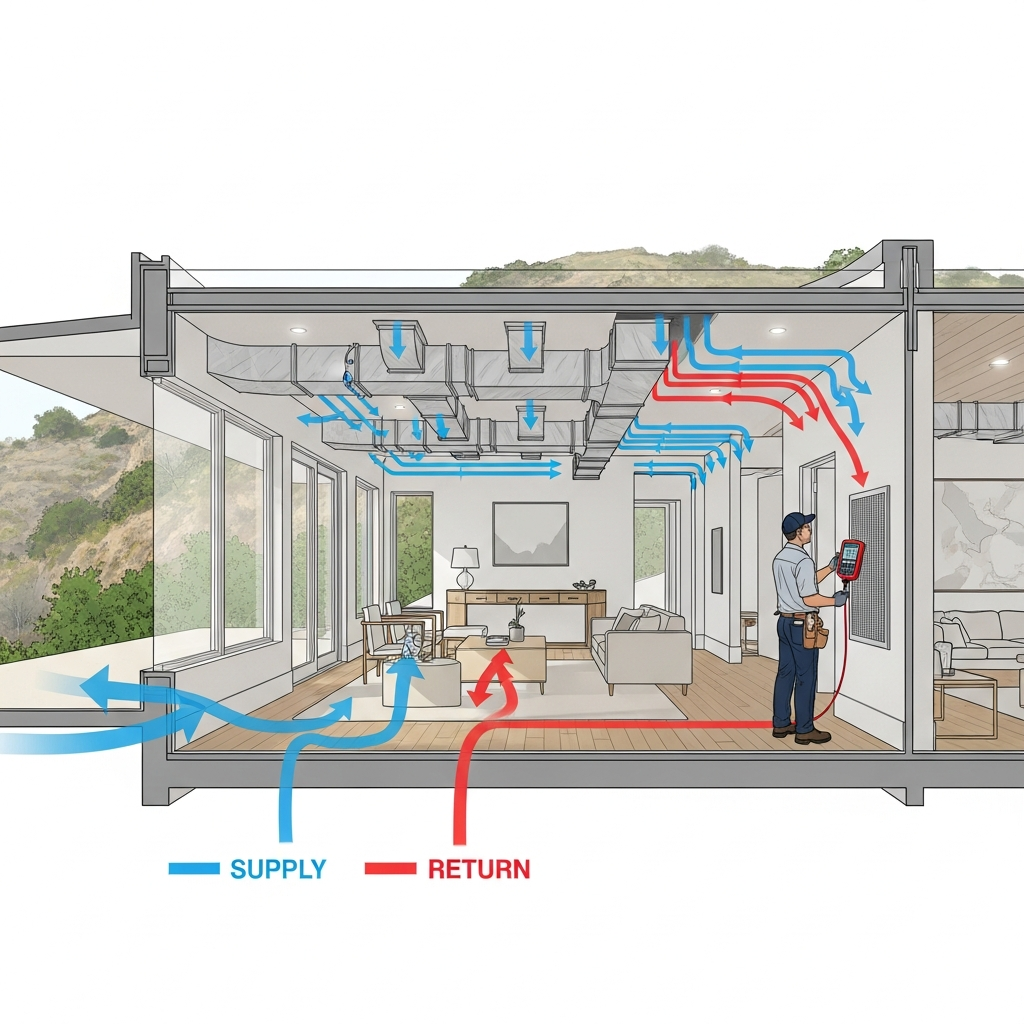
The Case for Essential Upgrades in a Coastal Community
Ask any longtime Malibu homeowner and you will hear a familiar refrain: the ocean is a generous neighbor and a tough critic. Sea breezes, fog, and sunlight give this stretch of coast its magic, but they also challenge the hidden systems that keep a house comfortable. This is why I describe duct replacement as essential rather than optional for many local properties. When ducts age under coastal conditions, the results are not subtle—uneven rooms, weary equipment, and air that never feels as fresh as it should. Replacing the distribution network restores balance, efficiency, and peace of mind in a way band-aid fixes rarely do.
The conversation begins with the realities of our climate. Mornings can be damp and cool, afternoons warm and bright, and evenings wind-swept. Those swings create condensation cycles inside attics and crawl spaces. Over time, seams and tapes fail, insulation slumps, and flexible ducts settle into sags that choke airflow. Layer on the corrosive influence of salty air and the occasional mouse exploring for warmth, and the system that once glided along begins to limp.
Comfort Depends on the Pathway, Not Just the Machine
It is easy to focus on shiny equipment—new heat pumps, quiet air handlers, smarter thermostats. But none of that matters if the pathway for air is compromised. Think of ductwork as the road system in a city. When arteries are narrowed or riddled with potholes, traffic bogs down. In homes, that means noisy registers, hot and cold spots, and longer runtimes. Replacement is the equivalent of repaving and widening where necessary, smoothing turns, and adding the right exits in the right places so conditioned air reaches each room with intent.
When I evaluate a home, I look for signals that airflow is fighting back pressure: registers that roar on startup, return grilles that whistle, and rooms that swing wildly in temperature between cycles. Static pressure measurements tell the rest of the story. With new ducts designed to match the equipment’s performance curve, those symptoms fade. The result is a home that settles into comfort and stays there without drama.
Health and Indoor Air Quality in the Malibu Context
We love open windows and sliding doors here, but we also need refuge from pollen bursts, wildfire smoke, and the everyday dust that accumulates faster in coastal towns. Aging ducts often draw in unfiltered air from attics and crawl spaces through leaks. Replacement, paired with good filtration at the air handler, sharply reduces that intrusion. The air feels cleaner, fabrics collect less dust, and sinuses thank you during high allergen days. For families with asthma or sensitivities, this difference is not theoretical—it is lived relief.
Another quiet benefit is odor control. Musty smells tend to vanish when return pathways stop pulling air from insulation and framing cavities. New ducts also make it feasible to step up to higher MERV filtration, which captures finer particulates while keeping airflow within safe limits thanks to well-sized returns and supply runs.
The Malibu Factors That Make Replacement Essential
Beyond comfort and health, Malibu adds stressors that make replacement more than a luxury. Salt exposure accelerates corrosion on metal plenums and connectors. Sun-warmed attics push temperatures that deteriorate low-grade adhesives. Santa Ana winds can disturb rooftop penetrations and exterior transitions. And because so many homes are unique—architectural gems with complex footprints—original duct layouts were often compromises. Replacement gives us a chance to respect the design while untangling snarls and pinches that never worked well in the first place.
Then there is resilience during fire season. Tightly sealed ducts are a last line of defense when outdoor air quality plummets. With windows closed, your filtration matters more than ever. A sealed distribution system keeps the air loop clean so filters can do their job, helping protect your home’s interior when the sky outside turns amber.
How We Know It’s Time
You do not need to be an HVAC technician to suspect that ducts are past their prime. Telltale signs include dusty or discolored insulation around runs, tape seams that have peeled open, grills speckled with fine dust, and flex ducts slumping between support straps. Inside the rooms, if you routinely adjust the thermostat to chase comfort and never quite catch it, the pathway is likely to blame. A brief assessment—static pressure, airflow readings, and a flashlight tour—usually confirms whether sealing and small reroutes will suffice or if full replacement will serve you better.
Home renovations are another cue. If you are opening ceilings, renovating a kitchen, or converting space, revisit the duct layout. It is often the perfect moment to correct past compromises, add returns to stubborn rooms, and right-size the system for how you live now rather than how the home was used twenty years ago.
What Replacement Looks Like, Step by Step
Clarity eases anxiety, so I walk homeowners through the process before we begin. We start with design—measuring rooms, understanding exposures, and modeling airflow. Then we select materials rated for coastal environments. During installation, we protect finishes, remove compromised duct sections, and fabricate new transitions and plenums. As runs go in, we test and balance, confirming that each room receives its intended airflow. By the time grills are on, we have already tuned the system so you feel the difference immediately upon startup.
Commissioning is the unsung hero of replacement. We verify static pressure, temperature splits, and delivered CFM. We also calibrate thermostats and, if zoning is in play, confirm dampers respond smoothly. That diligence is what transforms a new set of ducts from a promise into a proven upgrade.
Why Replacement Pairs So Well with Modern Equipment
Variable-speed heat pumps and air handlers excel when they can breathe. They like steady pressure and predictable volumes. Old, leaky systems force them into higher effort modes, which is noisy and less efficient. By replacing ducts and balancing the network, we let modern equipment modulate gracefully. You experience even temperatures, quieter operation, and a sense that the home is simply in tune with the day.
If electrification is on your horizon, this step is foundational. A sealed, right-sized duct network sets the stage for a clean energy system to deliver comfort year-round without compromise. It is how we make sustainability and Malibu living feel synonymous rather than at odds.
Repair vs. Replace: Making the Call
There are times when targeted repairs—sealing a few joints, replacing a crushed section—buy a few more years. But when degradation is widespread, or when the layout itself constrains performance, replacement is the honest answer. I present both options when they are viable, explaining the tradeoffs and the likely outcomes. Most homeowners ultimately choose the path that gives them predictability and relief from chronic discomfort. In Malibu, with the salt and the swings, that path is frequently a well-executed replacement.
Midway through many projects, I like to pause with clients and show them what we have corrected. It is often eye-opening to see a reworked plenum that used to bottleneck half the house, or a new return that finally allows a suite to breathe. It is also the perfect moment to point toward reputable teams for Malibu duct replacement, because craftsmanship and local knowledge truly determine how well a system ages in our environment.
Permits, Standards, and Doing It Right
Good work aligns with codes and best practices. That means duct insulation levels appropriate for attics, sealed boots at the ceiling plane to prevent leakage, and returns sized to keep static pressure in the sweet spot. We document and test to standards so you have a record of performance, not just a promise. The ethos is simple: if it is worth doing, it is worth verifying.
Those standards also protect your investment over time. The less a system has to fight to move air, the longer the equipment tends to last. When the day comes to update an air handler or heat pump, it will be stepping into a well-prepared home, ready to showcase its potential from day one.
Life After Replacement
The most gratifying feedback arrives a few weeks after a project wraps. I hear about afternoons that no longer feel stuffy, bedrooms that finally match the living room, and quieter evenings where conversation is not competing with a whooshing register. Filters stay cleaner. The thermostat becomes a set-and-forget accessory rather than a dial you chase throughout the day. That sense of ease is what essential feels like in practice.
Looking ahead, maintenance is straightforward. Replace filters on schedule, glance at attic or crawl-space pathways during seasonal checkups, and keep an ear out for changes in sound that might suggest a disturbed run. With those simple habits, new ducts will serve you reliably through foggy winters, blazing sunsets, and everything in between.
Frequently Asked Questions
What signs suggest my Malibu home needs new ducts?
Persistent hot and cold spots, dusty supply grills, noisy returns, and visible deterioration in attics or crawl spaces are strong indicators. If your equipment is relatively new yet comfort remains elusive, the distribution system is usually to blame. A brief assessment with static pressure and airflow measurements can confirm the diagnosis quickly.
Will replacement disrupt my daily life?
Professional teams stage work to minimize disruption. We protect floors, isolate work zones, and often restore priority rooms first. Many projects proceed faster than homeowners expect because design and materials are finalized before demolition begins. Clear communication keeps surprises to a minimum.
Can I keep my existing equipment?
In many cases, yes. If the air handler or heat pump is healthy, properly sized, and well-maintained, new ducts can unlock its full capability. We match duct design to the equipment so airflow sits in the ideal range for quiet, efficient operation.
How does replacement improve indoor air quality?
Sealed, insulated ducts prevent dusty attic or crawl-space air from entering the supply stream. That allows your filtration at the air handler to capture particulates more effectively. The result is cleaner air throughout the home, less dust on surfaces, and reduced strain during high-pollen or smoke events.
What about zoning—do I need it?
Zoning can be transformative in multi-level or sprawling homes, especially when exposures vary widely. However, not every home needs it. A careful design often restores balance with a single system, and we recommend zoning only when it adds clear value without complicating operation.
Are there materials better suited to the coast?
Absolutely. We favor corrosion-resistant metals for plenums, robust liners and jackets for flex, and high-quality mastics and tapes that retain flexibility and adhesion in humid, warm conditions. The small components—the connectors and seals—matter as much as ducts themselves in a salty environment.
Will this help during wildfire season?
Yes. Tight ducts reduce infiltration of particulates from unconditioned spaces, letting your filtration protect indoor air more effectively when windows and doors are closed. The difference in air quality during smoke events is one of the most appreciated outcomes of a well-sealed system.
How soon will I notice a difference?
Immediately in many cases. Rooms stabilize, noise drops, and the system reaches setpoints without the previous struggle. Over time, you will also notice steadier humidity control and a home that simply feels calmer and cleaner.
Start with a Conversation
If you are living with a home that never quite feels right, you do not have to accept it as normal. A thoughtful plan can remake comfort from the inside out. Begin with a walk-through and airflow testing, and choose a team that knows our climate and our architecture. When you are ready, schedule with professionals who focus on schedule duct replacement and experience how a balanced distribution system turns Malibu living into effortless, everyday comfort.