
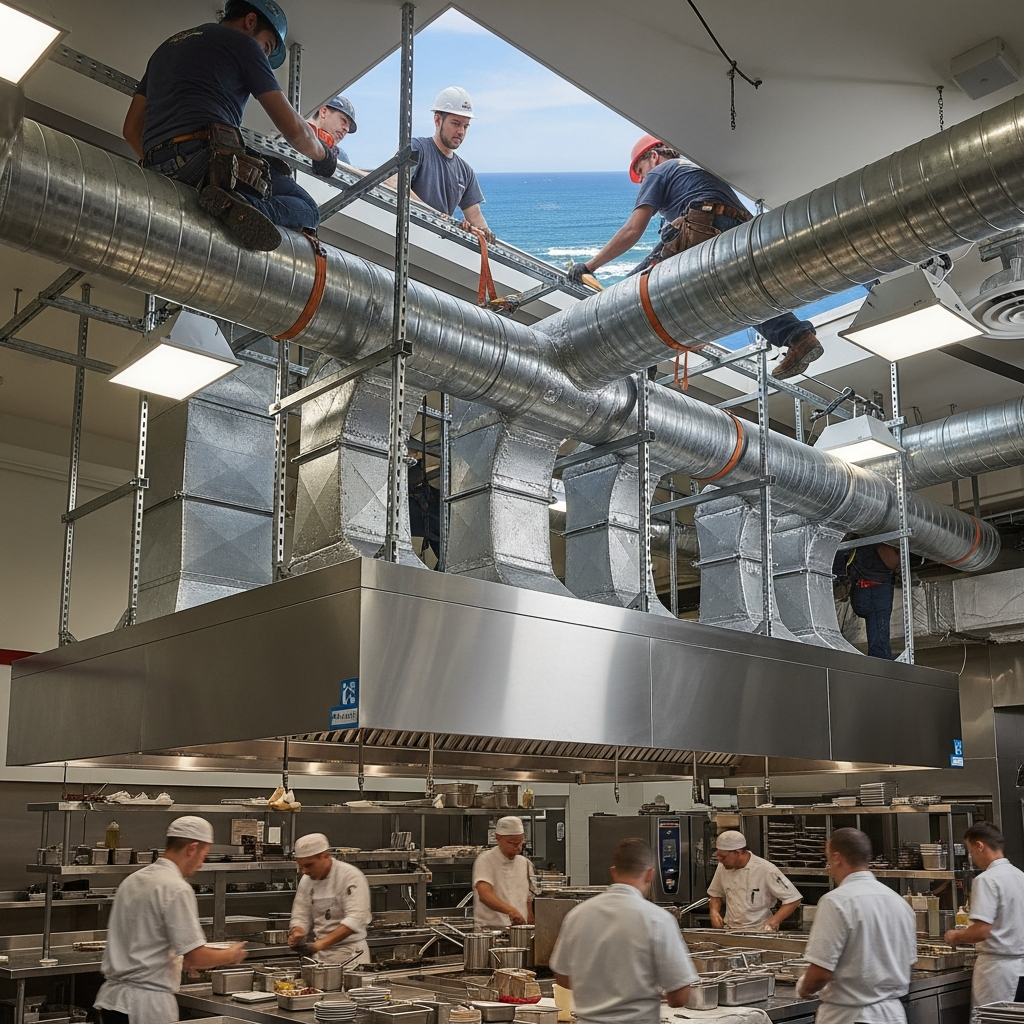
Running a restaurant in Malibu means cooking against a backdrop of ocean views and sea breezes, where guests expect meals that feel as effortless as the setting. Behind the scenes, though, the air systems that feed, condition, and exhaust your space are doing complex, constant work. Over time, ducts in dining rooms, kitchens, and back-of-house areas show their age—leaks that sap conditioned air, insulation that no longer holds up to roof heat, or routing that never fit your current layout. When you plan a commercial duct replacement, you are choreographing comfort, safety, and service flow all at once. Many local owners and operators begin by looking into the fundamentals of duct replacement so they can build a plan that respects Malibu’s coastal environment, health inspections, and the daily realities of service.
For restaurants, duct replacement is not a one-size task. Dining rooms need quiet, even airflow that does not draft across guests or let humidity creep in during a busy evening. Bars require targeted conditioning near doorways that open frequently to patios. Kitchens demand carefully balanced make-up air to match exhaust hoods, while storage areas need steady temperatures that protect ingredients and equipment. In Malibu, add the constant presence of salt air, the heat load of afternoon sun on roofs, and the importance of simple maintenance routines, and the need for a robust, well-sealed system becomes inescapable.
Understanding the Restaurant Airscape
Most restaurants juggle three air systems: front-of-house conditioning, kitchen make-up air, and hood exhaust. While hood and grease duct work is a specialty of its own, the supply and return ducts that condition dining areas and support zones are just as critical to guest comfort and indoor air quality. When those ducts leak or lose insulation performance, the HVAC equipment works overtime, and guests may feel drafts or uneven temperatures. In open-plan spaces with high ceilings or operable windows, proper diffuser selection and placement determine whether cool air settles on the floor or disappears into the volume above.
In Malibu’s coastal environment, corrosion and thermal stress speed up the wear on rooftop ducts, curbs, and plenums. Afternoon heat can push attic or roof temperatures high enough to bake insulation, while cool nights introduce condensation. Over time, those cycles loosen joints and open gaps. A thoughtful replacement seals the envelope back up and, where possible, relocates vulnerable runs or adds protective measures that extend service life.
Mapping the Project Without Disrupting Service
The success of a commercial replacement is won in the planning phase. Operators need a schedule that fits between service windows or leverages a short closure. Contractors should walk the space during live service to observe traffic, door usage, and hot spots that only appear when the room is full. From there, the plan can sequence work zones—starting with back-of-house areas during prep hours, shifting to dining room runs after close, and finishing rooftop connections at dawn. Protection, cleanliness, and communication keep the project invisible to guests.
Noise control is central to guest experience. Selecting diffusers with the right throw and sound characteristics, resizing trunks to lower velocities, and balancing returns so air travels naturally through the space all contribute to a calmer dining room. The goal is to make the system disappear into the background so conversation and music carry without strain.
Material Choices That Endure on the Coast
Commercial ducts in Malibu benefit from robust materials and finishes. Rigid metal with external insulation handles rooftop exposure better than internal insulation that can degrade or shed. Sealed joints with mastic and mechanical fasteners resist the daily cycle of temperature swings. Where ducts cross rooflines or pass near salt spray, protective coatings help. Inside, final runs to diffusers should be supported to prevent drumming and sized to slow air quietly into the room.
In kitchens and back-of-house conditioning, washable diffusers and accessible returns simplify maintenance. While grease exhaust is a separate system with its own standards, the supply air serving these zones should support the hood strategy by delivering air without creating turbulence at the capture zone. Smart placement, often informed by field observation, becomes as important as the material list.
Balancing Air: Make-Up, Exhaust, and Dining Room Comfort
Restaurants live and die by balance. When kitchen exhaust pulls more air than the building receives as make-up, doors resist opening, unconditioned air pulls through cracks, and guests near entries feel a constant draft. Conversely, too much make-up air pressurizes the kitchen and pushes odors into the dining room. A replacement project is the ideal time to measure these pressures and reset the balance with duct sizing that delivers steady, predictable flow.
Front-of-house systems also deserve precise calibration. Diffusers aimed across a room can create cold paths guests will notice immediately. Aiming patterns downward with controlled throw, adding discreet returns that complete the air loop, and moderating velocities turns a room from gusty to gracious. In Malibu’s forgiving temperatures, you may run systems at part load much of the year; properly balanced ducts handle that light-touch operation without stratification or dead zones.
Permits, Inspections, and Health Department Expectations
Commercial work brings a higher standard of oversight. Permitting addresses mechanical codes, energy standards, and, when relevant, structural or roofing considerations for rooftop units. Inspectors will look for correct insulation values, sealed joints, and proper supports. Health department expectations touch the comfort side of the dining room and the separation of conditioned spaces from areas where odors could migrate. Licensed professionals who regularly work in Malibu coordinate these conversations so approvals move briskly and documentation stays organized for future inspections or remodels.
Testing provides measurable proof of performance. Duct leakage tests, airflow balancing, and pressure measurements between kitchen and dining areas turn good intentions into verified results. For operators, those numbers translate into guest comfort that holds steady even on a packed Friday night and kitchens that feel manageable during rushes.
What to Expect During Replacement
Onsite, crews arrive with a plan that respects your calendar. Areas are isolated with temporary barriers where needed, and rooftop work is staged to minimize disruption. Old duct sections are removed in manageable pieces to keep debris under control. New trunks and branches are assembled with sealed joints as they are built, not left for a hurried finish. Insulation is applied carefully to maintain full thickness and continuous coverage. Inside, diffusers are set cleanly, and returns are trimmed to finish standards guests will never notice—but you will appreciate when cleaning day comes.
Midway through, balancing begins. Airflows are measured at diffusers and returns; adjustments are made to dampers to bring each zone into spec. This is a good milepost to compare progress to the original goals that sent you researching duct replacement—quieter dining rooms, steadier temperatures near entries, and a kitchen that neither robs nor floods the building with air.
Maintenance That Keeps the Wins Locked In
After completion, a simple maintenance plan preserves performance. Filters changed according to schedule, quarterly checks of rooftop seals and insulation, and a semi-annual balancing review—especially useful in restaurants with seasonal patio usage—keep systems tuned. Staff training helps too: showing a manager where to look for a stuck damper or how to listen for an unusual diffuser noise turns small concerns into quick fixes rather than service calls during dinner.
Documentation matters in the commercial world. As-built drawings, balancing reports, and photos of rooftop work become part of your operational record, smoothing future inspections and remodels. When you decide to add a private dining room or expand the bar, those records give the next project a running start.
FAQs: Commercial Duct Replacement for Restaurants
Q: Can duct replacement happen without closing the restaurant? A: Often yes. With careful staging, much of the work can be scheduled before opening, after close, or on dark days, keeping service interruptions minimal.
Q: How will new ducts affect guest comfort? A: Properly balanced, sealed, and insulated ducts deliver quieter, more even airflow. Guests feel comfortable across the room, not just in favored seats.
Q: What about the kitchen—does this impact hood performance? A: While hood systems are separate, supply and return ducting must support make-up air and building balance. Replacement is a chance to tune that interplay for smoother service.
Q: Are there special coastal considerations? A: Yes. Materials and finishes that resist corrosion, thoughtful routing away from the harshest exposure, and diligent sealing extend service life near the ocean.
Q: Will inspectors require testing? A: Expect verification of insulation, sealing, and airflow. Balancing reports and leakage tests are common components of approval.
Q: How long will the project take? A: Duration depends on scope and access. Early planning and after-hours work help compress timelines to fit your operational needs.
Q: Can diffuser changes really make a difference? A: Absolutely. The right diffuser style and aim can eliminate cold drafts and calm noise, transforming the dining experience.
Q: What should I budget time for after completion? A: Plan for routine filter changes, quick rooftop checks, and periodic balancing—small commitments that protect a major improvement.
Bring Quiet, Balanced Air to Your Dining Room
When comfort becomes reliable, service gets easier and guests linger longer. If your space could benefit from a calmer soundscape and steadier temperatures, now is the right moment to plan with a team that understands restaurants and the coast. Start by exploring duct replacement solutions shaped for Malibu kitchens and dining rooms, and feel how a well-tuned system elevates every shift.