
Commercial offices in Malibu blend coastal calm with serious work, and the HVAC systems in those spaces quietly shape how productive, focused, and comfortable each day feels. Ocean-facing buildings along the highway welcome salty breezes, while offices tucked into canyons juggle afternoon heat and pollen. Preventive attention is not just a facility checkbox; it is the difference between an environment that supports teams and one that drains energy during long afternoons. At the start, it helps to align facility managers and service providers around a clear baseline for air conditioning maintenance so the scope is complete and expectations are shared.
In commercial settings, predictable comfort is a contract with your workforce. When conference rooms cool evenly, when open offices remain quiet and steady, and when private suites maintain setpoints without drafts, people think less about air and more about ideas. Malibu’s climate, however, asks more of equipment than a typical inland office. Salt air preys on rooftop package units and coastal split systems, and canyon winds load filters faster than expected. A Malibu-savvy plan acknowledges those stressors and protects airflow and heat exchange surfaces so performance remains consistent.
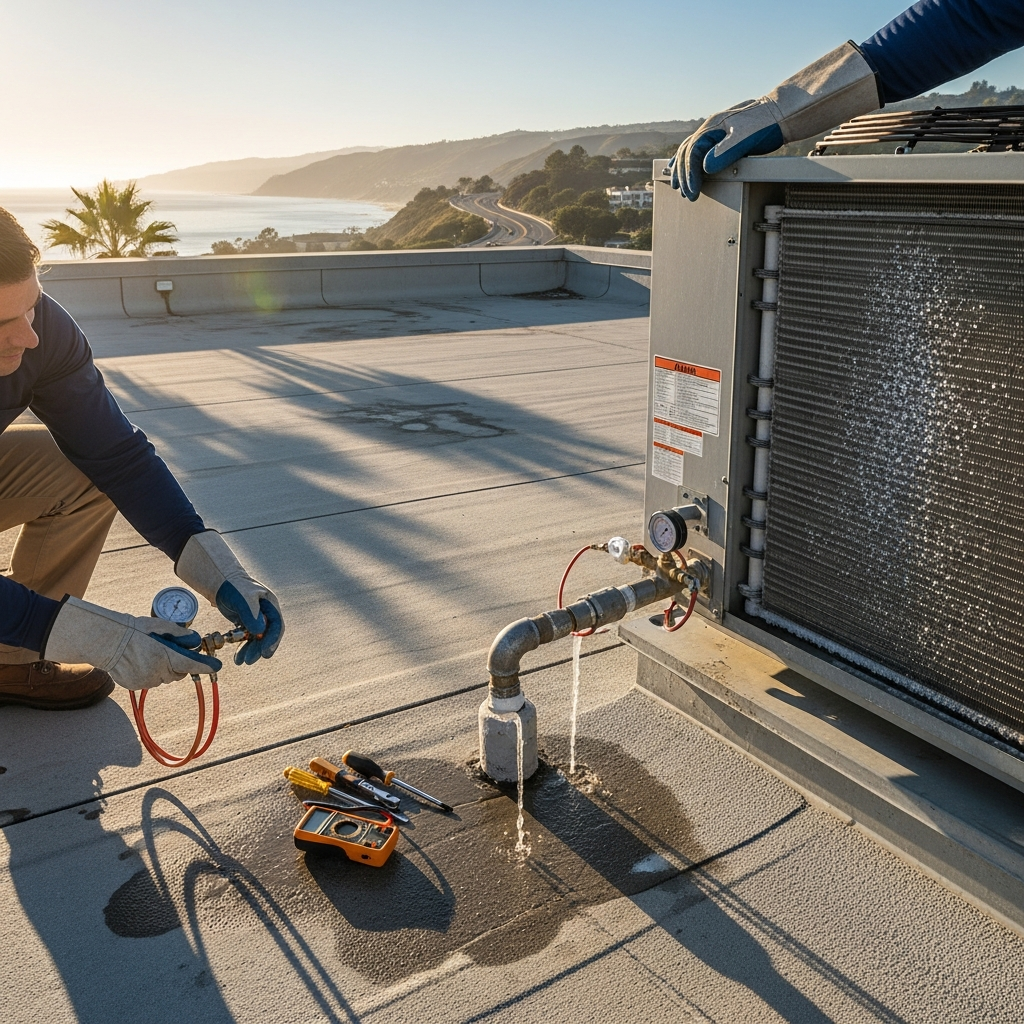
Rooftop units deserve special attention. Salt and moisture live up there all day, and morning marine layers push damp air through coils that may already be carrying a thin film from days prior. Coils need careful cleaning to avoid fin damage, and electrical compartments require inspection for early signs of oxidation. On buildings near the beach, cabinet seams and fasteners should be checked proactively, and drain pans tested under flow to confirm that condensate management will hold up when meeting-room loads spike on a warm afternoon.
Inside, airflow is the currency of comfort. Commercial duct systems branch across long runs to serve glass-lined conference rooms, quiet corners for focused work, and lobbies that see doors open frequently. Static pressure should be measured and balanced so that each area receives the right volume under peak conditions. Open-work ceilings with exposed ductwork can be beautiful, but they also reveal acoustic changes when airflow is off. A good maintenance routine listens as well as measures, ensuring fans and diffusers do their jobs quietly.
Filtration strategy for offices along the coast must account for fine salt haze and episodic smoke that rides in on certain winds. Higher-efficiency filters help, but they must be paired with an understanding of the system’s total available static pressure and fan capacity. Facility teams should coordinate filter changes with actual air quality events as well as calendar dates, and a local provider should share data after each visit so schedules can adjust when Malibu’s weather surprises.
Refrigerant charge and economizer function are two areas where commercial systems can stumble. Charge should be verified under real loads, not just at idle, and economizers—so valuable on cool, clear mornings—must be confirmed to open, close, and seal as designed. Foggy or damp mornings near the water can lead to condensation on surfaces even with modest cooling loads, and poorly controlled outside air can create comfort complaints that escalate into productivity issues.
Controls and zoning in offices evolve as teams change layouts. A Malibu office that embraced open collaboration last year might add private rooms this year, and diffusers, sensors, and schedules should be updated to match. Maintenance visits are the moment to recalibrate setpoints, verify sensor placement away from direct sun or ocean breezes through frequently opened doors, and confirm that schedules reflect current occupancy patterns, including after-hours use.
Documentation and communication separate adequate service from excellent service in commercial Malibu settings. Facility managers benefit from clear reports with photos of coil condition, static pressure readings, filter differentials, and notes on any salt-related wear. Over time, those reports tell the story of the equipment and justify smart upgrades—like coil coatings or improved filtration—based on measured outcomes rather than hunches.
When smoke or wind events strike, proximity matters. A local team that can dispatch quick filter checks after a Santa Ana weekend prevents Monday-morning complaints and restores the quiet hum of a settled office. Similarly, gentle rinsing of rooftop coils between formal visits may be recommended for buildings within sight of the breakers, where salt film never truly rests.
Tenants often notice comfort issues first. Encourage a simple reporting rhythm so that warm corners, noisy diffusers, or unusual odors reach the facility team before they become widespread complaints. During maintenance, technicians should visit those spaces, measure conditions during typical occupancy, and adjust balancing or controls to solve the root cause rather than masking the symptom.
Energy performance is a natural byproduct of consistent maintenance in Malibu. Coils free of salt-bound dust, properly balanced airflow, sealed economizers, and accurate sensors mean fans and compressors work within their design intent instead of pushing through hidden resistance. The result is steadier operation that lets teams focus on their work while the equipment fades into the background.
Finally, a commercial maintenance plan respects the building’s identity. Malibu offices serve creative agencies, legal teams, production companies, and wellness studios, each with its own schedule and ambiance. Some prioritize whisper-quiet conference rooms; others want active fresh-air strategies on clear mornings. A provider who listens and adapts the plan to those goals becomes a partner rather than just a vendor.
Mid-contract check-ins keep everyone aligned. Use a concise reference for AC maintenance as a shared language, and debrief quarterly: How did the equipment handle the last heat wave? Did smoke season demand extra filter changes? Are sensors still located where they make sense for today’s layout? Those conversations translate into calm Mondays and fewer last-minute requests.
In the end, commercial maintenance in Malibu is about stewardship—of comfort, of equipment health, and of the working day. With a local lens and a preventive mindset, offices stay even and predictable, ready for client meetings and team sprints alike, no matter what the coast brings.
Frequently Asked Questions
How often should Malibu offices schedule maintenance?
Plan on at least spring and fall as core visits, with targeted follow-ups after heavy wind, smoke, or unusual damp periods. Rooftop equipment near the ocean benefits from visual checks and gentle rinsing between formal appointments.
What makes commercial coastal maintenance different?
Salt and moisture accelerate corrosion and help dust bind to coils, while canyon winds add debris. Maintenance emphasizes careful coil cleaning, corrosion awareness in electrical compartments, and verification of economizer and control functions that shift with weather.
How can we reduce comfort complaints in open offices?
Measure and balance airflow regularly, confirm diffuser selection and placement, and verify sensor locations. Small changes—like redirecting a diffuser away from a workstation—often resolve complaints when backed by measured data.
Do higher-efficiency filters always improve outcomes?
They help when matched to system capacity. Filters must align with available static pressure and fan performance. Data from each visit should guide filter selection and change intervals so air quality and comfort improve without unintended side effects.
What should a maintenance report include for a Malibu office?
Photos of coil and cabinet condition, static pressure readings, filter differential pressures, notes on salt-related wear, verification of charge and economizer function, and any control or sensor adjustments made to match occupancy patterns.
If your office is ready for steadier comfort and fewer interruptions, align your team around a clear outline of air conditioner maintenance, then partner with a Malibu-focused provider who respects your schedule and your space. Reach out today to keep meetings calm, workdays productive, and the indoor climate reliably even with a quick request through air conditioning maintenance.