
Flex Duct Replacement That Suits Malibu’s Coastal Homes
Flex duct gets a mixed reputation, but in the right hands—and the right lengths—it delivers quiet, efficient airflow in Malibu’s often compact attic and crawlspace conditions. The coastal climate adds complexity: salt, humidity, and broad temperature swings between morning marine layer and sunny afternoons. When flex duct is installed thoughtfully, stretched properly, and supported to hold its shape, it becomes an elegant solution that navigates framing quirks without turning airflow into a maze. If your home has rooms that never quite reach the setpoint, or if you hear a persistent hush from the ceiling diffusers, you may benefit from a fresh look at the design and a carefully executed duct replacement that integrates flex where it truly excels.
In Malibu, access realities often steer material choices. Many homes feature narrow truss pathways, low-clearance attics, and coexistence with plumbing and electrical runs that leave little space for large metal trunks. Flex allows short, gentle transitions from a main trunk to a register, smoothing the final approach so airflow remains steady and quiet. The key is restraint: flex performs best when it’s used briefly and kept as straight as conditions allow.
What Good Flex Work Looks Like
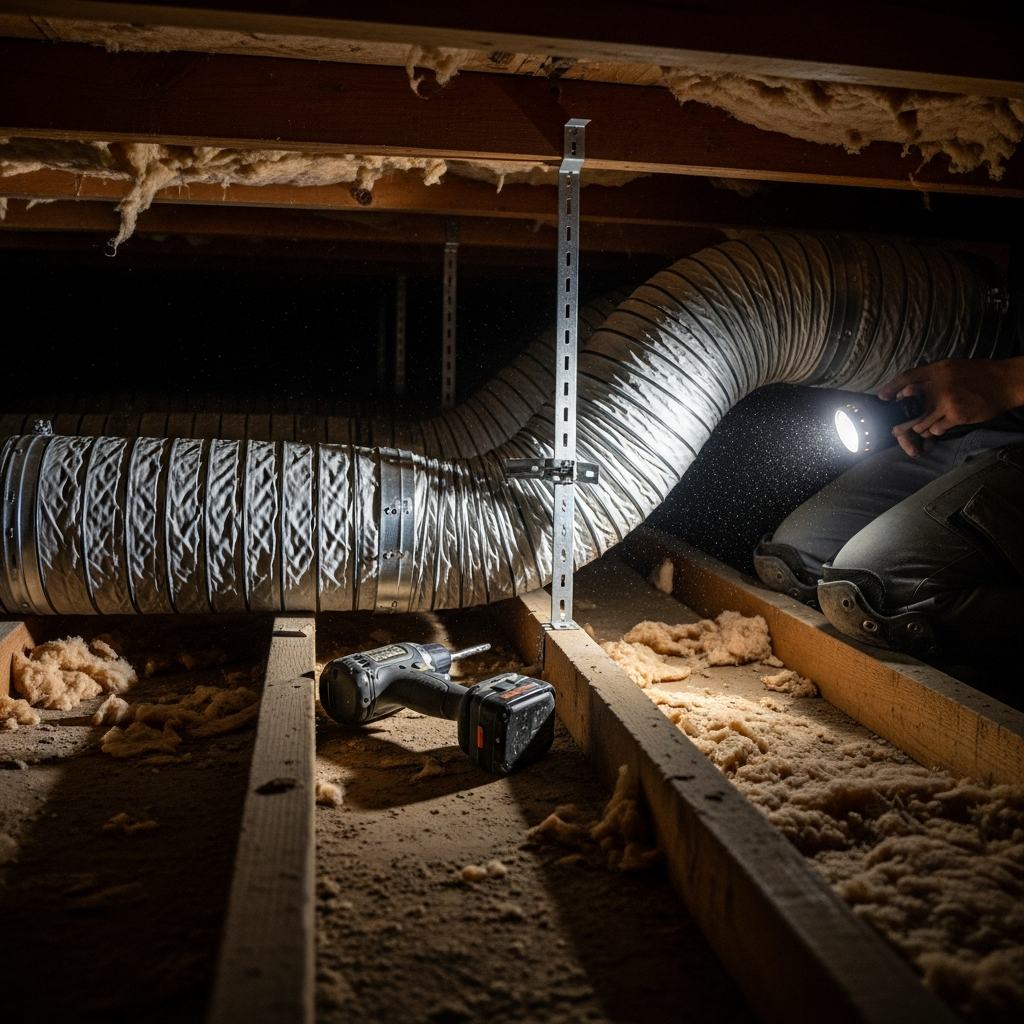
When you peer into a well-executed system, you’ll see flex that’s stretched to reduce internal ridges, supported at intervals that maintain round shape, and turned with broad sweeps rather than sharp kinks. Connections to collars are tight, mechanically secured, and sealed with mastic, not just tape. Insulation remains continuous at joints, and the jacket is protected against abrasion where it crosses framing. These details turn what could be a source of loss into a low-noise, durable link in the distribution chain.
Register placement and selection matter as much as the duct itself. A diffuser that throws air across a room, rather than dumping it near the register, mixes temperatures better and reduces the need for high blower speeds. During a replacement, a designer may suggest small register relocations or grille upgrades that, paired with tuned flex runs, even out comfort without calling attention to the system.
Malibu’s Coastal Climate and Flex Duct Choices
Salt air and humidity test materials year after year. Collars, clamps, and fasteners should be chosen with corrosion resistance in mind, and any roof or exterior penetrations supporting the HVAC system must be sealed diligently to keep coastal damp out of the building envelope. Inside, condensation risks are reduced by maintaining insulation integrity and ensuring vapor barriers remain continuous around joints.
For homes that have weathered smoke events, tight duct connections are invaluable. Flex that’s well sealed at each collar stops attic particulates from sneaking into supply air. Pairing that with an improved return path and a high-quality filter cabinet creates a system that feels calmer and cleaner during challenging air quality days.
Hybrid Systems: Flex Where It Shines, Metal Where It’s Master
Malibu homes often benefit from a hybrid approach. A rigid metal trunk provides a straight, stable backbone. From there, short flex runs, each kept as direct as the framing allows, connect to registers. This balance leverages flex’s agility without asking it to do heavy lifting. The outcome is a quiet system that threads through tight spaces without building unnecessary resistance or inviting future sag.
In practice, this looks like mapping the trunk line to the most open path, then measuring each branch carefully to avoid excess length. Registers receive just enough flex to accommodate position and alignment, and supports hold those arcs in a way that preserves roundness for the life of the system. When crews work this way, you end up with airflow that is both efficient and remarkably quiet.
Installation Day: Clean, Calm, and Deliberate
Replacing flex duct in a coastal home should feel organized. Crews protect floors, set up attic lighting, and stage materials for clean assembly. Old flex is removed without scattering debris, and each new run is measured and cut with purpose. The connections at collars are the stars of the show—secure, sealed, and insulated. Before jackets are taped closed, a conscientious installer will inspect the inner core, confirm tension and shape, and ensure the path remains obstruction-free.
Once the network is built, balancing begins. Adjusting dampers and registers brings rooms into alignment so temperatures stabilize. This step is part science, part craft, and it’s where you feel the payoff of careful routing and support.
Noise, Comfort, and Aesthetics
Open living areas and high ceilings in Malibu homes reward quiet airflow. Flex helps absorb certain frequencies of sound, and when air speed is matched to room needs, you trade the rush and hiss for a soft background hush that quickly fades into normal life. Thoughtful grille selection and placement accent the design of the space, blending with finishes so the visual effect is as polished as the performance.
Maintenance Made Manageable
Well-installed flex is easy to live with. Keep returns clear, change filters regularly, and note any unusual sounds after storms or high-wind days. If you store items in an accessible attic, maintain clear paths around ducts so jackets don’t scuff and supports aren’t overloaded. A seasonal glance at visible connections and registers is a simple habit that protects your investment.
Codes, Compliance, and Documentation
Flex duct replacement should track with California Mechanical Code guidelines and energy standards that prioritize sealing, insulation values, and verification testing. Proper documentation and inspections provide assurance that the system doesn’t just look right but measures right. For homeowners, that means a smoother project today and fewer questions during future remodels or appraisals.
When to Rethink Flex Altogether
There are moments when flex isn’t the right choice—long main runs, areas where it would be prone to contact, or routes that demand tight elbows. In those cases, metal takes the lead, and flex comes back at the very end of short branches, if at all. A design-first approach will spell this out clearly, so you understand why each material is used where it is.
FAQs: Coastal Homeowners’ Common Questions
Is flex duct durable enough for Malibu’s climate?
When installed correctly with corrosion-resistant hardware, continuous insulation, and properly supported paths, high-quality flex performs well on the coast. The key is avoiding long, winding runs and protecting jackets from abrasion.
Why not just use metal everywhere?
Metal is excellent for long, straight trunks and areas where durability is paramount. Flex shines for short, gentle connections that must navigate tight framing. Many Malibu homes succeed with a hybrid approach that plays to each material’s strengths.
Will flex ducts make my system quieter?
Often, yes. Flex can absorb certain sounds, and when airflow is balanced and speeds are right-sized, many homeowners notice a calmer system. Register selection and placement also influence overall noise levels.
Can I replace only the worst runs?
Targeted replacements are possible, especially where damage or poor routing is obvious. However, system performance is cumulative. A full evaluation can reveal upstream issues that, when corrected, elevate comfort across the entire home.
How long does flex duct replacement usually take?
Timelines depend on access, the number of runs, and whether returns or trunks are being adjusted. Straightforward replacements move quickly; complex attics or significant rerouting take longer. A site visit clarifies expectations.
Ready for Air That Feels Effortless
If your home deserves airflow that feels natural and quiet, start with a design conversation that respects Malibu’s coastal realities and your home’s unique lines. The right plan will specify where flex belongs and where it doesn’t, and the installation will prove it in sound, comfort, and consistency. When you’re ready to explore the options, schedule a visit and talk through a tailored duct replacement approach built for coastal living.