
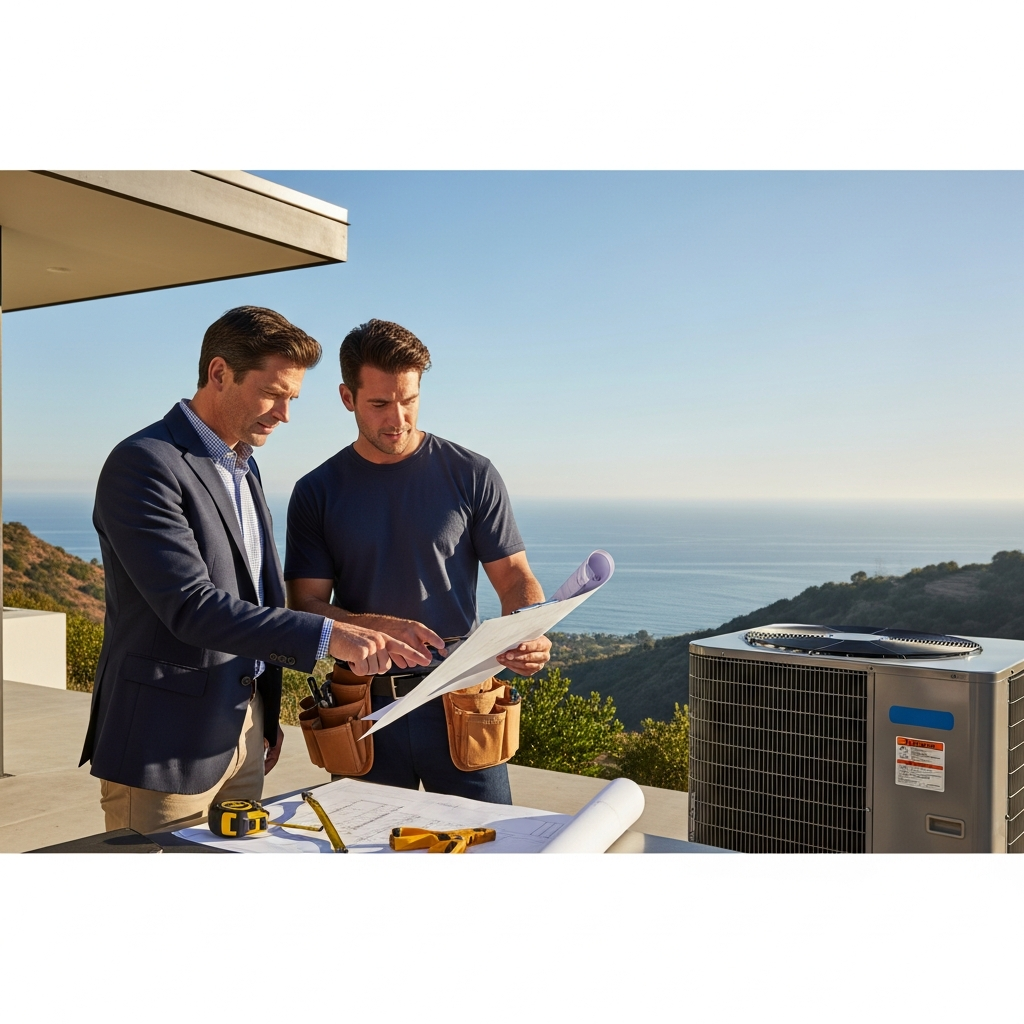
Talking about the “cost” of installing air conditioning in Malibu means talking about more than a single number. It means exploring the decisions that shape comfort, efficiency, longevity, and aesthetics in a place where ocean breezes, canyon sun, and architectural ambition coexist. As a local specialist, I have learned that the most useful conversations start with the home itself—its envelope, exposure, and the way you live—before they dive into equipment models or features. When homeowners understand why certain choices matter, their investment aligns with daily life, not just with a spec sheet. In the context of Malibu’s salt air and microclimates, this is doubly true because the right planning protects your system as much as it cools your rooms. Early in the process, it helps to anchor expectations around a clear scope, from load calculations to ductwork evaluation, so you can see how each step contributes to the finished result. If you are just beginning to explore options, the journey often starts with the basics of air conditioning and what makes it thrive in a coastal environment.
Begin with the home, not the brochure
Every effective installation grows out of a careful assessment. Homes close to the water face persistent salt mist and higher baseline humidity, which influence coil selection, cabinet coatings, and outdoor placement. Canyon and hillside properties encounter stronger afternoon sun and wind, longer line-set runs, and sometimes more challenging service access. Roofing materials, window glazing, shading strategies, and insulation levels all matter. A professional load calculation—one that accounts for Malibu’s real-world conditions rather than generic data—becomes the foundation of right-sizing. Right-sized equipment avoids short cycling, delivers better dehumidification, and supports longevity. This is the heart of a well-spent budget: a system tailored to your home’s needs rather than to a marketing promise.
Ductwork: the invisible driver of comfort
In many Malibu projects, duct systems tell the true story. Older ducts can leak conditioned air into attics or crawl spaces, undermining performance and masking as “expensive equipment problems.” If you are remodeling or adding cooling to a previously unconditioned space, ducts might need re-routing or resizing to support lower static pressure and balanced airflow. Thoughtful duct design makes rooms feel even, quiet, and unobtrusively cool, which is often more important than any single feature on a brochure. During planning, we measure pressures and inspect for insulation gaps and corrosion, especially in ocean-adjacent homes. Aligning duct upgrades with the installation plan often preserves both efficiency and aesthetics while controlling long-term ownership costs.
Central, ductless, or a hybrid approach
Malibu homes come in every shape and size—from compact bungalows near the beach to complex, multi-level residences that thread through hillsides. Choosing between central forced-air, ductless mini-splits, or a hybrid strategy depends on layout, noise expectations, and architectural priorities. Ductless shines in additions, guest suites, and spaces where running ducts would compromise design, offering precise zoning and excellent efficiency. Central systems excel when you want a unified aesthetic and a single control strategy across multiple rooms. Hybrid approaches can pair a central system for main living areas with ductless units in rooms that see different schedules or need more precise control. During the design phase, we talk not only about cooling load but also about how you use your home across the week, where guests stay, and what times of day particular spaces should feel their best.
Coastal durability and protection
Near the shoreline, corrosion resistance is more than a nice-to-have; it is essential. Outdoor units benefit from coatings specifically formulated for salty environments and from careful siting that balances airflow with protection from direct ocean spray. Stainless fasteners, protected control compartments, and regular coil care extend equipment life. Thoughtful placement also keeps line-set runs shorter, which supports performance and reduces exposure of components. It is not unusual to slightly adjust a planned location to align with a home’s wind patterns and service access—small changes that have a large impact on reliability over time.
Electrical readiness and controls
Installation planning always includes a look at electrical capacity and routing. Malibu renovations sometimes carry legacy panels or subpanels that require updating to support modern, efficient cooling. We also consider the control strategy up front. Smart thermostats integrate beautifully with both central and ductless systems, giving you fine-grained scheduling, remote monitoring, and runtime insights. For multi-zone homes, we map control locations to mirror how you actually move through the house, not just where a wire is easy to pull. When the cooling season peaks or a late-summer heat wave arrives, the right control strategy makes your investment feel effortless.
Quiet comfort: acoustics and placement
Malibu homeowners care deeply about sound. A system that keeps a low acoustic profile preserves the calm that defines coastal living. During design, we address outdoor sound ratings, consider walls and surfaces that reflect noise, and route line sets to avoid sympathetic vibration. Indoors, duct design, return placement, and blower selection shape the auditory experience. With a careful plan, the result is cool, even air and peaceful rooms where conversation and ocean sounds remain clear.
Permits, inspections, and quality assurance
Working in Malibu often includes permitting and inspections, and a well-run project welcomes that accountability. We coordinate with local requirements, schedule inspections at sensible points, and provide documentation that reflects the installed reality. Beyond code compliance, we perform our own quality assurance checks: verifying refrigerant charge, documenting temperature split under load, and measuring static pressure to confirm duct performance. Commissioning is the bridge between installation and daily life. Skipping it risks buyer’s remorse; doing it right locks in the value you expect.
Efficiency in practice, not just on paper
Efficiency ratings start important conversations, but your comfort depends on the interaction between equipment and your home. Inverter-driven systems modulate capacity gracefully, keeping rooms steady while consuming less energy during part-load conditions—exactly the scenario most Malibu days present. Paired with effective ductwork and realistic setpoints, these systems can run quietly and consistently without dramatic temperature swings. It is common to prioritize a high-performing envelope—sealing, shading, and targeted insulation improvements—alongside equipment selection to protect your investment and improve day-to-day experience.
Aesthetic integration and preservation of views
Cooling solutions must respect Malibu’s architecture and landscape. That might mean choosing low-profile outdoor units, routing line sets with painterly discretion, or designing soffits that vanish into existing lines. For homes with extensive glass and view corridors, we shape diffusers and returns to minimize visual clutter while still delivering balanced air. The goal is a system that serves your comfort without calling attention to itself. A successful installation feels like part of the house from the day it goes live.
What shapes the overall investment
Because every home is different, overall installation cost reflects a bundle of factors: load-driven equipment sizing, the number of zones, duct condition and scope of modifications, electrical upgrades, controls, access complexity, and coastal protection measures. Seemingly small choices—like relocating an outdoor unit to trim twenty feet of line set or reworking a return to reduce static pressure—can improve performance enough to influence long-term ownership costs and your daily satisfaction. It is wise to think in terms of total value rather than any single line item. The question to ask is simple: will the finished system feel effortless, stable, and quiet for years in this specific environment?
The Malibu maintenance mindset
Ownership costs are not just about installation day. Malibu’s climate rewards a maintenance cadence that includes coil washing, corrosion checks, and seasonal filter strategies that respond to marine layer months and wildfire smoke periods. Smart controls help by revealing runtime patterns and alerting you to unusual behavior before it becomes a surprise. Building maintenance into your plan from the start keeps the system operating the way it was commissioned and defends your initial investment.
From estimate to lived-in comfort
A thoughtful project moves through clear stages: discovery and load calculation, duct and envelope evaluation, design and proposal, permitting and scheduling, installation and commissioning, and a post-launch review. At each step, you should feel informed, not overwhelmed. When the first hot afternoon arrives after your system goes live, the best feedback is no feedback—you simply notice that the house stays even and quiet, guests relax, and the view remains the star. That is when you know the planning paid off.
Mid-project decisions that pay dividends
There are moments during installation when small decisions protect performance. Sealing a newly found duct gap, adjusting diffuser throws in a glass-heavy room, or adding a protective barrier for a coastal outdoor unit are examples that do not make headlines but make comfort tangible. A crew that shares these options openly and explains their impact gives you agency in shaping long-term results. Transparency is not a courtesy; it is a key ingredient of quality.
What if your home grows or changes?
Many Malibu homeowners add guest suites, studios, or ADUs. Planning for future expansion—leaving electrical headroom, considering modular zoning, or choosing a system platform with flexible capacity—reduces disruption later. If your home will evolve, mention that early. Thoughtful foresight can keep today’s installation elegant while making tomorrow’s addition plug in smoothly.
Frequently asked questions
What drives the price range of a new installation in Malibu?
The range reflects home-specific factors: equipment capacity and type, number of zones, duct condition and modifications, electrical readiness, control strategy, access complexity, and coastal protection measures. Malibu’s microclimates and architectural diversity add meaningful variables. A detailed evaluation turns estimates into clear, predictable plans that align with your goals.
How important is a professional load calculation?
It is essential. Accurate load data ensures right-sized equipment, stable humidity control, and quiet operation. Generic rules of thumb often oversize equipment, which can cause short cycling and uneven comfort. A calculation grounded in your home’s envelope, exposure, and real use patterns is the best foundation for a satisfying installation.
Should I choose central or ductless for a remodel?
It depends on layout, aesthetics, and room-by-room schedules. Central systems deliver a unified look and feel, especially in open plans, while ductless excels in additions, guest suites, or spaces with distinct schedules and temperature preferences. Many Malibu homes benefit from a hybrid approach that blends both.
What about outdoor unit placement near the ocean?
Placement should balance service access, airflow, protection from direct salt spray, and visual impact. Coated coils, stainless hardware, and mindful routing extend life. Small adjustments to location often deliver outsized benefits in performance and longevity.
How do smart controls influence long-term costs?
Smart controls provide granular scheduling and runtime data that reveal inefficiencies early. They support steady temperatures during Malibu’s frequent part-load conditions and can flag airflow or refrigerant issues before they escalate. In practice, they help preserve the efficiency and quiet comfort you paid for.
What should commissioning include?
Commissioning verifies refrigerant charge, confirms temperature split under real load, measures static pressure, and ensures controls and zoning behave as designed. It is the step that translates a good installation into a great lived-in experience. Skipping it risks performance drift and dissatisfaction.
If you are considering a new system now or preparing for a remodel that deserves reliable, quiet comfort, partner with a local team that designs with Malibu’s climate and architecture in mind. From first walkthrough to final commissioning, the right professionals will translate goals into choices that make daily life easier. For guidance on options, design, and integration of modern air conditioning systems into coastal homes, connect with specialists who can map a path from vision to reality. When you are ready to take the next step, reach out for a tailored plan that brings steady comfort to your space, season after season.