
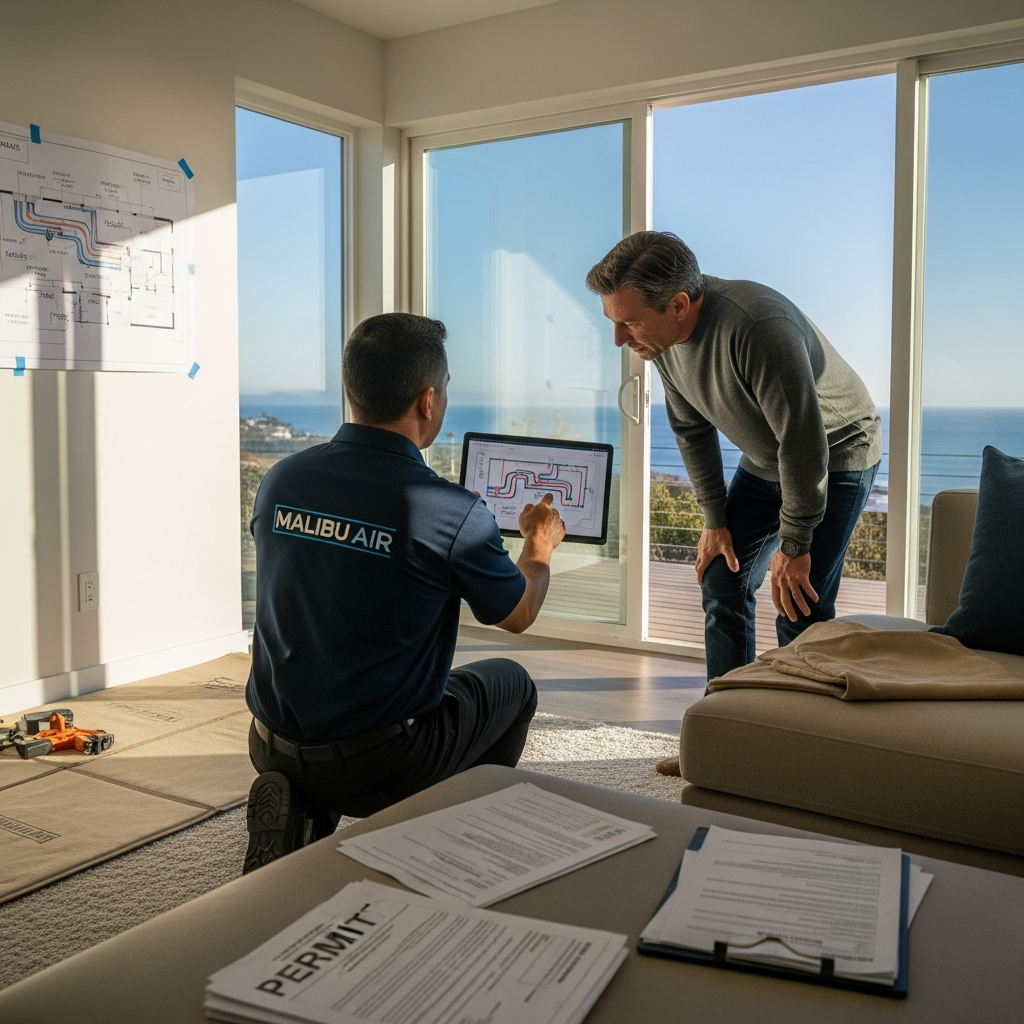
Choosing a licensed duct replacement contractor in Malibu isn’t just about hiring someone who knows their way around an attic. It’s about partnering with a professional who understands the rhythms of the coast, the quirks of our hillside architecture, and the standards that keep homes comfortable year-round. Licensing is the baseline; local insight and a disciplined process are the multipliers. As you explore your options, it helps to align with a clear primer on duct replacement so the conversations you have with prospective contractors focus on design, testing, and outcomes rather than vague promises.
Malibu’s homes span glassy beachfront retreats, mid-century canyon houses, and contemporary rebuilds shaped by resilience. Each type asks different questions of a contractor. Can they route quiet returns in an open-plan living room with big sliders? Do they know how to protect finishes during attic work when access is tight? Are they comfortable coordinating permits and inspections that verify leakage limits and insulation levels? A licensed pro should answer yes, but the way they explain their approach reveals whether they live this work daily or simply pass through.
What licensing really signals
Licensing affirms that a contractor has met state requirements, carries appropriate insurance, and is accountable under consumer protection laws. In our field, it also signals familiarity with energy code expectations that govern duct leakage, insulation, and verification. Still, licenses are not a substitute for process. The best contractors lead with design, document airflow targets, specify materials suited to coastal conditions, and close the loop with testing. When you interview, listen for those components.
Ask about Manual J load calculations and Manual D duct design. A serious contractor will use them as scaffolding for your project, not as buzzwords. In Malibu, that means translating ocean-facing glass, shaded canyons, and multi-level volumes into airflow needs room by room. It also means anticipating practical constraints like low-slope attics, crawlspaces with limited clearance, and the realities of working around tile roofs or delicate plaster.
How local experience shapes better outcomes
Contractors who work here regularly develop instincts for what lasts. They choose insulation jackets that tolerate salty mornings and sunny afternoons, avoid tapes that peel under dew cycles, and favor hangers and supports that don’t corrode quickly. They know when a smooth-walled trunk will quiet a boomy hallway and when a second return will transform an echoing great room. They’ve navigated steep driveways and tight staging, keeping crews efficient and neighbors happy. These details sound mundane, but over the life of a system they are the difference between “it works” and “it works beautifully.”
Wildfire seasons add another dimension. Local pros recognize the value of tight ducts and upgraded filtration to keep particulates out of living spaces. They plan sealing with the same seriousness as routing and sizing. If your previous system carried smoke odors for months after a nearby fire, you already understand why this matters.
Signs you’re interviewing the right contractor
They start with questions, not pitches. They want to hear your comfort story: which rooms lag, which vents roar, what hours you feel the home fighting the elements. They measure, sketch, and talk about balancing. They discuss returns as much as supplies. They explain how they protect finishes and keep dust under control. They commit to testing—duct leakage, static pressure, and room-by-room airflow—and they’ll share those numbers with you before and after. When they talk materials, they explain why a sheet metal trunk might anchor the system while taut flex serves short branches, or why a lined return could tame noise near bedrooms.
Timelines and logistics also reveal professionalism. In Malibu, access can shape schedules. A contractor who plans staging, debris routes, and parking for narrow streets or steep drives is thinking ahead. They’ll also coordinate permit submittals and inspections to keep your project moving, explaining what to expect at each milestone.
What a disciplined duct replacement process looks like
It begins with assessment and design. The team documents existing routes, calculates loads, and creates a duct plan with airflow targets. During installation, they remove old runs carefully, protect living spaces, and install new ducts with proper support spacing and gentle radii. Sealing uses durable mastics, and insulation meets or exceeds code. Returns are added or resized as needed, and registers may be relocated for better mixing. At the end, testing verifies that the plan lives in the system you can’t see: leakage is low, static pressures are healthy, and each room receives the airflow it was promised.
Communication during the job matters too. Good contractors invite mid-project walk-throughs so you can see trunk placement and talk through final vent positions. That’s when small choices—like angling a diffuser to wash a wall of glass or nudging a boot away from a bedroom corner—deliver lasting comfort.
Common Malibu challenges and how pros solve them
Low-slope attics demand careful routing and support to keep flex taut and prevent insulation from being compressed. Canyon crawlspaces require moisture awareness and robust pest protection. Beachside salt air pushes contractors to specify jackets with strong vapor barriers and corrosion-resistant hardware. Open-plan rooms prioritize quiet supply and return strategies. Experienced teams anticipate all of this, building durability and comfort into the plan from the first sketch.
During renovation phases when ceilings are open, the best contractors seize the window to route ducts within conditioned space where possible. That reduces energy losses and often quiets operation. In retrofits with closed ceilings, they’ll weigh the tradeoffs between soffit creation and creative attic pathways, explaining how each decision affects sound and performance.
Questions to bring to your interviews
How will you size and balance my system? What tests will you perform and share at the end? How do you protect finishes and manage dust? What materials and sealing methods do you use in coastal environments? Will you provide a simple drawing with airflow targets? How will you coordinate permits and inspections? Strong answers indicate process, not improvisation.
FAQ: Hiring licensed duct replacement contractors
Why is licensing important? It establishes baseline competence, accountability, and insurance coverage. In practice, it means your contractor is authorized to perform the work and understands the regulations that govern it.
Should I expect a design before an estimate? You should at least expect a conceptual design with airflow targets and routing strategy. Detailed calculations often follow a committed proposal, but the estimator should demonstrate design thinking from the start.
How can I compare bids fairly? Ask each contractor to specify trunk and branch sizes, materials, sealing methods, insulation levels, testing protocols, and return strategies. Comparing on design elements prevents cheap shortcuts from hiding behind vague numbers.
Will new ducts be quieter? With thoughtful design and installation, yes. Proper sizing, smooth routing, and improved return placement reduce noise compared to older, leaky systems.
How long does the process take? Most projects complete within a few days once underway, though access, inspections, and scope can extend timelines. Your contractor should outline the schedule clearly.
Can I keep using the system during work? During active replacement, the system is typically offline. Good contractors plan phases to minimize downtime and communicate daily progress.
What about wildfire and smoke concerns? Tight ducts and upgraded filtration strategies are central. Ask your contractor how the design resists infiltration of particulates and supports cleaner indoor air during smoke events.
Hiring the right partner is about comfort that lasts, not just new materials in your attic. Malibu rewards professionals who respect the climate, the architecture, and the standards that keep homes healthy. If you’d like a clear reference to guide your interviews and decisions, keep this overview of duct replacement close at hand. When you’re ready to move from research to results, invite a licensed local specialist to walk your home, listen to your comfort goals, and present a plan that balances quiet operation, even temperatures, and durability. Schedule your assessment today and experience how expert duct replacement can elevate daily life along the Malibu coast.