
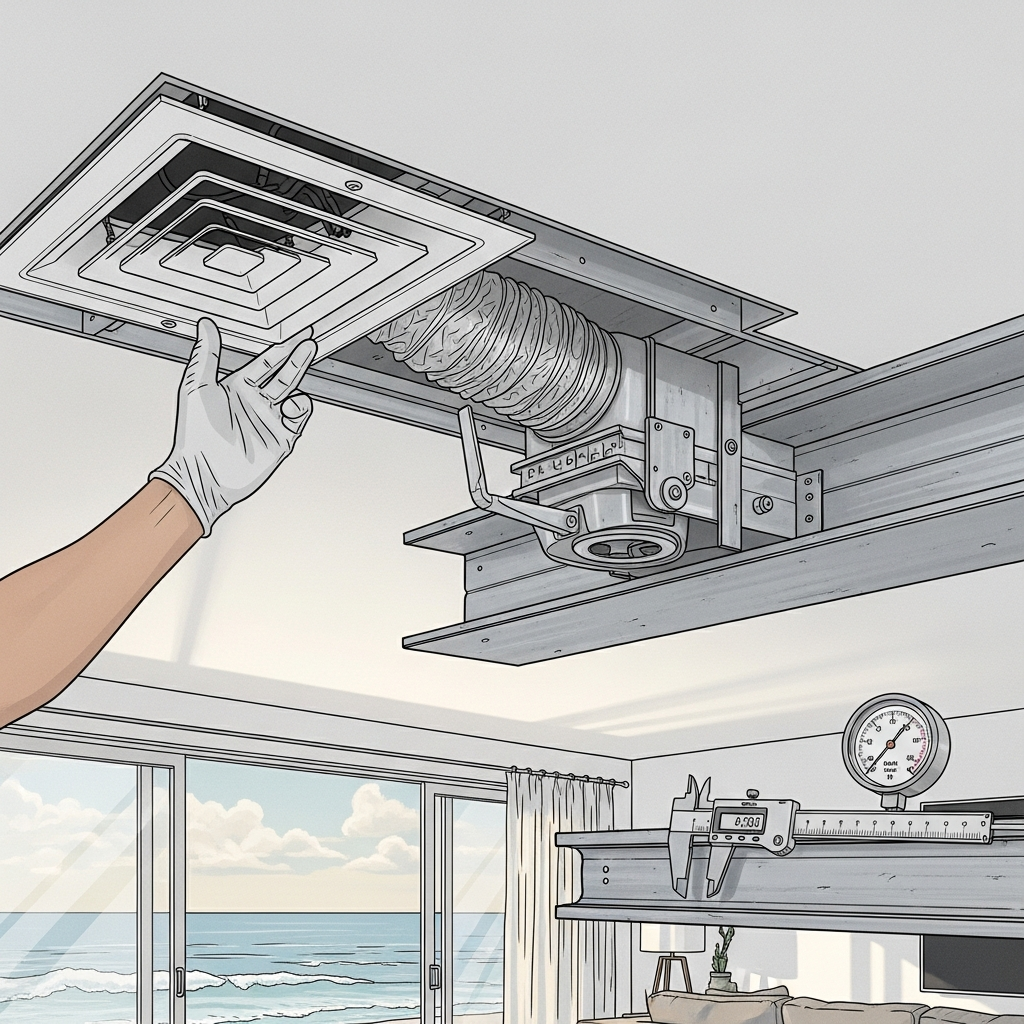
There’s something tempting about reducing a complex project to a simple figure like “per vent.” After all, you can count the registers in your Malibu home in a few minutes, multiply by a number, and think you know the shape of the project. But ducts are rivers, not faucets. The behavior of each vent depends on the trunk that feeds it, the resistance of the branch that leads there, and the balance of the entire system. When neighbors ask me whether a per-vent approach makes sense for duct replacement planning, I walk them through how vents differ, how rooms place unique demands on airflow, and why the route from equipment to grille matters more than the grille count itself. To get your bearings, it helps to start with a broad, practical introduction to duct replacement and then evaluate each vent through that lens.
Begin by picturing your system as a tree. The air handler or furnace plenum is the trunk, main ducts are the largest limbs, and each vent is a leaf. Replacing leaves without assessing limbs and trunk rarely renews the tree. Likewise, counting leaves doesn’t tell you the health of the structure. Two vents side by side in a hallway might be simple, short branches with gentle turns. Another vent across the home could snake around chimneys, through tight bays, and up over a beam, creating friction that starves the room of air. Per-vent thinking ignores that the path and pressure supporting each vent define the work involved in replacing it.
What makes one vent “harder” than another
The distance from trunk to boot, the number of turns, the radius of those turns, and the available space for proper support all shape the effort. A register supplying a bedroom directly beneath a roomy attic may be a straightforward swap: detach, size-check, install taut replacement, strap, seal, insulate, and verify. A register feeding a glassy corner room facing the ocean might need a larger branch to maintain throw against solar gain, with careful routing to avoid pinched bends and velocity noise. If the ceiling is vaulted with no attic above, that vent’s branch becomes a different species of challenge altogether, often involving soffits or interior chases.
Returns complicate the picture too. Malibu homes often need more return capacity than they were originally given. Some rooms beg for a nearby return to quiet the system and stabilize pressure. Others function beautifully with a central return if the doors are undercut and the path of air is open. Replacing supply ducts per vent without addressing returns can leave the system noisy and unbalanced, a common frustration after partial upgrades.
Room purpose and exposure change vent needs
A small office backed by a cool hillside needs a different airflow strategy than a west-facing media room with big sliding doors. Kitchens and bathrooms introduce humidity and sensible heat that ripple into adjacent spaces. Bedrooms demand quiet with enough velocity to cross the room and wash the outside wall without drafts on the sleeper. When we talk about per-vent “cost,” we are really talking about tailoring each vent to its room’s load and acoustics within the context of the entire home.
In beach neighborhoods, salt air and morning dampness challenge tape and jacket adhesives; in the canyons, attic temperatures and crawlspace moisture shape material choices and support spacing. That’s why the same number of vents can represent very different projects across Malibu. Add wildfire season into the mix, and you’ll see more emphasis on tight duct systems and improved filtration that keep ash out of living spaces. None of that nuance lives in a simple multiplier.
Design before replacement
Proper duct replacement begins with design, not demolition. Load calculations tell us what each room needs. Duct design then maps out trunk sizes, branch diameters, and run lengths to deliver that airflow quietly. A “vent” is a delivery point; its branch must be sized and routed to meet the target when the whole system is running. During replacement, we also consider whether a vent should move a few feet for better mixing, whether the diffuser style is right for the room, and whether balancing dampers are warranted to fine-tune distribution. Those decisions deliver comfort in a way that per-vent counting cannot capture.
Verification is equally important. Duct leakage testing, static pressure readings, and room-by-room airflow checks confirm that each vent performs to plan. If your previous system wheezed in distant rooms or roared near the equipment, testing after replacement is how we ensure those habits don’t return. It’s the difference between “new stuff” and “new performance.”
Access, structure, and aesthetics
In Malibu, many ceilings are framed with low-slope trusses that shrink working height. That matters at every vent because a neat, sealed boot connection requires room to operate. Plaster or specialty finishes demand extra care removing and reinstalling grilles and boots. In older homes, register openings may not match modern sizes, calling for careful transition work so the finished look remains clean. Crawling through tight bays with electrical and low-voltage lines nearby isn’t glamorous, but meticulous routing is what keeps airflows true and noise down.
For crawlspace-fed systems, pests and moisture are real considerations. Replacements must include protective screens where needed, hangers that won’t corrode in our coastal air, and insulation jackets with robust vapor barriers. A per-vent estimate can’t account for these site-specific protections that influence the durability of your new system.
When a per-vent mindset can still help
Even though it oversimplifies, thinking per vent can be useful for organizing a walkthrough. Create a comfort narrative for each room: what you feel now, what you want to feel, and what you hear when the system runs. Use that narrative to prioritize attention on problem vents. During the proposal stage, ask contractors to explain how those vents will be routed or resized and how the plan will be confirmed with testing. This moves the conversation from counting grilles to solving the right problems.
Mid-project check-ins are powerful. After the main trunks are placed, it’s a great time to revisit your goals and consider small improvements while access is open. Maybe a bedroom vent would benefit from a slight relocation, or a living room could use a diffuser that throws air along the glass more effectively. As you weigh tweaks, it can help to skim a practical overview of duct replacement so additions align with the core design and don’t introduce new imbalances.
Malibu realities that shift priorities
In ocean-adjacent homes, quiet often ranks as high as temperature because open-plan rooms amplify sound. That favors smooth trunks, carefully sized returns, and gentle branch routing—choices that may add effort to a handful of vents but pay off across the home. In canyon homes with tall spaces, stratification is the enemy. Adding or repositioning returns to pull warm air down can feel like unlocking a new house. After a smoky season, many homeowners also prioritize filtration and tight duct systems to keep particulates out; that might mean adjusting return plenums and branch seals even when supply vents are straightforward.
Questions to ask when you hear “per vent”
How will you size each branch to its room’s load? What path will the branch take and how will you support it? Will any vents move for better mixing or quieter operation? How will you verify airflow at each register after installation? What attention will you give to returns? A contractor who answers these with clarity is building your plan from performance outward, rather than from a grille count inward.
FAQ: Per-vent duct replacement in Malibu
Does adding more vents always improve comfort? Not necessarily. More vents can dilute airflow per branch and create noise without solving underlying load or layout issues. Correct sizing and placement beat quantity every time.
Can I replace ducts to a few problem vents only? You can, and targeted fixes sometimes help, but if the trunk is leaky or undersized, or returns are inadequate, partial work may disappoint. Test first, then decide.
Will new ducts change how my vents look? They can if sizes shift or if grilles are updated, but many replacements preserve the aesthetic while improving performance behind the scenes. Discuss options for diffuser style and placement during design.
How do you make vents quieter? Quiet comes from proper sizing, smooth routing, and good return design. Avoiding sharp turns near the boot, keeping velocities reasonable, and using lined returns where appropriate all help.
What about wildfire smoke? Tight duct systems and better filtration reduce infiltration of particulates from attics and crawlspaces. During replacement, sealing practices and return upgrades play a big role.
Is sheet metal better for certain vents? For longer, straight runs or where noise is sensitive, sheet metal trunks feeding those vents can be ideal. Short, gentle branches in tight spaces often favor well-supported flex. It’s about fit for purpose.
How long does a typical per-vent replacement take? The timeline follows overall system scope. Straightforward branches swap quickly; complex routes and return upgrades add time. Most homes wrap up within several days when well-planned.
Ultimately, vents are the faces of a system whose heart and arteries live above the ceiling. Plan your project as a renewal of the whole pathway to each grille, and you’ll feel the payoff in even temperatures, soft sound, and cleaner air. If you want a concise resource to compare options and share with other decision-makers at home, keep a trusted guide to duct replacement handy. And when it’s time to trade guesswork for a clear plan, invite a local specialist to walk your space, listen to your comfort goals, and map the branches that matter most. Schedule an in-home review today and take the next step toward balanced comfort with expert duct replacement across every room you love.