
Wake up early in Malibu and you can feel why our homes need thoughtful, resilient air systems. The morning marine layer rolls off the Pacific, afternoons warm up quickly, and canyon breezes change direction as the sun moves west. When neighbors ask me to explain what shapes the investment involved in replacing ducts here, I start with the landscape and the lifestyle because those two elements ripple through every technical decision. Understanding duct replacement cost in Malibu is really about understanding Malibu: the varied architecture from beach bungalows to hillside estates, the salty coastal air that challenges materials, the wildfire seasons that demand better filtration, and the building standards that promote efficiency and safety. If you are beginning to research options, one of the most helpful steps is reading a grounded overview of duct replacement and then tying that guidance to what makes your property unique.
Before we get into the nuts and bolts, it helps to reframe how to think about the word “cost.” In technical projects like this, the number a homeowner pays is the echo of dozens of choices: how the ducts will be routed, what materials make the most sense in a coastal climate, how accessible your attic or crawlspace is, how the system will be balanced for quiet performance, what testing will verify the results, and how the work will meet California code requirements. Malibu’s blend of oceanfront humidity and hillside topography amplifies some of those decisions. So rather than chasing a single price, I encourage people to get fluent in the drivers that shape the final project scope.
What exactly gets replaced when ducts are renewed
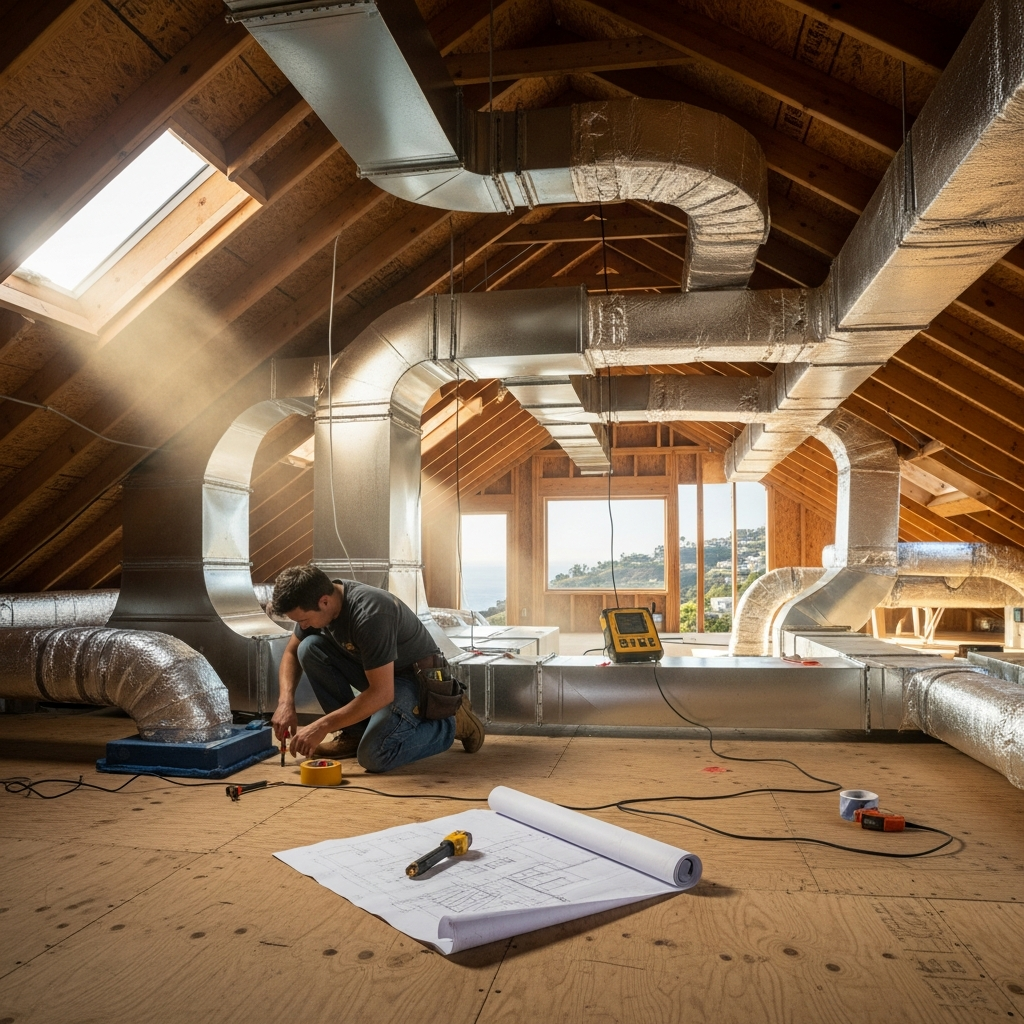
When people say “replace the ducts,” they sometimes picture just the long runs of insulated tubes. In truth, a complete duct replacement considers the entire air distribution ecosystem. That includes the supply and return trunks, branch runs to each room, plenums at the equipment, the take-offs and boots at each vent, balancing or zone dampers where needed, hanging hardware and support rails, tape and mastic sealing, and the insulation jacket that keeps conditioned air at the temperature you expect. For homes with older systems, this can also mean upgrading or relocating returns for better airflow, addressing undersized or overly long runs that starve distant rooms, and ensuring transitions are smooth to reduce noise. Every component carries a role in airflow, loss prevention, and acoustic comfort, which is why two homes with the same square footage can follow very different replacement paths.
In Malibu, many homes built decades ago were sized for a different era of insulation and window performance. As building envelopes improve, the distribution system should be tuned accordingly. It’s not uncommon to find duct layouts that made sense around the mechanical closet location rather than the rooms’ present-day heating and cooling needs. During replacement, we can correct those legacy compromises by resizing branches, adding returns, or simplifying runs that used too many sharp turns. The work is part art, part science, and part local experience.
Why Malibu’s environment changes the equation
Our oceanfront and canyon settings bring a combination of moisture, salt, and seasonal winds. Salt air is mildly corrosive and can shorten the life of exposed metal if left unprotected. Attics near the water can ride the line between cool and damp in the morning and hot and dry by afternoon, a cycle that punishes cheap tapes and inferior insulation jackets. In the hills, tight crawlspaces and steep access routes add time and care to staging, debris removal, and worker safety. If your home has a flat roof, limited attic clearance under low-slope sections may require creative routing or short flexible sections to negotiate structural obstacles. Conversely, vaulted ceilings without accessible chases might push the design toward soffits or carefully sealed pathways inside conditioned space. Each of these details matters to comfort and long-term reliability.
Wildfire and smoke are also part of our reality. Even homes that never experienced direct flame exposure can carry residual ash in attic insulation and on duct exteriors. Replacements in those homes often incorporate better filtration strategies, meticulous sealing, and attention to return placement to keep air quality high through fire season. The point is that Malibu’s climate and geography don’t just decorate the brochure; they actively inform duct design choices that influence scope and therefore cost.
Materials and craftsmanship: choosing what lasts
Three common approaches dominate duct systems: well-supported insulated flex duct, galvanized sheet metal trunks with insulated branches, and rigid fiberglass ductboard for certain plenums or straight runs. None is automatically “best”; each can be excellent or problematic depending on installation quality and application. Flex is efficient for gentle curves and short branches when stretched taut and properly supported. Sheet metal shines where durability and precise transitions matter, especially for longer trunks, but it must be sealed rigorously and insulated to code. Ductboard can offer quiet performance and clean internal surfaces when cuts and seams are executed with practiced hands. In salt-prone zones, extra attention to external jacketing, vapor barriers, and corrosion protection helps these materials go the distance.
Insulation values, seam sealing methods, and support spacing all influence system performance and the effort required. Using a high-quality mastic instead of relying on tape alone, double-strapping heavier runs, and keeping bends broad instead of pinched at tight radii are small decisions that pay comfort dividends. Malibu homeowners also tend to value quiet; carefully sizing returns and using smooth-walled trunks can minimize velocity noise and the “air rush” many people notice after a system upgrade.
Access, structural realities, and the human element
I’ve spent afternoons crawling through attics lit by a single work lamp, measuring joist bays and marking truss lines, because access is half the battle. If your attic is low and webbed with trusses, each support strap and hanger must be planned so ducts don’t rest on sharp wood edges. In crawlspaces, wildlife screens, moisture levels, and clearance to grade influence hardware choices and protective measures. Tile roofs and delicate plaster ceilings make below-ceiling work a non-starter; that pushes more of the project into tight attic time, which adds coordination and care. Conversely, during a renovation when ceilings are open, routing options expand and labor becomes more efficient. These real-world constraints are where the practical side of “cost” emerges—not as a mystery fee, but as the hours and skill that safe, neat work requires.
Design and testing: where comfort gets quantified
Good duct replacement begins before a single strap is hung. Load calculations sized to your envelope, known as Manual J in the trade, reveal how much heating and cooling different rooms truly need. Manual S pairs equipment to those loads, and Manual D translates the loads into duct sizes and lengths that deliver the right airflow quietly. In California, verifying the finished product with duct leakage tests and proper refrigerant charge checks is standard good practice and often a code requirement. These steps ensure that the effort invested in replacement pays off in measurable comfort and efficiency gains. I like to show homeowners pressure and airflow readings before and after—watching a stubborn back bedroom come into balance is one of the pleasures of the job.
Halfway through many projects, clients ask if there’s anything else they can do while we’re in the attic. Sometimes the answer is simple: a better return location, a second return to lower noise, or a short, straighter run to a room that has always lagged. Other times, adding filtration capacity or a lined return trunk makes the most difference. This is also a good point to revisit educational resources on duct replacement so you can compare your home’s evolving plan with best practices and feel confident in the trade-offs you choose.
Permits, code, and Malibu’s oversight
Malibu’s building standards sit within California’s energy code framework and local life-safety guidelines. Replacement often triggers requirements for duct insulation levels, verified leakage limits, smoke detectors’ coordination when penetrations occur, and protection of combustion air pathways if any appliances remain atmospheric. Homeowners sometimes underestimate the time necessary for permit submittal and inspection scheduling, especially during busy seasons. A licensed contractor familiar with Malibu’s expectations will anticipate documentation, ensure that labeling is clear on accessible duct sections, and coordinate inspections so your project flows with minimal disruption. Even in straightforward swaps, the paperwork exists to safeguard your home’s performance and safety.
Balancing expectations: comfort, air quality, and aesthetics
A well-executed duct replacement should feel like moving from a patchy, draft-prone home to one where rooms settle to temperature together. You’ll hear fewer abrupt whooshes because velocities are tamed, and you’ll notice cleaner vents and less dust when leakage points are eliminated. If you’ve ever walked from a sun-exposed living room into a chilly hall then back into a stifling bedroom, proper redistribution addresses those swings. For oceanfront properties with large glass exposures, tailored supplies that bathe the glass help counter solar gain without cold drafts. For canyon homes, careful return placement can reduce temperature stratification that comes with tall ceilings and loft spaces.
Common misconceptions that inflate projects
One of the most common traps is assuming “bigger is better.” Oversized branches create low velocity, which sounds quiet but can actually starve the far end of a system when pressure relationships go sideways. Another misconception is believing all flex is inherently sloppy or that sheet metal is always elite. The truth is that any material installed with skill and intention will perform; any material installed hastily will disappoint. Finally, people sometimes push for fancy add-ons before establishing a solid baseline. Smart thermostats and zoning only shine when the underlying duct design is sound. Establishing that foundation during replacement protects everything else you invest in the home.
Planning your project with less stress
Here’s a rhythm I’ve seen work well. Start with a clear comfort wishlist: which rooms lag, which runs are noisy, what seasonal issues bother you most. Pair that with a basic mechanical assessment—static pressure, leakage, and room-by-room airflow targets. Let design lead the conversation before materials. When bids reflect the same design intent, you can fairly compare quality rather than trying to decode apples and oranges. Ask how crews will protect finished spaces, where debris will exit, and how existing insulation will be handled to control dust. In Malibu, schedule around weather if your attic is prone to heat spikes, and allow extra time if hillside access complicates staging.
When repairs make sense and when replacement is wiser
Minor tears or a single crushed branch can be patched or replaced in isolation if the underlying layout is solid and leakage is low. But when you see widespread failed tape, dark streaks from dust marking leaks on many joints, insulation that’s matted with salt-laden moisture, or an imbalanced layout that has starved rooms for years, piecemeal fixes rarely deliver lasting value. Replacement provides a clean canvas to size, seal, insulate, and balance the system to today’s standards. Consider it especially if a home renovation or equipment change is on the horizon; aligning these timelines can reduce disruption and avoid rework.
Malibu-specific touches that matter
For homes within constant earshot of the surf, I prefer external jackets with strong vapor barriers to ward off coastal moisture. In the canyons, where wildlife may explore crawlspaces, I recommend robust protective screens around low returns and careful sealing to deter pests. In neighborhoods with steep driveways or limited street parking, staging plans and debris removal routes keep neighbors happy and crews efficient. These are the small, local lessons that don’t show up on a national checklist but absolutely influence the smoothness of a project and the longevity of its results.
FAQ: Your Malibu duct questions answered
How long does a typical duct replacement take in Malibu? Most projects finish within a few days once work begins, but home size, access, and inspection timing can stretch or compress that window. Attic-only replacements with tight clearances may take longer than those done during open-ceiling renovations.
Will replacing ducts make my home quieter? Yes, when designed and executed thoughtfully. Proper sizing reduces velocity noise, smoother transitions calm turbulence, and better return placement softens the “rush” sound that older systems often produce.
Can I keep some of my existing ducts? If sections are in good condition, properly sized, and well-sealed, selective retention can be reasonable. However, mixing old and new can complicate balancing and future maintenance. Evaluate with testing rather than guessing.
What about air quality during wildfire season? Replacement is a chance to upsize return filtration, use tighter-sealing components, and minimize leakage that draws particulates from attics or crawlspaces. Combined with disciplined filter maintenance, the improvement is noticeable.
Do I need permits? In most cases, yes. Malibu follows California energy and safety codes, and inspections verify leakage limits, insulation levels, and workmanship. A licensed contractor familiar with local procedures can simplify this step.
Is sheet metal always better than flex? Not always. For trunks and long straight runs, sheet metal can be excellent. For short, gentle branches, properly supported flex works beautifully. Installation quality and design are the deciding factors.
Can duct replacement improve hot and cold spots? Absolutely. Right-sizing branches, correcting routing, and adding or relocating returns often eliminate chronic problem areas. The change is typically felt most in rooms furthest from the equipment or with big glass exposures.
What should I ask contractors who visit my home? Ask how they size and balance systems, what testing they perform, how they protect finished spaces, and how they handle permit inspections. Request a layout sketch and airflow targets so you can compare proposals meaningfully.
When you’re ready to move from research to action, remember that Malibu homes reward careful, climate-savvy planning. A well-designed duct system is invisible when it’s doing its job—you simply feel better in your own rooms, at any hour of the day. If you want a concise primer to share with your household or use as a checklist as you interview pros, revisit this overview on duct replacement and then relate each point to the quirks of your own property. And if the time feels right to reclaim consistent comfort, quieter airflow, and cleaner indoor air, reach out to a trusted local specialist to map your project. To schedule a thoughtful assessment and get started on a plan tailored to your home, request a visit today and learn how strategic duct replacement can elevate everyday life by the coast.