
Breathing Easier When the Hills Are Dry
Fire season in Malibu reshapes how we think about indoor air. Winds shift, visibility drops, and even on days when the flames are far away, fine particulates ride the air and creep into our lives. In homes, that shows up as a faint campfire note when the HVAC starts, a persistent film on surfaces, and irritated sinuses after long afternoons indoors. Air duct cleaning isn’t a cure-all, but done well, it’s a powerful step toward reclaiming calm air, especially when paired with smart filtration and sealing. The benefits extend beyond a single smoky week—they help your system stay resilient and your home feel like a refuge, not a refuge with a lingering reminder of the sky outside.
In Malibu, we live with microclimates that can flip from fog to dry winds within hours. During fire season, that volatility adds ash and ultrafine particles to the mix, many of which are small enough to bypass ordinary filters. Some enter through imperfect door seals or exhaust paths; others sneak in when windows open or during quick trips to the deck. Once inside, a portion settles in ducts, especially in low-velocity corners, around turning vanes, and along seams. Cleaning those deposits under controlled negative pressure, then supporting the system with the right filter strategy, can make a startling difference in how the home feels.
At the outset, many homeowners turn to specialists in air duct cleaning to understand both the immediate and lasting benefits. The immediate gains include fewer smoky odors at startup and visibly cleaner registers. The lasting gains show up as calmer airflow, less frequent dusting, and a home that feels balanced even when the sky outside says otherwise. When matched with weather-aware operation—closing windows at the first hint of smoke and switching systems to recirculate—the benefits compound.
How Smoke Behaves in Ducts
Smoke is a complex mix of gases and particles, including ultrafine soot that can cling to surfaces and nestle into porous materials. In ductwork, smoke behaves differently than household dust. It can adhere tenaciously, especially where a light film already exists from coastal air or where dust has gathered over time. Odors can also bind to surfaces, reactivating when warm air passes. That’s why cleaning after a significant smoke intrusion often focuses not just on particulates, but also on carefully addressing the surfaces themselves.
Under professional negative pressure, agitation tools coax particles from branch lines and trunks while preventing redistribution into living spaces. Returns receive special attention because they collect the heaviest loads, and because any bypass on the return side can draw attic dust or smoke-laden air into the system. Sealing obvious leaks during or after cleaning preserves the gains by keeping bad air out and conditioned air in.
Benefits You Can Feel
After a thorough cleaning, many Malibu homeowners report a soft but unmistakable shift in the home’s feel. Startup odors diminish, airflow sounds smoother, and surfaces hold their cleanliness longer. For those sensitive to smoke or allergens, that improvement can be the difference between feeling on edge and finally relaxing at home. Beyond comfort, there’s a practical upside: a cleaner air path supports the system’s efficiency, allowing it to move air with less resistance and less noise.
There’s also a seasonal benefit. When the winds kick up and smoke drifts in from afar, a recently cleaned and well-sealed system is better positioned to resist odor retention. Pair that with a filter that matches your blower’s capability—often stepped up during smoky weeks—and the home will weather the season with more calm and less reactive dusting.
Preparation and Timing in Malibu
Preparation for cleaning during or after fire season begins with a frank assessment. Where are the returns, and are they adequately sized? Do any rooms run warm or cool, hinting at imbalances that could trap particulates? Are there access constraints—steep driveways, limited parking, or high registers—that affect staging? Malibu’s unique mix of architecture and terrain means these questions matter. When a plan addresses them upfront, the day runs smoothly and the results last longer.
Timing also matters. Some homeowners choose to act right after heavy smoke exposure; others wait for calmer weather. There’s no single right answer, but many find value in scheduling before the next major heat wave so the system can rest during cleaning. If renovations are underway, it’s wise to coordinate so the dustiest phases are complete, preserving your results from the outset.
Filtration: The Unsung Partner
Cleaning resets the system; filtration sustains it. During fire season, many households consider stepping up to a higher-efficiency filter—balanced against the blower’s capacity—to catch more of the fine particles that mark smoky days. A professional can help match the filter to the system so airflow remains healthy. Filter fit and sealing matter as much as rating; a leaky rack can let bypass dust around the filter media, undermining your efforts. Replacing filters more frequently during peak smoke periods is often a worthwhile practice.
It’s also smart to consider prefilters or staged filtration for homes that open frequently to decks and courtyards. While every system is different, the goal is the same: capture more at the intake and keep it from settling deeper in the system where it’s harder to remove later.
Sealing and System Integrity
One overlooked benefit of a cleaning visit is the chance to improve system integrity. Obvious leaks at joints, poorly fitted access panels, or returns that draw from unintended spaces dilute indoor air quality and reduce comfort. Sealing and small adjustments preserve the gains from cleaning by ensuring that the air you condition is the same air you breathe. For Malibu homes near the beach, small hardware upgrades at registers can also fight early corrosion and improve appearance over time.
In older homes or those with complex additions, technicians may recommend enhancing return pathways or rebalancing airflow. These conversations, sparked during a cleaning, can lead to improvements that make the home quieter and more even in temperature—both welcome during tense, smoky weeks when comfort counts most.
What to Expect During a Professional Visit
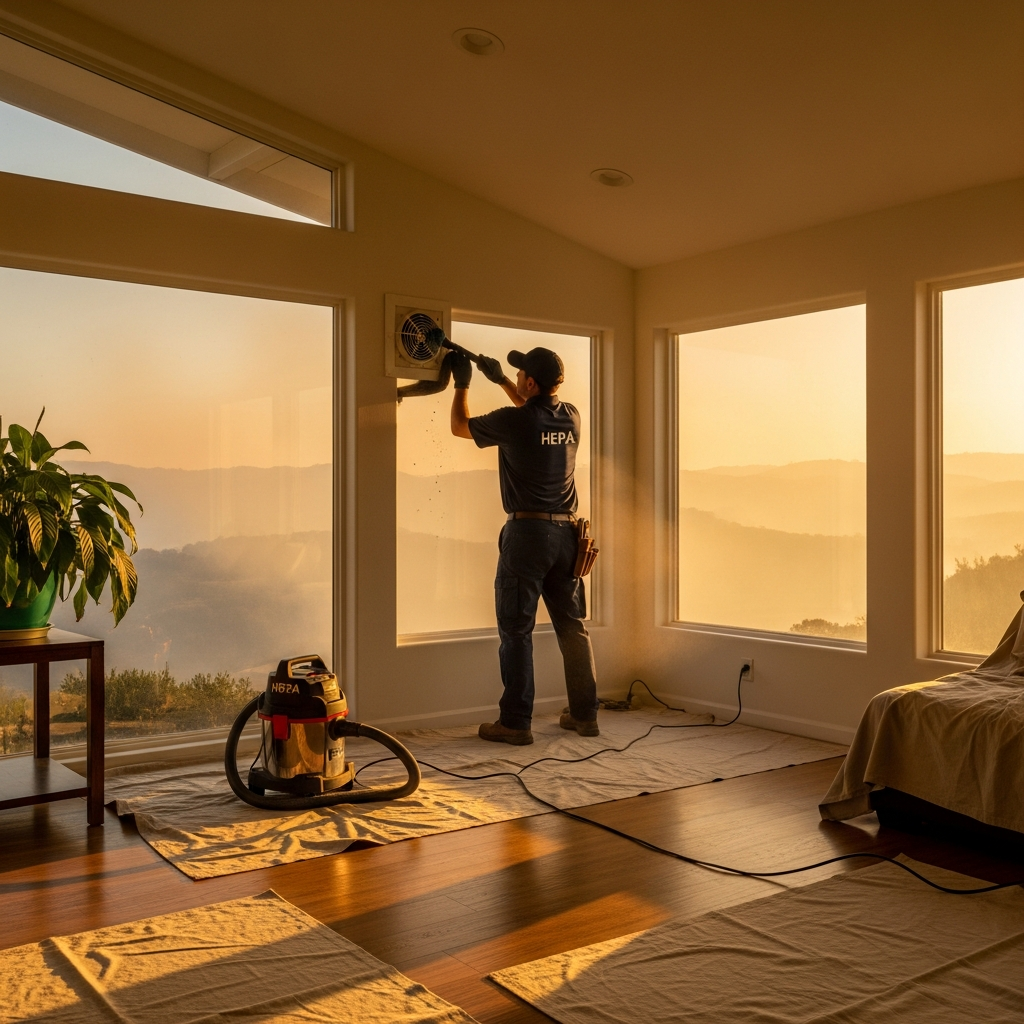
Expect a respectful, methodical process. The day starts with a walkthrough, protective coverings, and clear communication about which rooms will be staged first. With the system safely off, technicians establish negative pressure with HEPA filtration, then agitate debris from each branch and return so particles flow to the collector. High registers, lined trunks, and older flex ducts all receive tool choices suited to their materials. Any temporary access created to reach hidden sections is sealed and labeled afterward.
Documentation is part of the value. Before-and-after photos of trunks, returns, and the blower compartment help you see what changed. If a smoke odor persists in certain rooms, that evidence guides next steps without guesswork, saving time and keeping the focus on what actually helps.
Life After Cleaning: Making the Most of the Benefits
Once the ducts are clean, small habits protect your gains. Replace filters on a schedule that matches your home’s exposure and usage. Keep returns unobstructed. During active smoke days, switch to recirculate if your system allows, and keep windows closed. Wipe registers periodically to prevent films from reestablishing a foothold. If a new smoke event occurs, consider a shorter interval before your next check-in so odors don’t set in.
Pay attention to how your home feels in the first week. Vents should sound smoother, surfaces should stay cleaner longer, and any lingering odors should fade. If something feels off, call your provider; sometimes a small adjustment—resealing a panel, addressing a minor bypass, or tweaking filter fit—restores the calm quickly.
Frequently Asked Questions
Will air duct cleaning remove all smoke odor?
It often reduces odors significantly, especially when particulates are fully removed under negative pressure. In cases of heavy exposure, additional targeted steps may be considered. A professional will help prioritize measures that deliver the most impact first.
How soon after a smoke event should I schedule?
There’s no single rule. Some homeowners act immediately to reduce lingering odors; others wait until conditions stabilize. If sensitive individuals live in the home, earlier intervention can be helpful. Your provider can help weigh timing against weather and system usage.
Is it safe to stay home during the work?
Yes. Crews coordinate room access, manage noise, and keep debris captured under negative pressure. If anyone is highly sensitive to dust or sound, plan errands during the most active phases.
Do I need different filters in fire season?
Often, yes—within the limits of your blower’s capability. A higher-efficiency filter can capture more fine particles common in smoke. Proper fit and sealing are just as important as rating, and replacement frequency may increase during active periods.
What if my home has multiple zones or guest spaces?
Zoned systems and ADUs are common in Malibu. Professionals sequence the work to prevent cross-contamination and ensure each zone’s returns and trunks receive the right attention, with documentation to show the path taken.
If you’re preparing for fire season or recovering from it now, partner with a local team that understands Malibu’s winds, microclimates, and architecture. Start the conversation with experts in air duct cleaning, choose a day that fits your routine, and give your home the calm, clean air it deserves even when the hills are dry.