
Understanding What Malibu Homeowners Really Pay When They Think About Air Duct Cleaning
When neighbors in Malibu ask what people truly “pay” for air duct cleaning, the conversation quickly expands beyond dollars. Living here means navigating marine layer mornings, canyon winds in the afternoon, and the constant tug-of-war between beach humidity and hillside dust. Add in the reality of seasonal wildfire smoke, and the question becomes: what does it take to safeguard the air you breathe, protect your HVAC equipment, and keep a home comfortable year-round? The answer includes time, preparation, specialized know-how, and the peace of mind that comes with a thorough job performed the right way for our local conditions.
Right away, it helps to frame the topic around value. In Malibu, homeowners don’t just invest in a service; they invest in an outcome—cleaner indoor air, a system that runs more efficiently, and a plan for maintaining both. Getting there often means partnering with a company that really understands the neighborhood’s terrain, access constraints, and climate. That’s why early in the process, many residents look for a provider with real, on-the-ground experience in air duct cleaning specifically tailored to the coastal and canyon environment we call home.
So, what are the practical components that shape the experience? First, every home here is different. Ranch houses on Point Dume, hillside properties above Las Flores, and architectural gems tucked in the canyons all present unique access points for equipment and technicians. Some homes have straightforward attic runs; others require careful navigation through tight crawlspaces. The amount of preparation a team must do to safely reach supply lines and returns—without disturbing finishes or landscaping—matters greatly to the timeline and depth of the work.
Next, consider what has actually accumulated inside your ductwork. In Malibu, it’s common to see a blend of fine dust, pet dander, and the occasional layer of ash after a smoke event. Salt air near the beach can contribute to a slightly tacky film on grilles and registers, which can hold particulate more stubbornly than dry inland dust. If a home recently underwent construction or a remodel, the debris load can be heavier, and agitation steps may take longer. A professional who knows when to deploy soft-brushing versus compressed-air whips, and when to lean on HEPA-filtered negative pressure, can make a major difference in the final result.
Home Architecture and Access: The Malibu Reality
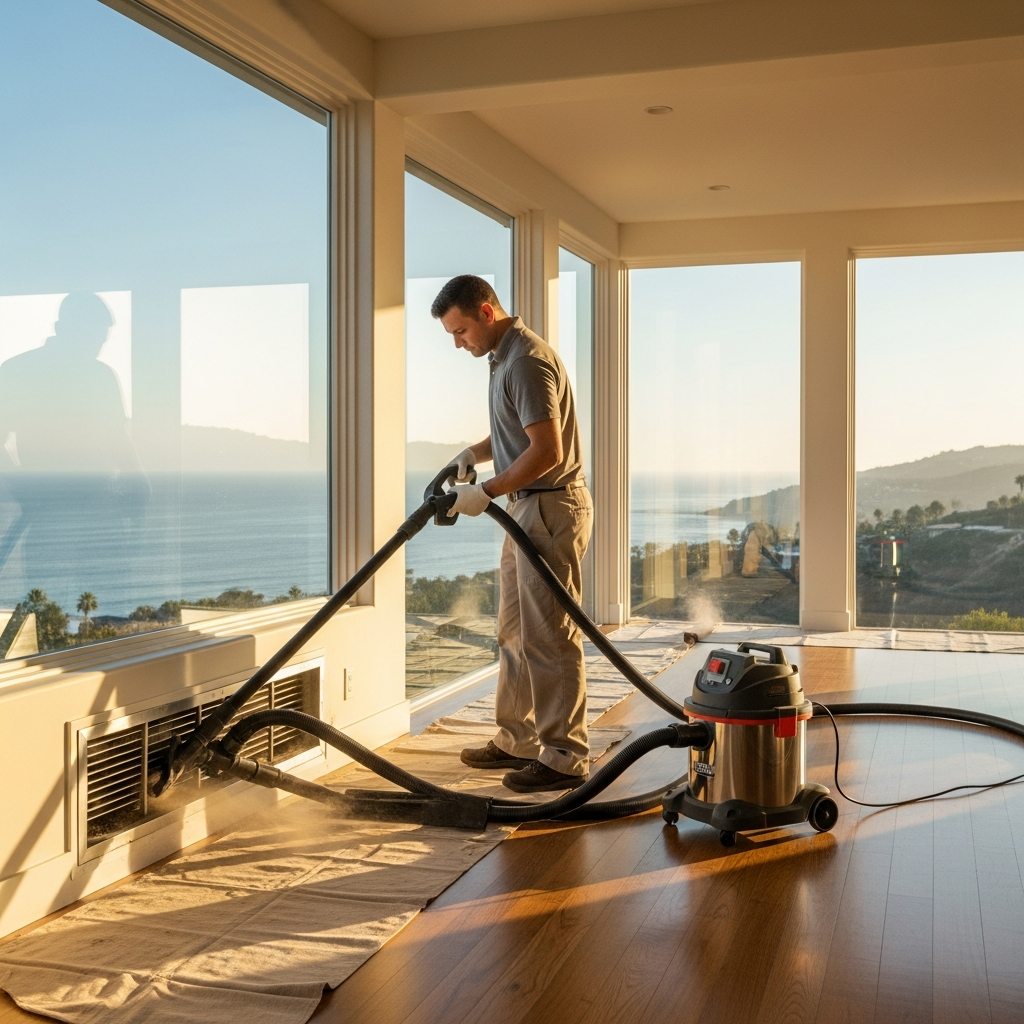
Access is rarely a footnote here. Driveways can be steep and narrow, parking may be limited along PCH or in gated communities, and equipment often has to be staged with care. Inside, technicians need to protect floors and furnishings while reaching registers in high ceilings or behind built-ins. That preparation—laying down protective coverings, removing and labeling grilles, creating temporary access openings to reach hidden trunk lines—represents a meaningful portion of what homeowners effectively “pay” in time and attention. A crew that shows up with the right ladders, drop cloths, and plan will work more efficiently and respectfully in the space.
It’s also critical to recognize how long duct runs and zoning affect the scope of work. Many Malibu homes rely on intricate zoning to handle temperature differences between sunny decks and shaded canyon rooms. More zones mean more balancing dampers, more returns, and more opportunities for buildup. Long, winding runs common in hillside properties can require additional agitation to transport debris back to the vacuum source. These details influence scheduling, preparation, and how the team moves through the home.
Climate, Smoke, and the Malibu Microenvironment
Beyond architecture, the microclimate directly shapes the cleaning approach. Morning fog often gives way to dry offshore breezes, lifting dust and carrying allergens. During fire season, smoke can intrude even when windows are closed, especially if the system brings in outdoor air or if there are unintended penetrations in the building envelope. In the months after a smoke event, many homeowners notice a persistent odor that lingers in fabrics and ductwork. Addressing that means not only removing particulates but also carefully treating surfaces so that those odors don’t reactivate every time the blower turns on.
Quality providers will discuss filtration as part of the conversation—what MERV rating your system can handle without straining the blower, whether you should step up to a denser filter during smoky weeks, and how often to change filters when the system is running more hours than usual. They may also talk about sealing leaky joints in the ductwork, because leaks can draw attic dust into supply air or release conditioned air into spaces you don’t want to heat or cool, both of which undermine the results of a thorough cleaning.
Methods and Standards That Matter
When you ask professionals how they approach a Malibu home, listen for the fundamentals. The process should involve establishing negative pressure with a high-powered, HEPA-filtered vacuum, then agitating debris from each branch line so it’s captured rather than redistributed. Returns deserve special attention because they pull in the most dust and hair. A conscientious crew will document access points, seal them after cleaning, and provide photographs showing the difference before and after. They’ll discuss the blower compartment, evaporator coil housing, and plenums, because those components directly affect air movement and cleanliness when the system runs.
Many teams reference national standards for best practices. What you’re really paying for is the assurance that the methods are thorough and repeatable, not improvised. Malibu homes often have high-end finishes and sensitive materials, so technicians should protect surfaces carefully and restore every register and grille exactly as found, making sure screws, paint, and trim remain intact.
Preparation: What Homeowners Contribute
Another part of what homeowners pay is their own time and coordination. Clearing spaces in front of returns and supply registers, creating a path for hoses, and ensuring pets are safe and comfortable all help the day go smoothly. If you work from home, planning for the sound of equipment or scheduling during quieter periods can reduce stress. When questions arise—like whether to open windows during portions of the process or how to stage furniture—clear communication between you and the crew keeps everyone aligned.
It also pays to make decisions about the broader HVAC ecosystem while the work is underway. If a technician notes a filter rack that allows bypass, or a return drop that vibrates noisily, the visit is an opportunity to discuss improvements. Those small adjustments often yield more comfort and cleaner air long after the team leaves.
Value Versus Headline Promises
Malibu homeowners have seen plenty of marketing that focuses on a quick in-and-out visit. But islanded properties, guesthouses, recording studios, and detached offices are common here, and each space might have its own system quirks. The most dependable outcomes come from providers who approach the home holistically and set expectations that match the property’s complexity. Think of it as paying for a methodical plan and verifiable results rather than a headline promise.
In the middle of that plan is choosing a partner who can explain not only what they’ll do but why. If they walk you through how returns will be cleaned first, how main trunks are accessed, and how they’ll verify the system is clean before reassembly, you’re buying clarity, not just time on site. Many locals start their search by narrowing in on teams whose day-to-day work is centered on air duct cleaning, not just as a sideline.
Timing, Seasonality, and After-Care
Timing often matters in Malibu more than in other places. Before the first big heat wave or the Santa Ana season, scheduling can get tight. If your home sits near the beach, the cooler months might be best so the system can rest while work is performed. If you live in a canyon where dust rises during dry spells, late winter or early spring might be optimal. After the visit, the most valuable follow-up isn’t just a reminder to replace filters but a specific maintenance rhythm that matches your household: pets, kids, doors frequently open to patios, or long stretches away when systems sit idle.
Documenting work is part of that. Ask for photos or video of critical trunk sections and the blower cabinet. If any access panels were created for better reach, confirm they’re properly sealed and labeled. This record becomes a roadmap for future maintenance and helps ensure that the next team starts from a cleaner baseline.
Construction, Renovation, and Rebuilds
Post-construction cleaning deserves special handling. Sawdust, drywall dust, and fine particulates from cutting stone or tile behave differently in ductwork than household dust and hair. They can clog secondary drain pans and settle in low-velocity sections of duct. Malibu has its share of rebuilds and remodels, and a thoughtful plan coordinates with other trades, protects recently finished surfaces, and sequences work after the dirtiest phases of construction are truly complete. When that coordination happens, homeowners pay less in frustration and rework later.
Indoor Air Quality and Energy Harmony
Clean ducts are one piece of the indoor air puzzle. Well-sealed ducts, properly sized returns, balanced supply, and the right filtration help systems run quietly and efficiently while reducing the distribution of dust. In older Malibu homes, retrofits often focus on returns that were undersized by today’s standards. Improving return pathways can lower system noise and reduce the dust load that reaches the ducts in the first place. When you invest in thorough cleaning and small system upgrades together, you’re buying harmony—less dust on furniture, more stable temperatures, and a home that feels fresher with less effort.
Neighborhood Nuance: Beachside Versus Canyon
Living steps from the sand is a privilege, but it means coping with salt and fine grit that ride in on sea breezes. Canyon homes, on the other hand, see gusty afternoons that loft dust and pollen, and wildlife that can occasionally dislodge flex ducts or leave debris near penetrations. Teams familiar with these nuances will recommend different maintenance rhythms and pay closer attention to particular trouble zones. A coastal property might focus on corrosion-prone hardware at registers; a canyon property might focus on sealing and rodent-proofing strategies to prevent infiltration that would undermine a cleaning.
What Homeowners Truly Pay: Time, Trust, and Confidence
At the end of the day, Malibu homeowners pay with more than money—they pay with their trust. Allowing a crew to move through private spaces, handle finishes, and work near cherished furnishings is an act of confidence. The return on that trust looks like a quieter system, cleaner vents, and a sense that the home’s air is as restorative as the ocean view. That’s why it’s worth choosing people who show up on time, protect your home, explain their steps, and follow through with documentation.
Frequently Asked Questions
How often should Malibu homeowners schedule air duct cleaning?
It depends on lifestyle and exposure. Homes near the beach or in dusty canyons, households with pets, or anyone sensitive to allergens may benefit from more frequent attention. After any smoke event or major renovation, it’s smart to reassess sooner. A professional can help establish a cadence that reflects your specific conditions rather than a generic interval.
What signs suggest my ducts need attention?
Persistent dust on surfaces shortly after cleaning, musty or smoky odors when the system starts, visible buildup on registers, and uneven airflow are all clues. Another hint is a filter that clogs quickly, which can indicate elevated particulate loading in the system or a mismatch between filter rating and blower capacity.
Will cleaning disrupt my day?
You can expect some noise and temporary access limitations in certain rooms. A good crew will outline the day’s path, protect surfaces, and coordinate with you so critical spaces are accessible when you need them. If you work from home, plan calls during quieter periods or request staging that prioritizes your workspace first.
Is sanitizing always necessary?
Not necessarily. The priority is removing debris under controlled negative pressure. In some cases—such as smoke odor or moisture history—targeted treatments may help. Any product used should be appropriate for HVAC applications, used sparingly, and applied according to standards. Ask for a clear explanation before authorizing any additional step.
What about filters and upgrades?
Filtration is the frontline. The right MERV rating for your blower, properly sealed filter racks, and well-sized returns make a measurable difference. During a visit, ask the technician to evaluate whether upgrades would enhance performance. Often, small corrections produce outsized comfort and cleanliness benefits.
Can I stay in the home during the work?
Yes, most homeowners do. Crews will coordinate access and may suggest opening windows in work areas if appropriate. If anyone in the home is highly sensitive to dust or noise, consider scheduling on a day when they can be out for a few hours.
What should I ask a provider before scheduling?
Ask how they create negative pressure, what agitation methods they use, how they protect finishes, and how they document results. Invite them to discuss access points unique to your home—attics, crawlspaces, high registers—and how they will restore each one after cleaning.
If you’re ready to breathe easier and want a team that understands Malibu’s mix of coastal air, canyon dust, and seasonal smoke, consider partnering with specialists who focus on results and respect for your space. To start a conversation with a trusted local approach to air duct cleaning, reach out and set a time that works with your schedule. You’ll be investing in clarity, comfort, and the confidence that your home’s air is working for you—not against you.