
Walk a few blocks from the shoreline, and you can hear the sea in the palms and feel the salty breeze on your skin. Live a little higher in the canyons, and the air shifts—still coastal, but dryer, dustier, and more prone to swings from cool mornings to warm afternoons. Malibu’s variety is its charm, yet it also creates a distinctive set of air conditioning maintenance issues that surface again and again for homeowners. Recognizing these patterns is the first step to staying ahead of problems and keeping your home comfortable in a way that suits our coastal reality. From corrosion on outdoor units to clogged drains and weathered wires, the common issues we see are almost always solvable with thoughtful, consistent care and timely visits for air maintenance.
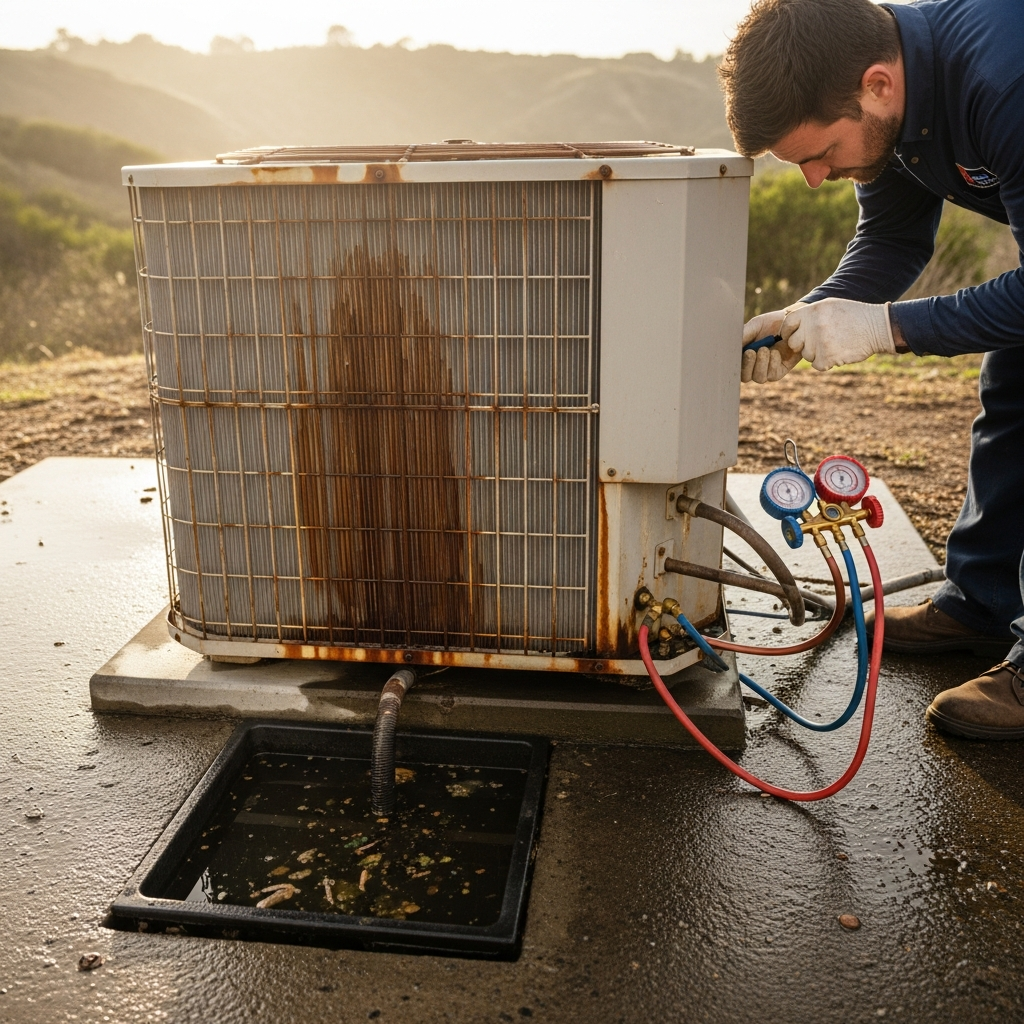
While every home tells a slightly different story, the coastal environment writes the plot. Outdoor condensers spend their lives breathing air infused with microscopic salt. Those fine crystals settle into fins, attach to screws and brackets, and set off a slow-motion chain of corrosion. On the hottest days, when a condenser must shed heat quickly, that film of buildup restricts airflow and quietly robs efficiency. Maintenance does the unglamorous but crucial work of rinsing fins, checking cabinet integrity, and monitoring signs of wear before rust migrates into moving parts. When this is done regularly, the unit does not need to strain through a layer of grime to keep your home cool.
Corrosion and fastener fatigue near the coast
The closer your property is to the ocean, the more relentless the cycle of corrosion. Fins and coil guards can start to pit, and screws on service panels seize, making it harder to perform even basic checks. Left alone, these small issues grow into rattles and vibrations that travel into the home. A maintenance visit not only cleans but also lubricates and replaces hardware where needed, so the system stays quiet and serviceable. In neighborhoods like Point Dume or Broad Beach, where salt fog carries well inland, technicians often add attention to exposed wire lugs and cabinet seams to keep moisture out and connections secure.
Electrical components face their own set of stresses. Contactors and capacitors are the unsung workhorses that handle every start and stop. Salt air and high humidity can accelerate oxidation on contacts, increasing heat and reducing reliability. A quick check that catches a pitted contactor or a weakening capacitor can be the difference between a smooth season and a no-cool call during the first heat wave. This is especially true for outdoor cabinets that sit where irrigation overspray or morning fog linger.
Clogged condensate drains and the June Gloom effect
The same marine layer that keeps mornings cool can also load indoor coils with moisture. When condensation forms, it must drain away quickly. Dust, pet hair, and airborne debris can mix with that moisture to form a fine sludge in traps and lines. Left unattended, the drain backs up, causing water to pool in the drain pan and sometimes overflow. Homeowners often notice a faint musty smell near supply vents or see water spots around the air handler. Regular maintenance clears the lines and confirms that floats or safety switches are ready to shut the system down before water finds its way into walls or ceilings.
During extended foggy spells, it is normal for the system to remove more moisture than usual from indoor air. The difference between a well-maintained system and a neglected one shows up in how quietly and efficiently this happens. Clean coils promote smooth condensation and drainage, while proper blower settings ensure moisture is removed without creating drafts or overcooling rooms. These are small, precise adjustments that a tune-up locks in place.
Filters, ash, and canyon dust
In canyon neighborhoods and during wildfire smoke events, filters can load up quickly with fine particulates. A register that felt brisk in May can feel muted by July if filters are overdue for replacement. The signs are subtle at first: longer run times, uneven cooling between rooms, and a faint, stale odor when the system starts. Changing filters on schedule and verifying that returns are sealed and pulling in only indoor air are two of the simplest, most effective maintenance tasks. In our area, where doors and windows are opened often to invite the breeze, these steps make a noticeable difference in day-to-day comfort.
We also see filters that are the wrong size for the return cabinet or not properly seated, allowing unfiltered bypass air to streak coils with dust. Over time, that film reduces heat transfer and forces the system to run longer. Maintenance prevents this spiral, restoring the clean, even air movement that Malibu homes need during warm afternoons.
Duct leaks and temperature stratification
Hillside homes frequently struggle with stratification, where upper floors trap heat and lower levels stay cool. If ducts are leaky or poorly balanced, the effect intensifies, and homeowners compensate by dropping the thermostat several degrees. Unfortunately, that makes the cold rooms colder and the hot rooms only slightly better. Maintenance approaches the problem at its source by inspecting duct connections, checking for crushed or kinked runs in tight attics, and confirming that dampers are set to serve occupied spaces. A small fix, like reseating a loose collar or adjusting a return grille, can transform the way a home feels in late afternoon.
Raised foundations and crawl spaces add another layer of complexity. Animals occasionally disturb ductwork, and condensation can accumulate on uninsulated sections of metal duct in damp zones. Routine inspections catch these issues before you are paying to cool the crawl space instead of your family room.
Wiring, UV exposure, and rodent damage
Solar heat and UV light weather the insulation on outdoor wires over time, especially in unshaded side yards. Chafing or brittle insulation can reveal copper, and while the damage may be minor at first glance, it is enough to invite corrosion or cause intermittent faults. In canyons, we also encounter rodent activity around air handlers and in attics, where small teeth find soft cable jackets irresistible. A maintenance visit looks for these vulnerabilities, secures conductors, and replaces worn segments before a nuisance becomes a shutdown. This attention is particularly important in homes that close up for part of the year, when small problems can go unnoticed until summer.
There is also the matter of grounding and bonding. Outdoor equipment relies on solid grounding to operate safely and consistently. In corrosive environments, clamps and straps can loosen or corrode. Verifying that these connections remain intact is a detail that pays dividends in equipment life and safety.
Refrigerant charge, airflow, and the art of balance
While homeowners rarely see it directly, the relationship between airflow across the evaporator coil and refrigerant charge is central to performance. A partially blocked filter or a coil with light buildup can mimic the symptoms of refrigerant imbalance. Maintenance sorts the signal from the noise by restoring design airflow and then confirming that pressures and temperatures align. The result is a system that delivers the right temperature split at the registers and avoids short cycling or excessive run times. This balance is especially important in Malibu’s swing seasons, when afternoons warm quickly but evenings cool down just as fast.
It is tempting to chase a quick fix when a room feels stuffy. In practice, a calm, methodical tune-up that looks at the whole system is far more effective. Once airflow is reset and small faults are corrected, most comfort complaints soften or disappear entirely.
Noise, vibration, and the quiet home
Salt-weakened screws, worn fan blades, and out-of-square condenser cabinets can all contribute to vibration and noise that travel into living spaces. Malibu’s homes are designed to blur indoor and outdoor life, so a humming side yard unit or a rattling closet air handler feels louder than it would in a sealed suburban house. Maintenance checks the mechanical balance of fans, tightens fasteners, and relevels equipment where settling has occurred. The payoff is more than silence; it is the feeling that the house is resting comfortably, the way it should when the windows are open and the breeze is right.
Mid-season check-ins are particularly helpful when a unit sits close to surf air or a dusty trail. A short visit to refresh the filter, rinse the coil, and confirm electrical stability can extend the calm through the hottest weeks. Planning this as a brief mid-year air maintenance appointment makes the difference between tolerable and delightful as summer stretches on.
Power quality and sudden outages
While not unique to Malibu, power quality issues show up in telling ways on air conditioning systems. Voltage dips or spikes can stress contactors and compressors, and sudden outages during heat waves put startup components to the test. Maintenance includes evaluating the health of those parts most exposed to electrical strain. Replacing a marginal capacitor on your schedule is far preferable to discovering it has failed when the house is full of guests on a warm evening.
It is also wise to confirm that thermostat settings and schedules match the way you live. Smart or programmable devices can drift from your routine, especially after outages or manual overrides. A quick review during maintenance aligns the technology with your real-world patterns so comfort is smooth and predictable.
FAQ
Q: Why do my outdoor unit’s fins look chalky or rusty? A: That is the mark of salt exposure. Regular rinsing and gentle cleaning during maintenance slow corrosion and keep airflow strong.
Q: My home smells musty when the AC starts. What is the likely cause? A: Often it is a condensate drain that needs cleaning or a coil that has collected fine dust. Maintenance clears the line and restores fresh, dry operation.
Q: Are clogged filters really that harmful? A: Yes. They restrict airflow, reduce cooling capacity, increase run times, and can cause coils to ice in extreme cases. On-time replacement is one of the simplest fixes with the biggest impact.
Q: I have uneven temperatures between floors. Can maintenance help? A: Definitely. Checking for duct leaks, reseating connections, and adjusting dampers can rebalance airflow so temperatures even out without lowering the thermostat.
Q: How do rodents affect my system? A: They sometimes chew wire insulation or disturb ductwork, especially in attics and crawl spaces. A maintenance visit looks for these signs and secures vulnerable areas.
Q: What should I do before a heat wave? A: Confirm your filters are fresh, clear debris around the outdoor unit, and consider a pre-heat check so electrical components and airflow are ready for higher loads.
When it comes to Malibu’s air conditioning, small, consistent actions go a long way. If your system has been working a little harder than usual, or if you are ready to prevent issues before they appear, set aside time to plan your next air maintenance visit and enjoy a cooler, calmer season at home.