
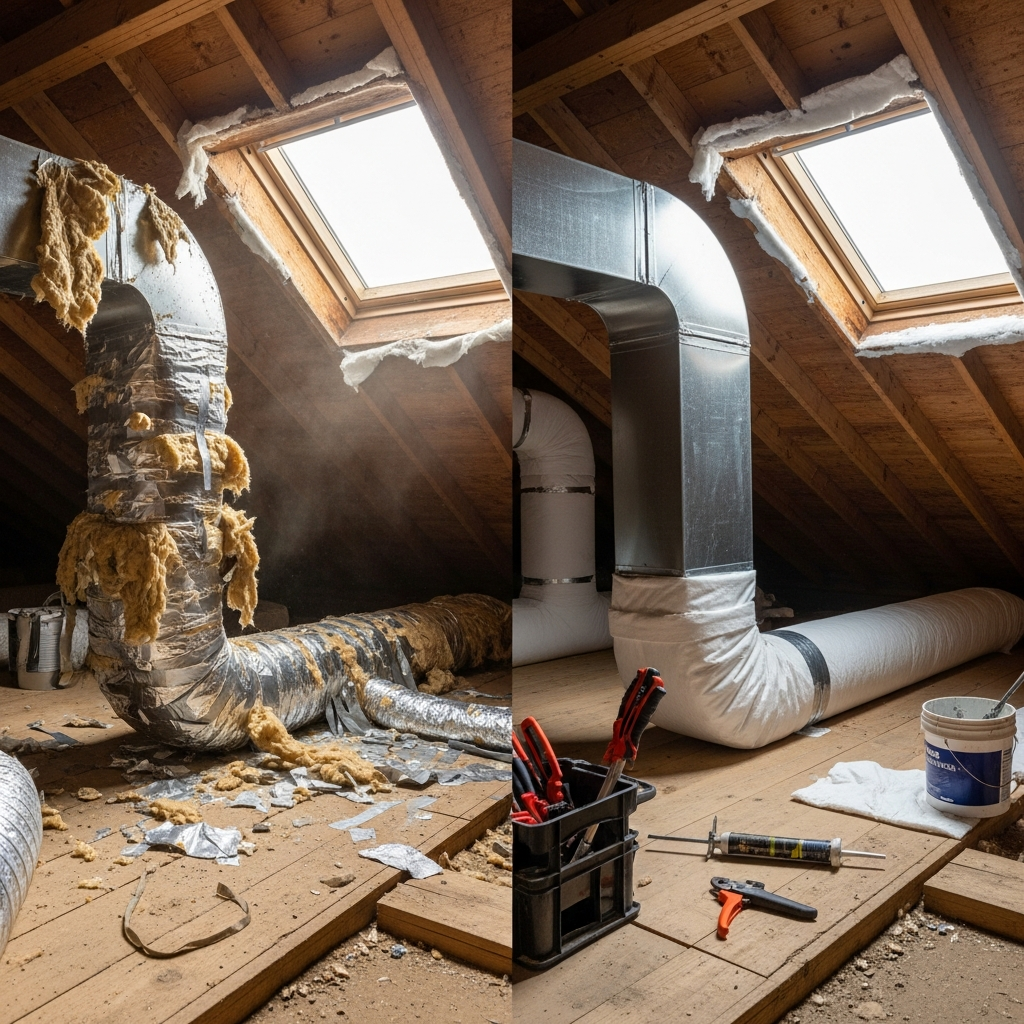
Deciding between repairing air ducts and replacing them entirely is one of the most common crossroads for Malibu homeowners. Along the coast, where salt air, marine layer mornings, and hillside access all complicate home systems, the correct choice is not always obvious from a quick glance inside the attic or crawlspace. Instead, the right path emerges from a blend of testing, inspection, and a clear understanding of your comfort goals. If you are at the stage of gathering information, it helps to learn how modern duct replacement compares to targeted repairs, and why the answer can differ from house to house—even on the same street.
Repair sometimes sounds more appealing because it promises a lighter touch and less disruption. In certain situations, that expectation is accurate. Minor damage near a register boot, a single crushed flex run, or an accessible connection that needs resealing can often be corrected without reworking the entire system. The key is determining whether those localized fixes address the root causes of uneven temperatures, excessive run times, or dust migration. When underlying issues involve undersized returns, widespread leakage, or a trunk layout that starves distant rooms, spot repairs may only scratch the surface.
Testing and diagnosis come first
Before you choose a path, professional testing provides a clear snapshot of system health. Duct leakage tests quantify how much conditioned air escapes before it reaches living spaces. Pressure and airflow measurements reveal whether the system is fighting against restrictions. In Malibu’s varied terrain, these readings can differ significantly between a home near the water and another tucked higher in the canyons. With data in hand, you and your contractor can weigh whether strategic repairs will achieve your goals or whether the distribution network itself needs rethinking.
Good diagnosis also looks at return air pathways. Many older systems have one or two returns serving an entire level, which can leave bedrooms starved for airflow when doors are closed. Replacing a few supply runs won’t fix that kind of imbalance; it often takes reconfiguring returns and adjusting trunk sizing. When long-standing comfort issues stem from design rather than damage, full replacement is a more effective route because it lets you correct those fundamentals rather than patching symptoms.
When targeted repairs make sense
Repairs are most attractive when the system’s bones are sound. If the trunk layout is thoughtful, returns are appropriately sized, and insulation is intact across most runs, then addressing isolated kinks, resealing suspect joints, and updating a handful of boots or registers can restore performance. This approach can be ideal for newer homes where construction was generally solid but where a few shortcuts or subsequent remodels introduced issues in specific rooms.
In these scenarios, craftsmanship is everything. Long-lasting mastics and mechanical fasteners matter, as does proper support to prevent sags that choke airflow. Malibu’s humid mornings and dry afternoons create a daily cycle of expansion and contraction, so repair work should be robust enough to endure those conditions. A good follow-up test after repairs confirms that the intended improvements are real, not just presumed.
When replacement delivers better long-term value
Even with the best intentions, some systems accumulate too many fundamental problems to justify continual fixes. If ducts are aged, insulation is deteriorated, and leakage is widespread, replacing the network can transform the way your home feels. This is especially true in houses where additions were tacked on over time and ducts were extended piecemeal. In those cases, the system often resembles a patchwork rather than a designed pathway for air. Full replacement allows a clean re-think: right-sizing runs, adding returns, smoothing interior trunks for quiet operation, and insulating thoroughly to keep air at the temperature your equipment produces.
Coastal exposure also tips the scale. Salt air accelerates wear on some fittings and can harden older tapes or compounds, which then fail across many connections at once. Wildfire seasons may contribute to contamination inside ducts that have gaps, pulling in particulates from attics or crawlspaces. A replacement built with today’s sealing materials and better filtration strategies often makes a day-to-day difference you can feel—more even temperatures, cleaner air, and reduced noise from throttled, high-speed operation.
The role of access and construction type
Whether repair or replacement is feasible can hinge on access. A single-story ranch with open attic pathways invites more surgical work. By contrast, vaulted ceilings, tight crawlspaces, and hillside homes with chases weaving through structural members can limit the effectiveness of piecemeal fixes. If your home hides duct runs behind finishes that are tough to reach, a strategic replacement might be easier to execute cleanly, especially when coordinated with other updates like lighting or minor framing adjustments.
Planning around daily life matters too. Thoughtful teams sequence work to minimize disruption, keeping parts of the system active whenever practical and maintaining clean pathways through living areas. Whether you choose repairs or replacement, ask for a simple phasing plan and communication checkpoints so you feel in control throughout the process.
How to compare recommendations
When you receive competing opinions, request a short narrative explaining the rationale behind each proposal. If the recommendation is for repairs, it should specify which deficiencies are being corrected and how post-work testing will verify success. If replacement is suggested, you should see details on materials, insulation, sealing methods, return sizing, and balancing. In both cases, clarity counts. Malibu homes vary widely, so the best plan addresses your rooms, your exposure to sun and wind, and your family’s routines rather than quoting generic boilerplate.
Right in the middle of your decision-making, it can help to revisit core goals: quieter rooms, even temperatures, or better filtration during smoky days. Organizing your thoughts around those outcomes makes it easier to evaluate whether strategic fixes or a full redesign gets you there with confidence. Remember that modern duct replacement is less about swapping parts and more about designing an efficient, airtight distribution network tuned to your home.
Air quality and comfort go hand in hand
Along the coast, the marine layer and occasional smoke events create challenges for indoor air. Leaky or poorly routed ducts pull in particulates and odors from attics and crawlspaces. Proper sealing and thoughtful return placement reduce that risk. If allergies or respiratory concerns are a top priority, both comprehensive repairs and full replacements can integrate better filtration strategies. The right approach depends on how extensive the air pathways need to be reworked to support steady airflow through higher-grade filters without excessive resistance.
Noise is another concern. Systems that rely on high fan speeds to push air through cramped or leaky ductwork create noticeable rush or whistling at registers. Redesigning trunks for smoother interiors and generous bends lowers static pressure so equipment can run at quieter, lower speeds. If nighttime noise disrupts sleep in ocean-facing bedrooms, that consideration alone may tilt the decision toward broader reconfiguration rather than isolated repairs.
Planning for future equipment
If you anticipate upgrading HVAC equipment in coming years, consider how today’s choices support tomorrow’s systems. Variable-speed equipment thrives with efficient, airtight ducts. Right-sizing now, ensuring sufficient returns, and aiming for low resistance gives you flexibility when the time comes to select new equipment. It also generally improves comfort immediately, because current equipment benefits from the same reduced load and smoother airflow.
Frequently Asked Questions
How do I know if repairs will be enough? Start with testing and a thorough inspection. If leakage is localized and the layout is fundamentally sound, targeted fixes can restore performance. If issues stem from design flaws or widespread deterioration, broader work is usually more effective.
Will replacement reduce hot and cold spots? A redesign that right-sizes runs, adds returns, and balances airflow often evens out room-to-room differences. The effect can be dramatic in rooms with strong afternoon sun or where long runs previously starved supply.
Is permitting required for this kind of work? Yes, in most cases. Permits, inspections, and testing help ensure the system is safe and efficient. Your contractor should handle coordination and provide documentation for your records.
Can repairs improve indoor air quality? Yes, if leaks are sealed and returns are optimized. However, if contamination or gaps are widespread, a clean, well-sealed replacement with a filtration strategy may deliver better results.
How disruptive is full replacement? With good planning, crews can phase work to limit downtime and protect living spaces. Communication about daily start and stop times, access routes, and cleanup keeps the process comfortable.
Will today’s decisions limit my future equipment choices? A well-designed distribution network usually expands your options by lowering resistance and creating stable airflow. That supports a wide range of efficient equipment in the future.
Move forward with clarity
If you are weighing air duct repairs against a more comprehensive rework, center the conversation on your comfort priorities and the data from testing. A plan that truly fits your home will feel right in everyday life—quieter, cleaner, and more even from room to room. When you are ready to explore next steps in duct replacement, reach out to a trusted local professional who can translate diagnosis into design and deliver a result that stands up to Malibu’s coastal realities.