
Living and working along the Malibu coast teaches you to respect two forces: the ocean and time. Salt air, sun, and shifting marine layers work quietly on every surface, and your cooling system is no exception. When neighbors call about a unit that once purred and now struggles through foggy mornings and hot, windy afternoons, I know we’re chasing issues that are as local as the tides. Early in the season, when the first warm days arrive and the marine layer breaks, I always suggest checking the heartbeat of your system—and yes, that means understanding how your air conditioning responds to coastal wear, from the compressor pad to the smallest electrical connection.
Repair work here is shaped by the environment. Malibu homes, whether perched on a bluff in Big Rock, tucked in a canyon with eucalyptus and dust, or steps from Broad Beach with salt spray in the morning breeze, present a set of challenges unlike inland neighborhoods. Corrosion loves to settle into condenser fins and fasteners. Pitted coils can leak refrigerant even when the system seems to cool for a while, and fan motors can seize after a season of wind-driven mist. When we approach a repair diagnosis, we bring not just tools and gauges but a mental map of microclimates. How close is the unit to the ocean? How often do the marine layer and afternoon winds hit it? Is it protected by vegetation, or is that same hedge sending organic debris into the coil? These small details often determine whether a fix is simple or surgical.
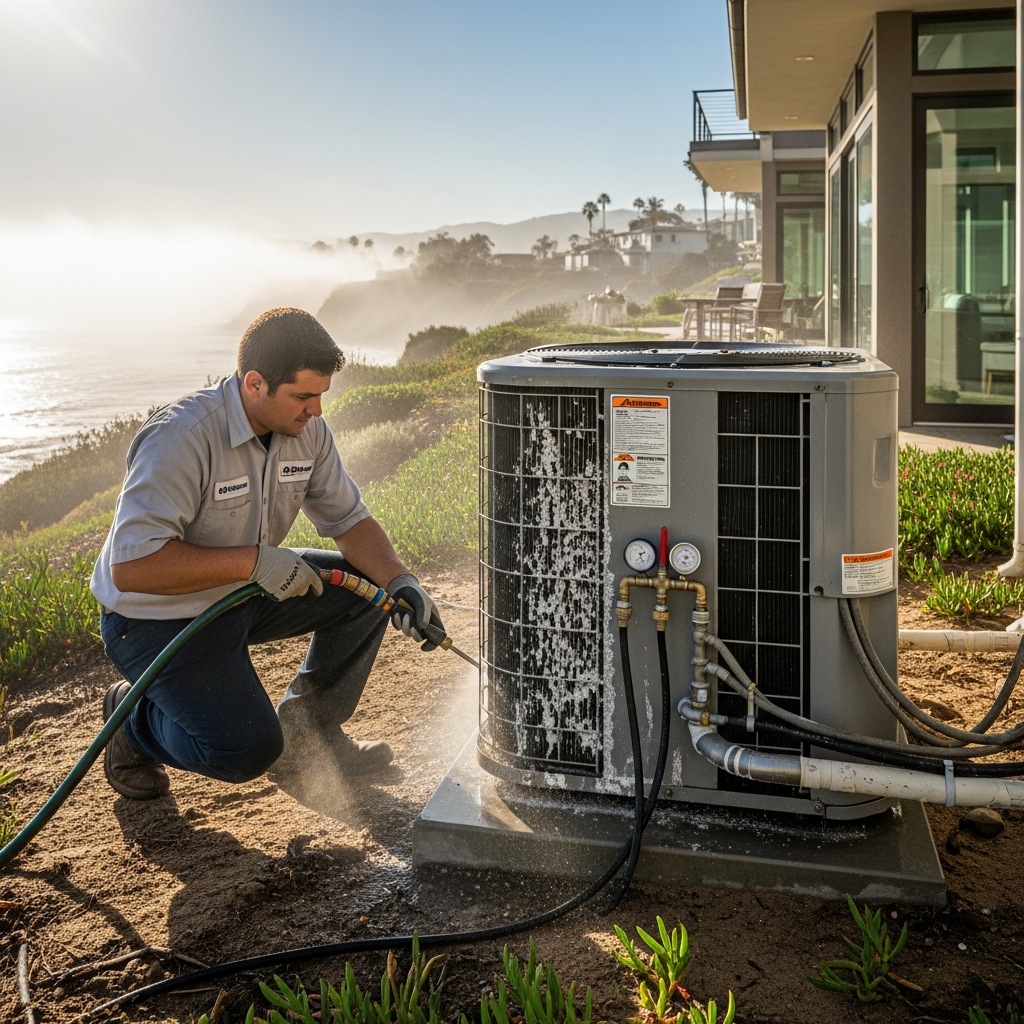
One of the most common coastal issues is reduced heat transfer due to salt deposits. Condenser fins that look gray and matte instead of metallic are often choked by a crystalline film you can’t fully see without close inspection. The system then runs longer, pressures rise, and weak points show themselves—usually in the form of a failed capacitor, a rolled scroll in the compressor, or a fan motor that overheats. Our repair approach starts with a careful rinse and desalting regimen, followed by an electrical check under load. We often find that restoring airflow buys time, but we don’t stop at temporary relief. We evaluate whether anti-corrosion coatings, marine-grade fasteners, or a physical relocation of the condenser will offer a longer-term solution.
Electrical components live a tough life near the coast. Contactors arc more readily when connections are crusted with salt, and wire insulation can grow brittle faster than you’d expect. A good repair doesn’t just swap parts; it resets the foundation, tightening lugs, cleaning grounds, and addressing any evidence of moisture migration into junction boxes. I tell homeowners that a clean electrical path prevents premature part failures and smooths startup amperage, which makes your compressor happier on the hottest days.
Then there’s airflow on the indoor side. Malibu’s coastal fog can make insulation and ducts feel perpetually damp, especially in crawl spaces and lower-level mechanical rooms. That moisture invites microbial growth and rust, and it can warp flex duct or loosen tape seams. During a repair, we verify static pressure and look for sagging or constricted runs. Sometimes, what appears to be a “weak AC” is a system starved for return air. Correcting a return grille, resealing a trunk, or fixing a plenum leak can restore comfort and reduce noise, saving the compressor from working too hard.
Homeowners often ask why a system that worked perfectly last September acts up in June. The answer is seasonal rhythm. Our fall Santa Ana winds blow in dust and debris, which settle everywhere. Then the winter marine layer keeps surfaces damp, setting up corrosion. By spring, the combination is ripe for failure. That’s why a thorough pre-summer inspection is worth more on the coast than almost anywhere else. When a repair call confirms a failing motor or restricted coil, we also set you up with a plan for rinsing and visual checks that are easy to maintain between visits.
Location matters for noise, too. In tight oceanfront lots or hillside terraces, residents and HOAs are sensitive to sound. When a condenser fan blade chips or a motor bearing starts to sing, the echo can travel across patios and stairwells. Our repairs focus not just on restoring cooling but on quiet operation. Balanced blades, correctly torqued mounts, and fresh vibration pads make an immediate difference, especially at night when the neighborhood is still.
In the middle of a heatwave, it can be tempting to solve the immediate problem and move on. But here, long-term resilience matters. We look at UV exposure on fan shrouds, rust on base pans, and the path of coastal winds around your property to recommend simple protectors that last—sometimes it’s a wind baffle positioned just right, other times it’s a riser that lifts the unit above pooling water. We also talk about the control side: smart thermostats and lockouts that prevent overcooling in damp conditions, keeping coils from freezing during foggy mornings and easing stress on the compressor. In these conversations, I always emphasize that Malibu homes benefit from a thoughtful relationship with their systems, where efficiency and longevity meet. If you aren’t sure whether your current setup is working for you, consider an evaluation grounded in local conditions and the fundamentals of dependable air conditioning.
When we replace parts, we prefer coastal-rated components where available: sealed bearings, epoxy-coated coils, stainless hardware, and UV-stable fan housings. Even the small decisions—like choosing a contactor with a better dust cover—pay off. For refrigerant circuits, proper brazing practices, nitrogen purges, and micron-level evacuation protect the compressor. These may seem like shop-talk details, but they matter here, where leaks and moisture are the enemies over time. A strong vacuum and dry system keep acid formation at bay, protecting oil and windings so the repair lasts.
Air quality is another thread that ties into repair outcomes. Malibu’s mix of ocean moisture and canyon pollen can quickly clog filters, leading to coil icing and low airflow. During any service, we measure temperature split, check coil cleanliness, and look for signs of freeze-thaw stress on line sets and insulation. We also advise on filter types that match your home’s realities: if you host guests frequently or leave doors open to the deck, you may need a more frequent swap schedule than a typical inland home. Matching maintenance to lifestyle prevents many “emergency” repairs.
Finally, there’s the human factor—how you use the system. Many oceanfront homes cool in short bursts between beach outings, while canyon homes might run steadily through late afternoons when the sun bakes the slopes. We calibrate systems to those patterns during a repair visit, ensuring fan settings, ramp profiles, and thermostat differentials fit the way you actually live. It’s a personal approach, but it’s the only way to turn a simple fix into a lasting improvement.
Frequently Asked Questions
Why do Malibu coastal systems seem to fail sooner than inland units?
Salt-laden air and persistent moisture accelerate corrosion on coils, hardware, and electrical contacts. Over time, heat transfer declines, parts run hotter, and components like capacitors and fan motors fail earlier. Regular rinsing, anti-corrosion measures, and prompt repairs extend service life despite the environment.
What repairs most often solve “weak cooling” near the ocean?
We typically restore performance by cleaning and desalting condenser fins, repairing or replacing pitted coils, correcting low refrigerant from micro-leaks, and fixing airflow restrictions indoors. Often, tightening electrical connections and replacing worn capacitors complete the job.
How can I protect my system after a repair?
Use gentle fresh-water rinses on the outdoor coil, keep vegetation trimmed for airflow, replace filters on a schedule that reflects your lifestyle, and consider protective coatings and stainless hardware. Smart thermostat settings that avoid overcooling in damp marine conditions also prevent freeze-ups.
Will repairs help with noise that bothers neighbors or violates HOA guidelines?
Yes. Balanced fan blades, new vibration pads, secure mounts, and well-tuned motors dramatically reduce sound. We also advise on placement adjustments and wind baffles where feasible, all in line with local guidelines and the character of your property.
How do you schedule urgent repairs during peak heat or holiday weekends?
We prioritize no-cool and safety issues and coordinate access with property managers and HOAs when needed. Clear communication, photos, and service notes help us move quickly while respecting neighborhood rules and your privacy.
When your coastal system falters, every hour without cooling can feel longer than the tide cycle. If you’re ready for responsive diagnostics, durable parts, and a repair plan shaped by real Malibu conditions, reach out and let’s put the breeze back where it belongs—inside your home. Start with a local evaluation grounded in reliable air conditioning expertise, and we’ll guide you from first check to final cool exhale.